Michelin Bib Gourmand
Our verdict
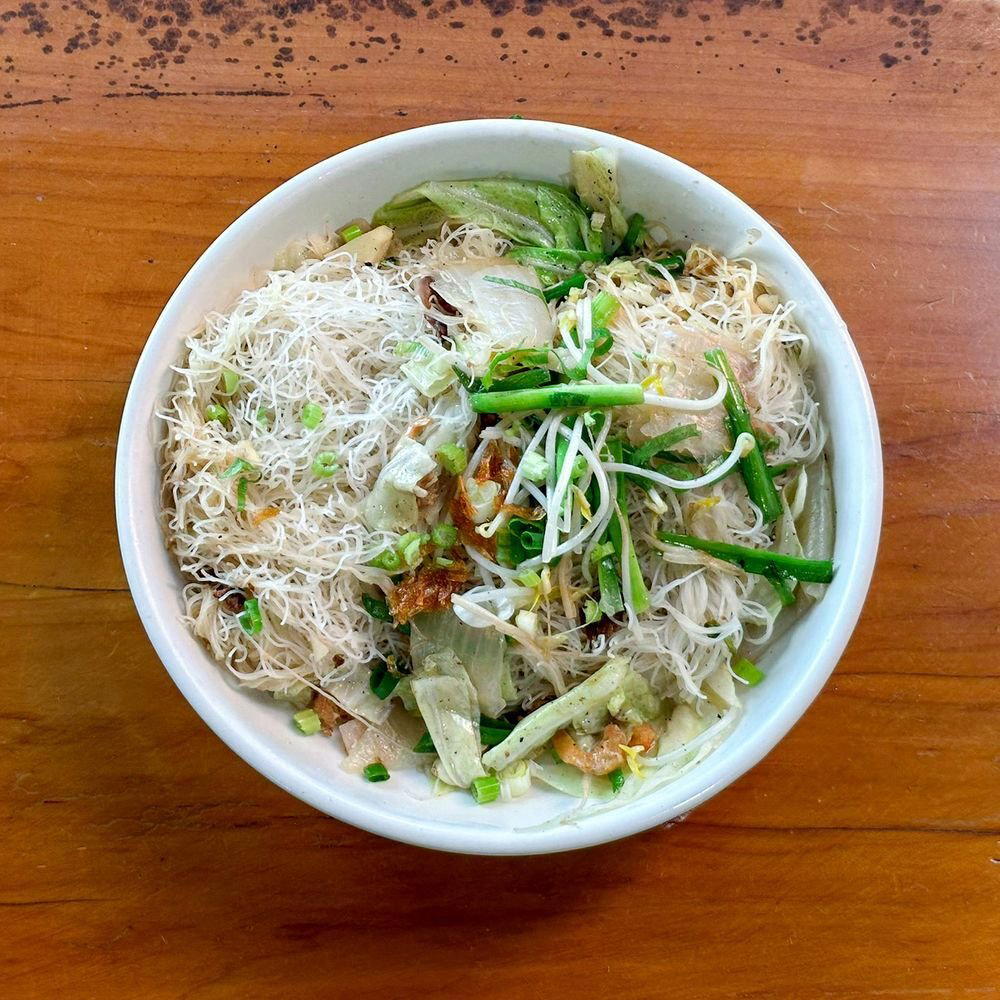
A Qionglin Township institution with more than four decades of history, Yi Ge Rice Vermicelli draws locals and returning visitors to its garden-and-pond setting for the kind of unhurried meal that defines Hsinchu County's noodle culture. The signature rice vermicelli, served stir-fried or in soup, arrives with a pronounced rice fragrance and a satisfying elasticity. Pair it with pork ball soup and marinated meats for a complete picture of the local table.

Pearl is the En Primeur Club membership app, where members save venues, book tables and use the concierge.
The menu
What to order
- Rice vermicelli
- Ribbon rice noodles
- Pork ball soup
Where the Meal Has a Rhythm of Its Own
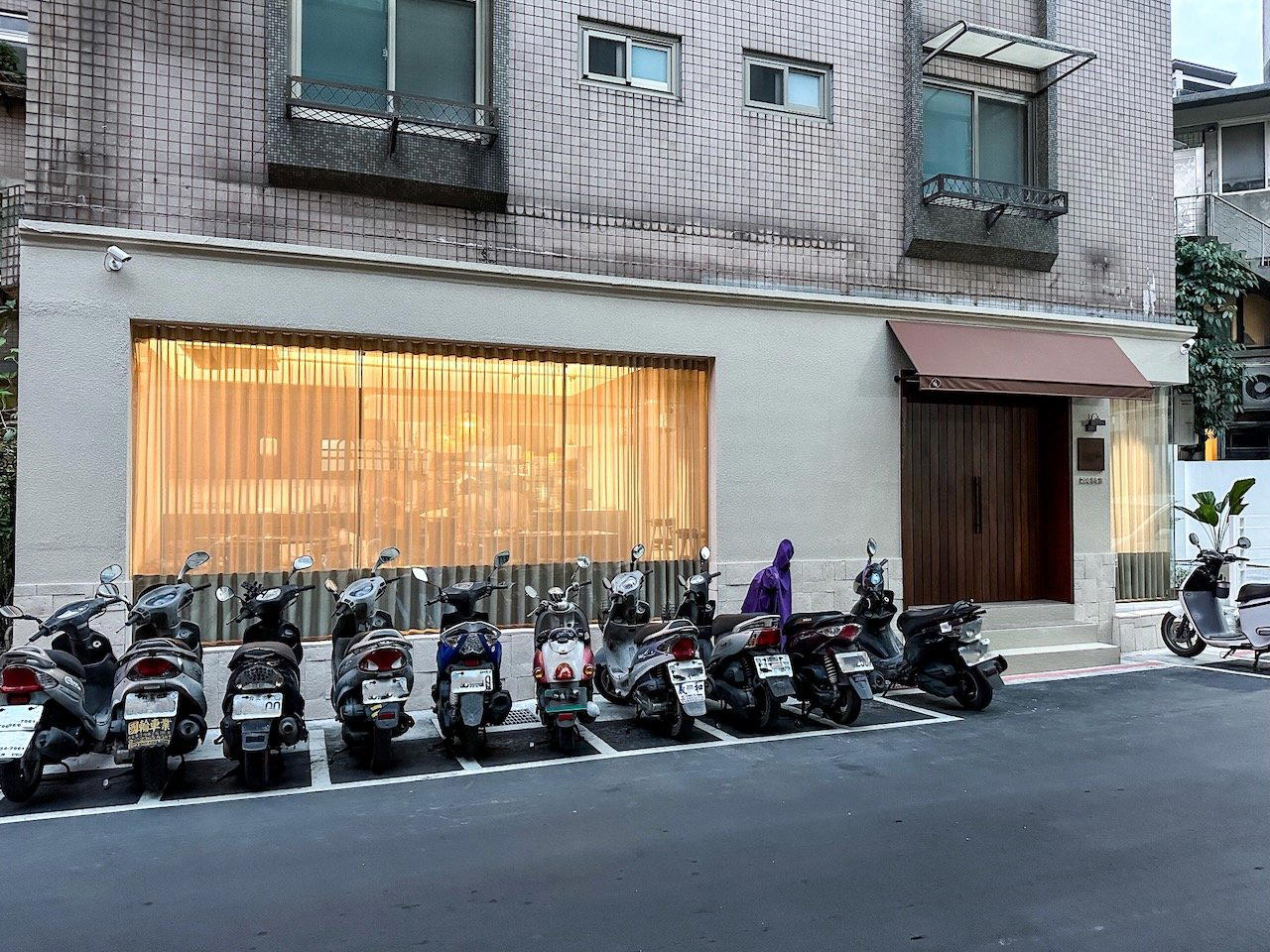
Approaching 621 Fuchang Street in Qionglin Township, the scene shifts noticeably from the commercial density of central Hsinchu. A garden opens alongside the building, a pond sits nearby, and the whole compound carries the unhurried quality of somewhere that has been receiving guests for a long time. Yi Ge Rice Vermicelli has operated here for over 40 years, and that duration has shaped everything about how the meal works: the menu is deliberate, the expectations are clear, and the pacing follows a logic that feels entirely local.
Hsinchu County's food identity is often reduced to a single export, its rice vermicelli, the thin, wind-dried noodle that the region's climate made possible. But what gets discussed less often is how a proper Hsinchu meal is structured around that noodle, not merely decorated by it. At places like Yi Ge, the vermicelli is the axis of the table, and the surrounding dishes, stir-fries, marinated meats, soup, are chosen to complete a specific kind of balance rather than compete for attention. Understanding that structure is the difference between ordering well and ordering randomly.
The Ritual of the Hsinchu Table
The dining ritual here follows a pattern that older Taiwanese noodle houses have maintained across generations. Guests arrive, scan a menu defined by a short list of local preparations, and build their order from a familiar framework: one noodle dish (the anchor), one protein (usually marinated or braised), one soup, and perhaps a stir-fried vegetable to round things out. There is no tasting menu, no progression of courses managed by the kitchen. The table fills quickly, and the eating begins without ceremony.
Yi Ge's rice vermicelli comes in two main expressions: stir-fried or in soup. Both versions work from noodles that are notably fine in gauge, characteristic of the Hsinchu style, with a springy, bouncy texture that holds up under the heat of a wok or the weight of a broth. The rice aroma is pronounced, a marker of vermicelli that has been properly dried and stored rather than rushed through production. For those who want textural contrast, the kitchen offers a mixed option combining ribbon rice noodles with the thinner vermicelli, a pairing that produces a different mouthfeel in each bite without requiring a second bowl.
Pork ball soup is the standard accompaniment, and in Hsinchu County this is not a minor addition. The local version of pork balls uses a paste-based technique that produces a firm, almost springy bite, quite different from the looser meatball preparations found elsewhere in Taiwan. A bowl of this soup alongside the vermicelli constitutes what locals would recognise as the canonical Hsinchu meal, the kind of combination that recurs at family tables and after night markets with equal frequency.
Marinated Meats and the Supporting Cast
Beyond the vermicelli and soup, Yi Ge's menu extends into the category of local snacks and marinated meats that define the broader Hsinchu County eating style. Braised and marinated preparations, typically pork in various cuts, slow-cooked with soy, spice, and time, appear across Taiwanese cuisine, but the Hsinchu versions tend toward a balance that is savoury without being heavy, with the soy base present but not dominant. These dishes function as counterpoints to the lighter vermicelli, adding density and depth to the meal without pulling it in a different direction.
The stir-fry section of the menu covers the kind of wok-cooked vegetables and proteins that most Taiwanese sit-down restaurants include as a matter of course. These are not the focal point at Yi Ge, but they provide flexibility for groups eating together, allowing the table to expand or contract depending on appetite and company. The setting supports this kind of communal eating: the garden and outdoor elements mean the space can accommodate groups with more ease than a small urban counter would allow.
Placing Yi Ge in the Hsinchu County Scene
Hsinchu County's restaurant scene divides roughly between the urban density of Hsinchu City's dining corridors and the more dispersed township establishments that have built loyal local followings over decades. Yi Ge belongs firmly to the second category. Its location in Qionglin Township positions it outside the city proper, which means the clientele skews toward those with specific intent: people who know what they are coming for, or visitors who have done enough research to find it.
Within the county's noodle-focused dining tier, Yi Ge sits alongside establishments like Ang Gu, Bebu, Chuan Fu, Firoo, and Geng Ye Yue Mei as part of a local dining fabric that runs on decades of operation rather than recent critical recognition. These are not venues chasing awards or press cycles. The 40-year tenure at Yi Ge is itself a trust signal in the Taiwanese context, where longevity at a specific address indicates sustained community endorsement across multiple generations of diners.
For those mapping Taiwan's wider dining scene, Hsinchu County's vernacular cooking tradition occupies a different register from the fine dining formats found elsewhere in the country. Operations like JL Studio in Taichung or logy in Taipei work from international frameworks and progressive tasting formats, while southern addresses like GEN in Kaohsiung and Zhu Xin Ju in Tainan each interpret regional identity through different lenses. Yi Ge represents neither of these directions. It is a document of Hsinchu's specific food culture, preserved in practice rather than in concept.
Elsewhere in Taiwan, township-based dining with strong local identity shows up in very different culinary registers. Akame in Wutai Township works from indigenous Paiwan ingredients with a contemporary structure; Volando Urai Spring Spa and Resort in Wulai District ties food to a resort experience in a mountain setting. Yi Ge's version of township dining is more direct: a single culinary tradition, applied over four decades, for a community that has absorbed it into daily life.
Planning the Visit
Reaching Yi Ge requires transport of your own or a hired car, since Qionglin Township sits outside Hsinchu City's walkable centre and public connections to this specific address are limited. The garden setting and outdoor space make the venue a more comfortable proposition in mild weather, which in Hsinchu County typically means the spring and autumn months. Taiwan's summer humidity is a factor worth considering for outdoor seating; the cooler end of the year suits the warm soup pairings well. The address is 621 Fuchang Street, Qionglin Township. Given the venue's local following and the number of group diners the space attracts on weekends, earlier meal times during peak periods tend to involve shorter waits.
For a broader view of what the county offers across dining, accommodation, and other categories, see our full Hsinchu County restaurants guide, our full Hsinchu County hotels guide, our full Hsinchu County bars guide, our full Hsinchu County wineries guide, and our full Hsinchu County experiences guide. For international reference points in very different culinary registers, Le Bernardin in New York City and Emeril's in New Orleans illustrate how long-standing institutions in other contexts manage their reputations across decades.
Frequently asked questions
What awards or recognition does Yi Ge Rice Vermicelli have?
Yi Ge Rice Vermicelli has received recognition including: Complete with a garden and pond, this eatery outside the city can claim over 40 years of history. Local snacks, stir-fries and marinated meat define the score, together with their eponymous signature rice vermicelli. Be they stir-fried or i….
Where exactly is Yi Ge Rice Vermicelli?
Yi Ge Rice Vermicelli is located at 621 Fuchang Street, Qionglin Township, Hsinchu County.
What's the best thing to order at Yi Ge Rice Vermicelli?
The eponymous rice vermicelli is the anchor order, available stir-fried or in soup, with fine noodles that carry a pronounced rice aroma. Ordering a mixed portion of ribbon rice noodles and vermicelli adds textural contrast. Round out the meal with a bowl of pork ball soup, which the venue itself flags as the standard pairing for an authentic Hsinchu spread.
Is Yi Ge Rice Vermicelli reservation-only?
Reservation details are not listed for this address. Given the garden setting and 40-plus years of local standing, walk-in traffic is part of the rhythm here, but calling ahead is advisable for larger groups, particularly on weekends when township eateries of this profile tend to fill.
What's Yi Ge Rice Vermicelli best at?
Rice vermicelli in both its forms: the stir-fried version and the soup version are the dishes that have defined the kitchen across four decades. The broader menu of local snacks, stir-fries, and marinated meats fills out a meal, but the vermicelli is what draws people from central Hsinchu City out to Qionglin Township.
Can Yi Ge Rice Vermicelli handle vegetarian requests?
The documented menu centres on pork ball soup, marinated meats, and stir-fries, which suggests a meat-forward kitchen. Guests with dietary requirements should confirm directly before visiting.
Cuisine-First Comparison
Comparable venues nearby, for context on price, style, and recognition.
| Venue | Cuisine | Price | Awards | Notes |
|---|---|---|---|---|
| Yi Ge Rice VermicelliThis venue (the venue you are viewing) | Hakka Rice Vermicelli | $1–10 | Michelin Bib Gourmand | Not listed |
| Ho Chu Yuan | Traditional Taiwanese Chinese | Not listed | Michelin Plate | North District |
| Yuan Wei Duck Noodle | Taiwanese Raw Fish Noodles | $1–10 | Michelin Bib Gourmand | East District |
| Chin Ta Lu Rou Fan | Taiwanese Shark Meat Rice | $1–10 | Michelin Plate | Sanchong District |
| Le Yeh | Home-style Taiwanese | Not listed | Michelin Plate | Pinglin District |
| Happy Garden | Taiwanese Farm-to-Table | Not listed | Michelin Plate | Bali District |
Recognition history
Dated appearances from independent guides and award organizations, with the underlying list record or original source where available.
Michelin Bib Gourmand
Michelin
Full recognition history (2 entries)
Michelin Plate
Michelin · 2026 Michelin Plate