

Michelin Selected · Small Luxury Hotels of the World Member
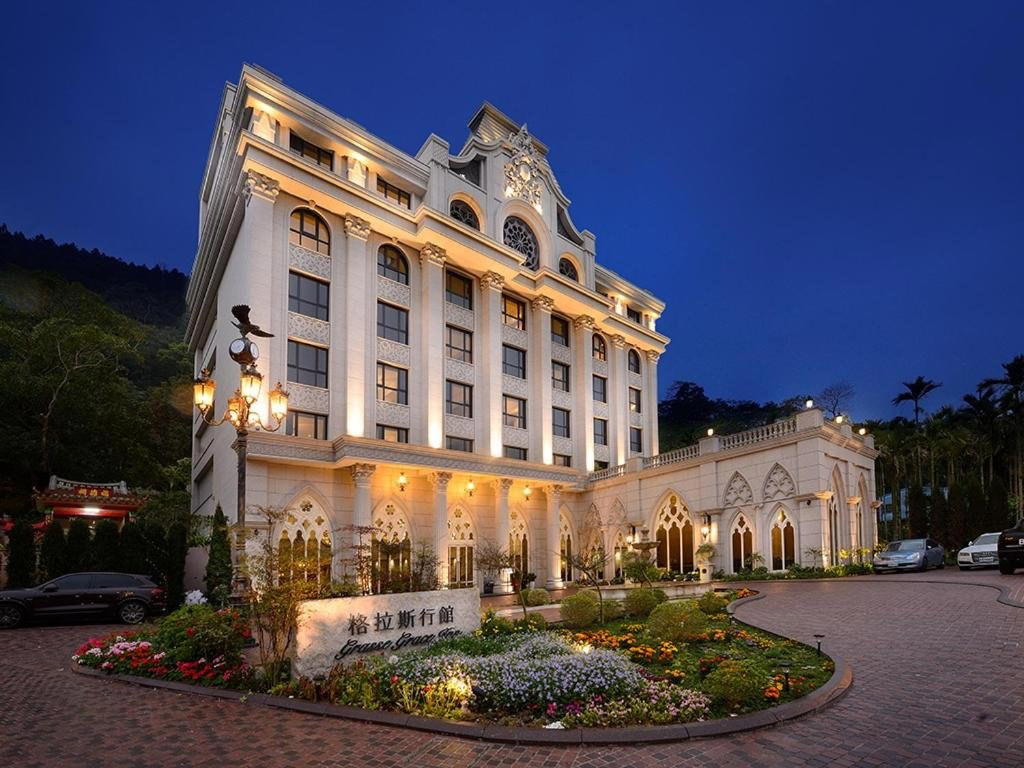
A Gothic-tinged boutique property in Nanzhuang Township, Miaoli County, Grasse Grace Manor draws on the aesthetic of Grasse, the French perfume capital, to deliver a composed, design-forward stay in one of Taiwan's quieter mountain retreats. The architecture is grandly Gothic in silhouette, while the interiors shift register entirely: calm, cool, and considered. It occupies a distinct position among Taiwan's boutique rural properties.

Pearl is the En Primeur Club membership app, where members save venues, book tables and use the concierge.
A French Reference Point in Taiwan's Mountain Interior
Nanzhuang Township sits in the low mountain folds of Miaoli County, roughly two hours south of Taipei, in a region better known for Hakka culture, river valleys, and cedar forests than for European architectural gestures. The arrival of a property that draws its conceptual grammar from Grasse, the historic perfume capital of Provence, is not an obvious move for this setting, and that tension is precisely what gives Grasse Grace Manor its editorial interest. The property belongs to a category that has grown steadily across Taiwan's rural hinterland: boutique design hotels that use a strong aesthetic identity, rather than resort scale or international brand recognition, to position themselves against the mainstream.
Taiwan's independent boutique sector has produced some of its most considered properties outside the major cities. From the volcanic spring resorts of Yilan, as seen at Evergreen Resort Hotel (Jiaosi) in Yilan, to the indigenous-landscape sensitivity of properties like Hotel Indigo Alishan, the pattern is consistent: design specificity over generic resort formulas. Grasse Grace Manor fits inside that pattern, while choosing a reference point that is notably unusual for the region.
Gothic Architecture Against a Hakka Backdrop
The architecture is the property's most immediate statement. Gothic styling, with its vertical emphasis, pointed forms, and formal grandeur, is an uncommon register for rural Taiwan, where most boutique properties default to either Japanese minimalism, Aboriginal material culture, or local stonework traditions. The Gothic mode carries specific European connotations: Romanticist sensibility, a certain theatricality of silhouette, the suggestion of old-world permanence. In Nanzhuang's range of forested hillsides and low-rise township buildings, the contrast is deliberate and considerable.
That kind of architectural displacement is not without precedent in premium rural hospitality. Properties like Gloria Manor in Kenting National Park have similarly anchored their identity in an architectural personality that differs from its surroundings, using the contrast as part of the guest experience rather than working against it. The gamble, in both cases, is that the design coherence inside the property justifies the aesthetic argument made outside it.
The interior at Grasse Grace Manor is reported to shift register markedly from the exterior. Where the facade reads as grand and Gothic, the interior moves toward calm and restraint. This kind of interior-exterior tension, theatrical arrival, composed retreat, is a recognisable pattern in high-concept boutique hospitality. It mirrors approaches taken by design-led properties internationally, including properties like Castello di Reschio in Lisciano Niccone, where monumental architecture frames interiors of deliberate quietude.
The Grasse Reference and What It Signals
Naming a property after Grasse is an act with specific cultural freight. The town in the Alpes-Maritimes department of southeastern France has been the centre of European perfume production since the sixteenth century, and carries associations of sensory sophistication, floral abundance, and a particular strain of Provençal luxury that has nothing to do with urban grandeur and everything to do with atmosphere and material quality. Properties in this reference class, whether physically in Provence or simply invoking it, are signalling that their appeal is experiential and sensory rather than amenity-led.
That positioning separates Grasse Grace Manor from the urban luxury tier, where properties compete on location efficiency, business facilities, and international brand recognition. The urban Taiwan luxury market, centred on Taipei, includes properties like amba Taipei Zhongshan and operates on an entirely different logic. Grasse Grace Manor is not competing in that space.
Nanzhuang as Context
Understanding what Nanzhuang offers helps calibrate expectations. The township is one of Miaoli County's most visited rural destinations, with a historic old street, river canyon scenery, and a strong association with Hakka and Saisiyat Aboriginal heritage. It draws Taiwanese domestic travellers looking for mountain air, natural hot springs in the broader county, and a pace of life that registers differently from Taipei or Taichung. The accommodation market here has traditionally been dominated by guesthouses and small family-run inns rather than design-led boutique properties.
Grasse Grace Manor occupies a position at the upper end of that local market, bringing a design ambition that the guesthouse tier does not. For travellers accustomed to properties like Hoshinoya Guguan in Taichung, the category logic is broadly familiar: a nature-adjacent setting, a strong design identity, and an experience that is primarily about atmosphere and retreat rather than activities or amenities. The address at 東江80號 in Nanzhuang Township places it within easy reach of the old street area, which remains the township's main concentration of food vendors, craft shops, and river access points. Travellers arriving from Taipei should account for a journey of approximately two to two and a half hours by road or a combination of train and local transport, with Miaoli Station serving as the nearest major rail connection. For a fuller sense of what the county offers, our full Miaoli guide maps the region's dining and accommodation options across different budgets and styles.
Where It Sits in Taiwan's Rural Boutique Set
Taiwan's rural boutique hotel market has developed a coherent upper tier over the past decade, with properties differentiated by design clarity, setting specificity, and the distinctiveness of their experiential offer. At the nature-immersive end of that tier, Hotel Beore at Sun Moon Lake in Nantou and Volando Urai Spring Spa and Resort in Wulai District demonstrate how landscape integration drives the guest proposition. At the design-concept end, Grasse Grace Manor's Gothic-Provençal frame makes a different kind of argument: that a property can transport its guests conceptually as well as physically, using architecture and interior atmosphere to create a sense of elsewhere that complements rather than competes with the surrounding landscape.
For travellers working their way through Taiwan's boutique scene, the property sits alongside other stylistically distinctive rural options including Grand Cosmos Resort Ruisui in Hualien County and The Lalu Hotel in Yuchi. These properties share a commitment to atmosphere over amenity volume, and draw guests who are travelling specifically to experience the property rather than using it as a base for external programming.
Planning a Stay
Nanzhuang's peak season runs from spring through mid-autumn, when the mountain weather and foliage draw the largest domestic visitor numbers; a stay outside those windows offers a quieter experience of the township and its surroundings.
Frequently Asked Questions
What's the general vibe of Grasse Grace Manor?
The property operates in the design-concept tier of Taiwan's rural boutique market. The Gothic exterior creates a formal, Romantic arrival experience, while the interior shifts toward calm and composed luxury. The reference to Grasse, France signals a sensory and atmospheric approach to hospitality rather than an amenity-heavy one. It is positioned for guests seeking retreat and design specificity in a mountain setting, and its Nanzhuang location places it within reach of Hakka heritage sites, river scenery, and the county's wider natural environment. Compared to Taiwan's urban luxury tier, the emphasis is decisively on atmosphere over urban efficiency.
What room category do guests prefer at Grasse Grace Manor?
Given the property's boutique scale and Gothic-Provençal design identity, the architectural coherence of the space is likely to vary between room types, with rooms that most fully express the interior design language, calm finishes, considered detailing, French Romantic atmosphere, generally drawing the strongest response from guests seeking the property's distinctive aesthetic. Checking current availability directly with the property or through local Taiwanese booking platforms will give the clearest picture of the room hierarchy on offer.
How It Stacks Up
Comparable venues nearby, for context on price, style, and recognition.
| Venue | Cuisine | Price | Awards | Notes |
|---|---|---|---|---|
| Grasse Grace ManorThis venue (the venue you are viewing) | French-inspired luxury manor with meticulous attention to design detail and high-end finishes. | $200–300 | Michelin Selected · Small Luxury Hotels of the World Member | Not listed |
| The One Nanyuan | Cultural heritage retreat blending traditional Chinese and Fujianese architecture with contemporary luxury hospitality. | Not listed | 1 Michelin Key | Xinpu |
| Madison Taipei, a Tribute Portfolio Hotel | Boutique hotel with timeless design and refined hospitality | $200–300 | Michelin Selected | Yi'an |
| Provintia Hotel Tainan | Renovated heritage property with modern comforts in Tainan's old town. | $100–200 | Michelin Selected | North District |
| Hyatt Centric East Taipei | Upscale urban lifestyle hotel | $200–300 | Not listed | East Taipei |
| Hanns House | Contemporary serviced apartment hotel with heritage-inspired design elements reflecting founder Teresa Wei-Hsin Ma's family history and Taiwanese cultural narrative. | $100–200 | Michelin Selected | Xinyi District |
Recognition history
Dated appearances from independent guides and award organizations, with the underlying list record or original source where available.
Michelin Selected
Michelin
Small Luxury Hotels of the World Member
Small Luxury Hotels of the World
Continue exploring
More in Miaoli
Hotels in Miaoli
All hotels in Miaoli →
Bars in Miaoli
Browse all →

Details
- Romantic
- Elegant
- Ornate
- Scenic
- Romantic Getaway
- Honeymoon
- Anniversary
- Weekend Escape
- Garden
- Historic Building
- Design Destination
- Panoramic View
- Private Dining
- Wi Fi
- Restaurant
- Free Parking
- EV Charging
- Garden
- Garden
- Mountain
Ornate and romantic with Gothic arches, crystal chandeliers, marble foyer, and soft pastel tones creating a European atmosphere.