








logy is a restaurant in Taipei's Neihu District.
Pearl is the En Primeur Club membership app — saves, bookings, and concierge access live there. Same editors, same standards.
- Address
- 114, Taiwan, Taipei City, Neihu District, Lane 258, Ruiguang Rd, 39號1F
- Website
- logy.tw
- Directions
- Get directions
 Saves & bookings on Pearl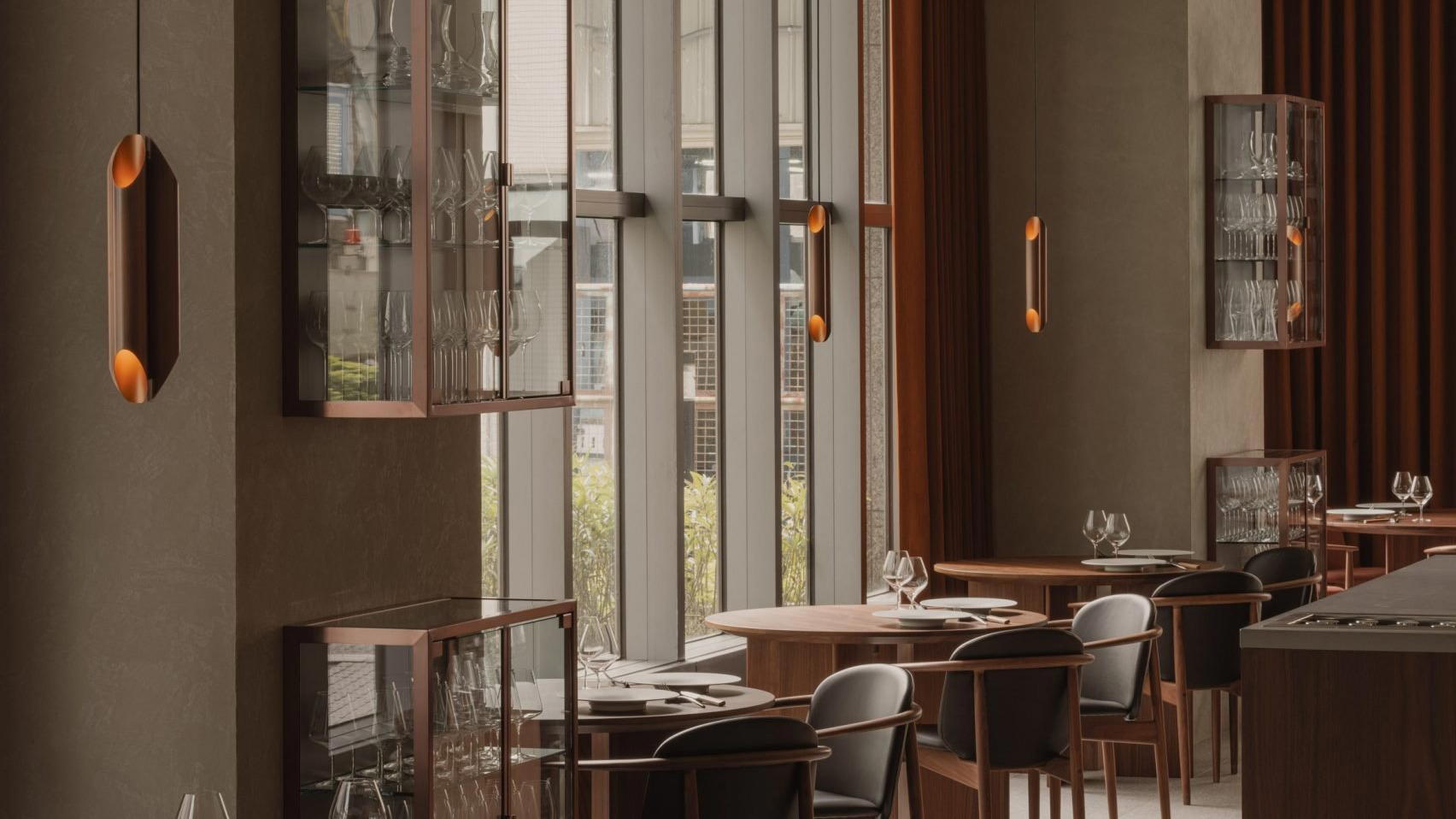
logy is a two-Michelin-star restaurant in Taipei serving Modern Japanese-Taiwanese Fusion Omakase. Neihu is not where you expect to find one of Taipei's most closely watched restaurant tables. The district sits northeast of the city's dining core, removed from the Xinyi luxury corridor and the Zhongshan hotel strip. Arriving on Lane 258 off Ruiguang Road, the building offers little announcement. That deliberate restraint carries through the door: the room is calibrated, not theatrical, and the first thing you register is how the space orients everything toward what will arrive on the plate. In a city where prestige dining often competes for visual drama, this is a considered counter-argument.
The Architecture of the Menu
The deeper editorial question at logy is not what the dishes are made of, but how the menu is structured to make an argument. The format sits within a broader Asian fine dining shift that has moved away from either-or identity: not European technique applied to Asian ingredients, nor Asian tradition dressed in Western plating. Particularly interesting tables working in this space now build menus where the logic moves fluidly between both traditions, course by course, without the seam showing.
At logy, the operating principle is the synthesis of Japanese and Taiwanese culinary reference points across a single tasting arc. Chef Ryogo Tahara arrived in Taipei with lineage from Florilège, the Tokyo restaurant that built its reputation on French technique reframed through Japanese sensibility. That training shows not in the presence of French dishes but in a structural approach: the menu advances through contrasts of temperature, weight, and texture in a way that borrows from French progression logic while drawing its ingredients and flavour references from Taiwan and Japan. The result is a menu that cannot be read as simply one thing, and that ambiguity is where its identity sits.
This places logy in a specific competitive tier within Taipei. Taïrroir works a parallel vein, building menus around Taiwanese cultural narrative within a contemporary European structure. Molino de Urdániz imports a Spanish contemporary framework wholesale. L'Atelier de Joël Robuchon maintains a French house identity in Taipei's high-end dining market. Each represents a distinct answer to the question of what a $$$$ tasting menu in this city should do. Logy's answer sits closest to a genuinely bilingual culinary text.
Credentials and Position in the Asian Fine Dining Tier
The awards record at logy is dense enough to require some disaggregation. Two Michelin stars, held in both 2024 and 2025, place it in the city's uppermost bracket alongside Le Palais, which holds three stars and represents Taipei's Cantonese fine dining peak. Within the broader Asian ranking circuit, logy's trajectory is significant: Opinionated About Dining placed it 11th in Asia in 2023, 25th in 2024, and 32nd in 2025, a slight recalibration against a field that has expanded and sharpened. The World's 50 Best Asia's Leading Restaurants ranking for 2025 places it at 26th, which is the more globally visible data point. La Liste's 2026 ranking assigns 76 points, up from 75 in 2025, consistent upward movement on a panel that weights culinary tradition and technique heavily.
For context, that puts logy in comparable territory to restaurants like Atomix in New York, which similarly operates at the intersection of East Asian culinary identity and European fine dining structure, and which the same ranking circuits track closely. The comparable set is international, not merely regional.
Taiwan's fine dining scene has produced a small cohort of restaurants that now operate at this level of international recognition. JL Studio in Taichung and GEN in Kaohsiung represent different nodes of the same broader moment: Taiwanese cooking infrastructure, applied to contemporary fine dining formats, producing results that travel well across international critical frameworks. Logy is the Taipei anchor of that network.
Service Windows and the Booking Pattern
The hours structure at logy reflects a high-demand, low-turnover model. Wednesday through Saturday runs two seatings in the evening, the 5:30 and 8:00 pm slots, consistent with a kitchen managing an extended tasting format across two controlled service windows. Friday, Saturday, and Sunday add a lunch seating from noon to 2:30 pm. Monday and Tuesday are closed. That gives the kitchen five operating days and no more than two full services per day, a pattern typical of two-star operations managing quality through volume discipline.
For prospective visitors: the tasting format and the double-seating structure mean walk-in access is effectively not a viable strategy. This is a reservation-first restaurant in the same way that any two-Michelin-star counter in Tokyo, Copenhagen, or Paris would be. Reservations are essential.
Taipei's fine dining circuit is worth mapping across a stay rather than treating as a single destination. For different registers, Mudan Tempura handles the Japanese precision format at the premium end of the tempura category, while a broader survey of the city's dining range is in our full Taipei restaurants guide.
Florilège Lineage and What It Signals
The restaurant's connection to Florilège in Tokyo matters as a credential, not as a biographical footnote. Florilège built its international profile by treating French technique as a living tool rather than a fixed orthodoxy, applying it to Japanese ingredients and seasonal logic in a way that earned consistent Michelin recognition in one of the world's most contested dining markets. A chef trained in that environment carries a specific set of competencies: precision in classical structure, comfort with produce-driven menu logic, and an understanding of how to manage a tasting menu's arc. These are transferable skills, and they travel in the menu architecture at logy.
The Taipei posting represents a particular kind of challenge: applying that toolkit in a city where the fine dining tradition has different anchors, where Taiwanese produce has its own strong seasonal character, and where the dining audience increasingly includes both international visitors and a sophisticated local clientele. Logy's standing in the OAD and 50 Best Asia rankings suggests the translation has been well-received across both audiences.
Taiwan Beyond Taipei
Logy sits within a broader Taiwan dining picture worth acknowledging for travellers constructing a multi-city itinerary. The island has developed serious fine dining infrastructure beyond the capital. In Tainan, A Cun Beef Soup on Baoan Road represents the depth of Southern Taiwanese culinary tradition at the other end of the price and format spectrum. Akame in Wutai Township is among the more discussed examples of indigenous Taiwanese ingredients applied to a contemporary tasting format. Volando Urai Spring Spa and Resort in Wulai District offers a different context: cuisine embedded in a resort setting outside Taipei, for those pairing the table with longer stays in the region. For logistics beyond restaurants, our Taipei hotels guide, bars guide, wineries guide, and experiences guide cover the surrounding infrastructure.
Know Before You Go
Planning Notes
- Cuisine: Modern Japanese-Taiwanese Fusion Omakase
- Chef: Ryogo Tahara (Florilège lineage, Tokyo)
- Price tier: $$$$
- Awards: Michelin 2 Stars (2024, 2025); Asia's Leading Restaurants #26 (2025, World's 50 Best); OAD Asia #32 (2025); La Liste 76pts (2026); Black Pearl 1 Diamond (2025)
- Hours: Mon: Closed; Tue: Closed; Wed: 6:30–10:30 PM; Thu: 6:30–10:30 PM; Fri: 12–3 PM, 6:30–10:30 PM; Sat: 12–3 PM, 6:30–10:30 PM; Sun: 12–3 PM, 6:30–10:30 PM
- Location: Lane 258, Ruiguang Road, Neihu District, Taipei
- Booking: Reservation required; advance planning strongly advisable 3 from 808 reviews
Cuisine and Credentials
Comparable venues nearby, for context on price, style, and recognition.
| Venue | Cuisine | Price | Awards | Notes |
|---|---|---|---|---|
| logyThis venue — the venue you are viewing | Modern Japanese-Taiwanese Fusion Omakase | $$$$ | Michelin 2 Star | Not listed |
| Taïrroir | Taiwanese-French Fusion Fine Dining | $$$$ | Michelin 3 Star | Xikang |
| Le Palais | Fine Dining Cantonese | $$$$ | Michelin 3 Star | Jianming |
| Mume | Modern Taiwanese-European Fusion | $$$$ | Michelin Plate, World's 50 Best #52 | De'an |
| Mudan Tempura | Michelin-Starred Tempura | $$$$ | Michelin 2 Star | De'an |
| Kitcho | Modern Japanese Omakase | $$$$ | Michelin 1 Star | Jian'an |
Recognition history
Dated appearances from independent guides and award organizations, with the underlying list record or original source where available.
Black Pearl 1 Diamond
Black Pearl
Conde Nast Hot List Restaurants
Conde Nast
La Liste Top Restaurants
La Liste
Michelin 2 Stars
Michelin
Opinionated About Dining Top Restaurants in Asia Ranked #22
Opinionated About Dining
Star Wine List
Star Wine List
World's 50 Best Asia's Best Restaurants #22
World's 50 Best
Black Pearl 1 Diamond
Black Pearl
La Liste Top Restaurants
La Liste
Michelin 2 Stars
Michelin
Opinionated About Dining Top Restaurants in Asia Ranked #32
Opinionated About Dining
Tatler Listed in Best Restaurants Asia-Pacific
Tatler
The Best Chef Two Knives
The Best Chef
World's 50 Best Asia's Best Restaurants #26
World's 50 Best
Michelin 2 Stars
Michelin
Opinionated About Dining Top Restaurants in Asia Ranked #25
Opinionated About Dining
Opinionated About Dining Top Restaurants in Asia Ranked #11
Opinionated About Dining
Continue exploring
More in Taipei
Restaurants in Taipei
Browse all →
Bars in Taipei
Browse all →
Hotels in Taipei
Browse all →
Wineries in Taipei
Browse all →
At a Glance
- Intimate
- Elegant
- Modern
- Sophisticated
- Special Occasion
- Date Night
- Celebration
- Chefs Counter
- Open Kitchen
- Design Destination
- Sake Program
- Sommelier Led
- Natural Wine
- Local Sourcing
- Farm To Table
Current opening hours
- Monday
- Closed
- Tuesday
- Closed
- Wednesday
- 6:30–10:30 PM
- Thursday
- 6:30–10:30 PM
- Friday
- 12–3 PM, 6:30–10:30 PM
- Saturday
- 12–3 PM, 6:30–10:30 PM
- Sunday
- 12–3 PM, 6:30–10:30 PM
Hours can change for holidays and private events. Last verified .
Dimly lit, warm and earthy tones with brick and plaster walls, walnut wood paneling, and custom bamboo-inspired lighting creating an intimate, home-like atmosphere over 2-3 hours.