
For more than two decades, Geng Ye Yue Mei has drawn visitors up into the hills of Emei Township for traditional Hakkanese cooking with a light creative touch. The rustic hillside cabin, with its sweeping valley views, is among Hsinchu County's most enduring countryside dining destinations. Signature dishes include house-pounded mochi and scrambled egg with wild chayote, both rooted in Hakka pantry tradition.
Pearl is the En Primeur Club membership app — saves, bookings, and concierge access live there. Same editors, same standards.
- Address
- 5, Lane 7, Emei Township
- Phone
- +886 3 580 9666
- Directions
- Get directions
 Saves & bookings on Pearl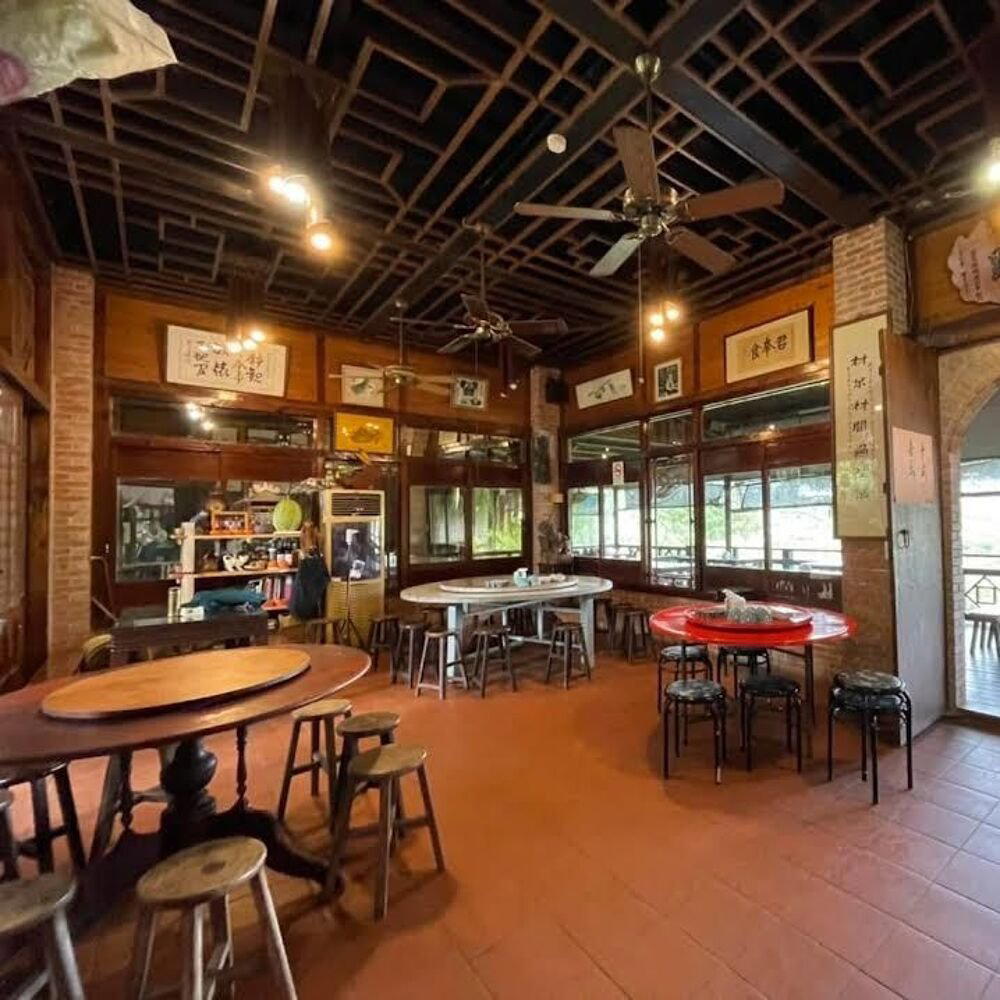
A Hillside Cabin in Emei Township
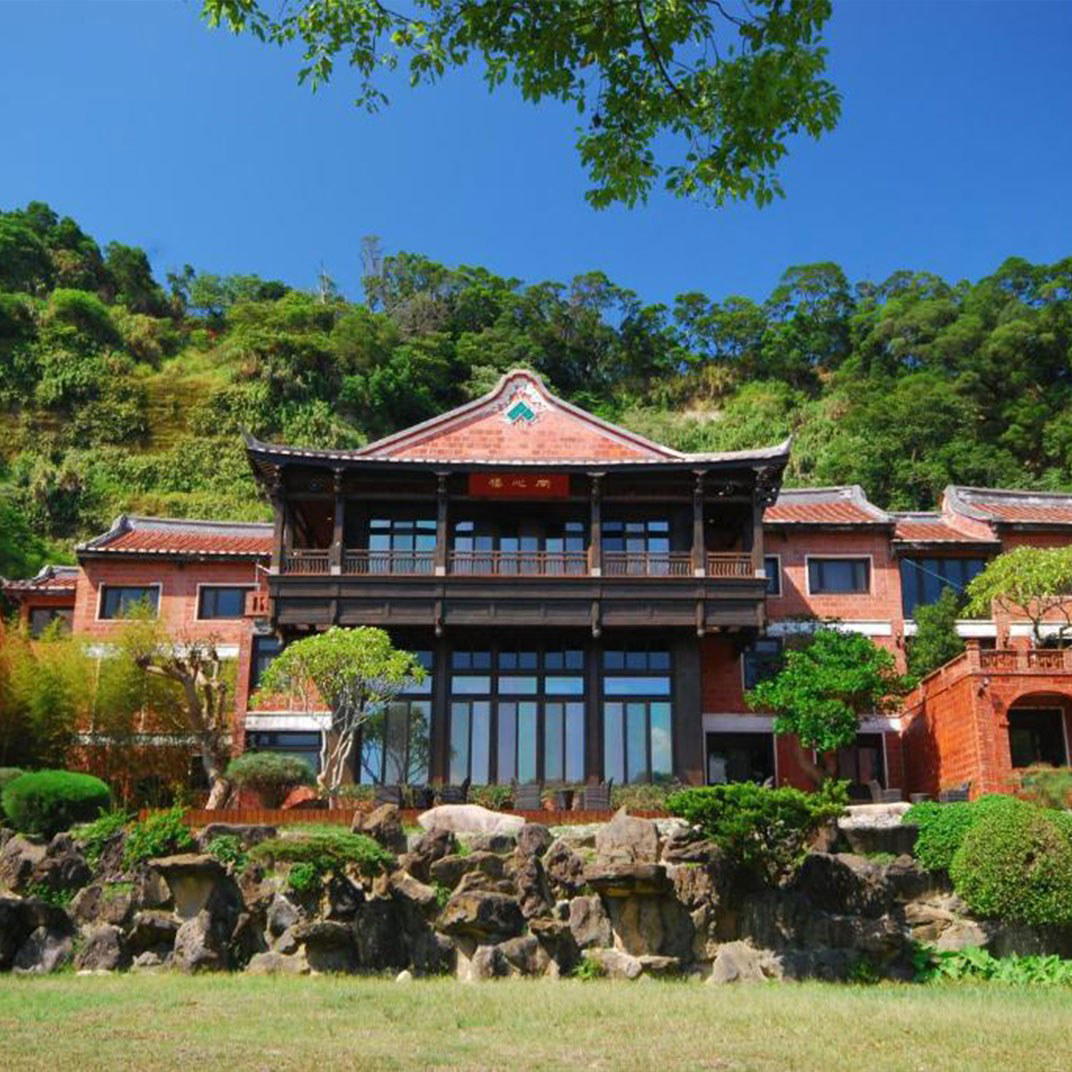
The road to Emei Township rises gradually out of the flatlands that most visitors associate with Hsinchu County, passing tea farms and scattered rural settlements before delivering you to a countryside that feels removed from any urban calendar. In Taiwan, this kind of terrain has long been Hakka territory, and it is in these hills that Hakka food culture maintains its most direct connection to agricultural life, preserved vegetables, pounded rice cakes, slow-cooked proteins, and a general preference for honest flavour over decorative technique. Geng Ye Yue Mei is a restaurant in Emei Township, Hsinchu County, serving Hakkanese cooking at price tier 2. It occupies a rustic cabin on a hillside at the address 5, Lane 7, where valley views extend across the surrounding landscape in a way that frames the meal before a single dish arrives.
That physical context matters more here than it would at a restaurant in Taipei or Taichung. The setting is not incidental to the food, it is part of the argument the kitchen is making. Eating Hakka cooking in this environment, surrounded by the specific terrain that shaped the cuisine, produces a different register of understanding than encountering it in a city dining room. The cabin's rustic aesthetic is consistent with that position: this is not a place that performs rusticity for urban visitors but one that has simply remained what it was.
More Than Two Decades of Hakkanese Cooking
Few restaurants in Hsinchu County have sustained the same format across twenty-plus years without retreating into self-parody or pivoting toward trend cycles. Geng Ye Yue Mei has done neither. The kitchen operates within Hakkanese tradition while introducing subtle creative adjustments, enough to keep the cooking alive and responsive without abandoning the culinary logic that defines the cuisine. That balance is harder to maintain than it sounds, and the fact that visitors have continued making the journey up to this hillside for over two decades suggests the kitchen has found a repeatable answer.
Hakka cuisine in Taiwan developed out of scarcity and resourcefulness. Historically, Hakka communities occupied less fertile upland areas, which shaped a cooking style that emphasised preservation, economy, and extraction of flavour from modest ingredients. The results, dried preserved meats, fermented mustard greens, glutinous rice preparations, foraged mountain vegetables, are now recognised as a distinct and valuable strand of Taiwanese food culture. Geng Ye Yue Mei draws directly on this inheritance, and the longevity of its operation puts it in a different bracket from newer restaurants working the same territory.
For comparison, Taiwan's more prominent destination restaurants, places like JL Studio in Taichung, logy in Taipei, or GEN in Kaohsiung, work within fine-dining frameworks that draw on Taiwanese ingredients while reaching toward international tasting-menu formats. Geng Ye Yue Mei operates at a different register entirely, closer in spirit to places like Akame in Wutai Township, where the cuisine's relationship to a specific community and geography is the primary proposition.
The Dishes That Define the Kitchen
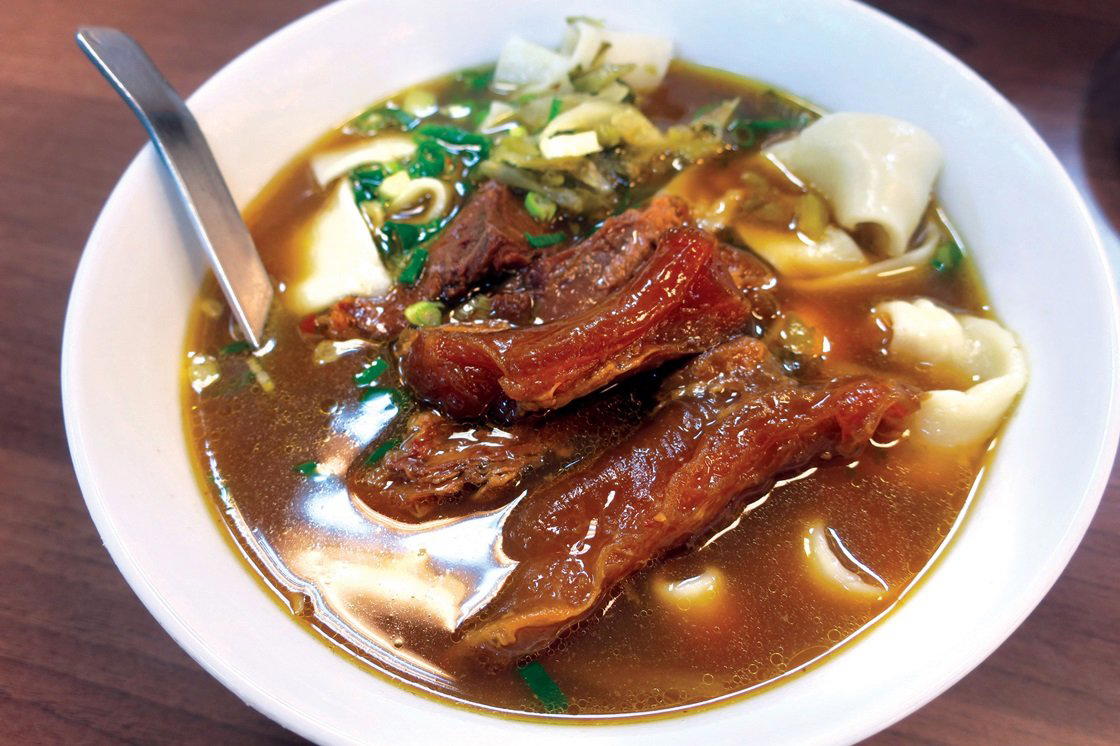
Two preparations illustrate the kitchen's approach with clarity. The scrambled egg with wild chayote is a dish built from foraged mountain produce, chayote is common in Taiwan's highland areas, and when harvested young and wild, the shoots carry a sweet grassiness that differs from the cultivated variety. Combined with egg, the result carries a chewy texture, sweet flavour, and egg-forward aroma that speak to Hakka cooking's ability to coax character from direct combinations. It is the kind of dish that rewards attention in proportion to how much you know about the ingredient's source.
The house-made mochi is the kitchen's most recognisable preparation. Mochi made by hand, through the labour-intensive process of pounding sticky rice rather than mixing pre-processed glutinous flour, produces a different result: a more elastic, cohesive texture that holds its character across a longer eating window. Finished with sugar and ground peanuts, this version is a direct reference to Hakka New Year and ceremonial food traditions, where the labour of pounding rice was itself a communal act. The fact that the kitchen continues making it this way, rather than adopting shortcuts, is a statement of intent that runs through the whole operation.
Emei Township as a Dining Destination
Hsinchu County's dining scene concentrates most of its formal restaurant activity in Hsinchu City itself, where places like Ang Gu, Bebu, Chuan Fu, Firoo, and Happy Hwa anchor the urban offer. Emei Township sits at a remove from that cluster, in the county's inland hills, and the drive out functions as a commitment device that self-selects for visitors with a specific kind of interest. You do not end up at the restaurant by accident.
That self-selection shapes the experience. The dining room draws a mix of local regulars who have been making this trip for years and visitors who have done enough research to know this kind of cooking exists. Both groups tend to arrive with calibrated expectations, which is to say, expectations that the food will deliver something genuinely rooted rather than something picturesque. The hillside setting reinforces this: the valley views from the rustic room are real and considerable, but the kitchen does not rely on them.
For visitors building a broader Hsinchu County itinerary, the county's hotel and leisure infrastructure is covered in our full Hsinchu County hotels guide. Drinking options are mapped in our full Hsinchu County bars guide. Those interested in the wider regional food scene should start with our full Hsinchu County restaurants guide, with additional regional context available through our Hsinchu County wineries guide and our Hsinchu County experiences guide.
Planning a Visit
The restaurant is located at 5, Lane 7 in Emei Township, Hsinchu County, a rural address that requires a car or pre-arranged transport rather than public transit. Given the venue's more than twenty-year track record and the specificity of its rural location, visitors should contact ahead to confirm availability and hours before making the journey. No booking details are publicly listed, so arriving without prior contact carries the risk of a closed door. Travelling from central Hsinchu City, the drive to Emei Township takes you through a different kind of Taiwan than the science park corridor the city is known for, tea estates, low-rise townships, and a pace of life that the food, when you arrive, will already have anticipated. The restaurant's position within the broader range of Taiwan's regional dining, alongside destinations like Volando Urai Spring Spa & Resort in Wulai District, reflects a category of experience that requires effort to reach and delivers accordingly.
A Minimal comparable set
Comparable venues nearby, for context on price, style, and recognition.
| Venue | Cuisine | Price | Notes |
|---|---|---|---|
| Geng Ye Yue MeiThis venue — the venue you are viewing | Emei Township, Hakkanese | $$ | Not listed |
| Chef Ah-Hsi's Old Time Restaurant | Ren'ai, Taiwanese Roast Goose | $$ | Not listed |
| Chinese Cuisine | Linquan, Modern Chinese Dim Sum | $$ | Not listed |
| Shing-Peng-Lai (Zhongshan North Road) | Tianfu, Traditional Taiwanese | $$ | Not listed |
| Shih Fang Hsiao Ching | North District, Taiwanese Contemporary | $$ | Not listed |
| Chi Yuan | Not listed | $$ | Gongliao District, Taiwanese Farm-to-Table |
Recognition history
Dated appearances from independent guides and award organizations, with the underlying list record or original source where available.
Michelin Plate
Michelin
At a Glance
- Cozy
- Rustic
- Family