
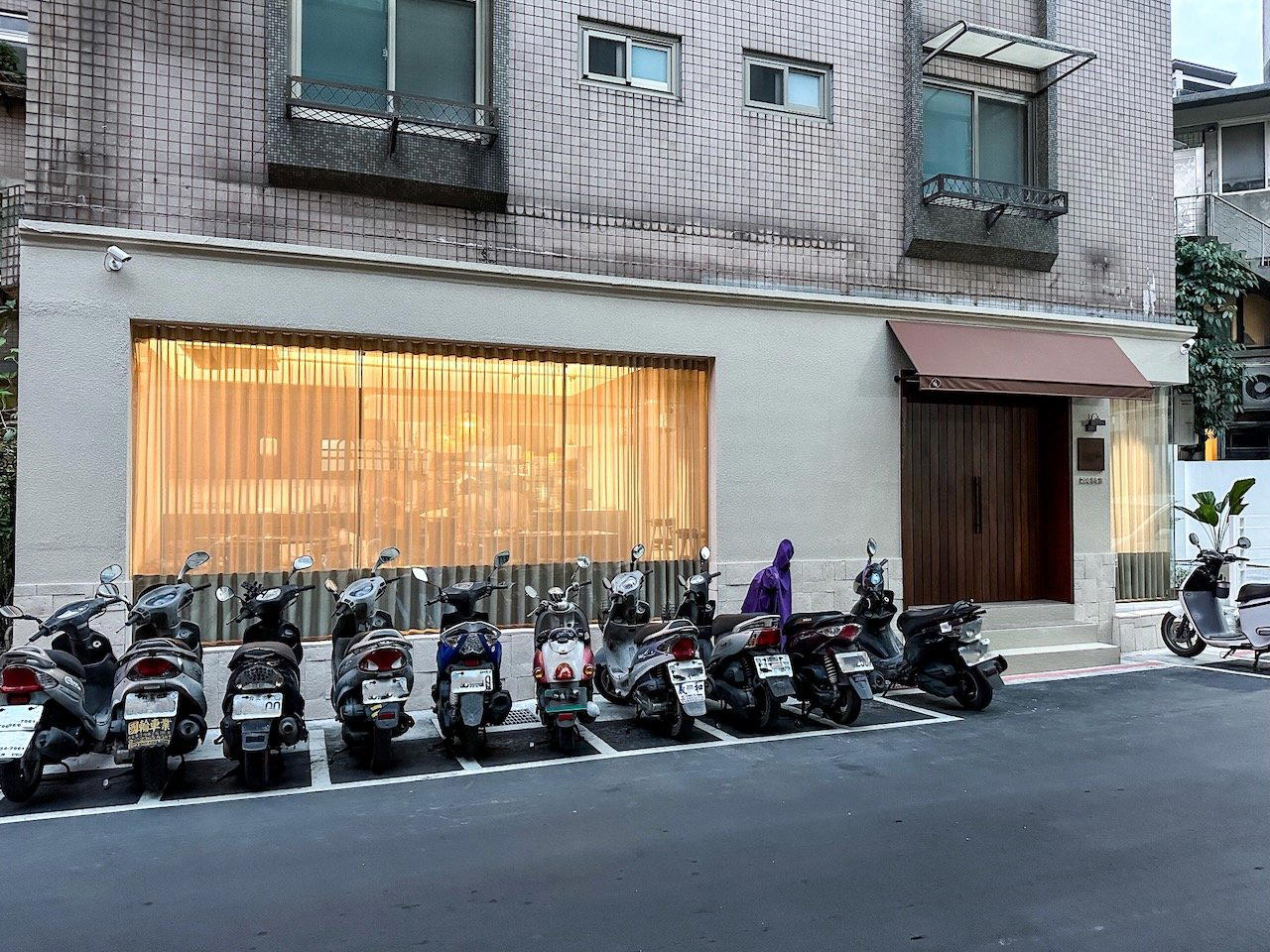
A béton brut villa tucked into a quiet alley in Beipu Township, Bebu has been serving flat rice noodles for over two decades. The third-generation family operation now pairs its signature bantiao with a broader Hakkanese menu, anchored by braised pork with gelatinous, soy-glazed skin. Popular dishes sell out early, so an unhurried morning visit is advisable.
Pearl is the En Primeur Club membership app — saves, bookings, and concierge access live there. Same editors, same standards.
- Address
- 1, Lane 16, Gongyuan Street, Beipu Township
- Phone
- +886 965 609 777
- Website
- beibu.com.tw
- Directions
- Get directions
 Saves & bookings on Pearl
A Quiet Alley, a Long Tradition
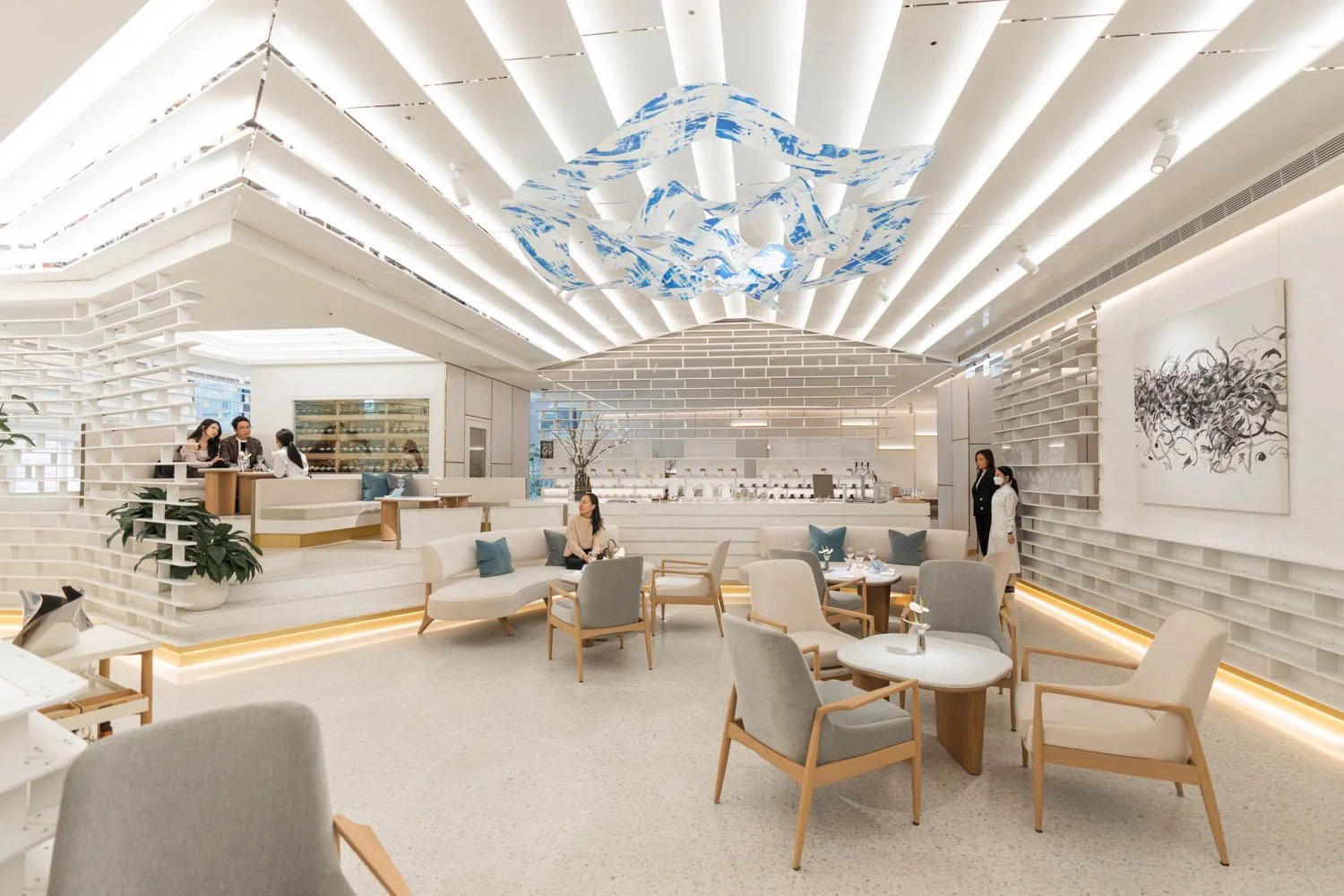
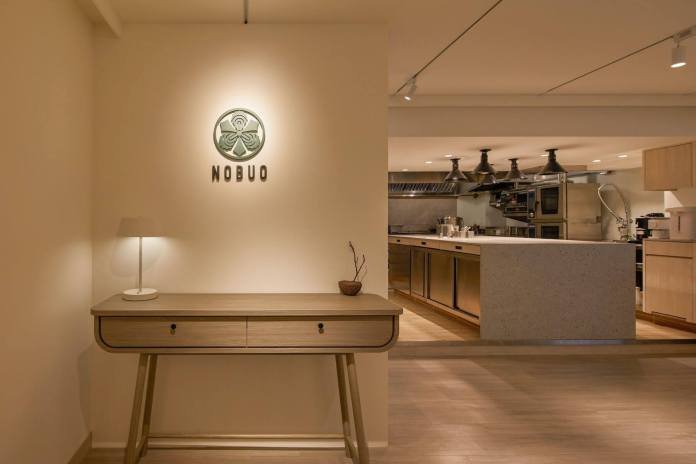
In Beipu Township, where Hsinchu County's urban edge gives way to older streetscapes and market rhythms, certain family-run kitchens carry more culinary history than their modest exteriors suggest. The buildings that house generational food businesses in Taiwan rarely advertise their depth. It is a béton brut villa with raw concrete walls, high ceilings, and a minimalist interior that reads more like an art space than a noodle house. The open kitchen sits in full view, which is a deliberate choice common to a wave of Taiwanese casual-dining renovations where transparency around preparation has become a point of differentiation.
Hsinchu County's food identity is closely tied to Hakka heritage, one of Taiwan's most distinct culinary traditions. Hakka cooking historically prized preservation, fermentation, and slow-cooked fats, a practical response to a mountain-agriculture economy where nothing was wasted and flavour had to be coaxed from humble materials. That tradition informs the logic of a place like Bebu, where braised pork and flat rice noodles occupy the centre of the menu not as nostalgic gestures but as expressions of an ingredient philosophy that prioritises texture and depth over ornamentation.
Bantiao and What It Represents
Bantiao, flat rice noodles, broader and softer than the vermicelli typical of southern Taiwanese cooking, is one of the foods most closely associated with Hakkanese communities in Hsinchu and Miaoli. The noodles are made from rice that is soaked, ground, and pressed into sheets, then cut to width; the quality of the rice and the ratio of water to starch directly affect whether the finished noodle has any structural integrity or collapses into mush. At family operations that have been making bantiao for over twenty years, the muscle memory encoded into that process is not something that transfers easily to commercial production.
Bebu's family has been selling bantiao for more than two decades, and that longevity is especially substantive trust signal a noodle house can carry. In a culinary tradition where technique lives in practice rather than text, twenty years of daily repetition produces a consistency that newer venues operating the same category rarely match. The third-generation owner has extended the menu beyond the noodles, adding a fuller Hakka spread that puts the bantiao in context rather than isolating it as a single-item draw.
The Braised Pork and Why Texture Matters
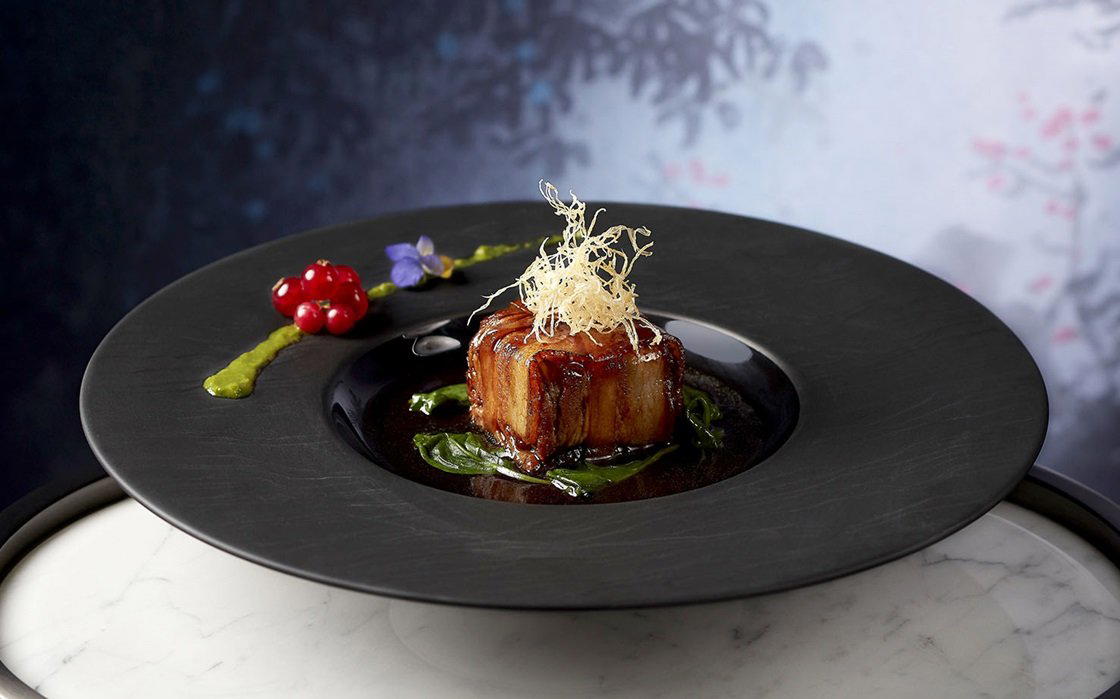
The family favourite, according to the venue's own record, is the braised pork. In Hakka cooking, braised pork preparations typically use belly cuts where the fat-to-meat ratio is high, and the measure of success is how completely the skin transforms during the braise. The target is a gelatinous collapse, where collagen has fully converted and the skin moves with the weight of liquid rather than holding any structural resistance. A savoury-sweet soy braising liquid, reduced and re-applied over time, builds a lacquer-like exterior that carries bitterness, salt, and sugar in sequence.
This is ingredient sourcing at its most deliberate: the quality of the pork determines whether the skin has sufficient collagen to make the transformation possible, and the soy sauce, in Hakka kitchens, often a specific grade selected for fermentation depth rather than sheer salinity, determines the complexity of the finished glaze. At operations that have been refining this dish over generations, the sourcing decisions are deeply embedded in habit. The fact that this dish is named the family favourite, and that popular dishes at Bebu are noted to run out, suggests it is the item with the least tolerance for compromise.
The generational family kitchen occupies a completely separate tier, one where institutional memory rather than innovation is the value proposition.
The Hakkanese Menu in Broader Context
The expansion from bantiao specialist to fuller Hakkanese menu reflects a pattern across Taiwan where second- and third-generation operators are widening their family's signature to hold the table for longer and attract visitors who want a complete meal rather than a single-dish stop. Beipu is a township with enough cultural and culinary draw to support this format: visitors to the area are typically interested in Hakka heritage rather than passing through, which means the audience has appetite for a longer exploration of the cuisine. Comparable operations in the county, Ang Gu, Chuan Fu, Geng Ye Yue Mei, Happy Hwa, and Firoo, each occupy a distinct position in how they engage with local food culture, but the generational bantiao house remains its own category.
The béton brut renovation at Bebu places it in a small subgroup of traditional food businesses that have invested in design without repositioning their food upmarket. The minimalist space signals deliberate aesthetic choices without changing the price register or the menu logic. This matters because it attracts a visitor who might not otherwise enter a more visually conventional Taiwanese noodle house, without alienating the regulars who have been ordering the braised pork for years.
Planning Your Visit
Bebu is at 1, Lane 16, Gongyuan Street, Beipu Township, Hsinchu County. The practical rule here is arrival time: popular dishes run out, and the braised pork is among them. Coming early in the service is less a tip than an operational requirement if the full menu is the objective. The venue's address in a quiet alley means first-time visitors should use a mapping application rather than relying on street signage.
Comparison Snapshot
Comparable venues nearby, for context on price, style, and recognition.
| Venue | Cuisine | Price | Awards | Notes |
|---|---|---|---|---|
| BebuThis venue — the venue you are viewing | Hakka | $$ | Bib Gourmand | Not listed |
| Lao Tou Pai | Traditional Hakkanese | $$ | Michelin Plate | Beipu Township |
| Ko Chia Pen Se | Hakkanese | $$ | Michelin Plate | Beipu District |
| Mud Brick House | Hakka | $$$ | Michelin Plate | Beipu Township |
| Tsou Chi Cai Bao (Zhongzheng Road) | Hakkanese Small Eats | $ | Bib Gourmand | Beipu Township |
| Shou Wu EAT | Traditional Hakka Home-Style Cooking | $$ | Bib Gourmand | Zhubei City |
Recognition history
Dated appearances from independent guides and award organizations, with the underlying list record or original source where available.
Michelin Bib Gourmand
Michelin

At a Glance
- Minimalist
- Modern
- Casual Hangout
- Open Kitchen
Current opening hours
- Monday
- Closed
- Tuesday
- Closed
- Wednesday
- 11 AM–2:30 PM
- Thursday
- 11 AM–2:30 PM
- Friday
- 11 AM–2:30 PM
- Saturday
- 11 AM–5 PM
- Sunday
- 11 AM–5 PM
Hours can change for holidays and private events. Last verified .
Lofty minimalist vibe with open kitchen in a quiet alley villa.