Firoo

At 66 Shengli 6th Street in Zhubei City, Firoo is a wood-fire restaurant where two Taiwanese chefs who met in Australia cook over different native timbers, Formosan koa, longan, lychee, to match each ingredient. The rotating menu focuses on seafood from Taiwan's northeastern coast, served with fermented sauces and rare spices including strawberry gum. It is one of the more distinctive small-format restaurants operating in Hsinchu County.
Pearl is the En Primeur Club membership app — saves, bookings, and concierge access live there. Same editors, same standards.
- Address
- 66 Shengli 6th Street, Zhubei City
- Phone
- +886 3 668 1557
- Website
- firootw.com
- Directions
- Get directions
 Saves & bookings on Pearl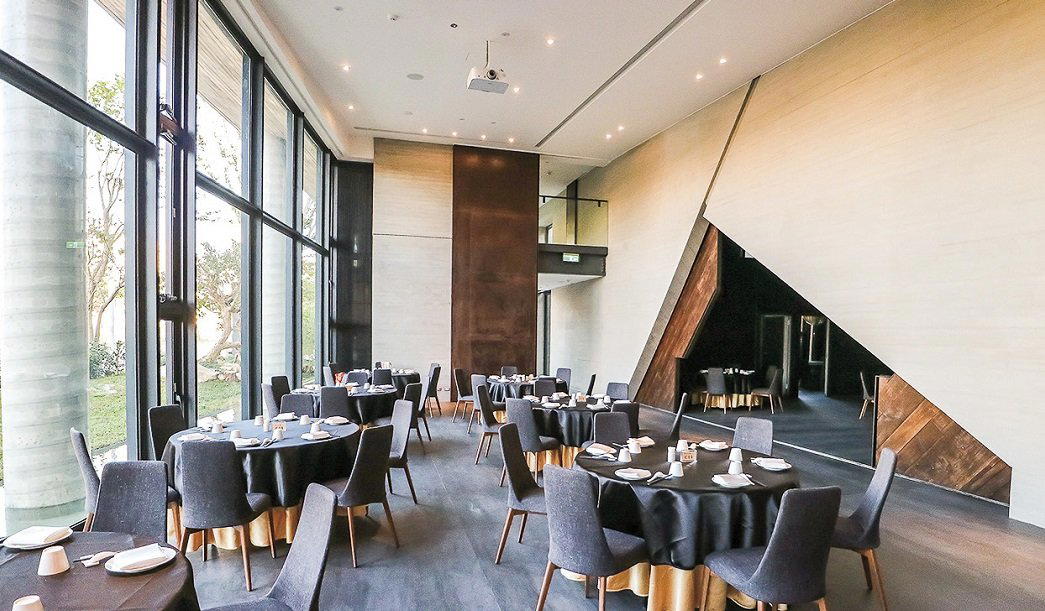
Fire, Wood, and the Pace of the Counter
Limewash walls absorb the warm glow from the open kitchen. A wooden counter runs close enough to the pass that the smell of burning timber arrives before the food does. At Firoo, a contemporary wood-fire restaurant in Zhubei City at 66 Shengli 6th Street, the physical setup is not decorative, it defines the rhythm of the meal. This is a format where the cooking is the theatre, and the counter is the seat closest to it.
Taiwan's small-format restaurant scene has developed a particular confidence over the past decade. Across the island, from logy in Taipei to JL Studio in Taichung and GEN in Kaohsiung, a generation of chefs with international training has returned to work with Taiwanese ingredients through techniques absorbed abroad. Firoo belongs to that same current, though it operates at a remove from those metropolitan centres, in a satellite city more associated with the semiconductor industry than fine dining.
The Logic of the Wood
Wood-fire cooking as a restaurant format carries a certain predictability elsewhere in the world, the hardwood grill, the ember-dusted plate, the deliberate rusticity. Firoo's version is more considered than that. The kitchen selects timber according to what is being cooked: Formosan koa, longan, and lychee wood each produce distinct aromatic profiles when burned, and the chefs apply them with specificity rather than uniformity. This is less a stylistic choice than a technical one, and it places Firoo in the same category of fire-forward cooking that Akame in Wutai Township has pursued through an indigenous ingredients framework.
The broader tradition here connects to something older than modern restaurant culture. Taiwan's northeastern coast has long supplied some of the island's most prized seafood, and cooking over open flame is a direct, low-interference way to handle fish and shellfish whose quality speaks for itself. The smoky depth that wood fire adds becomes a seasoning in its own right, complementing rather than masking the salinity and texture of coastal catch.
The Ritual of the Meal
The rotating menu at Firoo means no two visits are identical, but the structure of the experience remains consistent. Seafood from the northeastern coast anchors most of what arrives at the counter, served alongside fermented sauces and spices that are not standard in Taiwanese restaurant kitchens. Strawberry gum, derived from a native Australian tree and carrying a fruity, floral, slightly tart quality, surfaces here as an accent, a trace of the chefs' time in Australia that does not announce itself loudly but registers in the flavour logic of the dish.
Pacing at a counter like this is worth understanding before you arrive. The meal is not structured around courses you order individually. Dishes come as the kitchen sends them, in a sequence that reflects what is available and what the chefs want to say about it that evening. This format rewards patience and attention over decisiveness. The interaction with the two chefs, visible at the open kitchen throughout, is part of the ritual, not a bonus feature. Questions are answerable in real time, and the counter's proximity makes that conversation natural rather than performative.
This model of dining has become a distinct tier in Taiwan's restaurant culture. At venues like Zhu Xin Ju in Tainan and Volando Urai Spring Spa & Resort in Wulai District, the format disciplines, small capacity, chef-led sequencing, ingredient-sourcing transparency, define the experience as much as any individual dish. Firoo operates within that tier, in a city where the competition set is sparser, which gives it room to occupy the format without the noise of a major urban dining market.
Zhubei's Dining Scene in Context
Hsinchu County is not a dining destination in the conventional travel sense, but Zhubei City's growth as a technology hub has generated enough local demand to support serious restaurants. The dining options in the area range from traditional Taiwanese street-food formats to the newer generation of chef-driven spaces. Within that local spread, Ang Gu, Bebu, Chuan Fu, Geng Ye Yue Mei, and Happy Hwa each represent a different angle on what the county's restaurant scene can offer. Firoo's approach, native timber, coastal seafood, Australian-inflected technique, sits at the more experimental end of that group.
For visitors to the region, the full picture of what Hsinchu County offers across dining, drinking, and accommodation is worth mapping in advance. Our full Hsinchu County restaurants guide covers the broader scene, while separate guides to hotels, bars, wineries, and experiences in Hsinchu County provide context for planning a longer stay.
Planning a Visit
Firoo is located at 66 Shengli 6th Street, Zhubei City, Hsinchu County. The cosy, counter-led format means the seat count is limited, and the rotating menu model suggests the kitchen operates on its own schedule rather than as an open-door service. Given the small capacity, arriving without a reservation is a risk that is unlikely to pay off on a first visit. Current phone and booking details are best confirmed through local platforms or direct contact, as this type of restaurant in Taiwan frequently manages reservations through LINE or local booking services rather than international channels.
The format suits diners who come with time to spare and an appetite for a meal that moves at the kitchen's pace. Those looking for the same quality of fire-led cooking at global reference points, Le Bernardin in New York City represents the precision-over-fire end of the seafood spectrum, while Emeril's in New Orleans anchors a different tradition of fire-and-flavour cooking, will find that Firoo occupies its own position, rooted in Taiwanese coastal ingredients and shaped by a specific cross-cultural formation that does not map neatly onto any other model.
Cuisine Context
Comparable venues nearby, for context on price, style, and recognition.
| Venue | Cuisine | Price | Awards | Notes |
|---|---|---|---|---|
| FirooThis venue — the venue you are viewing | Contemporary Wood-Fire Cooking | $$ | Michelin Plate | Not listed |
| Tang Tsao Yuan | Traditional Taiwanese Noodles & Dumplings | $$ | Bib Gourmand | Zhubei City |
| ZenA | European Contemporary | $$ | Michelin Plate | Zhubei City |
| Piccola Enoteca | Modern Italian Trattoria | $$ | Michelin Plate | Zhubei |
| å ºå ShabuShabu ææ©è¾²å ´ | Traditional Shabu Shabu Hot Pot | $$ | Not listed | Zhubei City |
| SABI | Modern Japanese Creative Cuisine | $$$ | Michelin Plate | Zhubei City |
Recognition history
Dated appearances from independent guides and award organizations, with the underlying list record or original source where available.
Michelin Plate
Michelin
Continue exploring
More in Zhubei City
Restaurants in Zhubei City
Browse all →
Bars in Zhubei City
Browse all →
At a Glance
- Cozy
- Modern
- Intimate
- Date Night
- Special Occasion
- Open Kitchen
- Extensive Wine List
- Sake Program
- Local Sourcing
Current opening hours
- Monday
- Closed
- Tuesday
- Closed
- Wednesday
- 5:30–10 PM
- Thursday
- 5:30–10 PM
- Friday
- 5:30–10 PM
- Saturday
- 5:30–10 PM
- Sunday
- 5:30–10 PM
Hours can change for holidays and private events. Last verified .
Warm light, limewash walls, wooden counter, and open kitchen create a cosy space encouraging interaction with chefs.