Chuan Fu

Chuan Fu in Zhubei City brings Japanese Wagyu yakiniku to Hsinchu County with a focused set-menu format built around premium cuts including chateaubriand and zabuton. Table grilling with condiments like wasabi and garlic chips keeps the experience hands-on and ingredient-forward. A non-beef menu covering seafood, pork, and lamb extends the kitchen's range beyond cattle alone.
Pearl is the En Primeur Club membership app — saves, bookings, and concierge access live there. Same editors, same standards.
- Address
- 80 Guangming 1st Road, Zhubei City
- Phone
- +886 3 558 8057
- Directions
- Get directions
 Saves & bookings on Pearl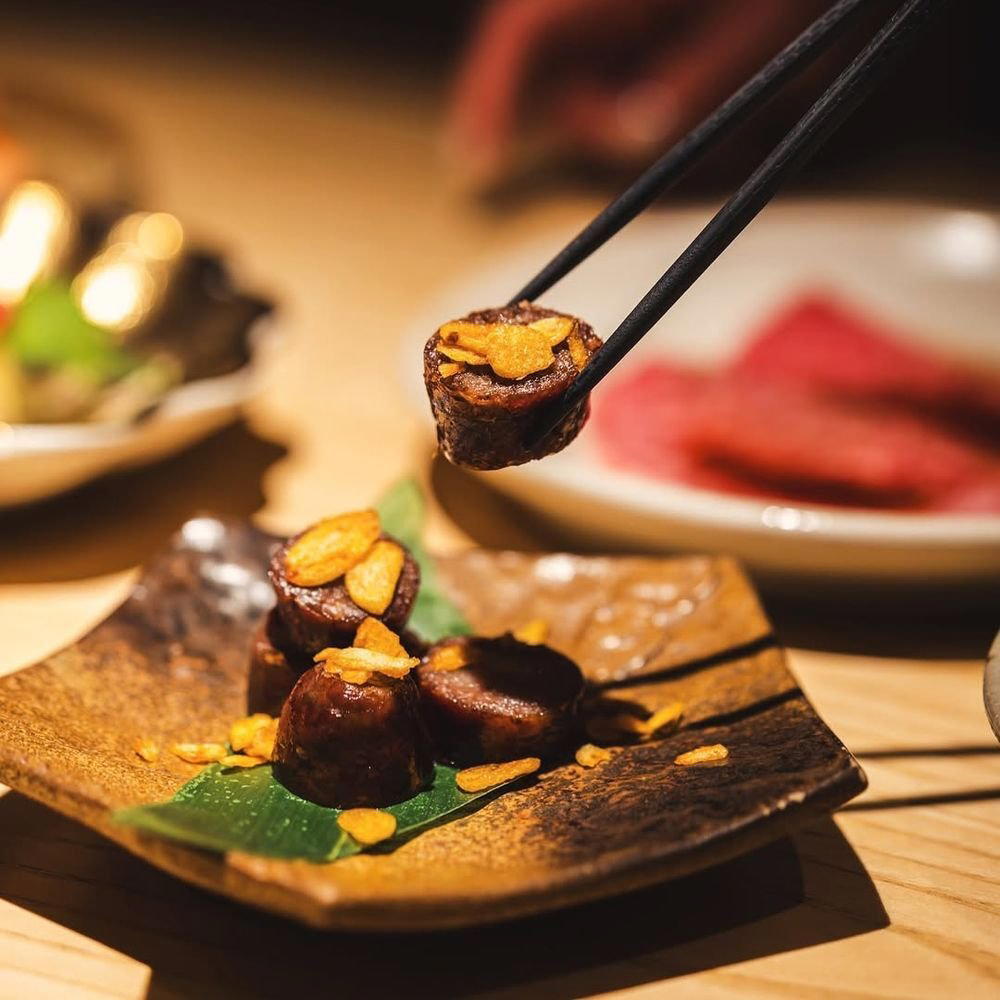
Wagyu Yakiniku in Hsinchu County: The Context
Taiwan's appetite for Japanese beef culture has deepened considerably over the past decade, shifting from the occasional imported cut on a teppanyaki menu to dedicated yakiniku formats where Wagyu provenance, grading, and cut selection are the entire editorial point. The tradition itself traces back to Japan's post-war yakiniku culture, which absorbed Korean barbecue technique and repackaged it through a Japanese lens: higher-grade cattle, table-side grilling as ceremony, and a battery of condiments designed to amplify rather than mask the fat's natural sweetness. In Taiwan, that format found a willing audience among a dining public already fluent in Japanese culinary codes and accustomed to paying for precision sourcing. Hsinchu County, home to a high concentration of technology industry professionals and a corresponding expectation of quality in dining, has become a logical landing point for this tier of restaurant. the Hsinchu County restaurants guide maps how this broader shift is playing out across the area.
What the Menu Is Actually About
Yakiniku's format discipline matters more than it might first appear. Unlike omakase, where the kitchen controls everything, or teppanyaki, where a chef performs the cooking, yakiniku transfers the final execution to the diner. The restaurant's job is sourcing, butchery, sequencing, and condiment calibration. Chuan Fu's approach centres on a set-menu structure, which is the correct format for a beef programme of this ambition: it allows the kitchen to sequence cuts from lighter to richer, pace the grilling, and present rare morsels in a context where their significance registers.
The cuts here include chateaubriand and zabuton, both of which sit at the specific end of the Wagyu vocabulary. Chateaubriand, sourced from the centre of the tenderloin, offers low intramuscular fat relative to other premium cuts, meaning its appeal is textural rather than rich. Zabuton, cut from the chuck, sits at the opposite end: densely marbled, with a fat content that benefits from grilling over direct heat where the exterior chars while the interior stays yielding. These two cuts alone represent a meaningful range of what Japanese Wagyu can do. The addition of Wagyu sausage signals that the kitchen is working whole-animal in spirit, using the programme's off-cuts in a format that keeps the table's energy up between the main event cuts.
Condiment work in yakiniku is underappreciated in most writing about the format. Wasabi and garlic chips are not decorative. Wasabi's sharpness cuts through fat and resets the palate between courses; garlic chips add crunch and a savoury note that directs attention to the beef's umami register rather than its sweetness. A kitchen that has thought carefully about its condiment programme is a kitchen that understands what it is serving.
Beyond the Wagyu: The Non-Beef Menu
The presence of a parallel menu covering seafood, pork, and lamb is worth acknowledging not as a concession but as a structural choice. At yakiniku restaurants operating at this level of curation, the secondary menu often receives as much sourcing attention as the beef programme itself, simply because the kitchen's relationships with suppliers tend to be broad. For tables where dietary preferences are mixed, or where the beef set menu reads as too intensive for a given occasion, the alternative menu allows the format to flex without diluting the core identity.
This also places Chuan Fu in a slightly different peer position from dedicated Wagyu-only counters that refuse the category entirely. The comparison is less about which approach is correct and more about what kind of occasion each format serves. For the Hsinchu County market, versatility has practical value.
Yakiniku in Taiwan's Broader Fine-Dining Picture
Premium yakiniku occupies a distinct position within Taiwan's wider restaurant culture, which has developed considerable depth in tasting-menu formats over recent years. Restaurants like logy in Taipei and JL Studio in Taichung represent the island's engagement with chef-led tasting menus, while destinations such as Akame in Wutai Township show Taiwan's indigenous-ingredient cooking developing its own critical following. GEN in Kaohsiung and Zhu Xin Ju in Tainan round out a national picture of significant range and ambition.
Yakiniku, in this context, functions differently. It is not a chef's platform in the way a tasting counter is. It is a product-forward format where the ingredient carries the argument, and the kitchen's credibility rests on sourcing depth and butchery knowledge rather than creative composition. That is not a lesser form of ambition; it is a different one. At its leading, a Wagyu yakiniku programme teaches a diner more about a single ingredient's range than almost any other format can.
For international reference points, the contrast with Western steakhouse culture is instructive. Where a restaurant like Emeril's in New Orleans or the seafood-forward Le Bernardin in New York City centres the chef's interpretation, yakiniku places the ingredient in an almost unmediated position. The cook's choices appear in the mise en place, not in a sauce or a technique applied after plating. That honesty of format is precisely what draws a certain kind of diner to the category.
Planning a Visit
Chuan Fu is located at 80 Guangming 1st Road in Zhubei City, the urban core of Hsinchu County. Zhubei is well-served by road from Hsinchu's train and HSR stations, and the area around Guangming Road has become a reference point for quality dining in the county. The set-menu format means the kitchen runs on a sequenced programme, so reservations are advisable, particularly for weekend evenings when the Hsinchu technology community's dining density is at its highest.
Price Lens
Comparable venues nearby, for context on price, style, and recognition.
| Venue | Cuisine | Price | Awards | Notes |
|---|---|---|---|---|
| Chuan FuThis venue — the venue you are viewing | Zhubei City, Japanese Yakiniku | $$$ | Michelin Plate | Not listed |
| å ºå ShabuShabu ææ©è¾²å ´ | Not listed | $$ | Not listed | Zhubei City, Traditional Shabu Shabu Hot Pot |
| SABI | Not listed | $$$ | Michelin Plate | Zhubei City, Modern Japanese Creative Cuisine |
| ZenA | Zhubei City, European Contemporary | $$ | Michelin Plate | Not listed |
| Li Yueh | Zhubei City, Japanese Omakase | $$$$ | Michelin Plate | Not listed |
| Sushi An | Zhubei City, Traditional Omakase Sushi | $$$$ | Michelin Plate | Not listed |
Recognition history
Dated appearances from independent guides and award organizations, with the underlying list record or original source where available.
Michelin Plate
Michelin
Continue exploring
More in Zhubei City
Restaurants in Zhubei City
Browse all →
Bars in Zhubei City
Browse all →
At a Glance
- Group Dining
- Special Occasion