

Michelin Plate · Black Pearl 1 Diamond
Our verdict
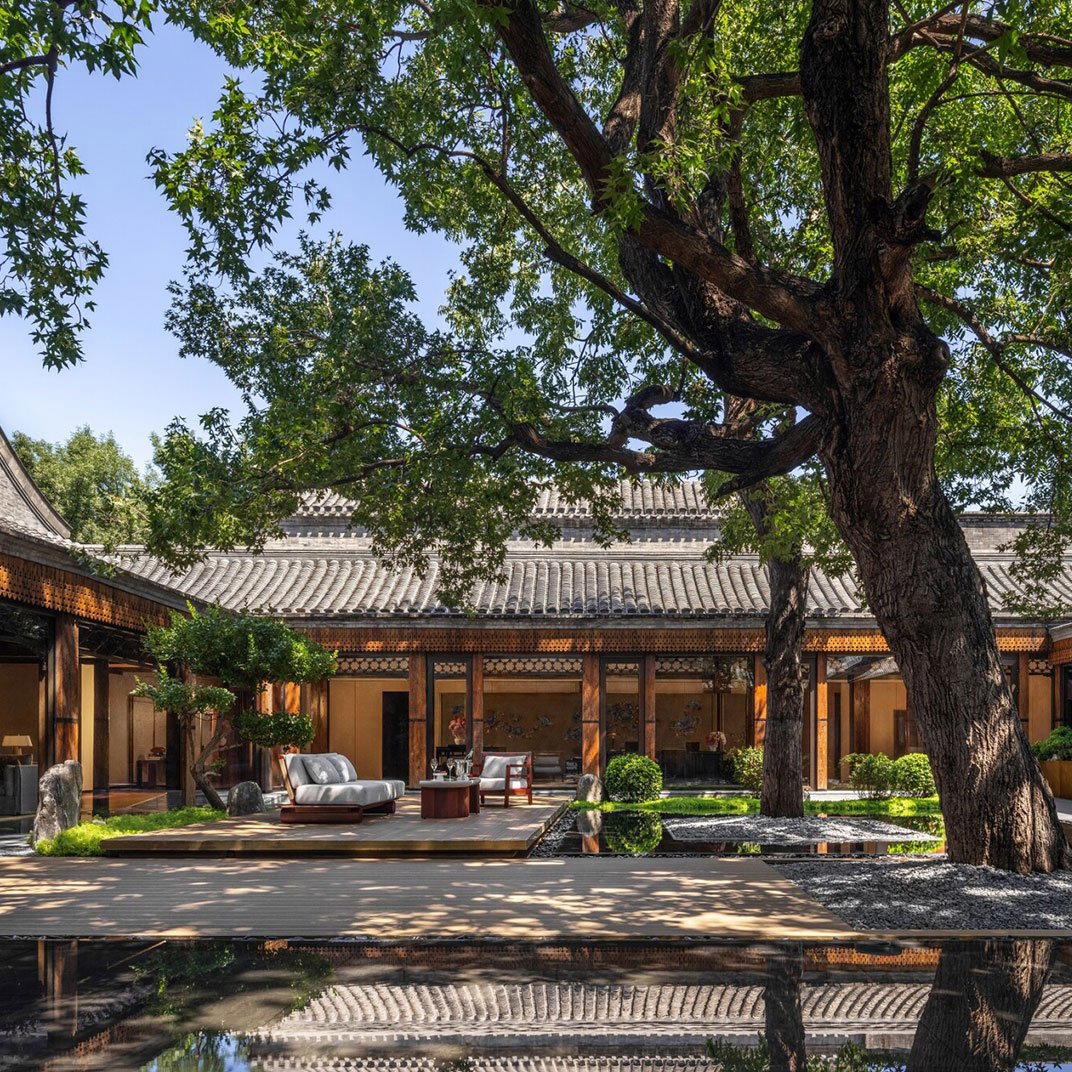
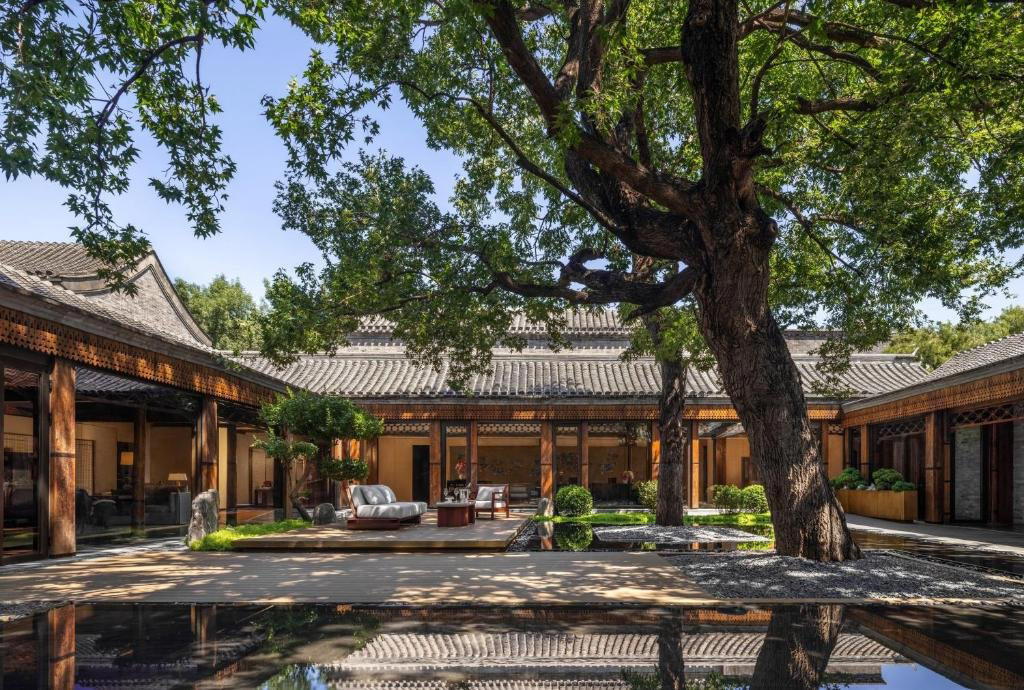
Set within a restored siheyuan in Dongcheng's alley network, Yan Garden by Chef Fei brings refined Chaoshan cooking to one of Beijing's most architecturally distinctive dining rooms. A century-old toon tree anchors the courtyard, and the kitchen's focus on premium hometown ingredients produces dishes like tableside-prepared fish maw and boneless marinated goose web. It occupies a specific niche: regional southern Chinese cuisine in a northern imperial-city setting.

Pearl is the En Primeur Club membership app, where members save venues, book tables and use the concierge.
The menu
What to order
- Fish maw sautéed tableside
- Boneless marinated goose web
- Wok-fried wagyu beef
A Courtyard That Earns Its Setting
Beijing's hutong districts have absorbed many restaurant conversions over the years, but not all of them sit comfortably in the bones of a siheyuan. The traditional courtyard house format, organized around an open central space with rooms flanking each side, was built for a different tempo of life entirely. Yan Garden by Chef Fei, located at No. 12, Caochang 9th Alley in Dongcheng, works with that architecture rather than against it. The restored courtyard places diners beneath a century-old toon tree, a detail that no interior designer can manufacture and no renovation budget can replicate. That tree is the physical anchor of the room, and it sets the register for everything that follows.
The siheyuan format has become a contested design choice in Beijing dining. Some operators strip the structure back to exposed grey brick and call it minimalism. Others layer in imperial-era ornamentation until the original proportions are lost. The approach here is restoration rather than reinvention, a decision that positions Yan Garden inside a smaller cohort of Beijing restaurants where the built environment functions as a genuine argument about place, not just backdrop. For comparison, King's Joy and Lamdre both occupy heritage spaces in the capital with strong design identities, but the presence of a living tree of this age inside a working dining room is a different category of spatial claim.
Chaoshan Cooking in a Northern Capital
The culinary logic of Yan Garden requires some context. Chaoshan cuisine, the cooking tradition of the Chaozhou and Shantou region in eastern Guangdong, has a distinct identity within Chinese gastronomy: it prizes ingredient quality above technique visibility, favours light seasoning that allows premium raw materials to lead, and has a particular relationship with preserved and fermented flavours that distinguishes it from Cantonese cooking more broadly. Chef Fei is a Chaoshan native, and the kitchen sources directly from his hometown region to supply the dining room in Beijing.
That sourcing logic matters in a city where the dominant local tradition runs toward roasted meats, wheat-based dishes, and the heavier flavour profiles of northern Chinese cooking. Yan Garden operates against that grain, and does so with sufficient confidence to price and position itself in the upper tier of the capital's Chinese restaurant market.
Across mainland China, this tier of regional fine dining has expanded considerably over the past decade. Restaurants in Shanghai, Hangzhou, and Chengdu have all developed audiences for Chaoshan and Taizhou cooking in markets far from those cuisines' home territories. Ru Yuan in Hangzhou and Xin Rong Ji in Chengdu operate in the same general current. Beijing arriving at this conversation through Yan Garden is a logical development, not an outlier.
What the Kitchen Sends Out
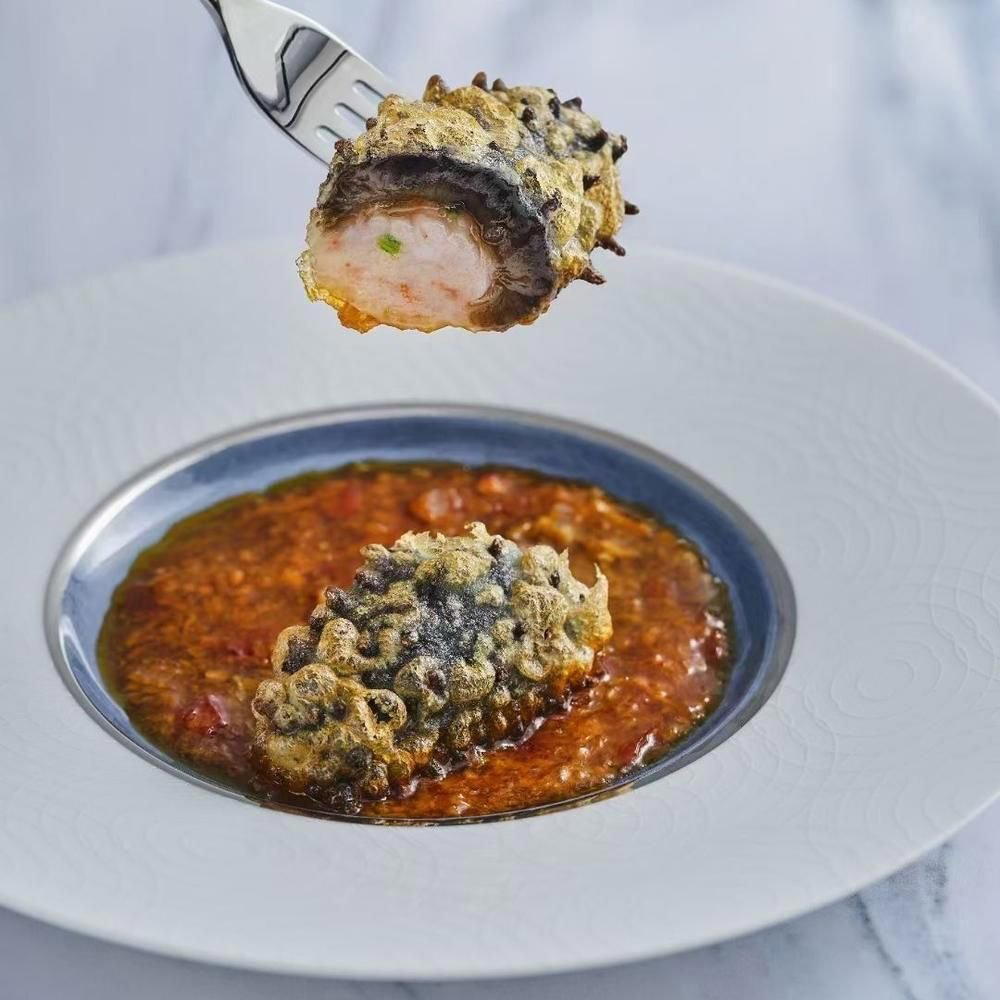
The dish that draws the most attention at Yan Garden is the fish maw prepared tableside: sautéed with dried shrimps, crabmeat, chopped chillies, dried radish, and XO sauce. The tableside format is a deliberate choice in a room of this character. It introduces a moment of activity into an otherwise composed environment, and it signals that the kitchen wants the diner to observe the assembly of flavour rather than simply receive a finished plate. Fish maw, prized in Chaoshan cooking for its gelatinous texture and its capacity to absorb surrounding flavours without overpowering them, is a high-value ingredient that reads as a deliberate quality signal to the informed diner.
The boneless marinated goose web is the other dish most associated with the kitchen here. Goose is foundational to Chaoshan cooking in a way that has no real parallel in northern Chinese cuisine, and preparing the web specifically, removing the bones while preserving the structural integrity of the skin and cartilage, is the kind of labour-intensive work that separates a kitchen committed to technique from one simply importing regional ingredients. The marination approach is where Chaoshan craft shows most clearly: slow, layered seasoning that penetrates without masking.
For those building comparisons with other refined Chinese kitchens working in a similar register elsewhere in the region, Chef Tam's Seasons in Macau, Imperial Treasure Fine Chinese Cuisine in Guangzhou, and Dai Yuet Heen in Nanjing each operate in different provincial contexts but share the same underlying argument: that southern Chinese cooking traditions, handled with precision and premium sourcing, constitute a serious fine-dining proposition. 102 House in Shanghai makes a related case in a design-forward setting.
Where It Sits in Beijing's Dining Picture
Beijing's premium Chinese restaurant tier has consolidated around a handful of formats: imperial-inflected tasting menus, northern regional specialists, and the growing category of refined southern-origin cuisines served in heritage spaces. Yan Garden occupies a specific position in that last group, with a spatial context and a regional cooking tradition that are both genuinely specific rather than assembled from market-tested components.
The Dongcheng address places the restaurant in the older eastern core of the city, accessible from the hutong network and associated with the kind of Beijing dining that rewards some navigational effort. Getting to Caochang 9th Alley requires entering alley territory rather than pulling up to a tower lobby or a mall atrium, which itself communicates something about the intended dining experience. That separation from the high-volume commercial dining circuits of Sanlitun or the CBD is a feature of the address, not a limitation.
For a broader picture of where Yan Garden sits among Beijing's options, the full Beijing restaurants guide maps the capital's dining scene across cuisines and price points. The Beijing hotels guide, bars guide, wineries guide, and experiences guide fill out the surrounding context for a stay in the capital.
Planning a Visit
Given the restaurant's positioning at the upper tier of Beijing's regional Chinese dining market and the alley setting that limits walk-in discovery, advance reservation is advisable. The courtyard dining format means that weather and season affect the experience differently than an enclosed room would: the toon tree and open sky are part of the proposition, and that element shifts across seasons. Diners should factor this into timing, particularly if outdoor seating in the restored courtyard is part of their interest. Contact should be made directly through reservation channels to confirm current availability and any seasonal adjustments to seating arrangements.
Frequently asked questions
What's the address for Yan Garden by Chef Fei?
Yan Garden by Chef Fei is located at No. 12, Caochang 9th Alley, Dongcheng, Beijing.
Is Yan Garden by Chef Fei award-winning?
Yan Garden by Chef Fei has received recognition including: Tucked away in an alley, this restaurant converted from a historical siheyuan has a restored courtyard where customers can dine under a century-old toon tree. A Chaoshan native, Chef Fei sources the best ingredients from his hometown to tur….
What should I order at Yan Garden by Chef Fei?
The fish maw sautéed tableside with dried shrimps, crabmeat, chopped chillies, dried radish, and XO sauce is the kitchen's most discussed preparation. The boneless marinated goose web is the other dish worth prioritising. Both reflect the Chaoshan sourcing that defines the menu.
Do I need a reservation for Yan Garden by Chef Fei?
Advance booking is strongly advised. The restaurant occupies a restored siheyuan in Caochang 9th Alley, Dongcheng, where courtyard seating is fixed and the alley setting limits walk-in traffic. At this tier of Beijing's regional Chinese dining market, same-day availability at peak times is unlikely.
What's the signature at Yan Garden by Chef Fei?
The tableside fish maw is the defining preparation: sautéed with dried shrimps, crabmeat, chopped chillies, dried radish, and XO sauce for a dish built on Chaoshan technique and ingredient sourcing from the chef's hometown. The century-old toon tree in the restored courtyard adds a physical counterpart to that sense of provenance.
Recognition, Side-by-Side
Comparable venues nearby, for context on price, style, and recognition.
| Venue | Cuisine | Price | Awards | Notes |
|---|---|---|---|---|
| Yan Garden by Chef FeiThis venue (the venue you are viewing) | Upscale Cantonese and Chaozhou | Not listed | Michelin Plate · Black Pearl 1 Diamond | Not listed |
| Top Feast (East Chang'an Street) | Imperial Beijing Fine Dining | Not listed | Michelin Plate | Zhengyilu |
| Duck de Chine | Modern Peking Duck | $50–100 | Michelin Plate | Chaoyangmen |
| Huai Xiang Guo Se | Traditional Huaiyang Fine Dining | $100–150 | Michelin Plate · Black Pearl 1 Diamond | Beixinqiao |
| Chu Shan Si Ji | Authentic Hubei Cuisine | Not listed | Michelin Plate · Black Pearl 1 Diamond | Chuiyangliu |
| Pure Lotus | Exquisite Modern Vegetarian Chinese | $50–100 | Not listed | Tuanjiehu |
Recognition history
Dated appearances from independent guides and award organizations, with the underlying list record or original source where available.
Michelin Plate
Michelin · 2026 Michelin Plate
Black Pearl 1 Diamond
Black Pearl
Continue exploring
More in Beijing
Restaurants in Beijing
All restaurants in Beijing →
Bars in Beijing
All bars in Beijing →


Details
- Elegant
- Quiet
- Intimate
- Sophisticated
- Special Occasion
- Business Dinner
- Garden
- Private Dining
- Hotel Restaurant
- Sake Program
- Garden
- A La Carte
- Tasting Menu
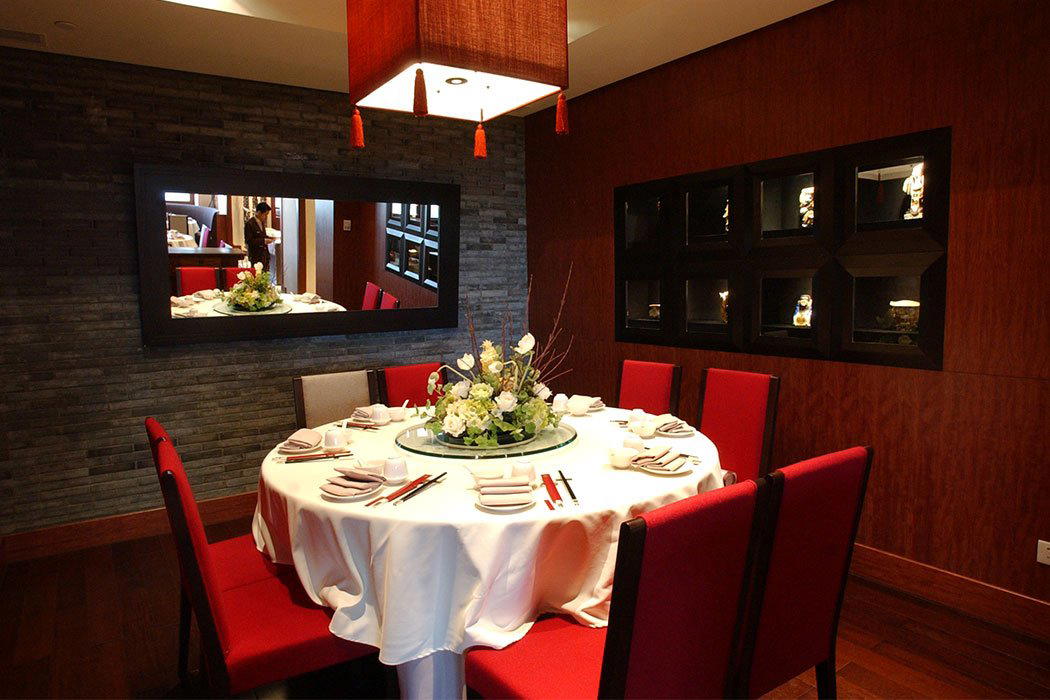
Tranquil courtyard shaded by ancient trees or elegant indoor room with deep burgundy walls, orchids, and traditional music evoking old China.