BIG CHILL INTERNATIONAL FOOD COURT - Khu ẩm thực Mũi Né
Our verdict
Where Mui Ne's Food Court Culture Meets the Coast Along Huynh Thuc Khang street in Ham Tien Ward, the open-air food court format is one of the more practical solutions to Mui Ne's position as a beach resort strip rather than a compact urban...

Pearl is the En Primeur Club membership app, where members save venues, book tables and use the concierge.
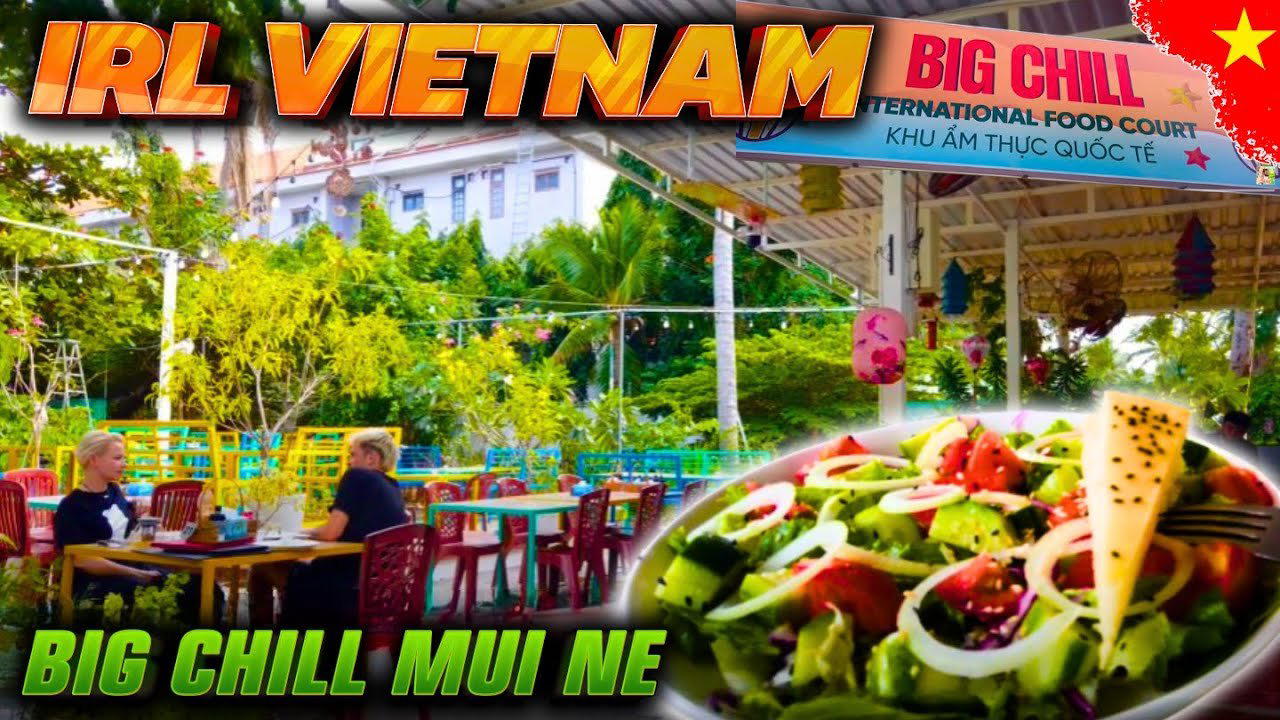
Where Mui Ne's Food Court Culture Meets the Coast
Along Huynh Thuc Khang street in Ham Tien Ward, the open-air food court format is one of the more practical solutions to Mui Ne's position as a beach resort strip rather than a compact urban dining district. Visitors spread across a long coastal road, and the international food court model addresses that dispersal by consolidating variety under one roof, or more accurately, one open compound. BIG CHILL INTERNATIONAL FOOD COURT sits at address 16 Huynh Thuc Khang in this stretch, positioned to serve the mixed population of Russian, European, and domestic Vietnamese tourists that has defined Mui Ne's visitor profile for well over a decade.
The food court format itself carries particular logic in a resort corridor like Mui Ne. Unlike Hoi An's dense old quarter, where a visitor might walk between Vietnamese, Japanese, and French options within a few blocks, Mui Ne's geography rewards consolidation. The international food court as a category occupies a different tier from the standalone restaurants along the strip, trading the focused identity of a single-cuisine kitchen for the convenience of a multi-vendor layout. That trade-off suits families, groups with mixed preferences, and travellers who want a casual evening without committing to a single menu. For context on how Phan Thiet's standalone restaurant scene operates, our full Phan Thiao T restaurants guide maps the broader options across the city.
The Sourcing Logic of Resort-Strip Cooking
The ingredient sourcing question in any Mui Ne dining context starts with geography. Binh Thuan province sits between the sea and inland agricultural zones, which means the theoretical supply chain for a venue in Ham Tien Ward runs through fresh seafood from the South China Sea fishing fleets and produce from the region's farms. In practice, the international food court format applies that local supply differently from a tasting-menu kitchen. Where a restaurant like La Maison 1888 in Da Nang or Gia in Hanoi builds a menu around provenance-specific sourcing, the food court model prioritises accessibility and range. The sourcing decisions are less about single-origin credentials and more about keeping a diverse menu executable at volume, which is a different discipline but not necessarily a lesser one.
Coastal proximity does matter even at the casual end. Venues operating along the Mui Ne strip have direct access to the day's catch in a way that restaurants in landlocked resort zones do not. The fishing villages north of Phan Thiet have supplied the local dining economy for generations, and that supply chain feeds across the full range of the resort strip's food options, from sit-down seafood restaurants to multi-stall food courts. Compare that supply advantage to the position of a restaurant like Saffron in Hue City, which draws on a different regional pantry centred on Hue's market garden tradition, or Cargo Club Cafe and Restaurant in Hoi An, which operates within Hoi An's dense tourist-facing culinary zone. Each geography shapes what gets cooked and how.
Phan Thiet's Dining Tier Structure
Phan Thiet's restaurant scene splits fairly cleanly into tiers. At the upper end, standalone venues with focused menus attract visitors willing to plan ahead and spend more deliberately. The middle tier is dominated by casual Vietnamese restaurants and beach-facing cafes. The food court format occupies a pragmatic tier that prioritises coverage over depth, which is a reasonable position in a resort town where not every meal needs to be a considered choice. Local options like Cơm Niêu Panda represent the Vietnamese casual end of that middle tier, while Pardis Restaurant and EI Cafe International Vegan/Vegetarian address more specific dietary and cultural preferences within the same loose neighbourhood.
The international food court model has its clearest precedent in Southeast Asian tourist corridors more broadly. Cities like Phuket, Siem Reap, and Nha Trang have all developed similar formats to address the challenge of mixed nationality visitor pools wanting familiar options alongside local ones. Mui Ne, with its historically strong Russian visitor base alongside European and domestic tourism, has the same structural demand. The food court answers that demand by design rather than by accident.
Planning a Visit
BIG CHILL INTERNATIONAL FOOD COURT is located at 16 Huynh Thuc Khang in Ham Tien Ward, Phan Thiet city, Binh Thuan province. The address places it in the central part of the Mui Ne resort strip, walkable from the main cluster of hotels in Ham Tien Ward. Given the food court format and the resort strip's reliance on motorbike taxis and rental scooters, getting there from most Mui Ne accommodations is a short ride. The format does not typically require advance reservations in the way that a tasting-menu restaurant would, but peak season periods, roughly December through March when the wind conditions draw kite surfers and the European winter escape crowd, can see resort-strip venues at capacity in the evenings.
For those spending time in Vietnam beyond Mui Ne, the dining register shifts considerably at venues like Akuna in Ho Chi Minh City or Le Pont Club in Hai Phong, both of which operate in more urban contexts with different expectations around format and sourcing. Further along the coast, Bau Troi Do in Son Tra and Mi Quang Ba Vi in Thanh Khe represent the regional Vietnamese speciality end of the spectrum, anchored in specific local dishes rather than international variety. For island dining, Phuong Nhung Restaurant in Cat Hai and Duyên Anh Restaurant in Phu Vang both show how coastal Vietnamese dining operates in less tourist-concentrated settings. At the furthest end of the format spectrum, Le Bernardin in New York City and Lazy Bear in San Francisco represent how the sourcing conversation plays out at the highest commitment tier, where provenance is the primary editorial point of the menu itself.
Closer to home, Nhà hàng Madame Lân in Hai Chau and Phước Hòa 5 in Cam Le round out the regional picture of how Vietnamese dining formats vary across central and southern provinces.
Frequently asked questions
Does BIG CHILL INTERNATIONAL FOOD COURT - Khu ẩm thực Mũi Né work for a family meal?
The food court format at 16 Huynh Thuc Khang is structured for exactly this situation. Groups with conflicting preferences, children wanting familiar dishes alongside adults seeking local Vietnamese options, can each order independently from different stalls under one roof. In a resort corridor as spread out as Mui Ne's Ham Tien Ward, consolidating a group meal into one address removes the logistical friction of finding a single-menu restaurant that satisfies everyone.
What kind of setting is BIG CHILL INTERNATIONAL FOOD COURT - Khu ẩm thực Mũi Né?
It operates in the open-air food court format common to resort-strip dining across Southeast Asian beach destinations. The venue sits on Huynh Thuc Khang street in Ham Tien Ward, Phan Thiet, placing it within the main hotel and beach access corridor of Mui Ne. Expect a casual, shared-table environment rather than a sit-down restaurant experience.
How does BIG CHILL INTERNATIONAL FOOD COURT compare to street food options elsewhere in Phan Thiet?
Phan Thiet's street food scene, particularly around the city centre markets, skews toward locally focused Vietnamese cooking, bánh canh chả cá and bún cá are staples of the province. Big Chill on Huynh Thuc Khang in Ham Tien Ward serves a different function: it consolidates multiple cuisine types in one covered venue for a resort-facing audience, rather than competing on regional Vietnamese authenticity. Visitors prioritising Binh Thuan's local food traditions would be better served heading toward Phan Thiet's market district rather than the resort corridor.
What's the must-try dish at BIG CHILL INTERNATIONAL FOOD COURT - Khu ẩm thực Mũi Né?
In the food court format, the practical editorial advice is to scan what individual stalls are actively cooking rather than ordering from a printed menu, output quality in multi-vendor settings typically correlates with turnover at each station. Binh Thuan province's coastal position means seafood sourcing is a reasonable starting point for any stall that lists it.
Where exactly is BIG CHILL INTERNATIONAL FOOD COURT - Khu ẩm thực Mũi Né?
BIG CHILL INTERNATIONAL FOOD COURT - Khu ẩm thực Mũi Né is located at 16 Huỳnh Thúc Kháng, Phường Hàm Tiến, Thành phố Phan Thiết, Bình Thuận 801095, Vietnam, Phan Thiao T.
Should I book BIG CHILL INTERNATIONAL FOOD COURT - Khu ẩm thực Mũi Né in advance?
Food courts in this format do not typically operate on a reservation system. During Mui Ne's peak season, roughly December through March, demand along Huynh Thuc Khang street increases noticeably as hotel occupancy along the Ham Tien Ward corridor fills up, so arriving early in the evening is a more reliable strategy than expecting a table to be held.
What makes BIG CHILL INTERNATIONAL FOOD COURT - Khu ẩm thực Mũi Né worth seeking out?
Its value is structural: Mui Ne's resort strip extends over several kilometres, and finding a single venue that accommodates mixed dietary preferences without requiring a taxi to a different part of Ham Tien Ward is a practical advantage. The address at 16 Huynh Thuc Khang positions it within walking distance of a dense cluster of hotels, which reduces the coordination required for larger groups. It is not a destination for focused Vietnamese dining, but as a logistical solution for resort-corridor eating, it fills that role directly.
Fast Comparison
| Venue | Cuisine | Price |
|---|---|---|
| BIG CHILL INTERNATIONAL FOOD COURT - Khu ẩm thực Mũi NéThis venue (the venue you are viewing) | International Food Court | $1–10 |
| Cơm Niêu Panda | Traditional Vietnamese Clay Pot Rice (Cơm Niêu) | $1–10 |
| EI Cafe International Vegan/Vegetarian | International Vegan/Vegetarian | Not listed |
| Pardis Restaurant | Vietnamese | Not listed |
Continue exploring
More in Phan Thiet
Details
- Lively
- Trendy
- Energetic
- Casual Hangout
- Group Dining
- Family
- Terrace
- Open Kitchen
- Beer Program
- A La Carte
- Small Plates
- Beer
- Wine
- Vegetarian Friendly
- Vegan Options
Current opening hours
- Monday
- 7 AM–10 PM
- Tuesday
- 7 AM–10 PM
- Wednesday
- 7 AM–10 PM
- Thursday
- 7 AM–10 PM
- Friday
- 7 AM–10 PM
- Saturday
- 7 AM–10 PM
- Sunday
- 7 AM–10 PM
Hours can change for holidays and private events. Hours as of .
Lively al fresco atmosphere with lively colors, comfy sofas, tropical garden, and peaceful waterfall.