



Michelin Plate · Star Wine List · Tatler Best Vietnam: Best Service
Our verdict
Chapter occupies a converted shophouse on Chân Cầm Street in Hoàn Kiếm, where a rusted steel façade gives way to a monochrome interior hung with contemporary art. Chef Quang Dung frames Vietnamese culinary tradition through a Nordic-inflected lens, with charcoal grilling as the kitchen's central technique. Consecutive Michelin Plate recognition in 2024 and 2025 places it among Hanoi's most closely watched contemporary dining rooms.

Pearl is the En Primeur Club membership app — saves, bookings, and concierge access live there. Same editors, same standards.
- Address
- 12C P. Chân Cầm, Hàng Trống, Hoàn Kiếm, Hà Nội, Vietnam
- Phone
- +84 333 201 221
- Hours
- Mon–Sat 6–11 PMSun Closed
- Website
- chapterhanoi.com
- Directions
- Get directions
- Booking
- Book on TableCheck
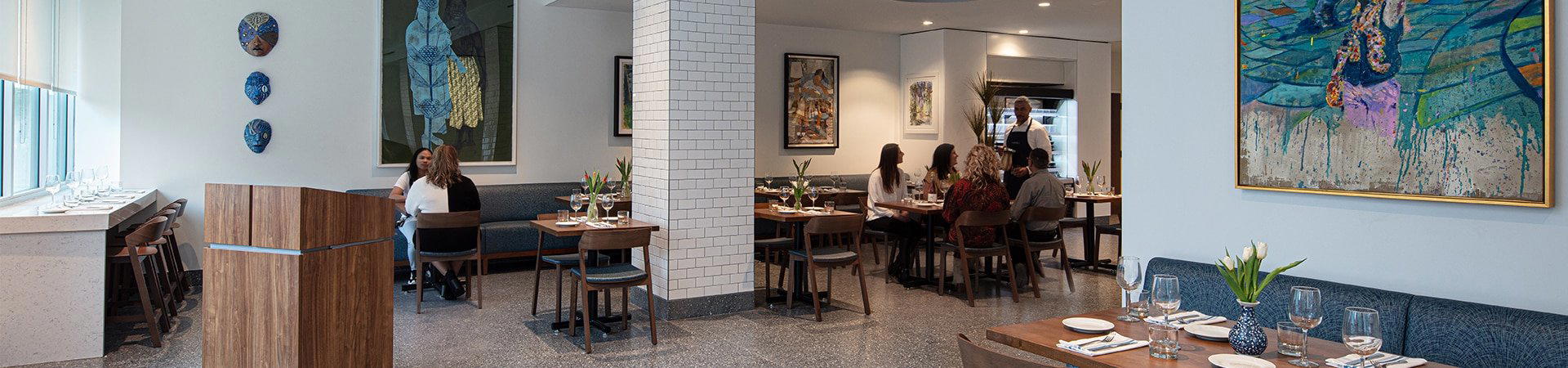
Rust, Steel, and Fire: What Chapter's Architecture Tells You Before You Sit Down
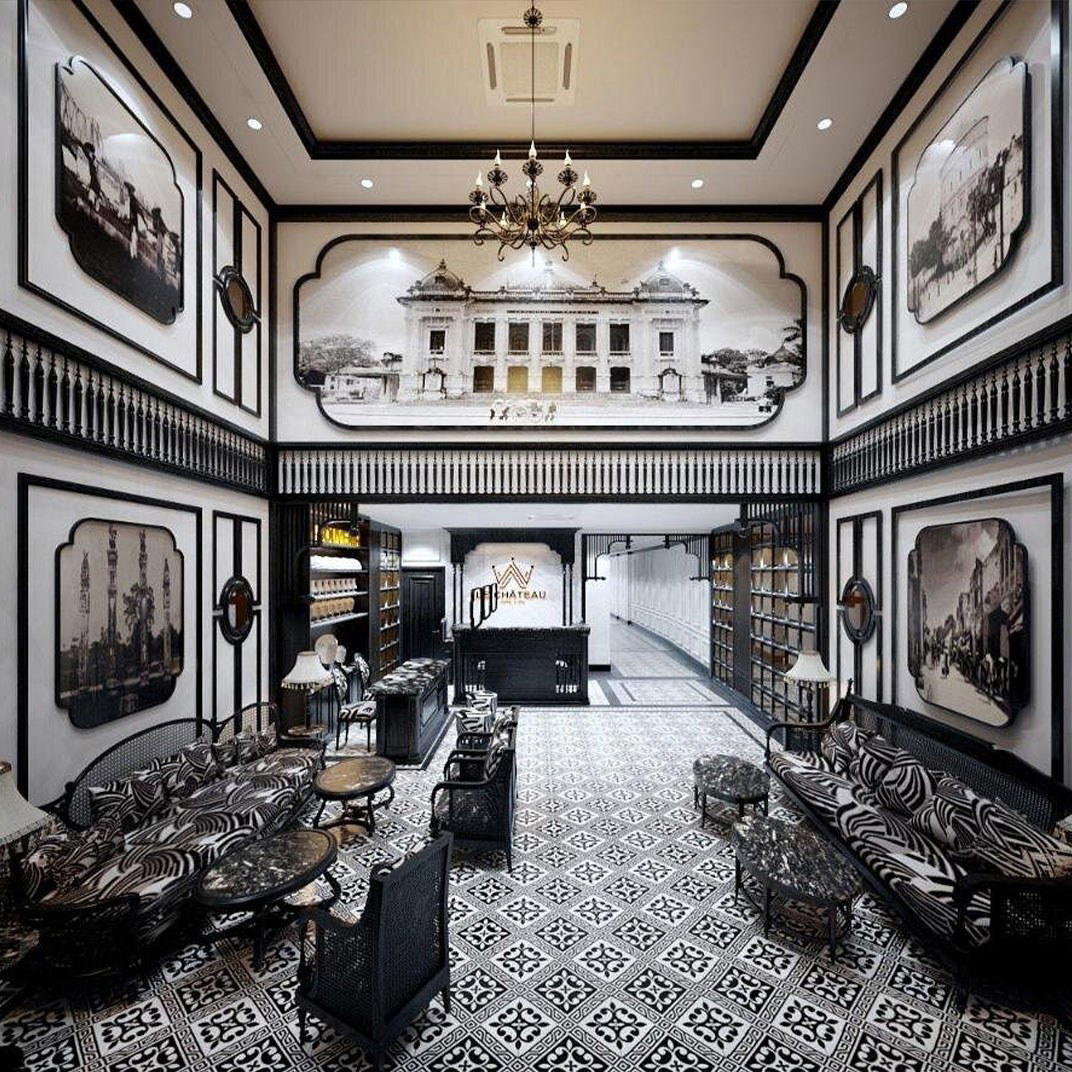
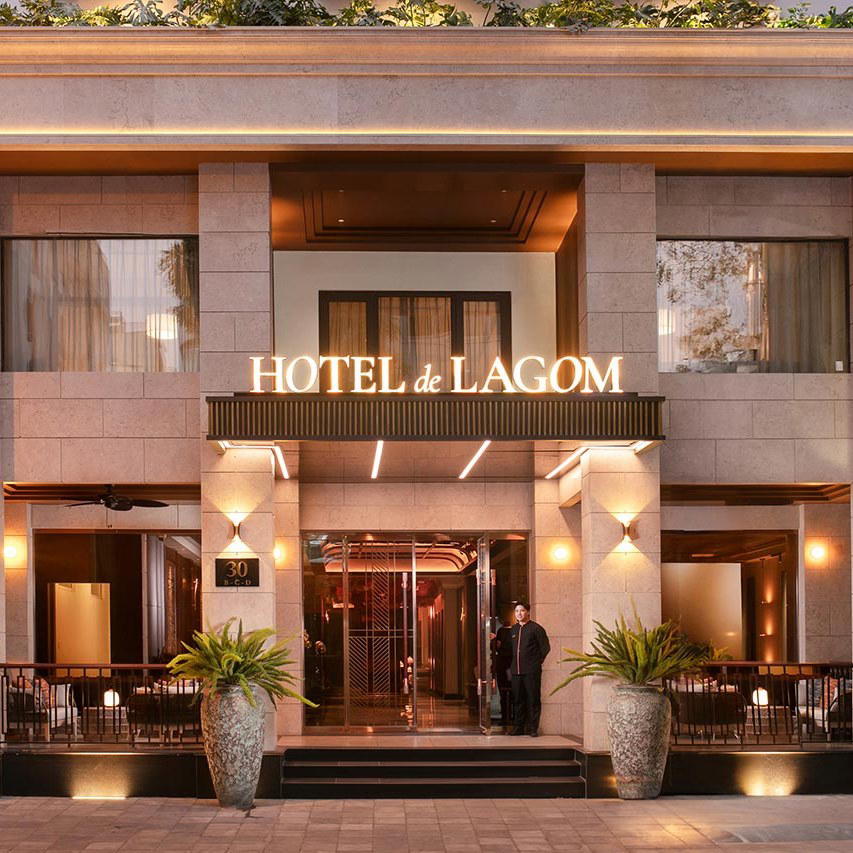
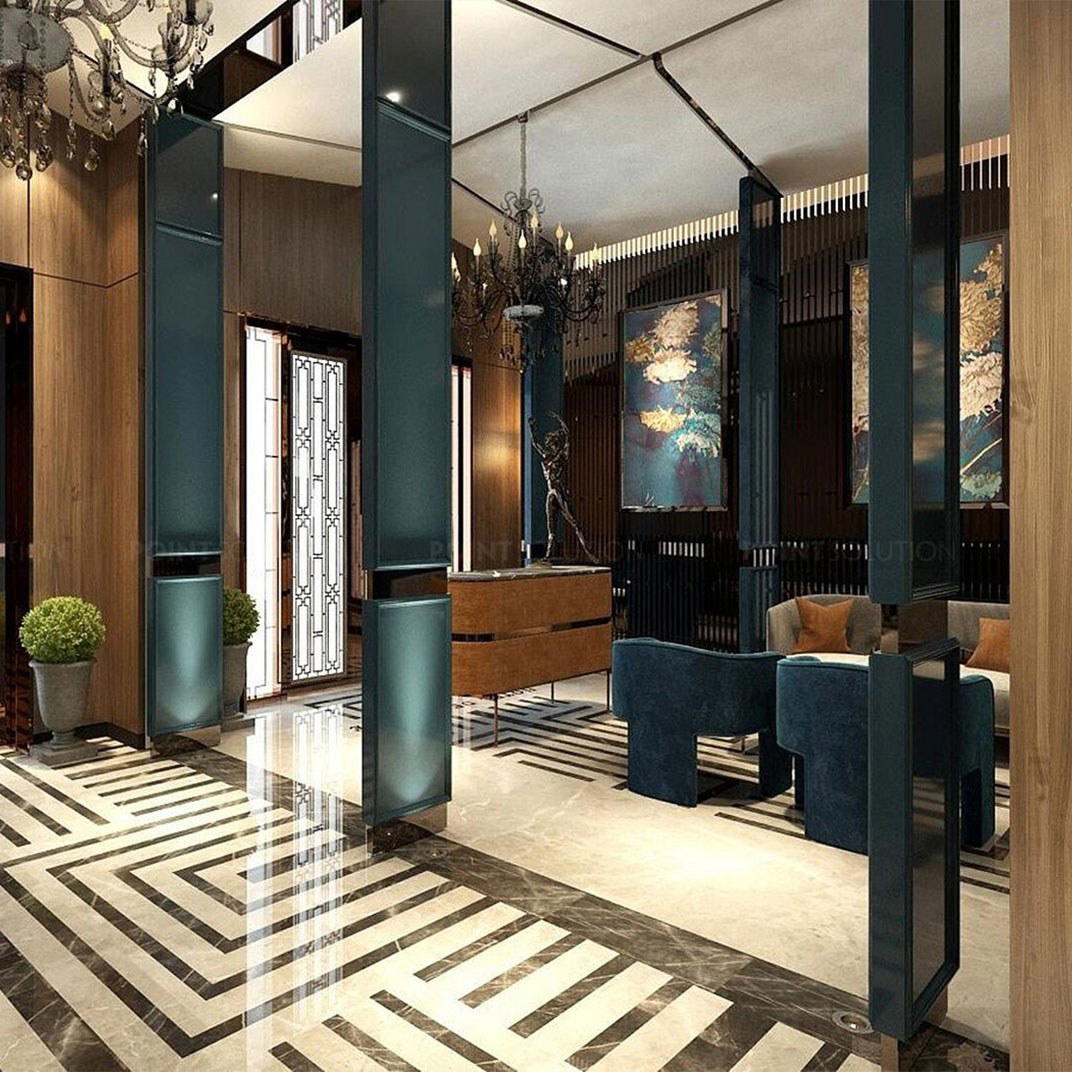
On Chân Cầm Street in Hoàn Kiếm, the approach to Chapter is a deliberate act of contrast. The façade is oxidised steel, a material choice that reads as industrial rather than ornamental, and it signals something about the restaurant's editorial position before the door opens. Inside, the palette shifts to monochrome: clean surfaces, considered lighting, and contemporary art pieces placed where a less confident room would hang decorative textiles. The environment does not romanticise Hanoi's colonial past or its street-food heritage. It is built for a different conversation.
This physical grammar matters because it predicts the menu logic. Restaurants in Hanoi's premium tier have broadly split between two approaches: those that lean into nostalgia and warmth, recreating the textures of a Vietnamese grandmother's kitchen at fine-dining price points, and those that treat Vietnamese ingredients and tradition as source material for something more architecturally considered. Chapter belongs firmly to the second category. The rusted exterior is not decoration; it is a position statement.
The Menu as a Structural Argument
The editorial angle that defines Chapter's identity is menu architecture. Chef Quang Dung, working at the intersection of Nordic technique and Vietnamese tradition, has structured the menu in a way that the divisions themselves communicate intent. The menu is divided into sections that move through textures, temperatures, and cooking methods rather than following the conventional starter-main-dessert scaffold that most Western-influenced restaurants in the region still default to.
Charcoal grilling is the kitchen's central technique and organisational anchor. In Vietnamese cooking, fire has always been foundational, from the grilled pork of bún chả to the char that defines bánh mì thịt nướng. What Chapter does differently is treat the grill not as a flavour addition but as a structural element around which the entire menu is designed. The Nordic influence here is less about Scandinavian ingredients and more about restraint in plating and a preference for allowing a single cooking method to do the expressive work across multiple courses. Restaurants that follow this logic, where technique is both medium and message, are relatively rare in Southeast Asia. You find this thinking more commonly at counters like Atomix in New York City, where the menu is conceived as a sequence of arguments rather than a list of dishes.
The menu's division into distinct sections, each showcasing different flavors and textures, also functions as a guide to pacing. Vietnamese contemporary dining has historically struggled with this: the communal-sharing tradition that makes street-food culture so alive can work against the kind of linear narrative that a tasting format requires. Chapter's structure attempts to resolve that tension by maintaining Vietnamese flavour profiles and ingredients while imposing a sequencing discipline borrowed from European tasting formats. Whether that resolution feels natural or engineered will depend on the diner, but the ambition is readable in the menu's layout.
Where Chapter Sits in Hanoi's Contemporary Scene
Hanoi's high-end Vietnamese contemporary tier has grown considerably more competitive over the past three years. Gia, also priced at the top of the market, operates in the same broad category and draws a similar audience: local professionals, international visitors with specific dining itineraries, and food media. The competitive set is small but active, and Michelin's attention to Hanoi since the guide's Vietnam expansion has sharpened the stakes. Chapter's consecutive Michelin Plate recognition in 2024 and 2025 places it inside the guide's recommended tier without yet reaching star level, a positioning shared by several ambitious rooms in the city that are building credibility through consistency rather than spectacle.
At the ₫₫₫₫ price tier, Chapter is priced alongside Hibana by Koki, Hanoi's teppanyaki counter, which also operates in the leading price bracket but addresses an entirely different audience and technique set. For diners who want to compare Vietnamese contemporary cooking at different price points and formats, Tầm Vị offers a more traditional Vietnamese approach at a significantly lower price, and 1946 Cua Bac sits at the budget end of the market with a heritage-focused menu. A Bản Mountain Dew represents another vector entirely, bringing northern highland ingredients into the capital. Chapter's position among these options is defined by its willingness to operate at the intersection of foreign technique and local tradition, a position that carries both the highest creative ambition and the most obvious risk of misalignment.
On a regional scale, the Vietnamese contemporary category has produced internationally recognised rooms. Anan Saigon in Ho Chi Minh City demonstrated that Vietnamese ingredients could sustain a globally competitive fine-dining narrative; La Maison 1888 in Da Nang approached the same challenge from a French-colonial angle. Chapter's Nordic-Vietnamese framing is a less common combination and, for that reason, harder to benchmark against regional peers.
Charcoal as Technique and Identity
It is worth understanding what charcoal grilling means as a fine-dining technique rather than simply as a cooking method. In restaurants where fire is central to the identity, from Japanese robatayaki counters to Basque wood-fire kitchens, the grill imposes discipline: it does not forgive imprecision in timing or product quality. Ingredients grilled over charcoal at the level Chapter operates must be sourced with a specificity that a sauce-led kitchen can partially obscure. The commitment to charcoal as the kitchen's primary tool is, in effect, a commitment to the raw material's integrity.
This connects to the Nordic influence in a way that is sometimes missed in descriptions of the restaurant. Nordic cooking's most durable contribution to global fine dining has not been the use of Scandinavian ingredients but rather its insistence on minimal intervention and product-forward thinking. Brought into dialogue with Vietnamese tradition, where the balance of aromatics, fermentation, and char already reflects a sophisticated flavour architecture, that restraint-led approach produces something that feels neither European nor conventionally Vietnamese. The art in the dining room is not merely aesthetic punctuation; it is a visual parallel to what the kitchen is attempting: works that reference a tradition without being contained by it.
Planning a Visit
Chapter is located at 12C Phố Chân Cầm in the Hàng Trống ward of Hoàn Kiếm district, within walking distance of Hoàn Kiếm Lake and the surrounding heritage streets. The Hoàn Kiếm area is the most consistently navigable part of central Hanoi for international visitors, with the lake as a natural reference point. Given the restaurant's recognition profile and its relatively small footprint suggested by the monochrome interior design, booking ahead is advisable, particularly for weekend evenings. The ₫₫₫₫ pricing places it at the top of Hanoi's restaurant market, and the experience is designed for the kind of deliberate, course-by-course engagement that benefits from not being rushed.
For those planning a broader Hanoi dining itinerary, our full Hanoi restaurants guide covers the city's competitive set across price tiers and cuisine types. If you are extending beyond dining, our Hanoi hotels guide, bars guide, wineries guide, and experiences guide provide the same level of editorial depth for each category. For context on how Hanoi's contemporary dining scene compares to other high-ambition formats globally, rooms like Lazy Bear in San Francisco, Le Bernardin in New York City, Alain Ducasse at Louis XV in Monte Carlo, and 8½ Otto e Mezzo Bombana in Hong Kong illustrate the range of approaches that have defined fine dining ambition over the past decade, and against which Hanoi's emerging rooms are, consciously or not, being read. Emeril's in New Orleans offers a further point of comparison as a restaurant that built its identity around a specific regional ingredient tradition and a clearly defined cooking philosophy.
What Do Regulars Order at Chapter?
What the available information does confirm is that the menu is structured around charcoal-grilled preparations using Vietnamese ingredients, with the menu divided into sections designed to showcase distinct textures and flavours. Regulars drawn to the restaurant's ethos tend to engage with the full menu sequence rather than selecting individual courses, which is consistent with how tasting formats generally reward sequential engagement over à la carte navigation. Chef Quang Dung's dual Michelin Plate recognition across 2024 and 2025 suggests a level of menu discipline and consistency that repeat visitors find worth returning to. The charcoal-led preparations, rooted in Vietnamese tradition and refined through a Nordic-inflected restraint, form the core of what the kitchen is known for.
Frequently asked questions
What do regulars order at Chapter?
Chapter's confirmed identity is built around charcoal-grilled preparations that apply Nordic technique to Vietnamese ingredients, so the grill-led dishes are where the kitchen's clearest statement is made. Chef Quang Dung structures the menu with deliberate divisions, meaning courses that highlight texture and smoke tend to define the experience.
What does dinner at Chapter typically cost?
Pricing at Chapter is listed as ₫₫₫₫.
Awards and Standing
A quick peer reference to anchor this venue in its category.
| Venue | Cuisine | Price | Awards | Notes |
|---|---|---|---|---|
| ChapterThis venue — the venue you are viewing | Modern Northern Vietnamese Fine Dining | $50–100 | Michelin Plate · Star Wine List | Not listed |
| Hibana by Koki | Michelin-Starred Japanese Teppanyaki | $200–300 | 1 Michelin Star · La Liste Top Restaurants | Teppanyaki, ₫₫₫₫ |
| Tầm Vị | Northern Vietnamese Home-Style | $10–20 | 1 Michelin Star | Vietnamese, ₫₫ |
| Gia | Modern Vietnamese Fine Dining | $100–150 | 1 Michelin Star · La Liste Top Restaurants | Vietnamese Contemporary, ₫₫₫₫ |
| 1946 Cua Bac | Northern Vietnamese | $10–20 | Michelin Bib Gourmand | Vietnamese, ₫ |
| Bun Cha Ta (Nguyen Huu Huan Street) | Authentic Vietnamese Bun Cha | $1–10 | Michelin Bib Gourmand | Noodles, ₫ |
Recognition history
Dated appearances from independent guides and award organizations, with the underlying list record or original source where available.
Michelin Plate
Michelin
Star Wine List
Star Wine List
Tatler Best Vietnam: Best Service
Tatler
The Best Chef One Knife
The Best Chef
Full recognition history (9 entries)
Michelin Plate
Michelin
Tatler Listed in Best Restaurants Asia-Pacific
Tatler
Tatler Best Service
Tatler
Michelin Plate
Michelin
Tatler Michelin Selected
Tatler

Details
- Cozy
- Elegant
- Intimate
- Modern
- Date Night
- Special Occasion
- Celebration
- Open Kitchen
- Extensive Wine List
- Local Sourcing
- Tasting Menu
- Vegetarian Friendly
- Allergy Accommodating
Current opening hours
- Monday
- 6–11 PM
- Tuesday
- 6–11 PM
- Wednesday
- 6–11 PM
- Thursday
- 6–11 PM
- Friday
- 6–11 PM
- Saturday
- 6–11 PM
- Sunday
- Closed
Hours can change for holidays and private events. Last verified .
Small, cozy space with simple elegance, warm vibes, open kitchen view, and elegantly understated dining area.