Our verdict
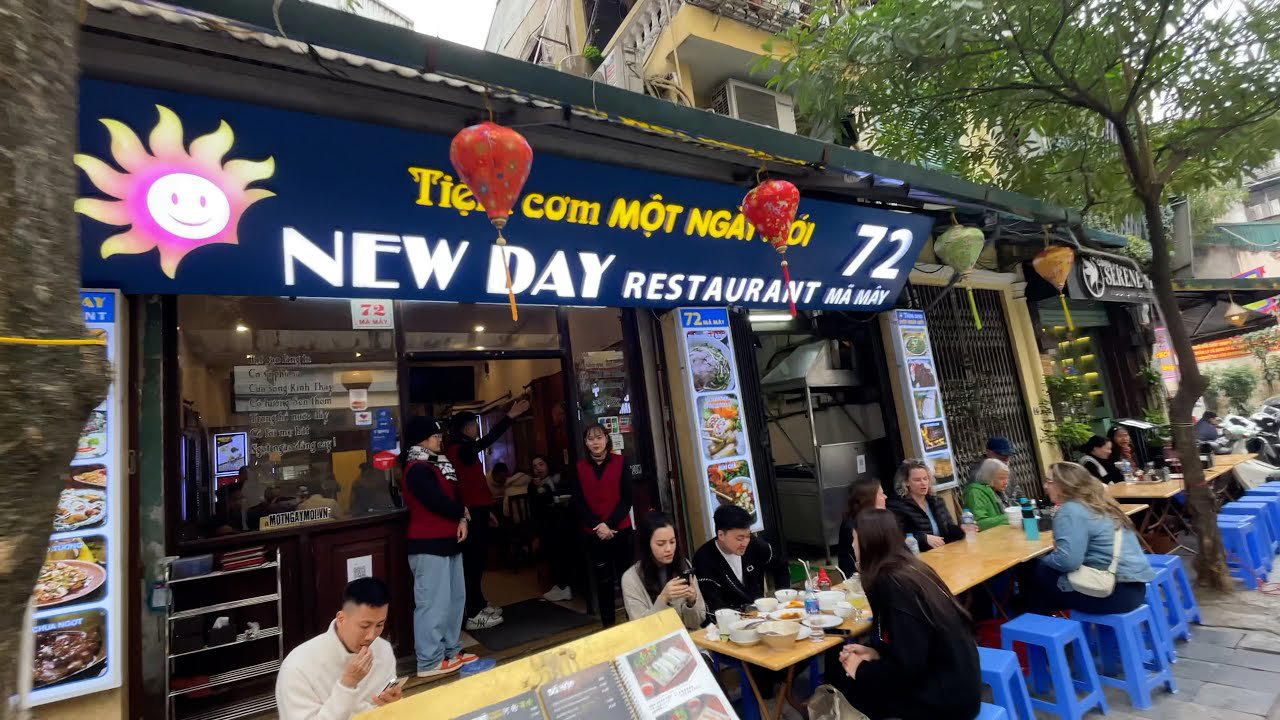
On Mã Mây, one of the Old Quarter's most traversed streets, New Day Restaurant occupies a position in a neighbourhood where the gap between tourist-facing dining and genuinely considered Vietnamese cooking is wider than it first appears. For visitors working through Hanoi's street-to-table spectrum, it functions as a practical reference point on a block that sees constant foot traffic from both locals and travellers.

Pearl is the En Primeur Club membership app — saves, bookings, and concierge access live there. Same editors, same standards.
- Address
- 72 Ma May Street
- Phone
- +84 24 3828 0315
- Hours
- Daily 10 AM–12 AM
- Website
- newdayrestaurant.vn
- Directions
- Get directions
The menu
What to order
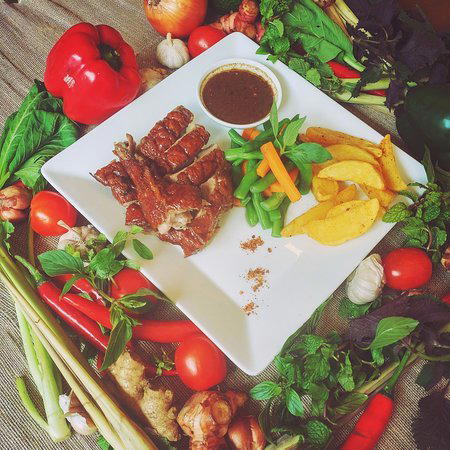
- Cha Ca La Vong
- Spring rolls
- Pork ribs
- Sautéed beef with garlic
- Roasted chicken with lemongrass
- Green papaya salad
- Beef noodles
Mã Mây and the Old Quarter's Dining Divide
Hanoi's Old Quarter operates on two distinct dining registers. The first is transactional: high-turnover spots positioned along pedestrian corridors where menus read in four languages and pricing adjusts subtly for foreign faces. The second is more considered: places where the cooking reflects some continuity with the neighbourhood's actual food culture, even if the room is no longer exclusively local. Mã Mây sits at the intersection of both registers. It is a street that functions as a tourist artery through Hàng Buồm ward, yet it retains enough residential texture to support restaurants that are genuinely used rather than merely visited. New Day Restaurant, at number 72, occupies that ambiguous middle ground, and understanding what that position means is the first step to reading the meal correctly.
The Old Quarter's food geography rewards some patience. Streets like Mã Mây compress a century of urban layering into a few hundred metres: narrow tube houses, ancestral trading families, French-era facades, and contemporary hospitality all stacked within walking distance. For comparative context, the Vietnamese contemporary cooking being produced at higher price points, such as the work at Gia or the teppanyaki format at Hibana by Koki, operates from a very different premise than what a street-level address on Mã Mây typically signals. That contrast is useful, not as a ranking exercise, but as a way of locating where in the city's dining spectrum any given meal sits.
Reading a Vietnamese Meal in Sequence
In the Vietnamese table tradition, a meal rarely arrives as a choreographed procession in the Western tasting-menu sense. Dishes come when they are ready, sharing plates rotate, and the pacing is social rather than theatrical. For a visitor calibrating expectations around multi-course narrative, this matters. The structure of a Vietnamese meal is additive rather than linear: a broth, a salad, a grilled protein, a stir-fry, and rice may all coexist on the table simultaneously, each element in conversation with the others rather than sequenced into separate acts.
This approach shapes how any Hanoi address in the mid-to-accessible range should be evaluated. The question is not whether the kitchen is building a narrative arc of flavours across courses, but whether the individual components hold up and whether the table becomes a coherent whole. At establishments along Mã Mây, the cooking tradition is primarily northern Vietnamese: pho and bun cha in their Hanoian iterations, grilled meats, and the cleaner, less herb-forward profiles that distinguish the north from Hoi An's more fragrant southern palate, as seen at spots like White Rose in Hoi An. The contrast between regional styles is one of the more instructive things a traveller moving through Vietnam can track meal to meal.
At the more budget-anchored end of Hanoi's Vietnamese dining, represented by addresses like 1946 Cua Bac (priced at the single-dong tier), the cooking tends toward unadorned northern classics with minimal staging. A step up in pricing and presentation brings you to places like Tầm Vị (₫₫), where the Vietnamese kitchen gets slightly more room to express itself across a fuller spread. New Day's position on a high-visibility street like Mã Mây places it squarely in the orbit of the traveller-facing mid-market, which comes with both accessibility advantages and the attendant compromises that high foot traffic tends to produce.
What the Neighbourhood Tells You Before You Sit Down
Mã Mây is a short street, but its character shifts within its own length. The southern end near Hàng Buồm is denser with activity: motorbike traffic, street vendors, and the compressed energy of a ward that has always been commercial. The northern approach toward Lương Ngọc Quyến becomes quieter. Number 72 sits within the active core of the street, which means the experience of arriving is already shaped by ambient noise and movement before the meal begins.
This is not a criticism. Hanoi's Old Quarter is not a place that rewards the search for stillness, and restaurants that function well within that energy often do so by leaning into the pace rather than resisting it. The contrast is sharper when you consider what Hanoi's higher-end dining offers: a deliberately constructed remove from that street-level intensity. For travellers who want to move between those registers, the full picture of where to eat in Hanoi is mapped in our complete Hanoi restaurants guide.
For regional Vietnamese comparison beyond the capital, the seafood-buffet format at Bien 14 in Ha Long or the refined French-Vietnamese proposition at La Maison 1888 in Da Nang illustrate how dramatically the country's dining formats diverge by city and price tier. Even at the international level, the precision-driven tasting format of Le Bernardin in New York or the Korean contemporary sequencing at Atomix provide a useful reminder of how differently cultures construct the idea of a meal's progression.
Practical Notes for Planning a Visit
New Day Restaurant is located at 72 Mã Mây in the Hàng Buồm ward of Hoàn Kiếm district, within walking distance of Hoan Kiem Lake and the core of the Old Quarter's pedestrian zone. On Mã Mây, walk-in dining is common across most price tiers, and the street's volume of foot traffic means that popular windows, particularly weekend evenings and the mid-day lunch period, can see queues at the more established addresses. Arriving early, between the opening of the lunch or dinner service, is the most reliable approach when visiting any busy Old Quarter restaurant without a reservation. No dress code information is available; the neighbourhood standard on Mã Mây is casual.
Frequently asked questions
How do I find New Day Restaurant?
New Day Restaurant is located at 72 Mã Mây, Hàng Buồm, Hoàn Kiếm, Hà Nội 100000, Vietnam, Hanoi.
Is New Day Restaurant at 72 Mã Mây suitable for first-time visitors to Hanoi's Old Quarter?
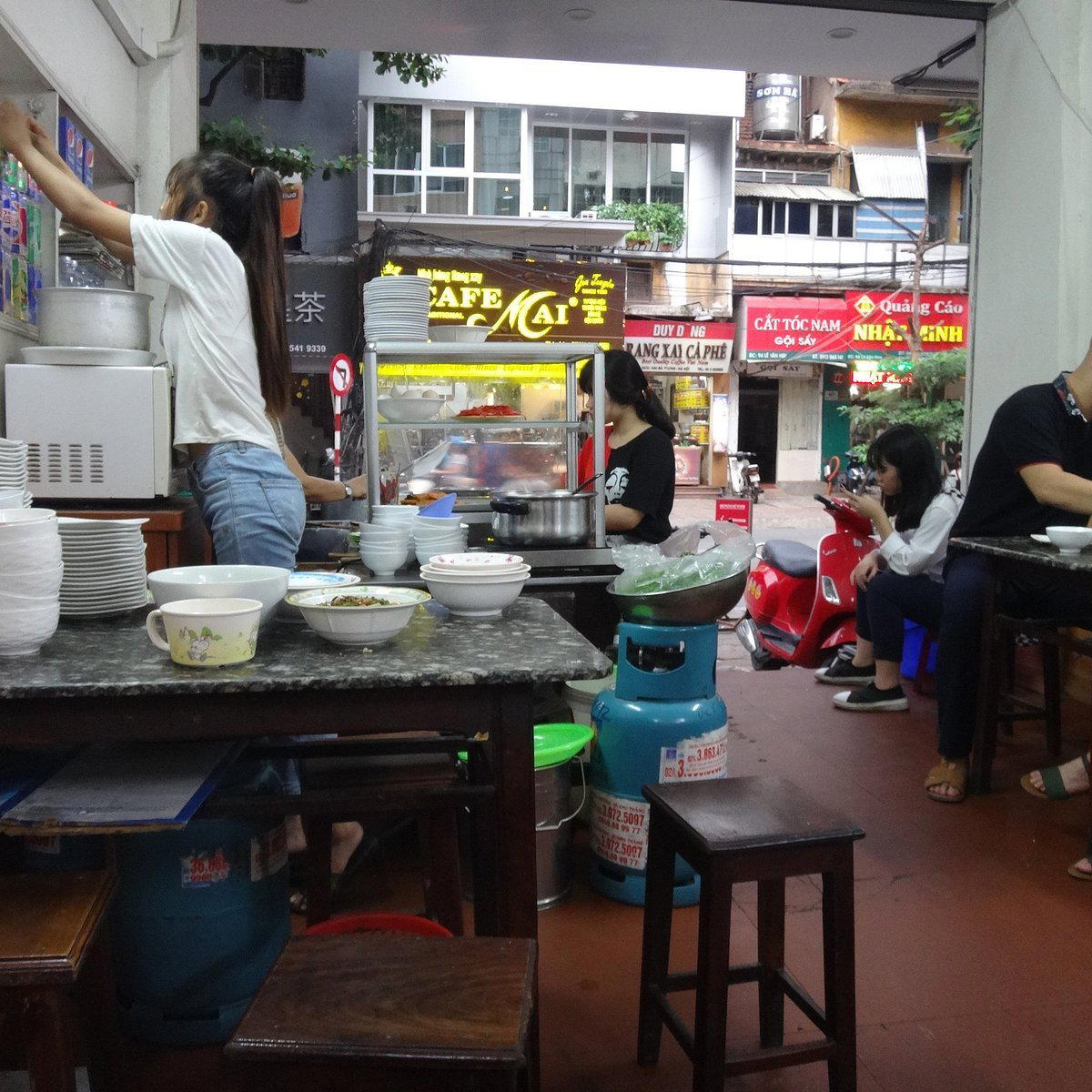
The Hoàn Kiếm address puts the restaurant within walking distance of Hoan Kiem Lake and the densest part of the Old Quarter, making it logistically straightforward to combine with a neighbourhood walk. For first-time visitors, Mã Mây offers a compressed version of what the Old Quarter does at street level: working kitchens, shared tables, and cooking that reflects the district's own eating habits rather than an adapted international format. No booking infrastructure is confirmed, so the format suits visitors comfortable ordering on arrival.
What should I eat at New Day Restaurant?
Northern Vietnamese cooking in the Mã Mây corridor typically features pho, bun cha, and braised pork dishes drawn from Hanoi's own culinary tradition rather than the broader Vietnamese canon. Dishes at this price tier on this street tend to be ordered family-style as they arrive from the kitchen, not in a fixed sequence.
Do they take walk-ins at New Day Restaurant?
Mã Mây sees consistent foot traffic from both residents and visitors moving between Hoan Kiem Lake and the dense commercial streets of the Old Quarter, so arriving outside peak lunch and dinner windows reduces wait times.
What's the standout thing about New Day Restaurant?
The address on Mã Mây places the restaurant within one of the Old Quarter's most legible dining streets, where the cooking reflects Hoàn Kiếm neighbourhood habits rather than a menu engineered for tourist expectations.
Is New Day Restaurant good for vegetarians?
Northern Vietnamese cooking does include vegetable-forward preparations — morning glory, tofu, and braised greens appear regularly at this tier of Old Quarter restaurant — but whether the kitchen at 72 Mã Mây accommodates vegetarian orders as a consistent practice has not been documented.
Standing Among Peers
Comparable venues nearby, for context on price, style, and recognition.
| Venue | Cuisine | Price | Awards | Notes |
|---|---|---|---|---|
| New Day RestaurantThis venue — the venue you are viewing | Authentic Northern Vietnamese Home Cooking | $1–10 | Not listed | Not listed |
| P. Lý Văn Phức | Vietnamese Grilled Chicken Street Food | $1–10 | Not listed | Ba Dinh |
| Bún chả Nem rán B2 Vĩnh Hồ | Hanoi Bún Chả & Nem Rán | $1–10 | Not listed | Dong Da |
| Bánh Cuốn Gia Truyền Thanh Vân | Traditional Vietnamese Banh Cuon | $1–10 | Michelin Bib Gourmand | Hoan Kiem |
| Bánh Cuốn Nóng Kim Thoa | Northern Vietnamese Bánh Cuốn | $1–10 | Not listed | Hoan Kiem |
| Chả Cá Thăng Long | Traditional Hanoi Turmeric Fish (Chả Cá) | $1–10 | Not listed | Hoan Kiem |

Details
- Cozy
- Rustic
- Casual Hangout
- Group Dining
- Open Kitchen
- Standalone
- Local Sourcing
- Family Style
- A La Carte
- Beer
- Vegetarian Friendly
- Vegan Options
- Gluten Free Options
Current opening hours
- Monday
- 10 AM–12 AM
- Tuesday
- 10 AM–12 AM
- Wednesday
- 10 AM–12 AM
- Thursday
- 10 AM–12 AM
- Friday
- 10 AM–12 AM
- Saturday
- 10 AM–12 AM
- Sunday
- 10 AM–12 AM
Hours can change for holidays and private events. Last verified .