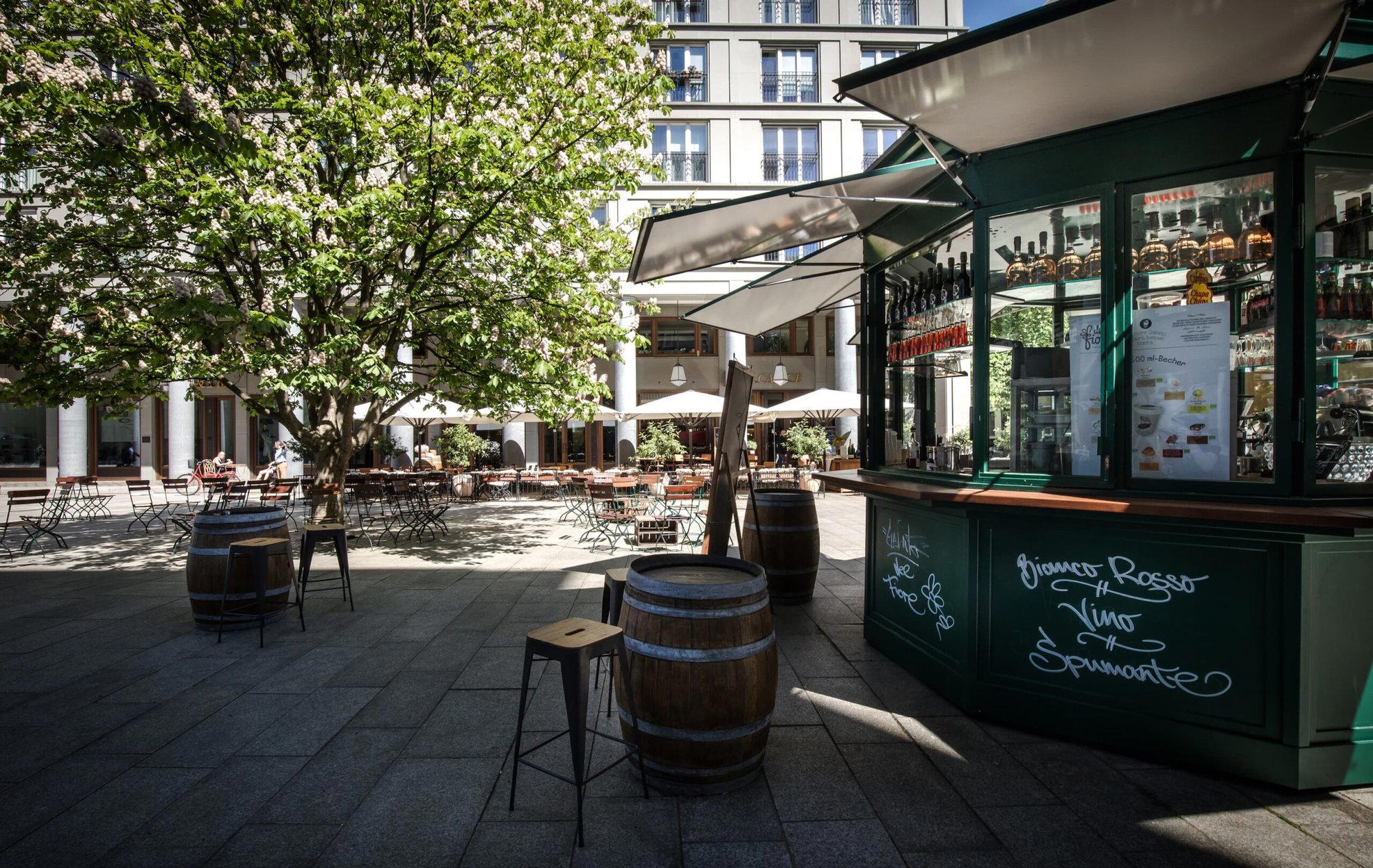
Wiener Conditorei Caffeehaus on Hagenplatz in Berlin's Grunewald district carries the grammar of a classic Viennese coffee house into a residential Berlin neighbourhood. The format, pastry, coffee, unhurried afternoon, belongs to a Central European tradition that predates the city's modern dining scene by centuries. For milestone occasions that call for ceremony without formality, it occupies a distinct position in Berlin's café culture.
Pearl is the En Primeur Club membership app — saves, bookings, and concierge access live there. Same editors, same standards.
- Address
- Hagenpl. 3, 14193 Berlin, Germany
- Phone
- +493089729360
- Website
- wiener-conditorei.de
- Directions
- Get directions
 Saves & bookings on Pearl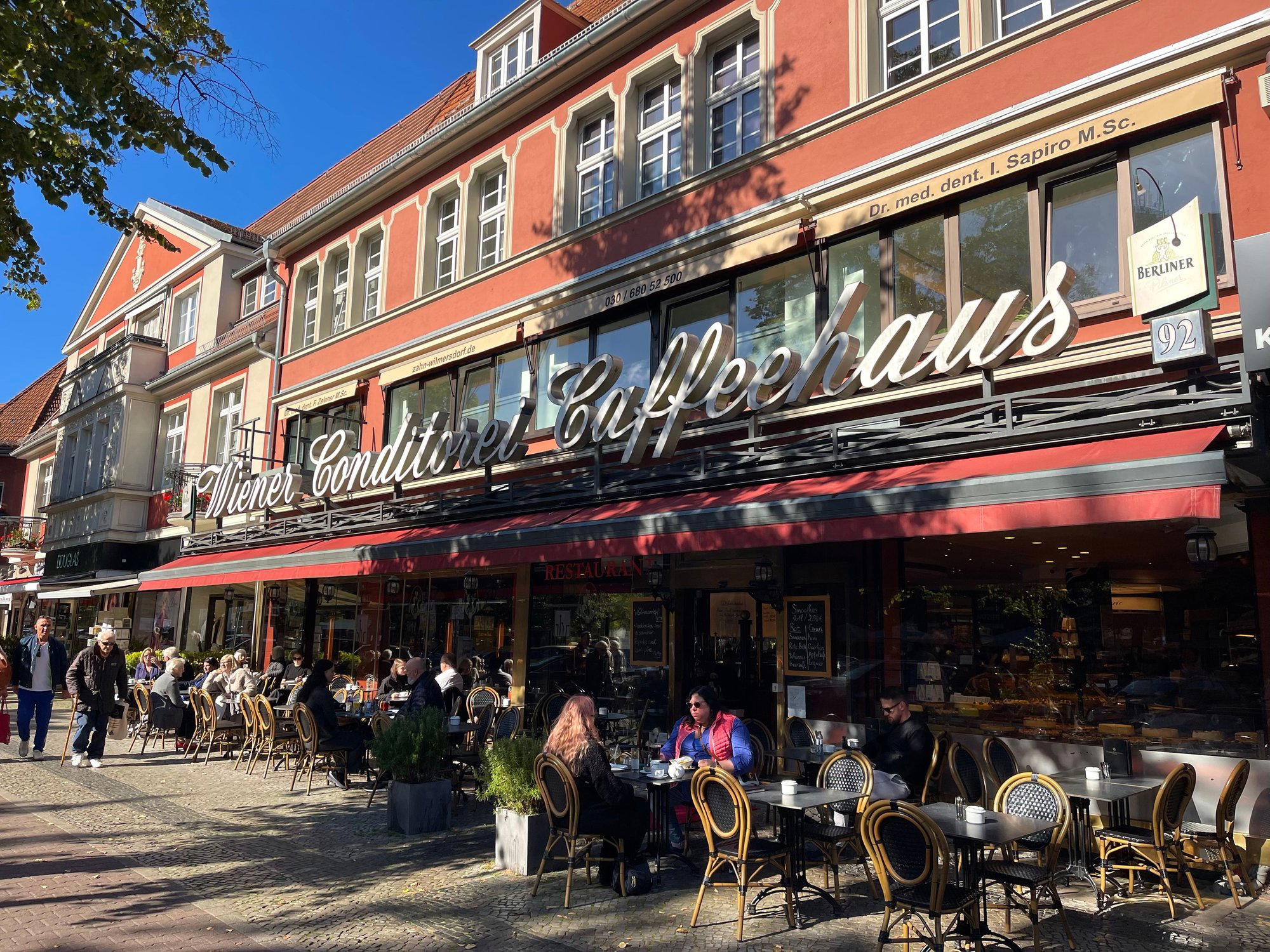
A Viennese Grammar in a Berlin Neighbourhood
The Viennese coffee house is among the more studied hospitality formats in Europe. At its core, it is a room designed for duration: you arrive, you order modestly, and you are left alone for as long as you wish. That philosophy, which the Austrian capital codified over three centuries, sits in deliberate contrast to the efficiency pressures of the modern café. When that format travels to Berlin and takes root in a residential district like Grunewald, it does something specific to the occasion of visiting: it removes the urban pace from the equation entirely.
Wiener Conditorei Caffeehaus sits at Hagenplatz 3, in one of western Berlin's quietest and most affluent quarters. Grunewald is not a neighbourhood you pass through; you go there with intent. That geographic remove from Mitte's density or Prenzlauer Berg's café saturation already frames the visit as a deliberate choice, which is exactly the register in which milestone occasions tend to operate. Birthdays, anniversaries, or the kind of slow Sunday that functions as its own ceremony find natural expression in a setting that the neighbourhood's residential character reinforces before you even open the door.
The Occasion Architecture of the Konditorei
Germany and Austria share a pastry tradition that operates on entirely different terms from the French pâtisserie or the British tearoom. The Konditorei is a bakery-café hybrid in which the counter displays, tortes, Schnitten, Kipferl, function as the menu's primary argument. The format is inherently celebratory in the Central European sense: cake is not a side order here, it is the occasion itself. A slice of Sachertorte or a layered cream cake arriving on proper china, with coffee presented in the Viennese manner alongside a small glass of water, is a ritual with enough theatre to mark a moment without requiring the production of a full restaurant experience.
That distinction matters in Berlin's current dining context. The city's serious special-occasion options tend to cluster at the summit end of the formal restaurant tier. Rutz, Nobelhart & Schmutzig, and FACIL all represent the €€€€ bracket, with tasting menus, extended booking windows, and the full apparatus of fine dining. At the other end of the spectrum, CODA Dessert Dining has made the case that a dessert-led format can carry serious culinary intent. The Konditorei tradition operates on a third axis entirely: it is not competing with tasting menus and it is not making an avant-garde argument. It offers the occasion of a slow afternoon, measured in courses of coffee and pastry, as a self-contained event.
Where This Fits in the Berlin Café Scene
Berlin's café culture is vast and internally differentiated. The specialty coffee movement that spread through Mitte and Neukölln from around 2010 onward created one tier: technically rigorous, espresso-forward, often standing-only or minimal seating. The Viennese or Austro-Hungarian café model represents a counter-tradition: it prioritises time, comfort, and the ritual of the pastry counter over brewing technique as spectacle. Both are legitimate, but they serve different occasions.
For anyone whose Berlin itinerary includes a meal at Restaurant Tim Raue or an evening at a Michelin-level table, a mid-afternoon stop at a Konditorei occupies a distinct slot in the day's architecture. It is neither a warm-up nor a wind-down; it is its own event, particularly for visitors who have come from cities where this format no longer exists in its classical form. Germany retains the tradition more faithfully than most European countries, and Berlin's western districts preserve it in a more residential, less tourist-facing register than the central neighbourhoods.
Across Germany more broadly, the high-end dining conversation takes place far from Berlin: Aqua in Wolfsburg, Schwarzwaldstube in Baiersbronn, and Vendôme in Bergisch Gladbach anchor the country's Michelin top tier in smaller cities and rural settings. Victor's Fine Dining by Christian Bau in Perl, Waldhotel Sonnora in Dreis, and ES:SENZ in Grassau extend that pattern. Within Berlin itself, the serious dining scene is real but smaller than the city's cultural weight might suggest. The Konditorei tradition fills a gap that none of those restaurants address: the slow mid-day occasion, the celebratory afternoon, the event that is measured in conversation rather than courses.
Planning a Visit
Hagenplatz sits in Grunewald, reachable by S-Bahn from central Berlin, making it accessible without requiring a car. The residential setting means the pace around the café is quieter than anything you would find in Charlottenburg or Mitte, which is part of the point for occasion visits. For comparable Austro-German café experiences in other German cities, Restaurant Haerlin in Hamburg represents the formal end of northern German dining tradition, while JAN in Munich and Schanz in Piesport show how German culinary ambition operates outside the capital. For international reference points on what a dessert-led occasion can achieve at serious level, Le Bernardin in New York City and Atomix in New York City represent the opposite pole: high-formality, tasting-menu-driven occasion dining. The Konditorei sits nowhere near that tier by design. Additional options in the western reaches include Bagatelle in Trier for those continuing west after Berlin.
Price and Recognition
Comparable venues nearby, for context on price, style, and recognition.
| Venue | Cuisine | Price | Notes |
|---|---|---|---|
| Wiener Conditorei CaffeehausThis venue — the venue you are viewing | Grunewald, Viennese Bakery Café | $$ | Not listed |
| Flemming´s | Not listed | $$ | Kreuzberg, German Steakhouse with Mediterranean Influences |
| Fischer & Lustig | Mitte, Traditional German Fish & Meat | $$ | Not listed |
| 3 Sisters | Kreuzberg, German Regional Seasonal | $$ | Not listed |
| Hops & Barley | Friedrichshain, German Craft Beer Pub | $$ | Not listed |
| Schnitzelei Mitte | Mitte, Modern German Schnitzel | $$ | Not listed |
Continue exploring
More in Berlin
Restaurants in Berlin
Browse all →
Bars in Berlin
Browse all →
Hotels in Berlin
Browse all →

At a Glance
- Classic
- Cozy
- Brunch
- Casual Hangout
- Family
- Historic Building
Current opening hours
- Monday
- 7:30 AM–6:30 PM
- Tuesday
- 7:30 AM–6:30 PM
- Wednesday
- 7:30 AM–6:30 PM
- Thursday
- 7:30 AM–6:30 PM
- Friday
- 7:30 AM–6:30 PM
- Saturday
- 7:30 AM–6:30 PM
- Sunday
- 7:30 AM–6:30 PM
Hours can change for holidays and private events. Last verified .
Classic Viennese coffee house with cozy, nostalgic decor and welcoming atmosphere.