Our verdict
Ustam occupies a modest address on Neuer Pferdemarkt in Hamburg's Schanzenviertel, a neighbourhood where Turkish and Middle Eastern food culture has been present for decades. The kitchen operates within that tradition rather than against it, positioning itself in a city whose dining scene increasingly rewards specificity over spectacle. For Hamburg diners looking beyond the fine-dining tier, Ustam represents a different kind of seriousness.

Pearl is the En Primeur Club membership app — saves, bookings, and concierge access live there. Same editors, same standards.
- Address
- Neuer Pferdemarkt 33, 20359 Hamburg, Germany
- Phone
- +494071003935
- Hours
- Mon–Thu 9 AM–12 AMFri–Sat 9 AM–2 AMSun 9 AM–12 AM
- Website
- ustamrestaurant.de
- Directions
- Get directions
- Booking
- Book on Quandoo
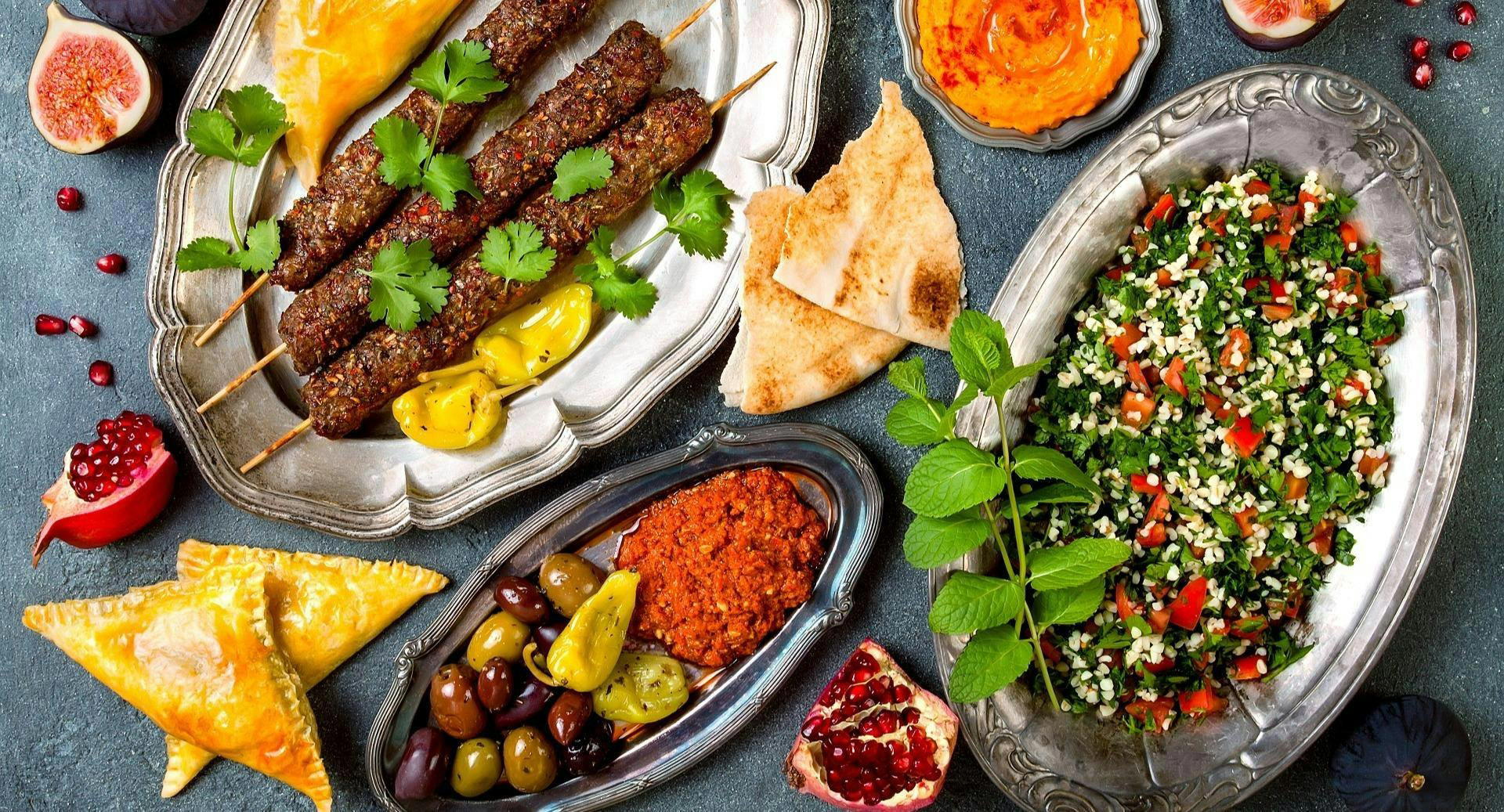
The menu
What to order
- Tavuk Şiş
- Kuzu Şiş
- Lahmacun
- Pide
- İrmik Tatlısı
Where Schanzenviertel's Food Culture Gets Specific
Hamburg's Schanzenviertel has long functioned as the city's most restless eating neighbourhood. The streets around Schulterblatt and Neuer Pferdemarkt accumulated decades of Turkish, Kurdish, and Middle Eastern kitchens long before the area became a destination for the city's creative class. That layering matters: it means the neighbourhood's food traditions are not novelty imports but settled, working parts of daily life. Ustam sits at Neuer Pferdemarkt 33 inside that context, operating on a street where the clientele has always been mixed and the expectations are set by regulars rather than tourists.
The Schanzenviertel sits at a different price register than Hamburg's harbour-adjacent fine-dining belt, where Restaurant Haerlin and The Table Kevin Fehling occupy the leading Michelin tier, or the creative mid-level represented by 100/200 Kitchen. The neighbourhood functions on a different logic entirely, one where frequency of visit and proximity to the kitchen matter more than occasion dining. That distinction shapes what Ustam is, and what it is not trying to be.
The Case for Ingredient Provenance at This Price Point
Across Germany's more serious Turkish and Anatolian kitchens, the conversation around sourcing has shifted considerably over the past decade. Restaurants in this category once operated under an assumption that ingredient cost needed to be suppressed to keep covers accessible. The better operators have moved away from that position. Lamb sourced from specific regions, vegetables purchased from Turkish-run market stalls rather than cash-and-carry wholesale, and bread baked in-house rather than delivered pre-sliced: these decisions are the substance of what separates a kitchen with real intent from one running on margin alone.
Ustam's address in the Schanzenviertel gives it geographical access to one of Hamburg's strongest networks of specialist suppliers. The Isemarkt, Hamburg's twice-weekly open-air market, is within reasonable reach, as are the Turkish and Middle Eastern wholesale suppliers that have served the neighbourhood's restaurants for generations. The distinction between a kitchen that uses those networks actively and one that does not tends to show up clearly in the food, particularly in dishes where the base ingredient carries most of the flavour load. Grilled meats, slow-cooked pulses, and flatbreads baked to order are the categories where sourcing decisions become immediately legible on the plate.
Germany's wider fine-dining circuit has engaged with questions of provenance in a formal, documented way. Places like Aqua in Wolfsburg and Schwarzwaldstube in Baiersbronn treat supplier relationships as editorial content. The same rigour, applied at a less expensive and less formal register, is what distinguishes the stronger neighbourhood kitchens from weaker ones. It is worth holding Ustam to that same standard of inquiry, even if the format and price point are entirely different.
Hamburg's Neighbourhood Restaurant Tier
Hamburg's restaurant economy, like most large German cities, has a pronounced gap between its Michelin-documented upper level and the mass of neighbourhood spots below it. The middle ground, where cooking is serious without being ceremonial, is where most locals actually eat most often. Bianc and Lakeside occupy a premium position within that middle band. Ustam operates further along the accessibility spectrum, in a zone where the food is expected to carry the room without the support of a polished service structure or a long wine list.
That is a harder position to hold consistently than it looks. Neighbourhood restaurants at this tier live or die on repeat business, and repeat business depends on reliability, on the lamb being as good on a Tuesday as it was on the Saturday when a first visit happened. The Schanzenviertel is a neighbourhood with enough alternatives that diners are not captive. Ustam's continued presence on Neuer Pferdemarkt implies that it has maintained enough of that consistency to hold its regulars.
For comparison, the broader German fine-dining circuit that EP Club covers, from JAN in Munich to Vendôme in Bergisch Gladbach and Victor's Fine Dining by Christian Bau in Perl, operates at a price and formality level that bears almost no relationship to what Ustam does. For international reference points, the gap between this category and something like Le Bernardin in New York or Atomix illustrates why peer-set framing matters so much when assessing a restaurant.
Other German kitchens operating in specialist registers, including CODA Dessert Dining in Berlin, ES:SENZ in Grassau, Waldhotel Sonnora in Dreis, Schanz in Piesport, and Bagatelle in Trier, demonstrate that seriousness of intent and narrowness of format are not correlated with price. That logic applies equally at the neighbourhood end of the spectrum.
Planning a Visit
Ustam is at Neuer Pferdemarkt 33 in Hamburg's Schanzenviertel, a neighbourhood most easily reached by U-Bahn to Feldstrasse or Messehallen, or by the S-Bahn to Sternschanze. The area is dense with food options, so arriving with a fixed plan is more reliable than wandering in search of a table. Because no booking platform or phone number is currently listed in EP Club's database, the most direct approach is to visit in person to check availability or look for current contact details on the venue's own channels. Schanzenviertel evenings move quickly on weekends, and earlier sittings tend to be less pressured. For the broader Hamburg picture, EP Club's full Hamburg restaurants guide maps the city's eating options across price tiers and neighbourhoods.
Frequently asked questions
Does Ustam work for a family meal?
Schanzenviertel's neighbourhood restaurant tier tends to favour relaxed formats over formal plating, and Ustam's address on Neuer Pferdemarkt 33 places it in a street-level, community-facing part of the district. Nothing in the venue's positioning suggests it is structured against family dining. The format appears better suited to shared eating than to occasion-driven tasting menus.
Is Ustam formal or casual?
Ustam sits in Hamburg's Schanzenviertel, a neighbourhood whose eating culture runs deliberately unpretentious. The address at Neuer Pferdemarkt 33 is in a working part of the district, not its dressed-up perimeter. Expect a casual register rather than a formal one.
What does the name Ustam mean and does it reflect the restaurant's cooking approach?
Ustam is a Turkish word meaning 'my master' or 'my craftsman,' a term traditionally used to address a skilled artisan or tradesperson. In the context of Anatolian restaurant culture in Hamburg, the name signals a kitchen oriented around craft and practised technique rather than trend-driven menus. That framing aligns with Schanzenviertel's appetite for neighbourhood restaurants that prioritise consistency and sourcing over spectacle.
What's Ustam's location?
Ustam is located at Neuer Pferdemarkt 33, 20359 Hamburg, Germany, Hamburg.
Is Ustam reservation-only?
For a neighbourhood address on Neuer Pferdemarkt, walk-in availability often depends on day of week and time of service. Contacting the restaurant directly before a visit is the most reliable approach.
What's the signature at Ustam?
What the broader context of Anatolian cooking in Hamburg's neighbourhood tier suggests is a kitchen built around technique-led preparation rather than novelty, with protein and bread at the centre of the menu. The restaurant's name — Ustam, meaning 'my master craftsman' in Turkish — points toward a cooking identity grounded in craft and tradition.
Comparison Snapshot
Comparable venues nearby, for context on price, style, and recognition.
| Venue | Cuisine | Price | Notes |
|---|---|---|---|
| UstamThis venue — the venue you are viewing | Anatolian Turkish Grill | $20–30 | Not listed |
| Kebab House KURTULAN | Traditional Turkish Kebab House | $10–20 | Neumuehlen |
| Saray Köz | Authentic Turkish Grill | $20–30 | St. Georg |
| Dubara | Turkish Fast Food / Döner Shop | $1–10 | Barmbek |
| Ata | Turkish Specialties | Not listed | Farmsen |
| La Sepia | Portuguese Seafood | $20–30 | Sternschanze |
Continue exploring
More in Hamburg
Restaurants in Hamburg
Browse all →
Bars in Hamburg
Browse all →

Hotels in Hamburg
Browse all →
Wineries in Hamburg
Browse all →
Details
- Cozy
- Casual
- Rustic
- Casual Hangout
- Family
- Group Dining
- Brunch
- Open Kitchen
- A La Carte
- Family Style
- Rakı
- Tea
- Vegetarian Friendly
- Vegan Options
Current opening hours
- Monday
- 9 AM–12 AM
- Tuesday
- 9 AM–12 AM
- Wednesday
- 9 AM–12 AM
- Thursday
- 9 AM–12 AM
- Friday
- 9 AM–2 AM
- Saturday
- 9 AM–2 AM
- Sunday
- 9 AM–12 AM
Hours can change for holidays and private events. Last verified .
Modern ambience with oriental touches, warm and welcoming atmosphere with a hint of the Orient.