Our verdict
Dubara occupies a Jarrestraße address in Hamburg's Winterhude district, a neighbourhood increasingly defined by considered, neighbourhood-scale dining rather than destination spectacle. With sparse public data and limited press presence, it sits in the city's quieter mid-tier, worth tracking for those drawn to Hamburg dining beyond the Michelin-heavy circuit of the Alsterchaussee and HafenCity corridors.

Pearl is the En Primeur Club membership app — saves, bookings, and concierge access live there. Same editors, same standards.
- Address
- Jarrestraße 42, 22303 Hamburg, Germany
- Phone
- +0123456789
- Hours
- Daily 11 AM–12 AM
- Website
- dubara.de
- Directions
- Get directions
A Street in Winterhude and What It Signals
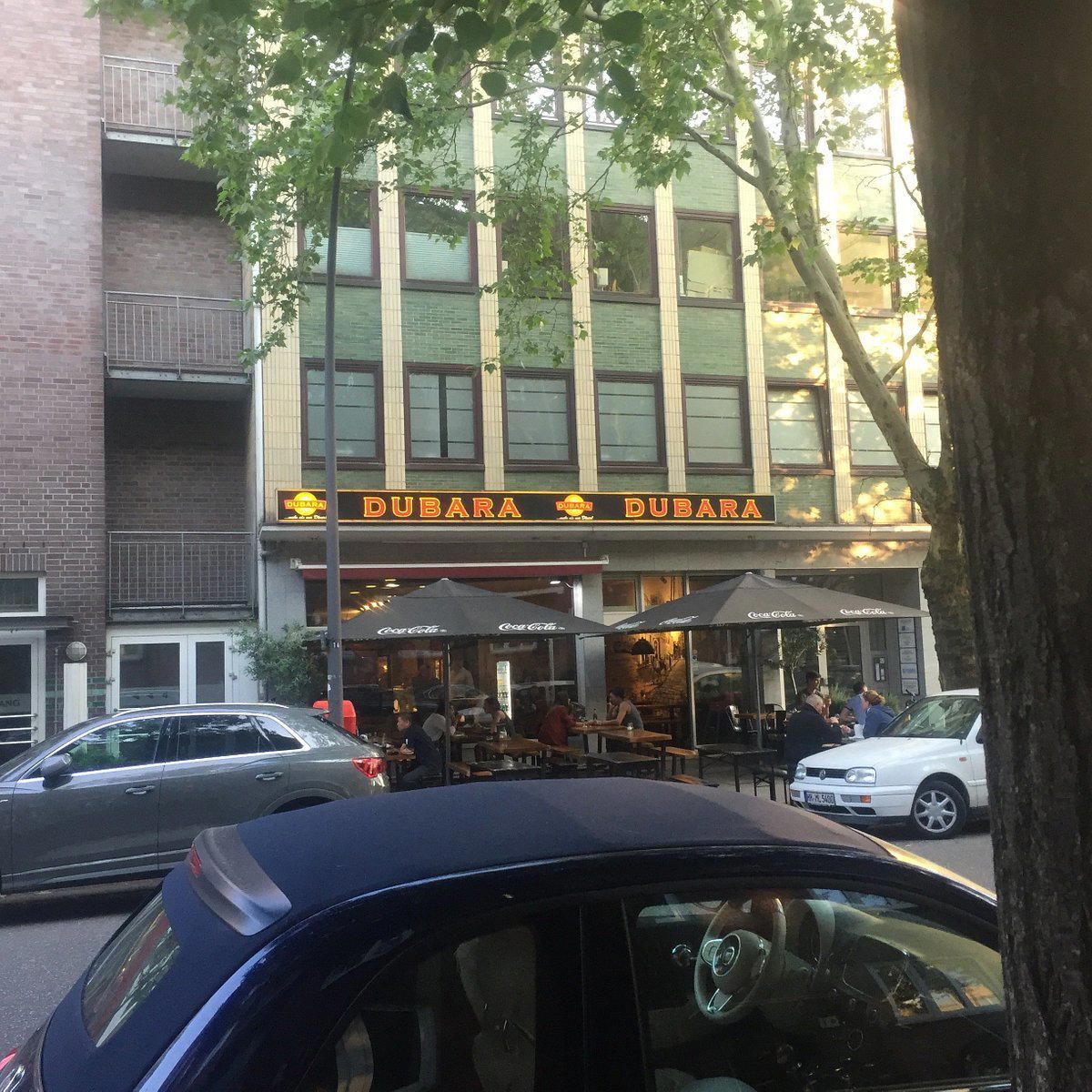
Jarrestraße runs through Winterhude, one of Hamburg's more settled residential quarters, north of the Alster lake and well clear of the tourist-facing waterfront. Restaurants that open here are generally not positioning themselves for the expense-account circuit. They are pitching to a local clientele with high expectations but limited patience for theatre. That context matters when you read an address like Jarrestraße 42: it tells you, before any menu arrives, something about the register the kitchen is likely to be working in.
Hamburg's dining geography has become increasingly legible over the past decade. The city's three-Michelin-star tier — anchored by The Table Kevin Fehling and Restaurant Haerlin — clusters around HafenCity and the Vier Jahreszeiten hotel respectively, both working with elaborate tasting formats and price points to match. Below that, venues like bianc and Lakeside occupy the €€€€ band with defined culinary identities. Winterhude, by contrast, tends to produce the sort of restaurant that earns neighbourhood loyalty first and broader recognition later, if at all.
Reading a Menu Before You Have One
Dubara's name is the only piece of editorial evidence the kitchen has published to the world beyond its physical address. It is a term associated with a North African dish, specifically, a Libyan preparation built around slow-cooked offal, chickpeas, and spiced broth, served as street food across Tripoli and into diaspora communities in Europe. If the name is programmatic rather than decorative, it suggests a kitchen interested in that culinary tradition: depth of flavour from long cooking times, relatively inexpensive cuts transformed by technique, and a menu architecture that treats legumes and organ meat as the core proposition rather than a footnote.
That architecture, if it holds, would place Dubara in a distinct position within Hamburg's restaurant map. The city has invested heavily in refined European formats, French-influenced tasting menus, Scandinavian-leaning modernism, and Mediterranean precision. What it has not developed at scale is a serious representation of North African cooking executed with the same degree of intentionality. 100/200 Kitchen works within creative formats; none of Hamburg's recognised names are staking a position in this culinary territory. That gap is either an opportunity or a difficult commercial position, depending on what the kitchen is actually serving.
Menu architecture in this tradition tends to resist the segmentation that European fine dining imposes. There is no clean progression from amuse to pre-dessert; dishes operate as components of a larger, shared logic. Broth is both a cooking medium and a course. Bread is essential infrastructure, not garnish. Spice functions as flavour, not accent. A restaurant that takes this seriously will build a menu that reads differently from its Hamburg peers, which is precisely the editorial point: the structure of what appears on the table reveals what kind of cooking a kitchen believes in.
Where Dubara Sits in the Broader German Scene
Germany's serious restaurant scene has moved significantly in the past decade toward a broader definition of what constitutes fine dining. Venues like CODA Dessert Dining in Berlin have earned Michelin recognition for formats that would have seemed eccentric a generation ago. JAN in Munich and ES:SENZ in Grassau work within strong regional identities. The country's recognised dining tier remains dominated by European technique, Schwarzwaldstube in Baiersbronn, Aqua in Wolfsburg, Vendôme in Bergisch Gladbach, Victor's Fine Dining by Christian Bau in Perl, Waldhotel Sonnora in Dreis, Schanz in Piesport, and Bagatelle in Trier all represent the French-inflected tradition in various registers, but the category is not fixed.
What the broader scene has demonstrated is that a restaurant does not need Michelin validation to carve a durable position if its culinary identity is specific enough and its neighbourhood relationship is solid. The model that works in Hamburg's outer residential quarters often resembles what drives certain New York neighbourhood spots or San Francisco's community-rooted kitchens. Lazy Bear in San Francisco built its reputation on a format that was legible and specific before it earned formal recognition. Le Bernardin in New York City demonstrates the inverse principle: institutional recognition and a cuisine so defined that its menu architecture has remained coherent for decades. The lesson in both cases is that culinary identity, expressed through what the menu does and does not include, is the primary signal.
Dubara, with minimal public data and no documented awards, is working in a different register. But the address and the name together suggest a kitchen that has made choices about its culinary territory. Whether those choices translate into a menu with the structural coherence the North African tradition rewards is something only a visit can confirm.
Hamburg's Neighbourhood Dining Tier
The more interesting question for Hamburg's dining future is whether its residential quarters can produce the kind of kitchens that give a city genuine depth below the Michelin tier. Paris and London both draw their critical energy partly from restaurants that are neither cheap nor starred, the two-to-three-course neighbourhood place where the cooking is specific and the room is small. Hamburg has built a serious top tier. Its mid-tier, particularly outside the Altstadt and HafenCity, remains more variable.
Winterhude has the demographics to support serious neighbourhood dining: high disposable incomes, educated local clientele, proximity to the Alster. What it has lacked is the critical mass of kitchens that turn a neighbourhood into a dining destination in its own right. Dubara sits at Jarrestraße 42 in that context, which makes it worth monitoring even in the absence of granular data. For Hamburg's dining map, see our full Hamburg restaurants guide.
Know Before You Go
- Address: Jarrestraße 42, 22303 Hamburg, Germany
- Neighbourhood: Winterhude, north of the Alster
- Price range:
- Reservations:; contact directly or visit in person
- Phone / Website: Not publicly listed at time of publication
- Awards: None documented
Frequently asked questions
How do I find Dubara?
Dubara is located at Jarrestraße 42, 22303 Hamburg, Germany, Hamburg.
What makes Dubara worth seeking out in Hamburg's North African dining scene?
Hamburg has a documented diaspora community with roots across North Africa and the Levant, yet very few city restaurants have built a kitchen programme explicitly around that culinary tradition at a neighbourhood level. Dubara's positioning on Jarrestraße in Winterhude — a settled residential quarter north of the Alster — places it outside Hamburg's tourist-facing restaurant belt, which tends to attract a more locally committed clientele.
What dish is Dubara famous for?
The restaurant takes its name from a North African preparation — a slow-cooked dish built around chickpeas, offal, and spiced broth with documented roots in Libyan and broader Maghrebi cooking traditions. That choice of name is the clearest signal the kitchen has given about its culinary orientation. No specific menu items have been published publicly, so the dish list beyond that framing remains undocumented.
Is Dubara reservation-only?
No booking policy is publicly documented for Dubara at Jarrestraße 42. Hamburg's smaller neighbourhood kitchens in Winterhude frequently operate on a walk-in basis or take reservations informally by phone, though no contact number is currently listed. Checking directly at the address remains the most reliable approach until more information is published.
At-a-Glance Comparison
Comparable venues nearby, for context on price, style, and recognition.
| Venue | Cuisine | Price | Notes |
|---|---|---|---|
| DubaraThis venue — the venue you are viewing | Turkish Fast Food / Döner Shop | $1–10 | Not listed |
| bona'me | Modern Kurdish-Turkish Cuisine | $20–30 | Hamburg-Altstadt |
| Ata | Turkish Specialties | Not listed | Farmsen |
| Mr. Kebab | Turkish Kebab & Grill | $10–20 | St. Pauli |
| Saray Köz | Authentic Turkish Grill | $20–30 | St. Georg |
| Ustam | Anatolian Turkish Grill | $20–30 | Sternschanze |