Michelin Plate
Our verdict
A Michelin Plate-recognised kaiseki counter in Osaka's Tenma district, Unkaku operates inside the thrifty logic of Osaka cooking, using every part of every ingredient, every time. Chef Masaharu Shimamura's signature dish simmers small sea bream whole in rapeseed oil until the bones become edible, a technical expression of a culinary philosophy rooted in the history of the surrounding neighbourhood.

Pearl is the En Primeur Club membership app, where members save venues, book tables and use the concierge.
Where the Neighbourhood Enters the Bowl
Tenma sits on the north bank of the Okawa river, one of Osaka's older commercial quarters, its covered arcade market still drawing the kind of daily foot traffic that keeps a neighbourhood honest about its food. It is not the stretch of Kita Ward that draws international restaurant tourists, that attention falls further south, toward the kaiseki temples of Minami and the French-technique houses that have made Osaka a serious destination for anyone tracking how Japanese chefs metabolise European culinary grammar. Tenma's credential is different: this is a district where cooking is expected to be purposeful, ingredient-led, and accountable to the people who actually live here. Unkaku reads as a product of that environment rather than an import into it.
The Logic of Leaving Nothing Behind
Osaka's culinary identity has always been shaped by kuidaore, the city's appetite for spending freely on good food, but the other side of that culture is an equally deep respect for not wasting what you paid for. The city's traditional cooking tradition prizes extraction: getting full flavour from every component, treating thrift not as austerity but as craft. This is the sensibility Unkaku operates within. The restaurant's approach to ingredients is structured around using every part of what arrives in the kitchen, a discipline that sounds simple and demands real technical precision to execute without the result tasting forced or compromised.
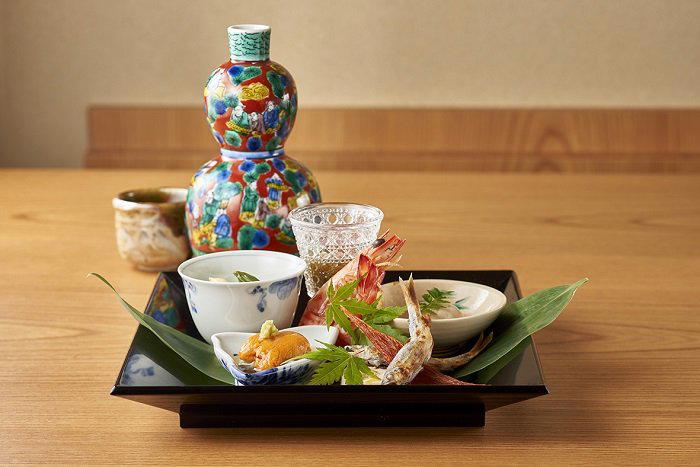
The clearest expression of this in practice is the signature dish that has become the defining reference point for understanding what the kitchen is doing. Nozaki-style grilled small sea bream is built around a historical connection: the area near Nozaki Kannon Temple, known as Jigen-ji, was once famed for canola cultivation. Shimamura simmers the fish in rapeseed oil, applying enough heat and time that even the bones of the whole fish become edible. Nothing is plated around the bone and left. The dish is a record of local food history delivered through a technical method, the kind of thing that rewards reading about before you arrive, because the flavour alone won't tell you the full story.
A Name That Sets an Expectation
Unkaku is a traditional Japanese pattern depicting cranes dancing in clouds. As a name for a restaurant, it sets a particular register: refined, image-conscious, aspirational in a specifically Japanese mode. The crane carries weight in this context, longevity, precision, grace under pressure. Whether or not a diner arrives with that reference in mind, the name signals that what's happening here is not casual. The 2024 Michelin Plate recognition confirms the kitchen is operating at a level that warrants serious attention, even if it sits a tier below Osaka's starred restaurants in the formal hierarchy.
Positioning Inside Osaka's Broader Japanese Dining Scene
Osaka's Japanese-cuisine tier at the ¥¥¥ price point is genuinely competitive. Kashiwaya Osaka Senriyama operates at the same price tier with deep kaiseki credentials. Miyamoto, Oimatsu Hisano, and Tenjimbashi Aoki each occupy recognisable positions in the same category. Yugen extends the conversation in a different stylistic direction. The ¥¥¥¥ tier, Hajime, La Cime, Fujiya 1935, operates on a different budget assumption and a different set of ambitions, largely defined by French-technique integration and multi-course tasting formats built for international dining tourists. Unkaku does not pitch against that tier. Its Michelin Plate at ¥¥¥ puts it in conversation with kitchens that are cooking with precision and purpose without the spectacle budget of the starred houses.
Across Japan, the same dynamic plays out in different cities. The discipline of using every part of an ingredient, drawing on local food history, and building a menu around what a specific place has always eaten is visible at Gion Sasaki in Kyoto and in the tighter, more personal formats at Harutaka in Tokyo. Further afield, Goh in Fukuoka and akordu in Nara approach the same question of regional identity from different angles. 1000 in Yokohama and 6 in Okinawa show how the conversation shifts when the geography shifts. In Tokyo, Myojaku and Azabu Kadowaki offer comparison points for Japanese cuisine at comparable levels of seriousness. Unkaku belongs to this wider pattern of kitchens that treat local food history as both constraint and material.
What the Room Suggests
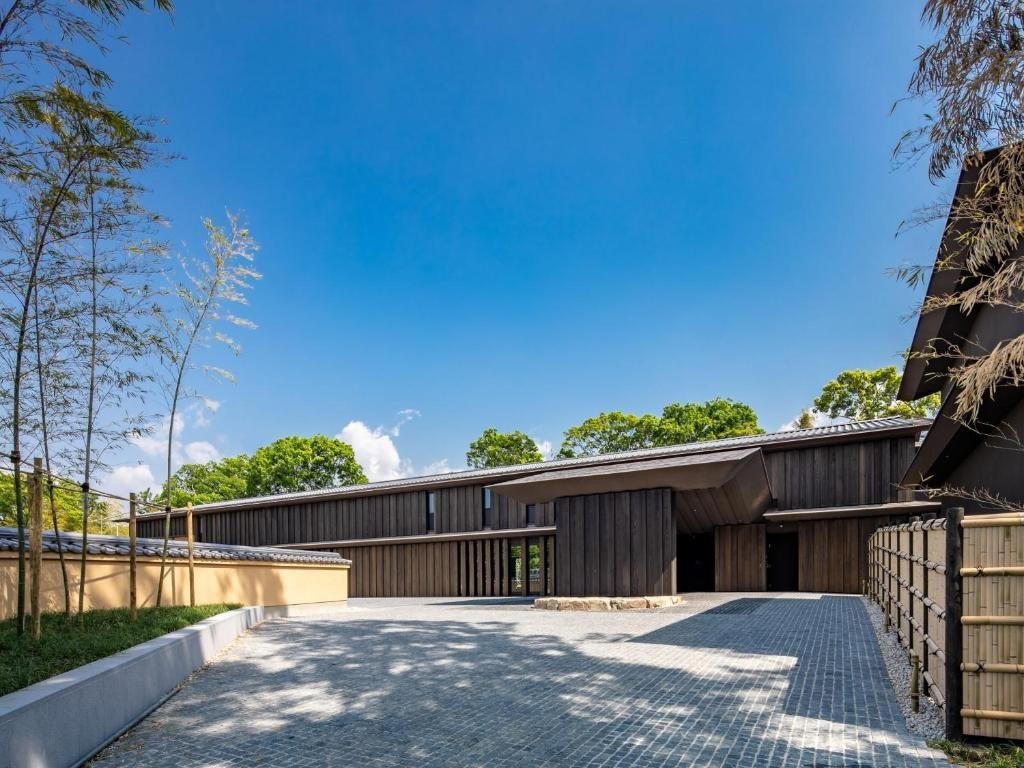
The address in Tenma, 1 Chome-18-17, a short distance from the Tenjimbashisuji shopping arcade, one of Japan's longest covered markets, places the restaurant inside a neighbourhood that operates at close range with its food supply. The market's daytime energy, the proximity of the river, the density of small restaurants along the surrounding streets: this is not the hermetic world of a destination kaiseki room designed to shut out the city. Unkaku draws from the city, and the Nozaki dish is the most literal proof of that orientation. Dishes grounded in the history of a specific local temple and its surrounding agricultural tradition do not happen in rooms that have opted out of their geography.
At this scale, consistency and the quality of individual interactions carry more weight than aggregated scores. A 4.3 from 36 diners who found the restaurant, made reservations, and engaged with what the kitchen was doing carries a different signal than the same score from a tourist-facing trattoria with hundreds of passing reviews.
Planning Your Visit
Unkaku is at 1 Chome-18-17 Tenma, Kita Ward, Osaka, accessible from Tenjimbashi-Suji 6-chome Station on the Tanimachi and Sakaisuji lines, or from Osaka Tenmangu Station. Price tier: ¥¥¥, placing it in the mid-to-upper range for Japanese dining in the city without reaching the ¥¥¥¥ tier of Osaka's internationally-oriented tasting-menu restaurants. Recognition: Michelin Plate 2024. Reservations:
For wider context on where Unkaku sits in the city's dining picture, see our full Osaka restaurants guide. For accommodation near Tenma and Kita Ward, our full Osaka hotels guide covers the range from large international properties to smaller design-led rooms. Our full Osaka bars guide, our full Osaka wineries guide, and our full Osaka experiences guide round out the picture for a longer stay.
What Regulars Order
What do regulars order at Unkaku?
The Nozaki-style grilled small sea bream is the reference point, both because it is the dish most directly connected to the kitchen's stated philosophy and because the technique (simmering the fish in rapeseed oil to render the bones edible) is specific enough to be worth seeking out rather than something you could encounter elsewhere. The dish connects to the history of the Nozaki Kannon Temple area and its former canola cultivation, which gives it a narrative layer that complements the eating. It is the order that anchors the experience to what makes a kaiseki meal in Osaka different from one in Tokyo or Kyoto: the insistence that the food be accountable to the specific place it comes from.
Frequently asked questions
Is Unkaku more mid-range or high-end?
Pricing at Unkaku is listed as ¥¥¥.
What distinctions does Unkaku have?
Unkaku has received recognition including: ‘Unkaku’ is a traditional pattern depicting cranes dancing in the clouds. Masaharu Shimamura sees himself as a crane; the image expresses his wish to fly high in the culinary world. In the thrifty spirit of Osaka cooking, he uses every part….
What do regulars order at Unkaku?
The Nozaki-style grilled small sea bream is the dish most closely tied to the kitchen's philosophy: the fish is simmered in rapeseed oil, a nod to Nozaki Kannon Temple's historic association with canola cultivation, so that even the bones can be eaten whole. It is the clearest expression of chef Masaharu Shimamura's commitment to using every part of an ingredient, the defining principle of Unkaku's approach to Japanese cooking.
What's the cuisine at Unkaku?
Where is Unkaku in Osaka?
Unkaku is located at 1 Chome-18-17 Tenma, Kita Ward, Osaka, 530-0043, Japan, Osaka.
A Quick Peer Check
Comparable options at a glance, pulled from our tracked venues.
| Venue | Cuisine | Price | Awards | Notes |
|---|---|---|---|---|
| UnkakuThis venue (the venue you are viewing) | Traditional Kaiseki | $150–200 | Michelin Plate | Not listed |
| HAJIME | Avant-Garde Japanese Fine Dining | $300–500 | 3 Michelin Stars · World's 50 Best #83 | French, Innovative |
| La Cime | Modern French with Japanese Ingredients | $150–200 | 2 Michelin Stars · World's 50 Best #13 | French |
| Kashiwaya Osaka Senriyama | Seasonal Kaiseki Omakase | $200–300 | 3 Michelin Stars · La Liste Top Restaurants | Japanese |
| Taian | Traditional Japanese Kaiseki Omakase | $150–200 | 3 Michelin Stars · La Liste Top Restaurants | Kaiseki, Japanese |
| Fujiya 1935 | Modern Japanese with European influences | $100–150 | 2 Michelin Stars · La Liste Top Restaurants | Innovative |
Recognition history
Dated appearances from independent guides and award organizations, with the underlying list record or original source where available.
Michelin Plate
Michelin
Full recognition history (3 entries)
Michelin Plate
Michelin
Michelin Plate
Michelin