Umai Nori
Umai Nori occupies a quiet address on 20th Street NW in Washington's downtown core, drawing a repeat clientele that suggests something more than passing novelty. The name points toward Japanese culinary vocabulary, positioning it within D.C.'s expanding roster of Japanese-inflected concepts. For those building a short list of addresses worth returning to, it belongs on the radar.
Pearl is the En Primeur Club membership app — saves, bookings, and concierge access live there. Same editors, same standards.
- Address
- 1147 20th St NW, Washington, DC 20036
- Phone
- +12025065218
- Website
- umainori.com
- Directions
- Get directions
 Saves & bookings on Pearl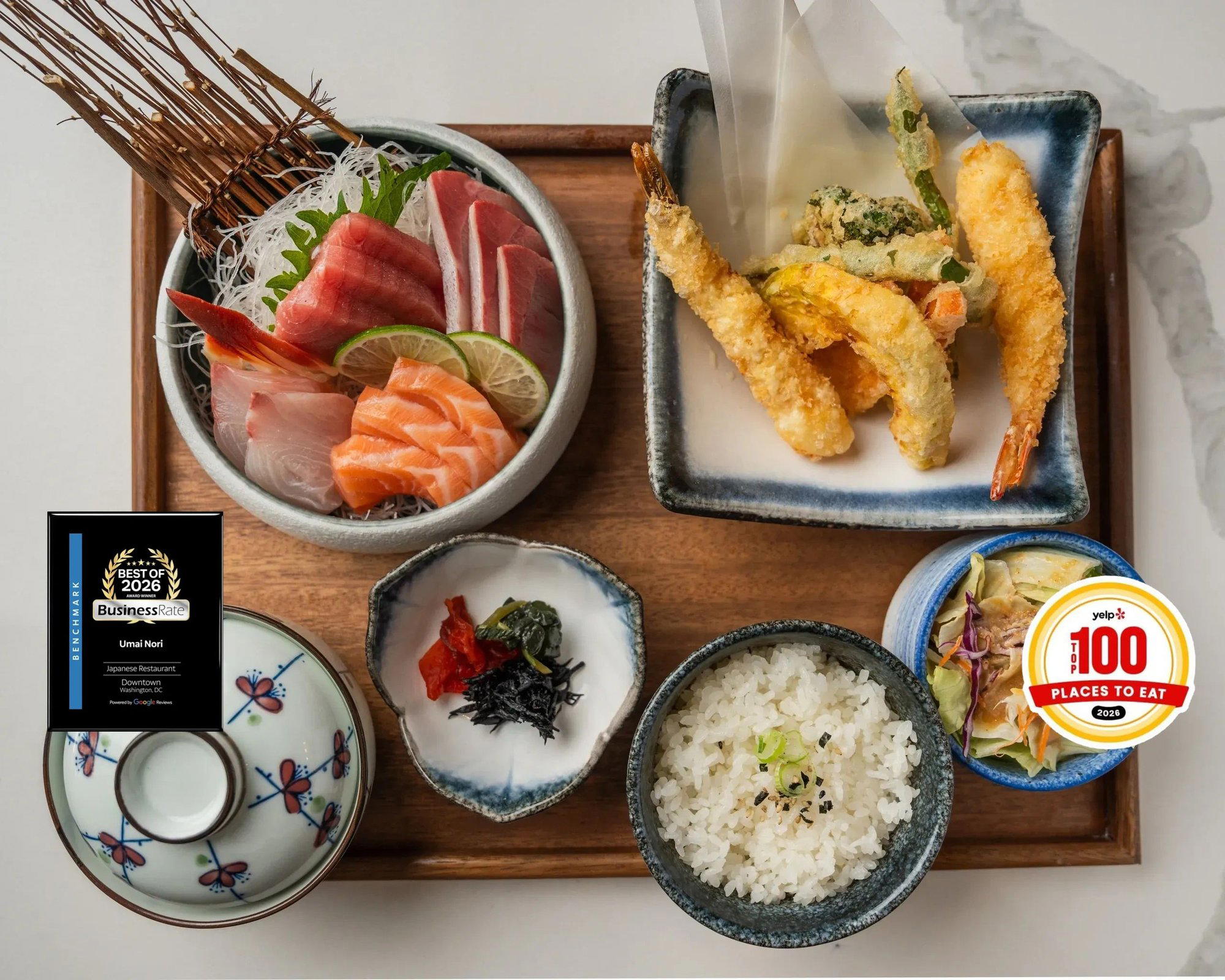
A Corner of D.C.'s Downtown That Rewards Repetition
Washington's 20th Street NW runs through a stretch of the city that is more office corridor than dining destination, which makes the addresses that sustain loyal followings here more telling than those doing the same in Penn Quarter or Shaw. When a room earns regulars in a neighbourhood defined by midday traffic and Monday-to-Friday rhythms, it is usually because the offer holds up beyond first impressions. Umai Nori, at 1147 20th Street NW, sits in that category: a modern Japanese sushi and temaki restaurant in Washington, D.C. with a casual dress code, recommended reservations, and an accessible price point around $50 per person.
D.C.'s Japanese dining tier has broadened considerably over the past decade. What was once a thin roster of sushi counters and ramen shops has diversified into omakase formats, izakaya-adjacent programs, and hybrid concepts that draw on Japanese technique while reflecting the city's own cultural mix. Umai Nori operates within that expanded field, and the fact that its name references nori, the dried seaweed sheet that functions as both wrapper and structural element across Japanese cuisine, hints at a concept built around the everyday vocabulary of Japanese food rather than its ceremonial upper register.
What the Regulars Know
Loyal clientele at any Japanese-inflected restaurant in this price tier tend to return for one of two reasons: either the kitchen maintains a consistency that makes the familiar feel trustworthy, or the format allows enough variation that repeat visits surface something new. The regulars at addresses like Umai Nori typically navigate both. They know which items anchor the menu across seasons, and they know when to ask what has changed. That kind of relationship with a restaurant, one that assumes a degree of institutional memory on both sides of the counter, is harder to sustain in a neighbourhood driven by transient lunch crowds and expense-account dinners.
The broader D.C. dining picture gives useful context here. At the higher end of the city's Japanese-influenced scene, tasting menus and omakase counters set the terms. Restaurants like Jônt operate in the modern French and contemporary register, while minibar represents the molecular and avant-garde pole. The restaurant does not appear to compete at that level of formality. Instead, it occupies a middle register where the quality of ingredients and the specificity of execution matter more than the architecture of a multi-course sequence. That positioning tends to suit regulars who want to eat well without the choreography of a tasting menu.
Japanese Technique in the Context of D.C.'s Wider Scene
Nori as a culinary reference point is worth examining briefly. In Japanese cuisine, the sheet functions across registers: wrapped around onigiri at convenience stores, layered into temaki at sushi bars, pressed into sheets for ramen toppings, and used as a seasoning in its own right. A concept named for it could mean something minimalist and snack-forward, or something more considered that uses the ingredient as a structural metaphor.
D.C.'s most ambitious cooking across all cuisine types has trended toward that ingredient-specificity in recent years. Across the city's better-regarded contemporary addresses, including Oyster Oyster with its sustainable New American focus, Causa in the Peruvian fine-dining bracket, and Albi in the Middle Eastern $$$$-tier, the signal is consistently toward sourcing and specificity rather than range. That is the competitive climate in which the restaurant operates, and it is a demanding one. The city's diners are more calibrated than they were a decade ago, and a Japanese concept at this address needs to hold its own against a comparable set that has raised expectations across the board.
For a broader orientation to the city's current dining conversation, the EP Club Washington, D.C. restaurants guide maps the full range of what is worth tracking, from neighbourhood staples to tasting-menu commitments. Nationally, the reference points for Japanese-influenced fine dining include Atomix in New York, which applies Korean-Japanese precision at the highest tier, and on the West Coast, Providence in Los Angeles, which has sustained a seafood-focused program over many years. The benchmark for what longevity looks like in a seafood-forward format can also be found at Le Bernardin in New York City, where decades of consistency have made the restaurant a reference point rather than just a dining option.
Planning a Visit
The restaurant's address, 1147 20th Street NW, places it within walking distance of Dupont Circle and the Foggy Bottom metro stations, making it accessible from most central D.C. locations without requiring a car. The neighbourhood functions at its highest volume on weekday lunchtimes; evenings here tend to be quieter than the Penn Quarter or 14th Street corridors, which can work in the visitor's favour when table availability is a concern. The restaurant is recommended for reservations, and its regular hours are Monday through Saturday from 11 AM to 3 PM and 5 to 10 PM, with Sunday hours from 12 to 9 PM.
Those building a broader D.C. itinerary that includes a high-end tasting experience might also consider The Inn at Little Washington, roughly 70 miles from the city, or look further afield to Blue Hill at Stone Barns in Tarrytown for farm-driven, long-format dining. For those for whom the West Coast fine-dining circuit is relevant, The French Laundry in Napa, Single Thread Farm in Healdsburg, Lazy Bear in San Francisco, Alinea in Chicago, Addison in San Diego, and Emeril's in New Orleans represent the full range of what long-running American fine dining looks like at its most recognised. Internationally, 8 1/2 Otto e Mezzo Bombana in Hong Kong demonstrates what European technique transplanted to an Asian city can sustain over time, a useful reference point for thinking about what cross-cultural culinary concepts require to hold up.
Cuisine and Credentials
Comparable venues nearby, for context on price, style, and recognition.
| Venue | Cuisine | Price | Notes |
|---|---|---|---|
| Umai NoriThis venue — the venue you are viewing | Modern Japanese Sushi & Temaki | $$ | Not listed |
| Susheria | Nikkei Japanese-Peruvian Fusion | $$ | Waterfront Georgetown |
| Toryumon Japanese House | Japanese Sushi and Ramen | $$ | Golden Triangle |
| Uchi | Modern Japanese Omakase | $$$ | Downtown D.C. |
| Etto | Neapolitan Pizza & Italian Antipasti | $$ | Logan Circle |
| the DINER | Modern American Diner | $$ | Reed-Cooke |
Continue exploring
More in Washington DC
Restaurants in Washington DC
Browse all →
Bars in Washington DC
Browse all →
Hotels in Washington DC
Browse all →

At a Glance
- Modern
- Trendy
- Casual
- Casual Hangout
- Date Night
- Open Kitchen
- Sake Program
- Craft Cocktails
Current opening hours
- Monday
- 11 AM–3 PM, 5–10 PM
- Tuesday
- 11 AM–3 PM, 5–10 PM
- Wednesday
- 11 AM–3 PM, 5–10 PM
- Thursday
- 11 AM–3 PM, 5–10 PM
- Friday
- 11 AM–3 PM, 5–10 PM
- Saturday
- 11 AM–3 PM, 5–10 PM
- Sunday
- 12–9 PM
Hours can change for holidays and private events. Last verified .
Welcoming and casual atmosphere with a large bar on the ground floor and dine-in seating upstairs.