Toryumon Japanese House
Toryumon Japanese House occupies a prominent address on Pennsylvania Avenue NW, placing Japanese dining within reach of Washington's institutional core. Relative to the capital's deeper roster of tasting-menu destinations, Japanese formats here occupy a smaller, more specialist niche. Visitors planning a meal should map the address against the broader D.C. scene before booking.
Pearl is the En Primeur Club membership app — saves, bookings, and concierge access live there. Same editors, same standards.
- Address
- 1901 Pennsylvania Ave NW #0001, Washington, DC 20006
- Phone
- +12027854600
- Website
- toryumonjapanese.com
- Directions
- Get directions
 Saves & bookings on Pearl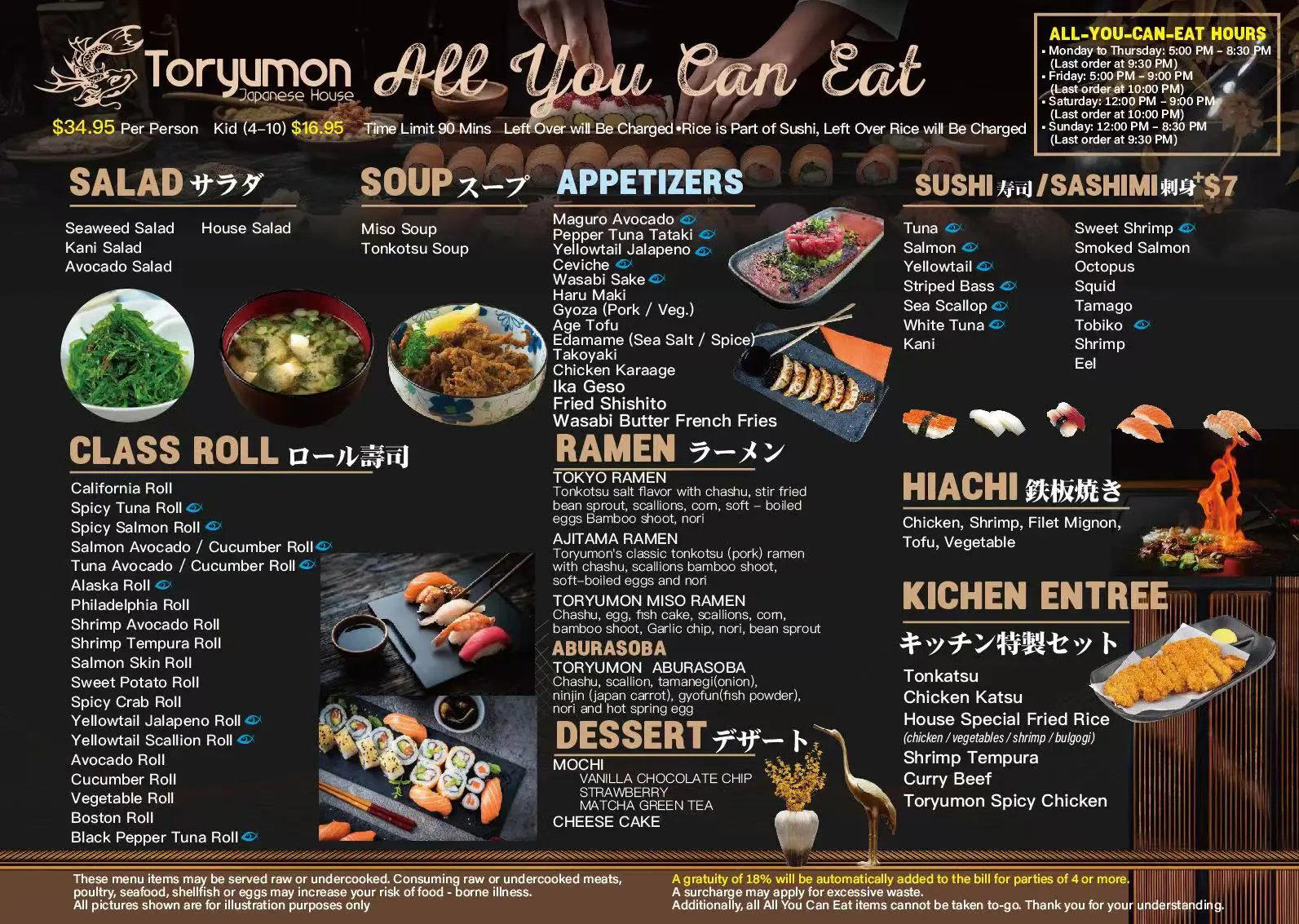
Japanese Dining in Washington, D.C.: Where Toryumon Sits in the Picture
Pennsylvania Avenue carries a particular weight in Washington. The address at 1901 Pennsylvania Ave NW places Toryumon Japanese House in the corridor between Georgetown and the White House, a stretch where the density of office workers, government adjacent visitors, and hotel guests creates a reliable dining audience. Japanese restaurants in D.C. occupy a smaller share of the city's serious dining tier than their counterparts in New York or Los Angeles, which means that when a Japanese house operates at this address, it draws from a relatively thin local comparable set. The comparison group for Japanese dining in D.C. skews toward sushi counters in Penn Quarter or izakaya formats in Adams Morgan, rather than the layered omakase economy you find compressed into a few Midtown Manhattan blocks. That context matters when you are deciding where Toryumon fits and whether it belongs on your itinerary.
D.C.'s ambitious dining scene has spent the last decade consolidating around a handful of formats: the chef-driven tasting menu, the fast-casual refined by sourcing credentials, and the culturally specific restaurant that operates with genuine depth rather than approximation. Jônt and minibar anchor the progressive tasting-menu end; Albi and Causa demonstrate how culturally rooted cooking with serious technique has carved out a high-demand position. Japanese formats have not yet clustered in the same way, which leaves individual establishments to carry more representational weight than they might in a denser market.
The Address and What It Signals
The Pennsylvania Avenue location is not incidental. Restaurants in this corridor operate against different foot traffic patterns than those in Shaw, 14th Street, or Capitol Hill. Lunch demand from nearby offices and federal buildings shapes the daytime rhythm. Evening covers draw more from hotel guests and visitors than from D.C. residents making a deliberate neighbourhood pilgrimage. This is not a criticism; it is a calibration point. Some of the city's most careful cooking happens outside the residential dining clusters, and address alone tells you nothing about kitchen ambition. But it does tell you something about the planning context: arriving at 1901 Pennsylvania Ave NW does not require the kind of neighbourhood research that a Shaw or Petworth reservation demands. The logistics are legible from most central D.C. hotels.
For visitors cross-referencing against the broader American dining calendar, comparable moments of precision-led Japanese dining appear at different price tiers from coast to coast: The French Laundry in Napa and Single Thread Farm in Healdsburg operate in the same register of deliberate, high-attention hospitality, even across different cuisines. Within the Korean-Japanese axis of contemporary American fine dining, Atomix in New York City sets a standard that illustrates how high the ceiling can reach when a culturally specific format operates with full resource commitment.
Planning a Visit: What to Know Before You Go
This is not unusual for Japanese houses that operate at a measured pace, but it does shift the booking dynamic. Restaurants with minimal digital footprint in D.C. sometimes reflect a deliberately local, word-of-mouth orientation; others are simply newer or quieter on social channels. Reservations are recommended, and it is worth confirming availability before you go.
Washington's more documented booking challenges cluster at the tasting-menu tier. Jônt and minibar require advance planning measured in weeks or months. Oyster Oyster, which sits at a lower price tier than its vegetable-forward peers nationally, still fills its limited covers quickly. If Toryumon operates on a similar reservation model, the absence of a widely publicized booking platform suggests walk-in or phone inquiry may be the operative route, at least until a more visible booking system is confirmed. Treat the uncertainty as a reason to plan further ahead rather than assuming availability on short notice.
For visitors whose D.C. itinerary extends across multiple evenings, the Japanese House format tends to pair well with a more overtly progressive dinner elsewhere in the same trip. Causa's Peruvian tasting format and Albi's live-fire Middle Eastern cooking offer distinct enough registers that the evenings do not compete with each other.
Travelers who approach Japanese dining seriously will find useful reference points in how this format performs elsewhere in the country. Providence in Los Angeles and Addison in San Diego show what sustained investment in a refined dining format looks like over time; Blue Hill at Stone Barns in Tarrytown and Lazy Bear in San Francisco demonstrate how format discipline and sourcing commitment translate into durable recognition. Internationally, 8 1/2 Otto e Mezzo Bombana in Hong Kong and Le Bernardin in New York City sit at the reference tier for sustained seafood-adjacent precision. Where Toryumon positions itself within that continuum depends on format and execution details that require direct verification.
Planning Details
Address: 1901 Pennsylvania Ave NW, Suite 0001, Washington, DC 20006. Reservations: Recommended. Neighbourhood logistics: The Pennsylvania Avenue address is walkable from several central D.C. hotels and accessible via Metro's Blue, Orange, and Silver lines at Farragut West. Budget: About $25 per person. Timing: Mon to Thu 11 AM to 3:30 PM and 5 to 10 PM; Fri 11 AM to 3:30 PM and 5 to 10:30 PM; Sat 12 to 10:30 PM; Sun 12 to 10 PM.
The Quick Read
Comparable venues nearby, for context on price, style, and recognition.
| Venue | Cuisine | Price | Notes |
|---|---|---|---|
| Toryumon Japanese HouseThis venue — the venue you are viewing | Not listed | $$ | Not listed |
| Susheria | Not listed | $$ | Waterfront Georgetown, Nikkei Japanese-Peruvian Fusion |
| Tokyo Pearl | Dupont Circle, Modern Japanese Sushi Bar | $$ | Not listed |
| KYOJIN Sushi | Not listed | $$$ | West Village Georgetown, Modern Japanese Sushi |
| Brisa | Not listed | Not listed | Buzzard Point, Coastal Latin with Tulum-inspired vibes |
| Chaplin's | Shaw, Modern Japanese Ramen House | $$ | Not listed |
Continue exploring
More in Washington DC
Restaurants in Washington DC
Browse all →
Bars in Washington DC
Browse all →
Hotels in Washington DC
Browse all →
At a Glance
- Cozy
- Modern
- Trendy
- Casual Hangout
- After Work
- Family
- Sake Program
Current opening hours
- Monday
- 11 AM–3:30 PM, 5–10 PM
- Tuesday
- 11 AM–3:30 PM, 5–10 PM
- Wednesday
- 11 AM–3:30 PM, 5–10 PM
- Thursday
- 11 AM–3:30 PM, 5–10 PM
- Friday
- 11 AM–3:30 PM, 5–10:30 PM
- Saturday
- 12–10:30 PM
- Sunday
- 12–10 PM
Hours can change for holidays and private events. Last verified .
Cozy and modern atmosphere ideal for casual lunches, relaxed dinners, after-work gatherings, and family parties.