Udonya Kazu

Udonya Kazu brings Tokorozawa’s everyday noodle culture into sharper focus: udon, tempura, and curry udon treated with the seriousness usually reserved for higher-priced counters. Its Tabelog Udon EAST 100 selections in 2020, 2022, and 2024 make it a useful benchmark for Saitama wheat-noodle dining rather than a casual stop chosen by convenience alone.
Pearl is the En Primeur Club membership app — saves, bookings, and concierge access live there. Same editors, same standards.
- Address
- 埼玉県所沢市小手指町1-29-3
- Phone
- +81420081501
- Website
- tabelog.com
 Saves & bookings on Pearl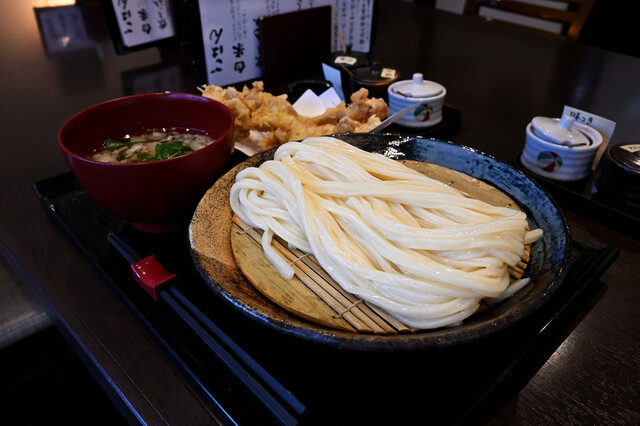
Approaching the Kotesashi side of Tokorozawa, the dining rhythm changes from central-city speed to a more local tempo: station streets, residential blocks, and small restaurants built around repeat custom rather than spectacle. That setting suits udon. Wheat noodles in Japan reward attention to texture, temperature, broth, and frying technique, but they rarely ask for ceremony. Udonya Kazu belongs to that grounded category, where the argument is made through noodle craft and side dishes rather than theatrical service.
Tokorozawa’s restaurant scene is not a single-lane story. There is polished dining at CP RESTAURANT, burger-and-café informality at CHOPPERS HAMBURGER & CAFE, ramen focus at Jikasei Temomi Men Suzunoki, and soba-led tradition at Kuromugi. Within that spread, udon occupies a particularly practical lane: affordable, ingredient-led, and unforgiving when the basics are weak. The useful comparison is not luxury versus casual, but how much technique can sit inside a modest noodle-house format.
Wheat noodles, tempura, and curry udon make the case for Saitama's everyday craft
Udon’s reputation depends on wheat quality, dough handling, and timing. The difference between a competent bowl and a serious one is often measured in elasticity, surface grip, and the way broth clings without turning heavy. In eastern Japan, udon shops also compete through supporting categories: tempura tests frying discipline, while curry udon tests balance between spice, thickness, and noodle structure. Udonya Kazu works within precisely those categories: udon, tempura, and curry udon form the public identity of the kitchen.
That matters because ingredient sourcing in this format is less about luxury produce and more about consistency. Wheat noodles expose shortcuts. Broth bases, frying oil management, and the vegetables or seafood used for tempura leave little room for disguise. A shop selected for the Tabelog Udon EAST 100 in 2020, 2022, and 2024 has earned recognition inside a category where diners tend to be highly detail-sensitive and repeat visits shape reputation. The award is not a Michelin-style luxury signal; it is a category signal, useful for reading where a neighborhood noodle shop sits within the broader eastern Japan udon conversation.
The presence of sake and shochu also places the meal closer to a small local dining room than a pure lunch counter. That detail matters in Tokorozawa, where restaurants often serve dual roles: quick daytime meal, evening gathering place, and neighborhood reference point. For travelers building a wider food itinerary, Beruteko and other local rooms show how varied the city can be without adopting central Tokyo’s high-pressure reservation culture.
A neighborhood noodle room with award-level scrutiny
The strongest way to read Udonya Kazu is as a local-format restaurant that has been judged beyond its immediate neighborhood. A Tabelog score of 3.69 and repeated Udon EAST 100 selections give it a different kind of weight from a place known only through local habit. The room’s scale keeps the experience in the small-restaurant register rather than the destination-dining register, and that is part of the appeal: udon is at its sharpest when the meal feels direct, not overproduced.
Against Tokorozawa peers, the distinction is category depth. Jikasei Temomi Men Suzunoki points ramen drinkers toward hand-worked noodle culture; Kuromugi speaks to soba’s buckwheat tradition; the restaurant sits on the wheat side of the same Japanese noodle grammar. That makes it a useful stop for diners who care less about a long menu and more about what a single staple can reveal when handled seriously.
The broader lesson is that Saitama’s dining interest is not confined to special-occasion restaurants. In Japanese food culture, humble categories often carry deep technique: onigiri, curry, soba, ramen, udon. Readers comparing regional everyday dining might also look at Onigiri Time in Pasadena, [Curry Senmon Ten] Maruyama Kyoju. in Sapporo, or (Shoku) Vietnam in Kawasaki to see how focused formats travel across cities and cuisines. The common thread is restraint: fewer categories, clearer expectations, and a higher penalty for imprecision.
How to place it in a Tokorozawa itinerary
For a Tokorozawa food day, the restaurant makes the strongest sense as the noodle anchor rather than a late add-on. Pair it with a broader scan of the city through Our full Tokorozawa restaurants guide, then decide whether the rest of the day should lean casual, formal, or drinks-led. Travelers staying locally can cross-check Our full Tokorozawa hotels guide, while evening planning belongs in Our full Tokorozawa bars guide. The city also has broader travel-planning rails through Our full Tokorozawa experiences guide and Our full Tokorozawa wineries guide, though udon remains the more grounded lens here.
Compared with destination restaurants built around ceremony, this is a narrower proposition: wheat noodles, frying, curry broth, and the discipline to repeat them. That narrower brief is the point. Diners chasing spectacle will find more obvious drama elsewhere, from beef-focused rooms such as -Grilled beef Sukiyaki- KAMAKURA TANUKIAN 鎌倉 たぬき庵 in Kamakura to izakaya-style seafood and charcoal cooking at. 鮪と炭火焼き うお炭 秋葉原店 in Tokyo. Diners interested in everyday Japanese formats will understand the appeal faster.
For a broader map of casual precision, the comparison can stretch beyond Saitama:.cafe in Osaka.know in Kumamoto, and Jōdo Saké Bar in Los Angeles each show how focused concepts depend on clarity rather than scale. The restaurant’s value is similar, but more elemental. It treats udon not as a filler meal between larger plans, but as the plan itself.
Fast Comparison
Comparable venues by cuisine and price in the same metro.
| Venue | Cuisine | Price | Notes |
|---|---|---|---|
| Udonya KazuThis venue — the venue you are viewing | Udon and tempura shop | $ | Not listed |
| Jikasei Temomi Men Suzunoki | Handmade ramen with house-made temomi noodles | $ | Sayamagaoka |
| Ramen Kappa House | Tomato ramen & tsukemen shop | $ | Tokorozawa |
| Gyoza no Manshu (ぎょうざの満洲) | Japanese Gyoza Specialist | $$ | 新所沢 |
| Unagiya Shubo Gasou Echigoya | Traditional Unagi & Kaiseki | $$$ | Kotesashi |
| CHOPPERS HAMBURGER & CAFE | American Burger Cafe | $$ | Kotesashi |
Recognition history
Dated appearances from independent guides and award organizations, with the underlying list record or original source where available.
Tabelog 100 #57 · No. 57
Tabelog · Tabelog 100 - Udon - EAST - 2024
Continue exploring
More in Tokorozawa
Restaurants in Tokorozawa
Browse all →



Bars in Tokorozawa
Browse all →




Hotels in Tokorozawa
Browse all →




Wineries in Tokorozawa
Browse all →
At a Glance
- Cozy
- Quiet
- Casual Hangout
- Group Dining
- Solo
- After Work
- Family
- Standalone
- Private Dining
- Sake Program
A small 24-seat, non-smoking udon shop with a simple, relaxed interior and a low-key, cozy atmosphere suited to casual meals with friends rather than formal dining.