Kuromugi

Kuromugi places Tokorozawa soba in a serious regional frame: a compact Nishi-Tokorozawa room, Tabelog 100 Soba EAST 2025 recognition, and a modest JPY 1,000–1,999 spend band. The appeal is not spectacle but sourcing discipline, noodle craft, and the kind of neighborhood scale that rewards diners who care about buckwheat as much as ambience.
Pearl is the En Primeur Club membership app — saves, bookings, and concierge access live there. Same editors, same standards.
- Address
- Japan, 〒359-1144 Saitama, Tokorozawa, Nishitokorozawa, 1 Chome−4−14 山和ビル 1階
- Phone
- +81 4-2922-9619
- Website
- kuromugi28.blog137.fc2.com
- Directions
- Get directions
 Saves & bookings on Pearl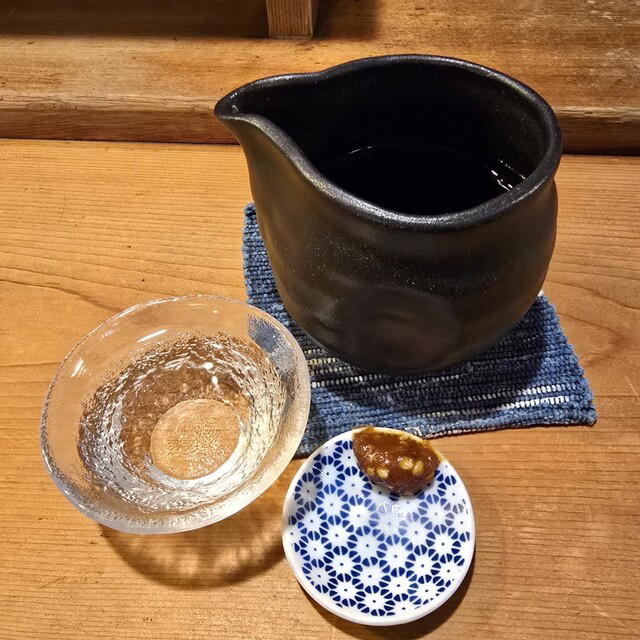
Approaching a serious soba room in suburban Saitama is different from entering a polished Tokyo counter. The cues are quieter: a small frontage near Nishi-Tokorozawa, a room built around counter seating and raised-floor tables, and a pace that belongs to handmade noodles rather than destination-dining theatre. Kuromugi sits in that register, where the value of the meal begins with buckwheat, water, and timing rather than a long menu narrative.
Tokorozawa’s restaurant culture is often read through convenience, family dining, and station-area regulars, but its better addresses show how much depth sits outside central Tokyo. Soba is a useful lens for that. It does not need luxury signals to be rigorous. A low spend band can still carry exacting craft when the kitchen is judged on texture, aroma, cut, and the balance between noodles, dipping sauce, and drink.
Buckwheat, restraint, and the Saitama soba bracket
Kuromugi’s most persuasive credential is its selection for Tabelog 100 Soba EAST 2025, a category that places it within a competitive eastern-Japan soba field rather than merely among local Tokorozawa restaurants. That matters because soba ranking is unforgiving: small differences in milling, hydration, boiling, rinsing, and service temperature change the entire meal. Recognition in this category signals consistency in a craft where the margin for error is narrow.
The ingredient story is also the editorial story. Soba houses live or fail on how clearly they express buckwheat, and the better ones resist the temptation to bury noodles under excessive garnish or overbuilt sets. The category rewards directness: noodles, tsuyu, seasonal sides when offered, and drinks that understand salt, smoke, and grain. Kuromugi’s listed drinks, including sake, shochu, and wine, place it in the grown-up soba tradition where the meal can move from a lunch stop into an evening of small plates and noodles without becoming formal.
In Tokorozawa terms, the price band is part of the argument. At JPY 1,000–1,999, it sits beside value-minded local names such as negombo33 and Sayama Okina rather than higher-spend steak formats such as STEAK HOUSE BRASE Tokorozawa ten. Ramen Kappa House occupies an even leaner casual bracket, while Italian and contemporary local dining fill different occasions. The point is not that soba is cheaper; it is that soba offers a different kind of precision at a modest spend, one based on repetition and restraint.
A small room changes the meal
The physical format keeps the experience focused. Seventeen seats, including counter seats and raised-floor table seating, create the kind of room where turnover and timing matter. Soba loses force when it waits. A compact room helps the kitchen protect that rhythm, especially during lunch, when the category often functions as a quick meal but serious diners expect the same attention as dinner.
The no-frills structure also keeps expectations in the right place. This is not the Tokorozawa address for a long chef-led tasting menu, nor is it trying to compete with central Tokyo’s high-price counters. Its competitive set is narrower and more specific: regional soba rooms that deliver craft, comfort, and a sense of place without inflating the occasion. That makes it useful for travelers who want to understand the food culture around the Seibu lines, not only the headline restaurants inside the Yamanote loop.
For a broader Tokorozawa map, compare the city’s range through Beruteko, CHOPPERS HAMBURGER & CAFE, CP RESTAURANT, Jikasei Temomi Men Suzunoki, and Musashino Dentou no Aji Ryotaro. Together they show a city where specialist noodles, casual Western formats, and local Japanese cooking coexist at close range.
How to read Kuromugi in a Tokorozawa itinerary
The address works strongest as a focused meal rather than a detour built around spectacle. Nishi-Tokorozawa is close enough to central Tokorozawa to combine with local shopping, parks, or Seibu-line movement, but the dining decision should be made around soba rather than convenience alone. The room’s small scale and the listed reservation availability make planning sensible, particularly for diners who dislike waiting during peak lunch periods.
Operational details also shape the audience. Cash-only payment narrows the margin for spontaneous card-dependent travelers, and the policy excluding children under elementary school age makes the room better suited to adults, older children, and small groups that can match the pace of a compact soba restaurant. Private use is listed up to 20 people, which is notable for a room of this size, but the strongest read remains intimate rather than banquet-driven.
For readers building a wider Saitama or Japan dining file, Kuromugi belongs in the same research habit as the city pages: Our full Tokorozawa restaurants guide, Our full Tokorozawa hotels guide, Our full Tokorozawa bars guide, Our full Tokorozawa wineries guide, and Our full Tokorozawa experiences guide. For cross-city comparison rather than direct peer benchmarking, file it alongside distinct Japanese and Japanese-adjacent formats such as -Grilled beef Sukiyaki- KAMAKURA TANUKIAN 鎌倉 たぬき庵 in Kamakura. 鮪と炭火焼き うお炭 秋葉原店 in Tokyo.cafe in Osaka.know in Kumamoto, (Shoku) Vietnam in Kawasaki, [Curry Senmon Ten] Maruyama Kyoju. in Sapporo, Jōdo Saké Bar in Los Angeles, and Onigiri Time in Pasadena.
The verdict is simple: Kuromugi is for diners who take soba seriously as an ingredient-led cuisine, not as a light prelude to something grander. Its appeal lies in the discipline of a small room, the credibility of Tabelog 100 Soba EAST 2025 recognition, and a price point that keeps the experience grounded in everyday Japanese dining while still rewarding close attention.
Comparison Snapshot
Comparable venues by cuisine and price in the same metro.
| Venue | Cuisine | Price | Notes |
|---|---|---|---|
| Kuromugi | Traditional handmade soba & sake | $$ | Nishitokorozawa |
| 自家製手もみ麺 鈴ノ木 | 自家製手もみ麺 | $$ | 狭山ヶ丘 |
| Ramen Kappa House | Tomato ramen & tsukemen shop | $ | Tokorozawa |
| Gyoza no Manshu (ぎょうざの満洲) | Japanese Gyoza Specialist | $$ | 新所沢 |
| Udonya Kazu | Udon and tempura shop | $ | Kotesashi |
| STEAK HOUSE BRASE Tokorozawa ten | Steakhouse | $$ | Shintokorozawa |
Recognition history
Dated appearances from independent guides and award organizations, with the underlying list record or original source where available.
Tabelog 100 #17 · No. 17
Tabelog · Tabelog 100 - Soba - EAST - 2025
Continue exploring
More in Tokorozawa
Restaurants in Tokorozawa
Browse all →



Bars in Tokorozawa
Browse all →


Hotels in Tokorozawa
Browse all →




Wineries in Tokorozawa
Browse all →
At a Glance
- Quiet
- Cozy
- Classic
- Intimate
- Solo
- Date Night
- After Work
- Casual Hangout
- Standalone
- Sake Program
- Beer Program
- Local Sourcing
Current opening hours
- Monday
- 11:30 AM–2:30 PM, 6–10 PM
- Tuesday
- 11:30 AM–2:30 PM, 6–10 PM
- Wednesday
- Closed
- Thursday
- 11:30 AM–2:30 PM, 6–10 PM
- Friday
- 11:30 AM–2 PM, 6–10 PM
- Saturday
- 11:30 AM–2:30 PM, 6–10 PM
- Sunday
- 11:30 AM–2:30 PM, 6–10 PM
Hours can change for holidays and private events. Last verified .
Calm, refined neighborhood soba restaurant with a small, intimate dining room and a quietly classic feel, oriented toward adults enjoying soba and carefully selected sake in a relaxed setting.