Jikasei Temomi Men Suzunoki

A compact Tokorozawa ramen counter with repeated Tabelog Ramen EAST 100 selections from 2019 through 2025, Jikasei Temomi Men Suzunoki belongs to the serious suburban noodle circuit rather than the tourist ramen trail. Its appeal sits in handmade-style noodle craft, a tight counter format, and a menu range that covers ramen, abura-soba, maze-soba, and tsukemen.
Pearl is the En Primeur Club membership app — saves, bookings, and concierge access live there. Same editors, same standards.
- Address
- 1 Chome-3003-83 Sayamagaoka, Tokorozawa, Saitama 359-1161, Japan
- Phone
- +81 4-2907-7967
- Website
- twitter.com
 Saves & bookings on Pearl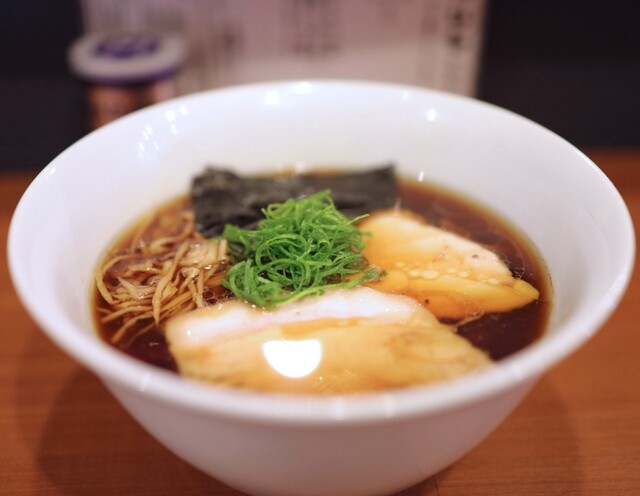
Sayamagaoka is not the Tokyo ramen postcard. The area moves at commuter-line tempo, with small food shops near the station and regulars reading the room before the menu. In this counter culture, ramen is judged less by theatrical plating than by bowl discipline: noodle texture, broth balance, tare control, and clean turnover in a small space.
That frames Jikasei Temomi Men Suzunoki, a Tokorozawa ramen shop with eight seats and a category spread of ramen, abura-soba, maze-soba, and tsukemen. The name states the argument before ordering: house-made, hand-worked noodles. In contemporary Japanese ramen, noodle sourcing is not a side detail; it determines chew, broth pickup, and whether a bowl feels engineered for speed or built around texture.
Hand-worked noodles define the shop's place in Saitama ramen
Tokyo-adjacent ramen culture is technically fragmented. Some shops build reputations on clear chintan broths, others on heavy paitan, dried-fish intensity, spice, or oil-based formats. A noodle-led shop takes another lane: the bowl succeeds when the noodle has enough structure to carry soup, oil, or dipping sauce without becoming an accessory.
Jikasei Temomi Men Suzunoki sits there with unusual consistency signals for a suburban counter. It was selected for Tabelog Ramen EAST 100 in 2025, with selection history listed across 2019, 2020, 2021, 2022, 2023, and 2024 as well. For a ramen shop outside central Tokyo’s obvious food corridors, that run matters. It places the shop in the wider eastern Japan ramen conversation, not merely Tokorozawa’s local lunch map.
The menu categories show why noodle production matters. Ramen asks the noodle to meet broth; abura-soba and maze-soba pressure sauce, oil, and mixing texture; tsukemen demands a noodle that holds shape after dipping. A shop comfortable across those formats argues for noodles as the constant, with soup and seasoning as context.
Tokorozawa’s dining scene is broader than ramen, but its strongest casual addresses often reward a specific craving rather than a tasting-menu mindset. For local comparison, CHOPPERS HAMBURGER & CAFE works in the burger-and-cafe lane, CP RESTAURANT sits in a more restaurant-led register, and Kuromugi and Musashino Dentou no Aji Ryotaro show how regional Japanese staples anchor everyday dining identity. Against that field, this ramen counter reads as the specialist choice.
A small counter format changes the rhythm of the meal
Eight seats create a different evaluation. There is little distance between production and service, and no anonymity of a large dining room. Counter ramen has the advantage of close cooking, compressed timing, and a meal built around one decisive order rather than courses.
The format clarifies expectations. This is not a long-table group restaurant or leisurely hotel-dining substitute. It is a focused noodle stop with enough recognition to plan around, especially for travelers already moving through Saitama or the Seibu Ikebukuro Line corridor. The absence of a broad hospitality apparatus is part of the category, not a flaw. Serious ramen often operates on narrow margins of space, time, and repetition.
That compactness makes the shop legible for solo diners. Japan’s counter dining tradition makes single-person meals normal rather than secondary, and ramen may be its clearest expression. Families are also part of the listed occasion profile, making the address more flexible than some tiny counters, though the room still favors small parties who can adapt to a short-meal pace.
For broader Tokorozawa mapping, use Our full Tokorozawa restaurants guide for dining, then widen the trip with Our full Tokorozawa hotels guide, Our full Tokorozawa bars guide, Our full Tokorozawa wineries guide, and Our full Tokorozawa experiences guide. Nearby casual research can also include Beruteko, depending on the meal needed before or after the train ride.
Why the sourcing angle matters more than the hype cycle
Ramen’s prestige economy often focuses on queues and rankings, but the more durable question is where the central component comes from. In noodle-led ramen, house production or hand-working changes the bowl’s hierarchy. Wheat, hydration, kneading, resting, cutting, and handling all shape how the finished noodle behaves. Without turning dinner into a technical lecture, a diner can usually tell when a shop treats noodles as architecture rather than filler.
Jikasei Temomi Men Suzunoki’s recognition within Tabelog’s Ramen EAST 100 gives that craft a public benchmark. The stronger editorial point is not that an award guarantees pleasure; ramen preferences are too personal. Repeated selection across multiple years suggests the shop has held attention in a category where new openings and limited runs constantly compete for oxygen.
Price also shapes the experience, because ramen remains one of Japan’s rare categories where serious craft can stay close to everyday spending. Compared with higher-ticket Tokorozawa meals such as eel-focused dining, a specialist noodle counter offers a tighter, lower-commitment way to understand local taste. Compared with burger cafes or general restaurants, it gives a narrower but more revealing view of how a city eats at midday: quickly, attentively, and with strong opinions about texture.
Travelers building a wider Japan dining list can compare this focused noodle address with different formats elsewhere: -Grilled beef Sukiyaki- KAMAKURA TANUKIAN 鎌倉 たぬき庵 in Kamakura,. 鮪と炭火焼き うお炭 秋葉原店 in Tokyo,.cafe in Osaka,.know in Kumamoto, (Shoku) Vietnam in Kawasaki, and [Curry Senmon Ten] Maruyama Kyoju. in Sapporo. For Japanese food culture abroad, Jōdo Saké Bar in Los Angeles and Onigiri Time in Pasadena show how single-category discipline translates outside Japan.
The editorial call is clear: this is a ramen stop for diners who care about noodle craft and quieter food geography beyond central Tokyo. The counter is small, the format focused, and the recognition history strong enough to make the detour feel grounded rather than trend-chasing.
Comparable Spots, Quickly
Comparable venues by cuisine and price in the same metro.
| Venue | Cuisine | Price | Awards | Notes |
|---|---|---|---|---|
| Jikasei Temomi Men SuzunokiThis venue — the venue you are viewing | Handmade ramen with house-made temomi noodles | $ | , | |
| Beruteko | Bakery / Bread Shop | $ | , | Higashi Tokorozawa |
| Udonya Kazu | Udon and tempura shop | $ | , | Kotesashi |
| Ramen Kappa House | Tomato ramen & tsukemen shop | $ | , | Tokorozawa |
| Gyoza no Manshu (ぎょうざの満洲) | Japanese Gyoza Specialist | $$ | , | 新所沢 |
| Sayama Okina | Traditional Japanese soba | $ | , | Shimo-Yamaguchi |
Continue exploring
More in Tokorozawa
Restaurants in Tokorozawa
Browse all →

Bars in Tokorozawa
Browse all →



Hotels in Tokorozawa
Browse all →



Wineries in Tokorozawa
Browse all →
At a Glance
- Cozy
- Hidden Gem
- Intimate
- Solo
- Casual Hangout
- After Work
- Family
- Standalone
- Chefs Counter
- Local Sourcing
A small, counter-focused ramen shop with just eight seats, creating an intimate and cozy atmosphere where dishes are prepared carefully in front of guests; the feel is that of a friendly neighborhood spot in a quiet residential area rather than a buzzy downtown restaurant.