
Udon Stand Gozu reads as a Mitaka answer to Tokyo’s counter-heavy noodle culture: casual, compact, and disciplined enough to earn selection for Tabelog 100 Udon EAST 2024, with earlier selections in 2022 and 2020. The format sits between udon shop and izakaya, making the meal feel less like a quick stop and more like an evening rhythm built around noodles, sake, and small plates.
Pearl is the En Primeur Club membership app — saves, bookings, and concierge access live there. Same editors, same standards.
- Address
- 1 Chome-6-20 Nishikubo, Musashino, Tokyo 180-0013, Japan
- Phone
- +81 422-38-4720
- Website
- instagram.com
 Saves & bookings on Pearl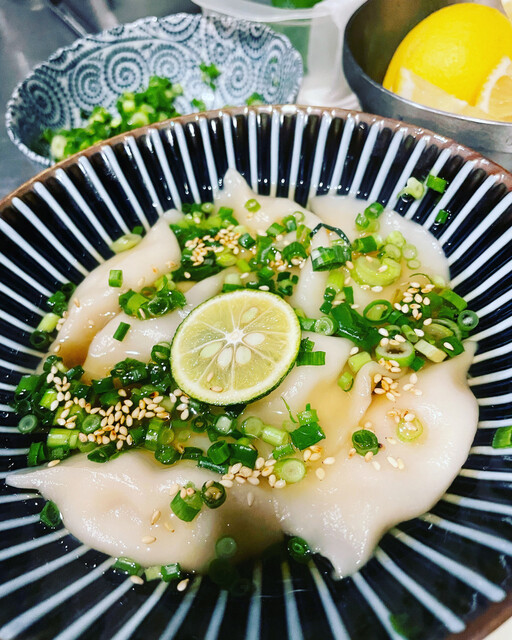
Mitaka’s north side has a different tempo from central Tokyo’s station-front dining corridors. The pace loosens after the commuter crush, and small neighbourhood rooms carry more of the city’s everyday food intelligence than their modest facades suggest. In that context, Udon Stand Gozu belongs to a category Tokyo often undervalues from abroad: the serious noodle room that also functions as a casual drinking table.
Tokyo visitors tend to file udon under lunch, speed, and low cost, while reserving dinner attention for sushi, yakitori, tempura, and kaiseki. That misses a large part of how the city actually eats. Udon, especially in a room with izakaya habits, is less a single-bowl transaction than a flexible ritual: a drink, a few shared plates, a pause, then noodles as the anchor rather than the opening move. Gozu’s selection for Tabelog 100 Udon EAST 2024, alongside prior selections in 2022 and 2020, places it inside that more demanding noodle conversation rather than the anonymous station-shop tier.
Udon as the final course, not the whole meal
The useful way to read this format is through pacing. A pure udon counter rewards decisiveness: choose broth, choose temperature, eat, leave. An udon-izakaya hybrid stretches the meal without turning it formal. The listed categories, udon and izakaya, matter because they explain why sake and shochu sit naturally beside wheat noodles here. It is a Tokyo pattern with roots in after-work dining: the table begins with drinking food, then returns to starch for closure.
That distinction separates Gozu from ramen specialists such as Ramen Sukoyaka or Ganso Stamina Manten Ramen Suzuki, where the bowl usually defines the entire visit. It also sits far below the ceremony and spend of a yakitori dinner such as Yakitori Yamamoto. The appeal is the middle register: enough structure to be worth crossing town for, enough informality to suit a weeknight. In a city where noodle culture is often judged by queues and speed, this slower udon rhythm is the point.
The menu evidence supports that reading. Listed course-style drinking options include grilled mackerel, chicken tempura with green onions and ponzu, dumplings cooked in udon broth, seasonal vegetable tempura, and a small bowl of homemade Sanuki udon noodles to finish. Those details show the custom clearly: savoury plates first, noodles last. Sanuki-style udon carries a cultural association with chew and restraint rather than heavy garnish, so the finale has to hold attention through texture and proportion, not spectacle.
A small-room Tokyo meal with neighbourhood rules
The room’s scale also shapes the ritual. Twenty-seven seats, split between a small first floor and a larger second floor, create a different social contract from the city’s polished destination counters. The first floor’s five counter seats suit solo diners and pairs; the second floor gives groups a way to turn udon into a shared dinner. Private use is available in the upstairs space, with group thresholds listed, which explains why the format can absorb families, friends, and drinking parties without abandoning its noodle identity.
That makes Gozu a useful marker for Musashino dining. Tokyo’s outer wards and western rail towns are not peripheral to the city’s food culture; they are where everyday genres develop loyal local audiences before outside attention catches up. Mitaka, with its residential base and rail access, rewards places that can serve multiple occasions without becoming vague. Gyoza no Harbin works in a similar everyday register on budget and sociability, while Shichijo occupies a different low-to-mid spend lane. Gozu’s distinction is that udon remains the spine even when the meal behaves like an izakaya session.
For a broader Tokyo itinerary, this is not a substitute for the city’s higher-ceremony dining. It is the corrective. A visitor who only books counters and tasting menus leaves without understanding the way Tokyo eats between work, home, and the last train. Pairing a Mitaka noodle dinner with other casual addresses across the city gives a clearer map of the capital than trophy hunting alone. EP Club’s wider Tokyo coverage helps place that spectrum: Our full Tokyo restaurants guide sits alongside Our full Tokyo bars guide, Our full Tokyo hotels guide, Our full Tokyo wineries guide, and Our full Tokyo experiences guide.
How to think about the Tokyo comparison set
Within Tokyo’s casual dining field, Gozu is not competing with luxury rooms; it is competing with the precision of specialist formats. Curry shops, ramen counters, gyoza rooms, yakitori counters, and neighbourhood izakaya all ask the same question: how much character can a narrow genre carry? That is why comparison matters more by dining habit than by cuisine. A curry stop such as 3 Chome no Curry Ya San, a stylised café like 2D Cafe, or a meat-focused address such as. 鮪と炭火焼き うお炭 秋葉原店 all reveal different versions of the same city logic: small formats, clear appetite, limited ceremony.
Other Tokyo links broaden the picture without flattening it. 12/10 Shinjuku ten points toward Shinjuku’s dense casual grid, while 124. KAGURAZAKA (Yakitori) shows how a single cooking tradition can define an evening at a higher level of focus. Outside Tokyo, the same appetite for specialised Japanese formats appears in -Grilled beef Sukiyaki- KAMAKURA TANUKIAN 鎌倉 たぬき庵 in Kamakura.cafe in Osaka.know in Kumamoto, (Shoku) Vietnam in Kawasaki, [Curry Senmon Ten] Maruyama Kyoju. in Sapporo, and [ki:] in Kyoto. Even abroad, Japanese casual formats travel through focused concepts such as Jōdo Saké Bar in Los Angeles and Onigiri Time in Pasadena.
The practical reading is simple: treat Gozu as a meal of sequence rather than a bowl to check off. The strongest case is dinner, when the izakaya half of the identity has room to operate before udon closes the table. Lunch makes sense for a lower-commitment noodle stop, but the fuller argument for the place comes when drinks, shared plates, and the final noodle course form one continuous rhythm.
Standing Among Peers
Comparable venues to anchor price and recognition.
| Venue | Cuisine | Price | Notes |
|---|---|---|---|
| Udon Stand GozuThis venue — the venue you are viewing | Casual Udon Stand | $ | Not listed |
| Amane | Traditional Japanese Taiyaki & Obanyaki Stand | $ | Kichijoji |
| Amai Ko | Japanese sweets & kakigori cafe | $ | Suginami |
| Sakurajosui Funakoshi | Modern shio ramen | $ | Suginami |
| Pneuma Curry | Japanese Curry | $ | Shinjuku |
| Medika Soba Kingyo | Japanese Ramen | $ | Hino |
Recognition history
Dated appearances from independent guides and award organizations, with the underlying list record or original source where available.
Tabelog 100 #36 · No. 36
Tabelog · Tabelog 100 - Udon - EAST - 2024
Continue exploring
More in Tokyo
Restaurants in Tokyo
Browse all →



Bars in Tokyo
Browse all →



Hotels in Tokyo
Browse all →




Wineries in Tokyo
Browse all →
At a Glance
- Solo
- Casual Hangout
- After Work
- Late Night
- Standalone
Current opening hours
- Monday
- 11:30 AM–2:30 PM, 6–10 PM
- Tuesday
- 11:30 AM–2:30 PM, 6–10 PM
- Wednesday
- 11:30 AM–2:30 PM, 6–10 PM
- Thursday
- 11:30 AM–2:30 PM, 6–10 PM
- Friday
- 11:30 AM–2:30 PM, 6–10 PM
- Saturday
- 11:30 AM–2:30 PM, 6–10 PM
- Sunday
- Closed
Hours can change for holidays and private events. Last verified .