
Pneuma Curry places Tokyo curry in its low-price, high-discipline register: an eight-seat counter in Takadanobaba with Tabelog Curry TOKYO 100 selection in 2024 and a format built for quick, focused eating. The appeal is not ceremony, but the way Tokyo’s curry culture compresses global spice technique into a neighbourhood lunch-and-dinner rhythm.
Pearl is the En Primeur Club membership app — saves, bookings, and concierge access live there. Same editors, same standards.
- Address
- Japan, 〒169-0075 Tokyo, Shinjuku City, Takadanobaba, 1 Chome−17−10 ふじ荘 1F 西北側
- Phone
- +81 80-5434-2626
- Website
- pneumacurry.jimdo.com
 Saves & bookings on Pearl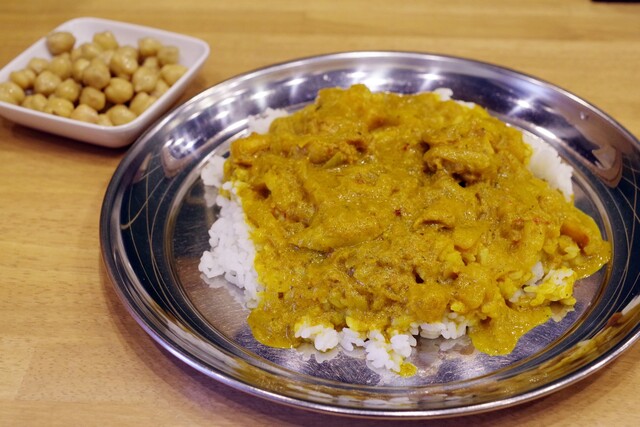
Takadanobaba is not Tokyo’s polished dining theatre. Around the station, the city feels fast and workaday: students, office workers, small counters, ticket machines, and meals that must justify themselves in minutes, not hours. That setting matters for curry. Tokyo curry is a borrowed form made local through repetition, adaptation, and price discipline, and Pneuma Curry belongs to the side of the genre where technique is compressed into a small room rather than dressed as occasion dining.
The local curry scene is more international than it first appears. Japanese curry carries British naval history, Indian spice logic, and the domestic comfort of rice-and-sauce eating, while Tokyo specialist shops sharpen that base with methods from South Asian, European, or contemporary Japanese kitchens. In Takadanobaba, where casual restaurants compete for regulars rather than destination-only diners, curry is judged by consistency, speed, and depth of flavour within a narrow format. Selection for Tabelog Curry TOKYO 100 in 2024 places Pneuma Curry in that specialist bracket, with the small shops that make curry one of Tokyo’s serious everyday cuisines rather than a fallback meal.
Tokyo curry, stripped to counter scale
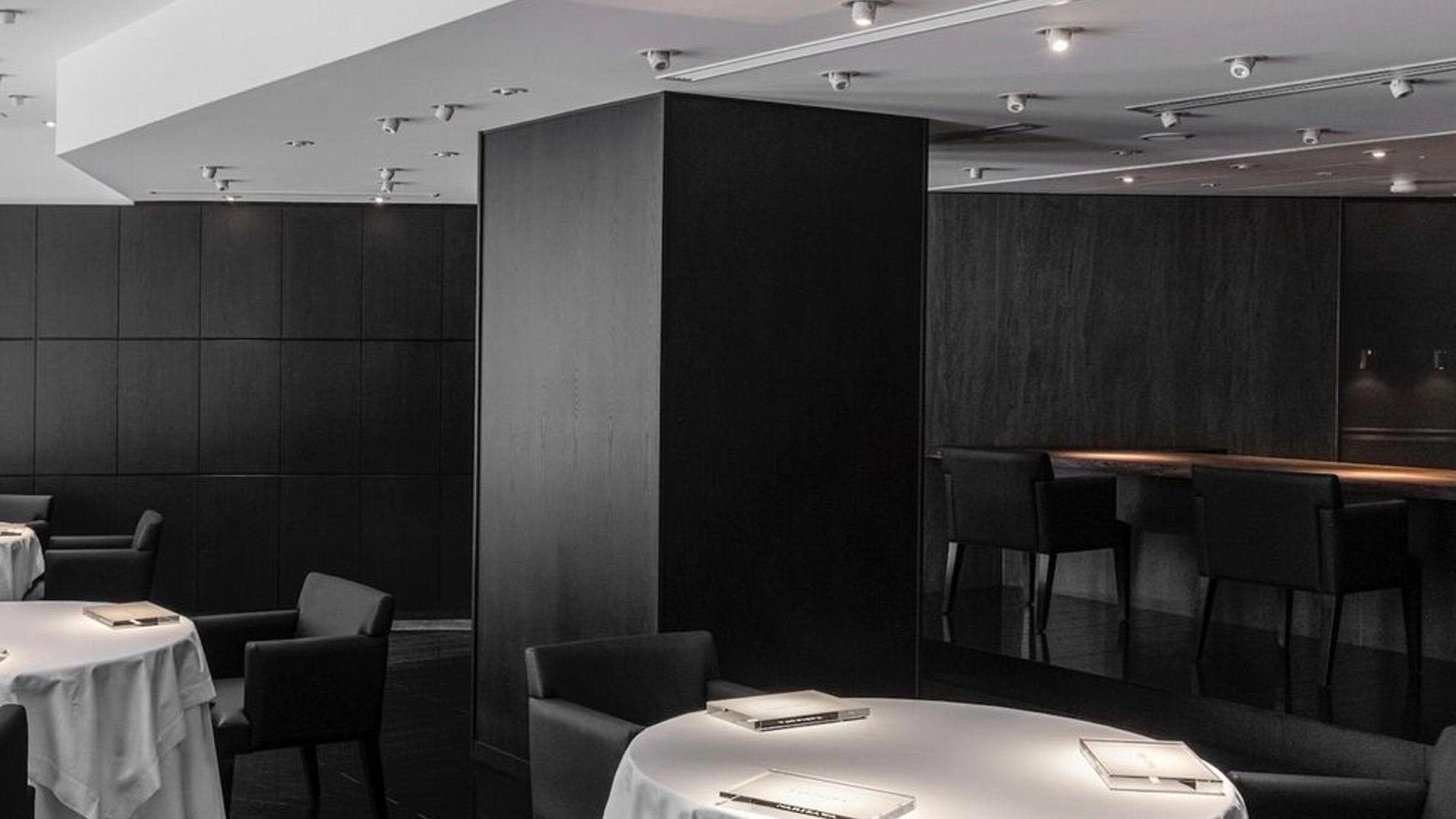
The eight-seat counter is the right lens for the restaurant. Counter curry in Tokyo is not just space-saving; it changes the meal’s tempo. Orders move quickly, turnover matters, and the cook’s process sits close to the diner without becoming performance. This is a different value from formal tasting menus or multi-course kaiseki. The discipline lies in how much character a single plate can carry, not how many courses can surround it.
That makes Pneuma Curry a corrective to ranking Tokyo dining by scarcity, luxury, or chef biography. Curry shops operate by another code. A Tabelog 3.73 score and inclusion in the 2024 curry selection are not decorative; they show the restaurant being measured in a dense local field where small differences in texture, spice structure, rice handling, and service rhythm matter. The comparison set is closer to Tokyo’s disciplined casual specialists than restaurant luxury: Tonkatsu Hinata works in a similarly focused single-category register, while Sanuki Udon Kuranosuke shows how a low-ticket format can attract serious attention when execution is tight. L'AMITIE and Alayashiki sit in different price and cuisine lanes, underlining that Tokyo’s credibility is not confined to expensive rooms.
The local-ingredient, global-technique angle is clear in curry because the dish is an import Japan absorbed so completely it now reads as domestic. Tokyo’s better curry counters respect that hybridity rather than treating “authenticity” as a fixed origin story. The spice grammar may look outward, but the structure is Japanese: rice as anchor, sauce as focus, portion and pacing calibrated for repeat eating. The restaurant fits that pattern, using the compact counter to keep attention on the plate rather than the room.
Takadanobaba's serious casual dining lane
Takadanobaba gives curry a particular audience. The neighbourhood has student traffic for affordable meals, office rhythm for weekday regularity, and food-literate diners who reward shops that do more than feed a queue. That mix explains why a small curry counter can carry editorial weight in Tokyo. It is not competing with Ginza sushi or Aoyama French on ceremony; it is competing in the city’s hardest category, the everyday meal people choose again.
Within that context, the take-out option and family-friendly listing point to a practical, neighbourhood-facing operation rather than a precious destination format. The room is non-smoking, counter-led, and small enough to feel focused rather than leisurely. There is no need to inflate it into a grand occasion. The sharper read is that Tokyo’s food culture often hides its discipline in plain sight: under railway viaducts, in basement counters, near universities, and in rooms where limited seats concentrate pressure on every service.
For travellers mapping Tokyo through categories, the restaurant pairs well with the city’s casual specialists. Curry has its own grammar, but it sits beside ramen, udon, tonkatsu, yakitori, and kissaten-style cafés in the same urban habit: narrow menus, repeat customers, and intense calibration inside modest rooms. Readers building a wider itinerary can cross-reference 3 Chome no Curry Ya San for another Tokyo curry address, 124. KAGURAZAKA (Yakitori) for a different counter tradition, . 鮪と炭火焼き うお炭 秋葉原店 for tuna and charcoal cooking, 12/10 Shinjuku ten for another Shinjuku-area option, and 2D Cafe for a lighter neighbourhood stop.
How to read its place in a Tokyo itinerary
The practical decision is simple: treat this as a focused curry stop, not a lingering dining appointment. Its value is strongest for travellers who understand that Tokyo’s food hierarchy is flatter than outsiders assume. A low-cost counter can deserve attention because the city’s casual categories are deep, competitive, and heavily scrutinised by local diners. Tabelog’s 2024 Curry TOKYO 100 recognition gives that claim a public marker, but the more interesting point is cultural: Japanese curry is now a Tokyo language of its own, shaped by imported spice systems and domestic eating habits.
It suits a Takadanobaba or west-Shinjuku day better than a cross-city detour built around ceremony. The neighbourhood rewards walking and category-hopping, and curry works well as the meal around which to build a looser afternoon. Those extending the research can use Our full Tokyo restaurants guide, then balance the trip with Our full Tokyo hotels guide, Our full Tokyo bars guide, Our full Tokyo wineries guide, and Our full Tokyo experiences guide. For wider Japan comparisons, see [Curry Senmon Ten] Maruyama Kyoju. in Sapporo, [ki:] in Kyoto, -Grilled beef Sukiyaki- KAMAKURA TANUKIAN 鎌倉 たぬき庵 in Kamakura, (Shoku) Vietnam in Kawasaki.cafe in Osaka, and.know in Kumamoto. Japanese food culture abroad provides another angle through Jōdo Saké Bar in Los Angeles and Onigiri Time in Pasadena.
The editorial case for the restaurant is not luxury. It is that Tokyo’s serious eating culture often lives in compact formats, where global spice technique has been absorbed into Japanese everyday dining and judged by a local audience that eats curry with high expectations. In a city crowded with expensive signals, that is a useful reminder.
Pricing, Compared
Comparable venues at the same tier for side-by-side context.
| Venue | Cuisine | Price | Notes |
|---|---|---|---|
| Pneuma CurryThis venue — the venue you are viewing | Shinjuku, Japanese Curry | $ | Not listed |
| Sanuki Udon Kuranosuke | Toshima, Sanuki udon noodle shop | $ | Not listed |
| Houraiya Honten | Not listed | $ | Chiyoda, Traditional Japanese Wagashi & Tea |
| Murghee | Shibuya, Classic Japanese curry house | $ | Not listed |
| TOKYO LIGHT BLUE HONGO-3 | Bunkyō, Standing Sanuki udon & tempura | $ | Not listed |
| Kuromatsu Honpo Sogetsu | Not listed | $ | Kita, Traditional Japanese Wagashi & Dorayaki Shop |
Recognition history
Dated appearances from independent guides and award organizations, with the underlying list record or original source where available.
Tabelog 100 #84 · No. 84
Tabelog · Tabelog 100 - Curry - TOKYO - 2024













At a Glance
- Cozy
- Quiet
- Minimalist
- Solo
- Casual Hangout
- Standalone
Current opening hours
- Monday
- 10:45 AM–3:30 PM, 5–8 PM
- Tuesday
- 10:45 AM–3:30 PM, 5–8 PM
- Wednesday
- 10:45 AM–3:30 PM, 5–8 PM
- Thursday
- 10:45 AM–3:30 PM, 5–8 PM
- Friday
- 10:45 AM–3:30 PM, 5–8 PM
- Saturday
- 10:45 AM–3:30 PM, 5–8 PM
- Sunday
- Closed
Hours can change for holidays and private events. Last verified .
Compact, no-frills, and intimate, with an easygoing counter-service atmosphere that feels low-key rather than bustling.