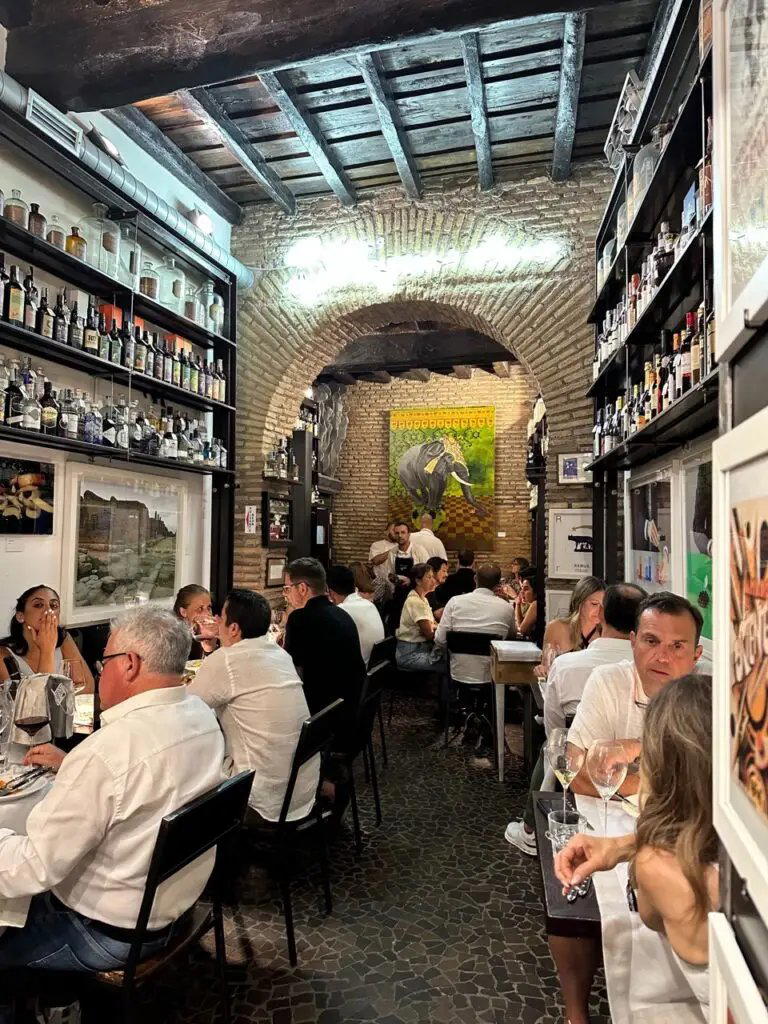
On Via del Pellegrino in Rome's Campo de' Fiori quarter, Trattoria Settimio occupies a stretch of street where neighbourhood eating has outlasted decades of tourist pressure. The kitchen works within the Roman trattoria tradition, where the divide between a weekday lunch and a Saturday evening tells you more about the place than any single dish. A practical address for visitors who want to eat alongside the city rather than above it.
Pearl is the En Primeur Club membership app — saves, bookings, and concierge access live there. Same editors, same standards.
- Address
- Via del Pellegrino, 117, 00186 Roma RM, Italy
- Phone
- +39 06 6880 1978
- Website
- settimioalpellegrinoroma.it
- Directions
- Get directions
 Saves & bookings on Pearl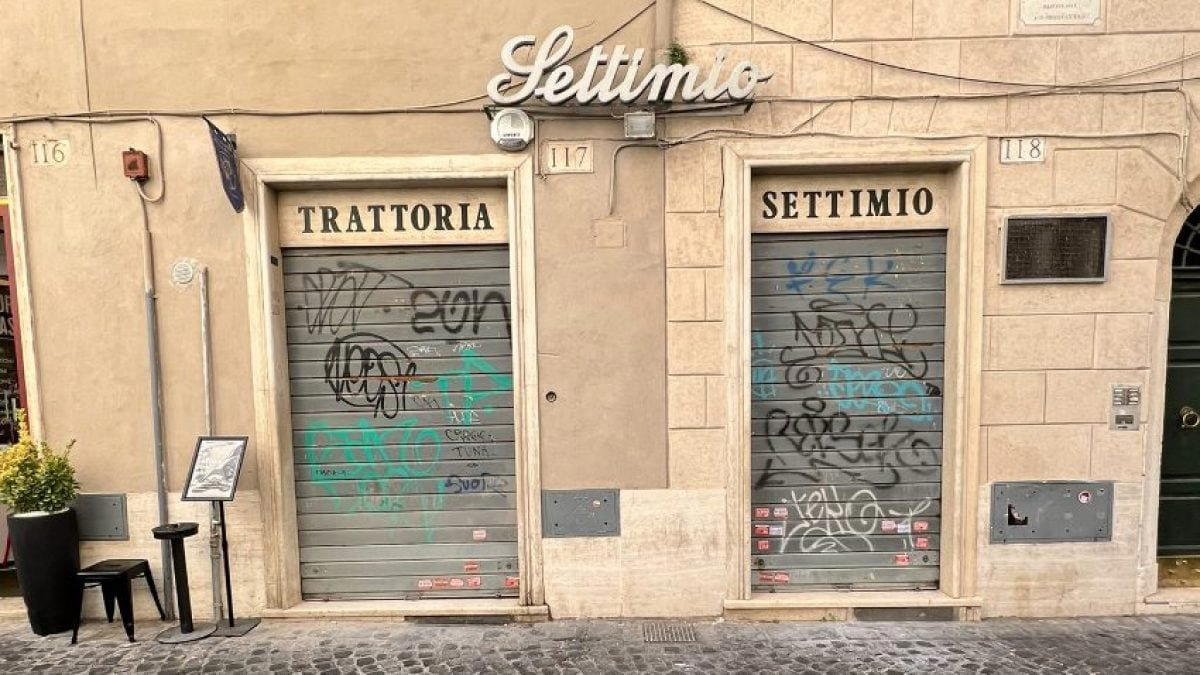
A Street That Still Belongs to the Neighbourhood
Via del Pellegrino runs through one of Rome's most compressed historic quarters, a narrow corridor connecting Campo de' Fiori to the older fabric of the centro storico. The buildings along this stretch date to the medieval city's commercial spine, and the streetscape has resisted the full conversion to tourist infrastructure that absorbed many of the surrounding blocks. Trattoria Settimio sits at number 117, in a position that tells you something about the logic of Roman neighbourhood eating: close enough to the major sights to attract passing visitors, but on a street where locals still run errands and stop for lunch. That tension, between the neighbourhood's original function and its growing visibility on international travel circuits, defines the context in which a trattoria like this operates.
Within Rome's dining spectrum, the traditional trattoria occupies a different register from the city's formal creative addresses. Restaurants like Il Pagliaccio or Acquolina operate tasting-menu formats at €€€€ price points, where the evening is structured around a sequence of courses and a deliberate pacing. The trattoria format sits elsewhere: à la carte, lunch-weighted, and built on the assumption that not every meal needs to be an occasion. In a city where La Pergola anchors the absolute upper tier and Enoteca La Torre and Achilli al Parlamento represent the creative middle ground, a traditional trattoria is positioned by exclusion as much as by affirmation: it is what those places are not.
The Lunch and Dinner Divide
In Roman trattoria culture, the split between lunch and dinner service is not simply a scheduling difference. It reflects two distinct relationships between a venue and its audience. The midday service, historically the main meal in the Italian daily rhythm, tends to draw a different crowd: working people from nearby offices and shops, residents running through the centro storico for various errands, the occasional visitor who has learned that eating at noon rather than eight in the evening changes the atmosphere of the room. Tables turn faster, the room is louder in a functional rather than festive way, and the menu's simpler preparations carry more of the weight. A bowl of pasta alla carbonara or cacio e pepe eaten at a paper-covered table at one in the afternoon in a room full of people who actually live nearby is a different proposition from the same dish presented to a dining room composed almost entirely of tourists at half past eight.
The evening service at a trattoria on a street like Via del Pellegrino shifts in character without shifting in format. The kitchen is not running a different menu, but the room fills differently, often with couples and small groups who have chosen the address deliberately rather than stumbling in from Campo de' Fiori. In the context of Roman eating, this is not a trivial distinction. The neighbourhoods immediately around Campo de' Fiori have seen pronounced tourist pressure over the past decade, and the addresses that have maintained a mixed clientele rather than tilting entirely toward the international visitor circuit occupy a specific position in the local hierarchy of respect. Evening service tends to be slower in pace, with tables held longer and orders considered more carefully, even when the menu itself is identical.
For visitors structuring time in Rome, this dynamic offers a practical signal. If the goal is to understand what the trattoria format actually represents in Roman daily life, a weekday lunch is the more instructive service. If the goal is a quieter meal at a considered pace with more time at the table, the evening sits better. Neither is more correct, but they are not the same experience.
The Roman Trattoria Tradition in Context
Rome's trattoria culture is frequently romanticised but rarely examined precisely. The form is defined by a set of culinary commitments that have remained relatively stable across generations: offal preparations, Roman pasta formats (carbonara, amatriciana, gricia, cacio e pepe), seasonal vegetables from the Castelli Romani and the markets of Testaccio, and a wine list that prioritises the Lazio region without requiring it exclusively. What distinguishes a functioning trattoria from a tourist-facing operation carrying the same label is the degree to which these commitments are treated as actual culinary positions rather than marketing signals.
Across Italy, the tradition of cooking rooted in regional specificity and seasonal produce is represented at varying levels of formality. Addresses like Dal Pescatore in Runate, Reale in Castel di Sangro, or Uliassi in Senigallia represent the formal end of the Italian regional dining tradition, with Michelin recognition and tasting formats that organise the meal around a single vision. The trattoria format represents the same underlying commitment to regional identity without the formal apparatus. The leading versions of the form, whether in Rome, Modena, or Emilia, share a quality of not needing to explain themselves: the cooking is what it is, the ingredients come from where they come from, and the room operates at the pace it operates at.
For reference across the broader Italian dining field, the EP Club covers venues from Osteria Francescana in Modena and Piazza Duomo in Alba through to Le Calandre in Rubano, Enrico Bartolini in Milan, Enoteca Pinchiorri in Florence, Quattro Passi in Marina del Cantone, and Atelier Moessmer Norbert Niederkofler in Brunico.
Planning a Visit
Via del Pellegrino 117 places Trattoria Settimio in the centro storico's western core, within walking distance of Campo de' Fiori and the Farnese quarter. The street is accessible on foot from most of Rome's historic centre hotels, and the surrounding neighbourhood is dense with daytime activity, making a pre-lunch walk through the area practical rather than a detour. Reservations are recommended, and the restaurant is open Monday, Tuesday, Thursday through Sunday from 12 to 2 PM and 6:30 to 10:30 PM, with Wednesday closed. The same applies to dietary requirements: Roman trattorie built on tradition rather than innovation tend to have limited flexibility on core preparations, though clarifying in advance, rather than at the table, is always the more productive approach.
Price and Recognition
Comparable venues nearby, for context on price, style, and recognition.
| Venue | Cuisine | Price | Notes |
|---|---|---|---|
| Trattoria SettimioThis venue — the venue you are viewing | Regola, Traditional Roman Trattoria | $$ | Not listed |
| Ristorante Pizzeria Pasquino | Not listed | $$ | Parione, Traditional Roman Trattoria & Pizzeria |
| Open Baladin | Regola, Italian Craft Beer Gastropub | $$ | Not listed |
| Ristorante da Mario | Sallustiano, Modern Roman Trattoria | $$ | Not listed |
| Mamma Angelina | Not listed | $$ | Trieste, Traditional Roman Trattoria with Fresh Seafood |
| Monzù Vladì | Trastevere, Creative Regional Italian | $$ | Not listed |
Continue exploring
More in Rome
Restaurants in Rome
Browse all →
Bars in Rome
Browse all →
Hotels in Rome
Browse all →

At a Glance
- Classic
- Rustic
- Cozy
- Casual Hangout
- Family
- Historic Building
- Extensive Wine List
- Local Sourcing
Current opening hours
- Monday
- 12–2 PM, 6:30–10:30 PM
- Tuesday
- 12–2 PM, 6:30–10:30 PM
- Wednesday
- Closed
- Thursday
- 12–2 PM, 6:30–10:30 PM
- Friday
- 12–2 PM, 6:30–10:30 PM
- Saturday
- 12–2 PM, 6:30–10:30 PM
- Sunday
- 12–2 PM, 6:30–10:30 PM
Hours can change for holidays and private events. Last verified .
Comfortable and casereccio (homey) atmosphere rooted in Roman tradition.