Toyama Shiroebitei sits inside Tokyo Station's B1 dining concourse, specialising in shiroebi, the translucent sweet shrimp harvested almost exclusively from Toyama Bay. The restaurant brings one of Japan's most regionally specific seafood traditions directly into the capital, making it a practical reference point for anyone tracking how prefecture-level produce travels to Tokyo's vast underground food infrastructure.
Pearl is the En Primeur Club membership app — saves, bookings, and concierge access live there. Same editors, same standards.
- Address
- 丸の内1-9-1 (東京駅一番街 B1F), 千代田区, 東京都, 100-0005
 Saves & bookings on Pearl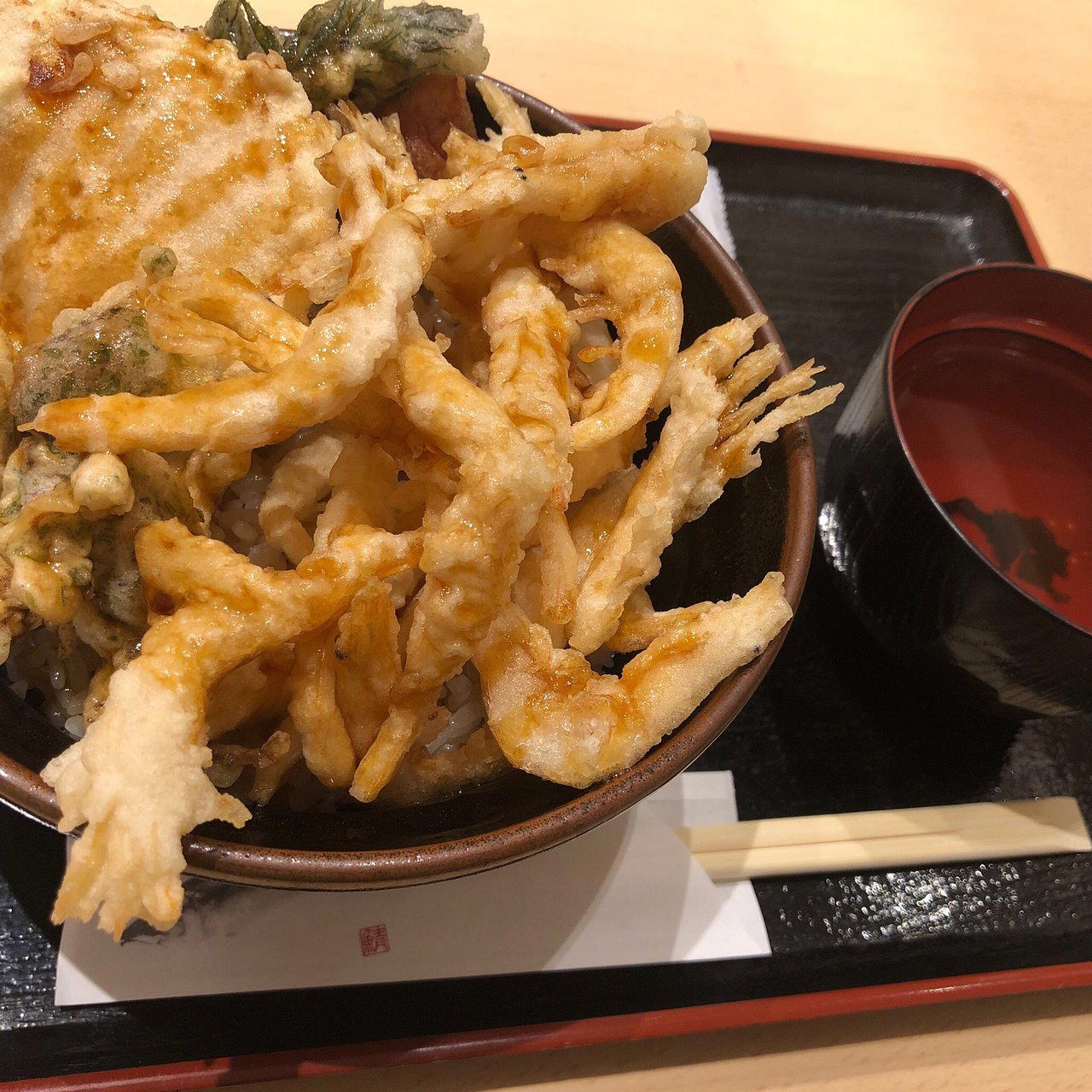
Toyama Bay on a Plate, Inside Tokyo Station
Japan's underground dining culture is on clear display at Tokyo Station. The B1 level of the Ichiban-gai complex houses regional specialty restaurants, each acting as an ambassador for a prefecture's signature produce or preparation style. Toyama Shiroebitei occupies that role for Toyama Prefecture, a coastal region on the Sea of Japan side of Honshu whose fishing economy is defined by one creature above all others: shiroebi, the pale, almost translucent shrimp found in commercial quantities almost nowhere else on earth. The restaurant's address, 丸の内1-9-1, Tokyo Station Ichiban-gai B1F, places it squarely in the commuter-and-traveller orbit of one of Asia's busiest rail hubs, and that location is itself an editorial statement about how regional Japanese food now reaches national audiences.
The station food hall as a format deserves more critical attention than it typically receives. In Tokyo, it functions as a curated map of Japanese food geography, where a diner can move from Hokkaido dairy to Kyushu ramen to Kanazawa seafood within a single underground floor. Toyama Shiroebitei participates in that geography not as a facsimile of a Toyama restaurant but as a focused specialist: the menu is built around shiroebi in multiple preparations, and the kitchen's brief is to make the ingredient legible to a Tokyo audience that may encounter it for the first time. That educational function is what separates the better station-format restaurants from those that simply replicate a regional brand.
The Shrimp That Defines a Prefecture
Shiroebi, sometimes translated as white shrimp or glass shrimp, are harvested from the deep waters of Toyama Bay, where the sea floor drops sharply from the coastline. The catch season and volume are tightly constrained by geography: the species congregates in Toyama Bay's distinctive basin, and processing happens locally before product moves to market. That combination of geographic specificity and limited supply has given shiroebi a reputation in Japanese food culture comparable to, say, the positioning of Kyoto's Kamo eggplant or Shizuoka's wasabi, a product so tied to a single place that eating it elsewhere carries an implicit argument about freshness and handling.
The tasting progression at a shiroebi-focused restaurant follows a familiar Japanese logic: the ingredient appears raw first, then in progressively transformed states. A typical sequence might move from sashimi or a delicate gunkan preparation, where the shrimp's sweetness and near-translucent texture are fully exposed, through to kakiage, the tempura-style fritter in which shiroebi are massed together and fried as a single dense cake. The fritter format is the regional standard-bearer; Toyama's food identity leans on kakiage as a visual shorthand in the same way Osaka claims takoyaki. Both preparations reward attention: the raw version communicates the shrimp's inherent character, while the fried version demonstrates what heat and aggregation do to flavour concentration and texture. Ordering both, if the format allows, gives the clearest picture of what the ingredient can do.
Dishes built around shiroebi don't require elaborate seasoning scaffolding. The shrimp carries enough sweetness and brine that restraint in the kitchen is a technical choice, not a limitation. This places Toyama Shiroebitei inside a broader pattern visible across Japan's regional specialty restaurants in Tokyo: the venues that perform leading are those where the sourcing story is credible and the preparation gets out of the way of the ingredient. Compare that discipline to the multi-element complexity at kaiseki-level restaurants like RyuGin or the French-influenced approach at L'Effervescence, and the contrast clarifies what a single-ingredient specialist is actually trying to do: it is a study in depth rather than breadth.
Tokyo Station as a Dining Format
Understanding Toyama Shiroebitei requires understanding its container. Tokyo Station Ichiban-gai is not a food court in the Western sense. It operates closer to a curated retail and dining edit, with tenants selected partly on regional provenance credentials. The audience is mixed: commuters eating quickly between trains, tourists assembling a map of Japanese regional food in a single afternoon, and deliberate visitors who treat the station's dining floor as a destination in its own right. The venue's position in this ecosystem means it competes on specificity rather than spectacle. It does not need the room design or service theatrics of a destination restaurant; the ingredient itself, and the story behind its sourcing, carries the load.
That contrast with Tokyo's higher-price-tier restaurants is worth holding. At the ¥¥¥¥ end of the Tokyo dining spectrum, where Harutaka, Sézanne, and Crony operate, the experience is shaped by tasting menus, intimate seating, and long advance booking windows. Toyama Shiroebitei operates in a different register entirely: accessible, station-integrated, and structured around a single regional product rather than a chef's multi-course narrative. Both modes are legitimate; they serve different purposes. The station-format specialist is the right tool when you want to understand a prefecture's signature ingredient without committing to a formal dinner. It also functions as a useful preview for diners encountering shiroebi for the first time. Restaurants across the region, from Goh in Fukuoka to Gion Sasaki in Kyoto, demonstrate how deeply Japanese dining rewards this kind of ingredient literacy built across multiple visits and formats.
Planning a Visit
Toyama Shiroebitei is located in the basement level of Tokyo Station Ichiban-gai, accessible directly from the station's internal concourse without exiting through the ticket gates. The station serves as the main Shinkansen hub for central Japan, meaning travellers heading toward Kanazawa, Toyama, or Nagano on the Hokuriku or Nagano Shinkansen lines pass through the same building. That transit context makes a stop here logistically sensible for anyone already routing through Tokyo Station on a regional itinerary. Walk-in access is the typical mode here, though peak lunchtime and early evening periods can generate queues.
Pricing, Compared
Comparable venues nearby, for context on price, style, and recognition.
| Venue | Cuisine | Price | Notes |
|---|---|---|---|
| Toyama Shiroebitei (富山白えび亭)This venue — the venue you are viewing | Not listed | $$ | Not listed |
| Tokyo Dosanjin | Not listed | $$ | Meguro, Traditional Soba Noodle Restaurant |
| Kyu Yamu Tei Shimokita sou | Setagaya, Japanese Curry | $$ | Not listed |
| Dashi to Men Yuei | Suginami, Modern dashi-focused ramen | $$ | Not listed |
| 波濤 | Shinjuku, Ichiran Tonkotsu Ramen | Not listed | Not listed |
| Iruka Tokyo | Roppongi, Modern ramen shop | $$ | Not listed |














At a Glance
- Classic
- Casual Hangout
- Standalone
- Sake Program
- Local Sourcing
- Sustainable Seafood
Casual station eatery atmosphere focused on fresh seafood dishes.