

Tabelog 100 #94
Our verdict
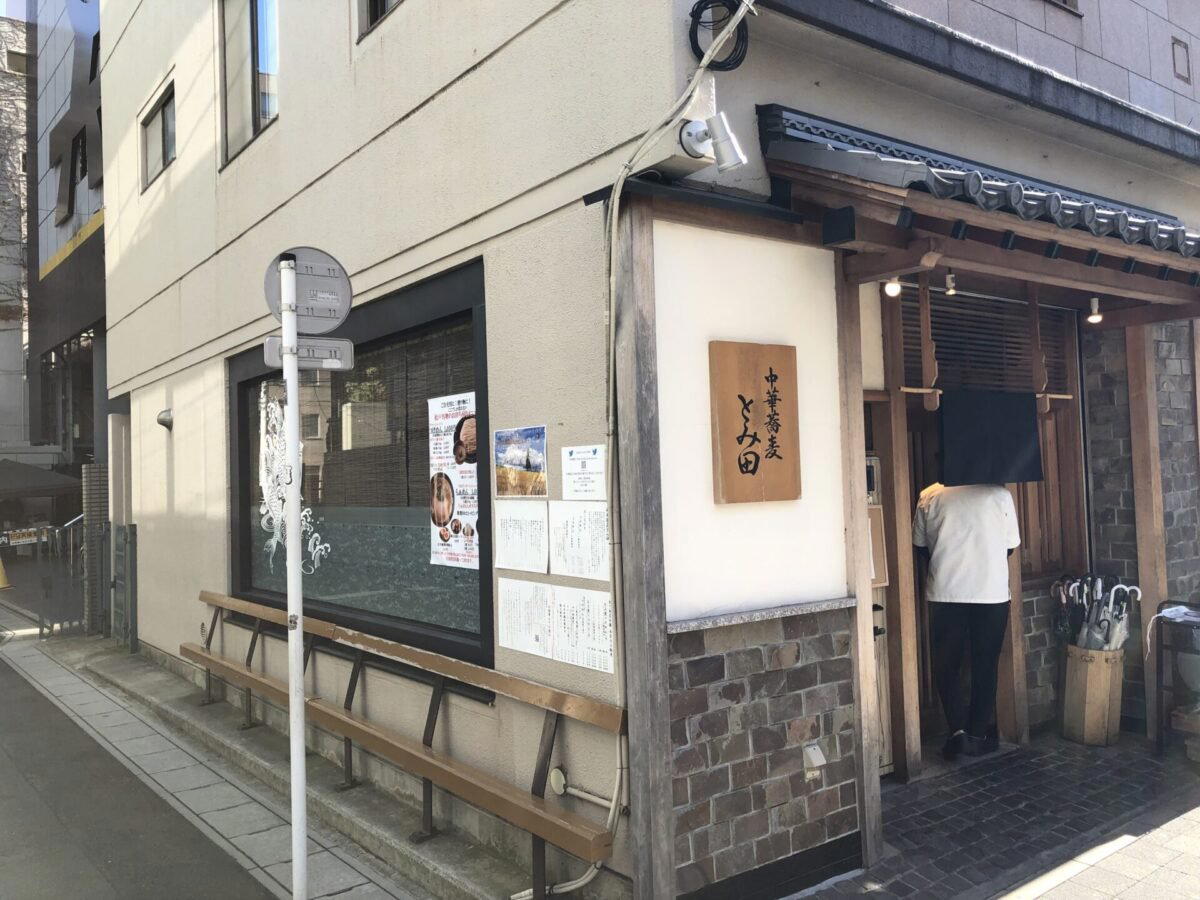
Tomita Ramen in Matsudo, Chiba, draws serious ramen pilgrims from across the Kanto region for a bowl that has earned a place among Japan's most recognised casual dining addresses. Ranked #53 on Opinionated About Dining's 2025 Casual Japan list, the shop operates in a register where craft, consistency, and restraint carry more weight than spectacle. Plan the visit: queues form early and patience is part of the experience.

Pearl is the En Primeur Club membership app, where members save venues, book tables and use the concierge.
The menu
What to order
- Tsukemen
- TOKYO-X Chashu Tsukemen
- Shumai Topping
The Queue as Context
The approach to Tomita Ramen on a weekday morning tells you something about how Japan's most serious ramen counters actually function. Matsudo is a commuter city on the Joban Line, roughly 30 minutes northeast of central Tokyo, and its high-rise blocks and neighbourhood shotengai give little hint that a globally ranked bowl of ramen sits at 1339 Takahashi Building. Yet the line outside does. Japan's ramen culture has always operated this way: prestige concentrates at ground level, in small rooms, in places that demand the visitor come to them. Tomita Ramen is a clear expression of that pattern. For more on eating well across Matsudo, see our full Matsudo restaurants guide.
Where Ramen Craft Meets a Kaiseki Sensibility
Ramen and kaiseki occupy opposite ends of Japan's dining register in price and formality, yet the philosophical kinship between them is stronger than the category gap suggests. Kaiseki's governing logic, that each component should be precisely considered, that nothing should appear in the bowl or on the plate without purpose, and that seasonal and regional ingredients carry the story, has quietly shaped how Japan's most deliberate ramen kitchens approach their work. At shops ranked inside the Afuri style of citrus-led lightness in Tokyo or the intensely reduced tonkotsu registers found further south, the broth is not a backdrop. It is the argument.
Tomita Ramen, under chef Osamu Tomita, belongs to the school of ramen that treats the bowl with that kind of concentrated attention. The style associated with this kitchen falls broadly in the rich, layered shoyu and tare tradition that the Chiba-Tokyo corridor does particularly well, where the depth of a long-cooked broth is balanced against the precise salinity of the seasoning liquid. This is not light ramen. It operates closer to the end of the spectrum where the broth itself is the main event, and where the ratio of fat, salt, and umami is the craft being judged. Opinionated About Dining placed it at #53 in its 2025 Casual Japan ranking, a list that treats ramen, soba, tempura, and yakitori on equal footing and rewards consistency and precision over concept or décor. A rank inside the top 60 on that list represents a specific kind of credibility: it is a kitchen that professionals and obsessives return to, not once, but across seasons.
For a different expression of that same philosophy of restraint applied at the kaiseki level, Gion Sasaki in Kyoto and Harutaka in Tokyo each show how Japanese culinary culture channels the same obsessive attention to a very different price point and format. The distance between a ¥¥¥¥ omakase counter and a ramen shop in Matsudo is vast in every practical sense, but the underlying discipline, that a dish is either correct or it isn't, runs through both registers.
The Ramen Scene That Tomita Sits Inside
Japan's ranked casual dining scene for ramen has shifted considerably over the past decade. The old geography, where Tokyo's 23 wards held almost all the serious addresses, has given way to a more dispersed map. Shops in Chiba, Kanagawa, and Saitama now appear regularly in the annual rankings produced by Opinionated About Dining and similar observer bodies, partly because rents in the capital's denser wards have pushed newer kitchens outward, and partly because a generation of trained cooks chose to open in their home prefectures rather than compete for space in Setagaya or Nakameguro.
Matsudo itself sits in this new geography. It is not a destination city in the way that Kyoto or Osaka function for visiting travellers, but Chiba Prefecture has developed a meaningful cluster of serious food addresses that reward the short train ride from Tokyo. Afuri's international expansion to Portland is one data point for how far Japanese ramen culture has now travelled, but the shops that matter most to domestic obsessives remain, like Tomita, resolutely local and physically unassuming.
Comparison helps calibrate expectations. At the top of the casual Japan rankings sit kitchens that have sustained recognition for a decade or more. Tomita's #53 position in 2025 places it in the tier where quality is a given but where the kitchen has not yet accumulated the decade-long consensus that would push it into the top 20. That is not a criticism. It is a placement that tells you this is a shop worth a deliberate trip, not a walk-in afterthought, and that the bowl you are eating is being watched and assessed by the same community of critics and obsessives who rank 1000 in Yokohama and track the output of regional specialists from Goh in Fukuoka to affetto akita in Akita.
Planning the Visit
Tomita Ramen sits at 1339 Takahashi Building, Matsudo, Chiba, accessible from Matsudo Station on the Joban Line from Tokyo's Ueno or Akihabara. The shop does not publish hours or booking details online, and the standard approach for first-time visitors is to arrive before opening and join the queue. Weekend mornings draw longer lines than weekday mornings; arriving 20 to 30 minutes before the shop opens is a reasonable buffer. Cash is the customary payment method at this class of Japanese casual dining shop, and ticket machines (券売機, kenbaiki) are the typical ordering format. Confirm current hours via the shop directly or via recent visitor reports before travelling, as hours at this level of operation can change without notice. If your visit to the broader region includes other serious dining, our Matsudo hotels guide covers accommodation options, while bars, wineries, and experiences in the area are mapped across the EP Club Matsudo guides.
For travellers building a broader Japan itinerary around serious food, the regional picture extends well beyond Chiba. HAJIME in Osaka, akordu in Nara, Aji Arai in Oita, Abon in Ashiya, 6 in Okinawa, and Ajidocoro in Yubari District each represent a different register of Japanese culinary rigour worth building a detour around.
Frequently asked questions
Can I bring kids to Tomita Ramen?
That said, Tomita's reputation on Opinionated About Dining's 2025 Japan list means queues can be long and conditions outside are not purpose-built for young children. An early arrival on a weekday gives the most practical shot at a manageable wait.
What's the vibe at Tomita Ramen?
This is a destination counter in a low-key commercial building at 1339 Takahashi Building, Matsudo, no design statement, no playlist. The atmosphere is set almost entirely by the queue itself, which functions as a sorting mechanism: the people inside have already committed the commute from Tokyo and the wait outside. Chef Osamu Tomita's ranking at #53 on Opinionated About Dining Casual in Japan (2025) signals a serious operation where the bowl, not the room, is the point.
What kind of recognition has Tomita Ramen received?
Tomita Ramen has received recognition including: Opinionated About Dining Casual in Japan Ranked #53 (2025).
What's the must-try dish at Tomita Ramen?
What is established is that Tomita earned its place on the 2025 Opinionated About Dining Japan Casual list, a ranking that skews toward depth of technique rather than novelty. Any first visit should default to the house ramen that built the counter's reputation, which regulars and ranking voters would have ordered repeatedly.
Where is Tomita Ramen located?
Tomita Ramen is located at Japan, 〒271-0092 Chiba, Matsudo, 1339 高橋ビル, Matsudo.
A Quick Peer Check
Comparable venues nearby, for context on price, style, and recognition.
| Venue | Cuisine | Price | Awards | Notes |
|---|---|---|---|---|
| Tomita RamenThis venue (the venue you are viewing) | Award-Winning Tsukemen Ramen | $20–30 | Tabelog 100 #94 | Not listed |
| Ramen Tomita | Award-Winning Tsukemen Ramen | $20–30 | Tabelog 100 #94 | Matsudo |
| Trattoria Il Regalo | Seasonal Italian Trattoria & Neapolitan Pizza | $30–50 | Tabelog 100 #90 | Matsudo |
| Chuka Soba Yanagi | Ramen / Chuka Soba | $10–20 | Tabelog 100 #51 | Kita-Kogane |
| Ajitokoro Musashino | Ramen & Tsukemen Shop | $10–20 | Tabelog 100 #40 | Matsudo |
| Tora Shokudo Matsudo bunten | Japanese Ramen | $1–10 | Tabelog 100 #6 | Matsuhidai |
Recognition history
Dated appearances from independent guides and award organizations, with the underlying list record or original source where available.
Opinionated About Dining Casual in Japan Ranked #25
Opinionated About Dining
Tabelog 100 #94 · No. 94
Tabelog · Tabelog 100 - Ramen - EAST - 2025
Full recognition history (3 entries)
Opinionated About Dining Casual in Japan Ranked #53
Opinionated About Dining
Continue exploring
More in Matsudo
Restaurants in Matsudo
All restaurants in Matsudo →






Details
- Intimate
- Well Known
- Cozy
- Solo
- Casual Hangout
- Open Kitchen
- Sake Program
- A La Carte
- Counter Dining
Current opening hours
- Monday
- 11 AM–3 PM
- Tuesday
- 11 AM–3 PM
- Wednesday
- Closed
- Thursday
- 11 AM–3 PM
- Friday
- 11 AM–3 PM
- Saturday
- 11 AM–3 PM
- Sunday
- 11 AM–3 PM
Hours can change for holidays and private events. Hours as of .
Solemn, high-end sushi-like L-shaped counter with meticulous service and attentive atmosphere.