Tiki On 18th
Tiki On 18th plants itself in the middle of Adams Morgan, one of Washington D.C.'s most reliably animated nightlife corridors. The bar trades in tropical drink culture with the earnestness of a neighborhood anchor rather than a novelty act. For an area better known for late-night energy than serious cocktail craft, it occupies a distinct position on 18th Street NW.
Pearl is the En Primeur Club membership app — saves, bookings, and concierge access live there. Same editors, same standards.
- Address
- 2411 18th St NW, Washington, DC 20009
- Phone
- +12028461952
- Website
- tikion18th.com
- Directions
- Get directions
 Saves & bookings on Pearl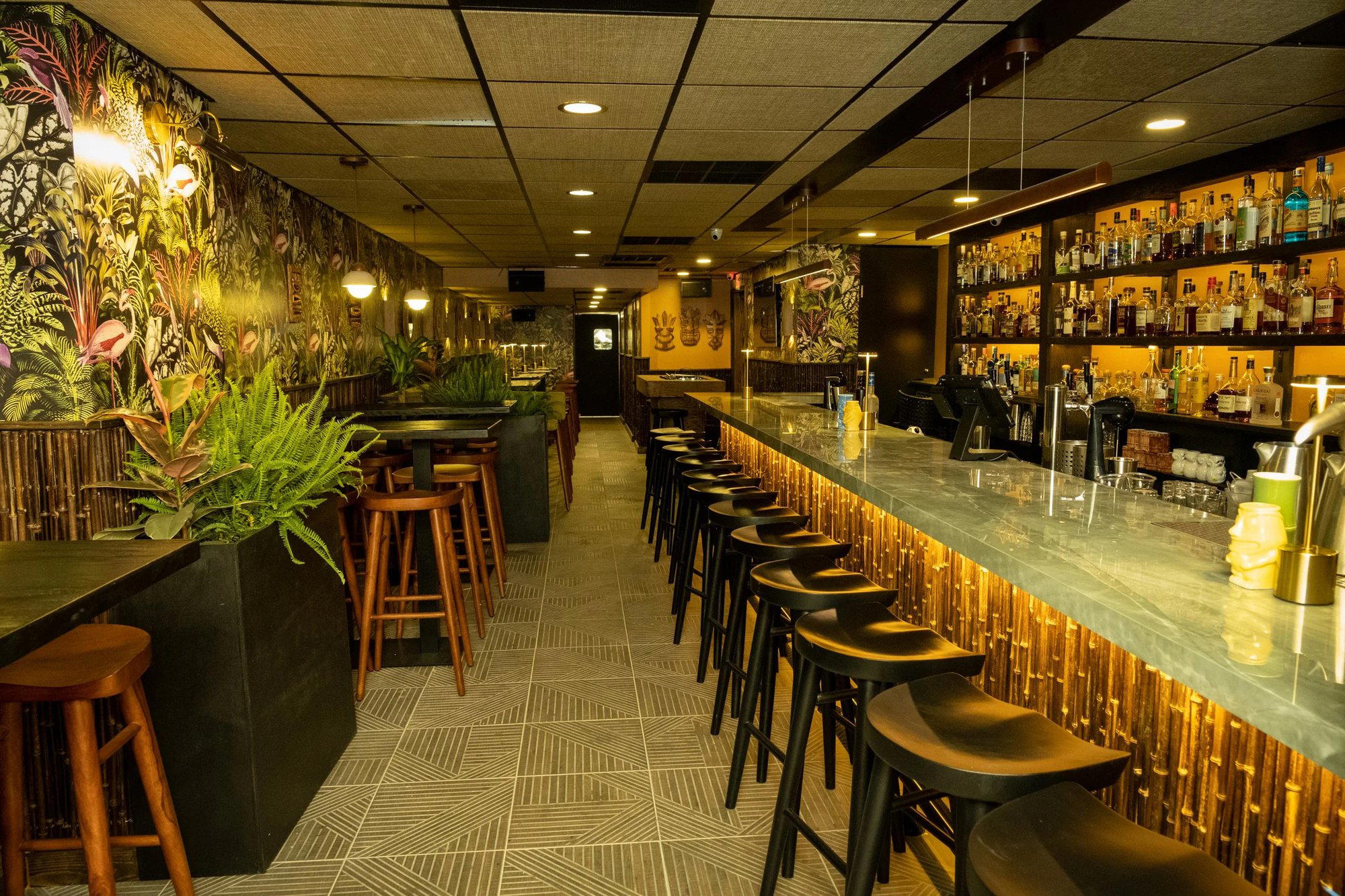
Adams Morgan and the 18th Street Tiki Tradition
Washington, D.C.'s bar scene has, over the past decade, sorted itself into recognizable tiers: the white-tablecloth cocktail programs attached to fine-dining rooms, the craft-forward neighborhood bars chasing recognition lists, and a third category that prioritizes atmosphere and accessibility over technical ambition. Adams Morgan sits at the intersection of all three impulses, and 18th Street NW is where that tension is most visible from the sidewalk. Tiki On 18th, at 2411 18th St NW, operates in the heart of that corridor, drawing on tiki's long American tradition of escapism through rum-forward drinks, tropical garnish, and deliberately maximalist decor.
Tiki as a format has its own sourcing logic that separates it from other cocktail categories. Where a modern American bar might pivot its identity around local spirits or regional produce, tiki's ingredient philosophy has always been explicitly global: Caribbean and Pacific rum blends, orgeat from almonds, citrus in forms ranging from fresh-pressed to house-fermented, and syrups built from spices that travel far to reach the glass. At its most considered, tiki is one of the more ingredient-intensive cocktail traditions in the American canon, demanding sourcing decisions across multiple supply chains simultaneously.
The Adams Morgan Setting
Adams Morgan is not D.C.'s most polished neighborhood, and that is part of its utility. The stretch of 18th Street between Columbia Road and Belmont Street has absorbed decades of demographic change, late-night foot traffic, and the gradual arrival of higher-concept food and drink alongside the dive bars and Ethiopian restaurants that gave the area its original identity. Tiki On 18th sits within that layered context, on a block that rewards walking rather than arriving by car. The physical approach along 18th Street carries the ambient noise and weekend energy that defines the strip, making the bar feel embedded in the neighborhood rather than dropped into it.
For D.C. visitors whose itineraries skew toward the more formal end of the city's dining register, bars like Tiki On 18th function as useful counterweights. The city's higher-end restaurant programming, which includes counters and tasting menus from venues like Jônt and minibar, operates on a different social register entirely. Adams Morgan's character is looser and more tolerant of spontaneity, which suits tiki's inherently convivial format.
Tiki's Ingredient Politics
The sourcing question in tiki is genuinely more complicated than in most cocktail categories. Rum itself is among the more varied spirits in the world, produced across Jamaica, Barbados, Trinidad, Guyana, Martinique, and beyond, each island's regulatory and agricultural context shaping the final product. A tiki bar that treats rum as a commodity ingredient, reaching for the same mid-shelf bottle regardless of context, produces a different result than one that builds its menu around the flavor distinctions between, say, a heavily-funky Jamaican pot-still rum and a lighter column-distilled Barbadian expression. The ingredient sourcing decisions embedded in a tiki menu are, in this sense, editorial decisions about the drink's character.
Citrus sourcing adds another layer. Fresh lime, Seville orange, grapefruit, and their juice-forward relatives are the acidic backbone of most tiki formats, and the quality gap between fresh-pressed and bottled is significant in a drink where balance is everything. Bars operating at a higher standard on ingredient sourcing tend to show that commitment in the brightness and precision of the citrus component. The same principle applies to the spice-forward syrups and liqueurs that tiki relies on: falernum, allspice dram, and cinnamon syrups made in-house from whole spices carry a different weight than commercially produced equivalents.
D.C.'s Broader Cocktail Context
Washington D.C. has developed a more serious cocktail culture than its political identity might suggest. The city's drinking scene has historically been underwritten by an expense-account dining culture, but independent bar programs have carved out their own space over the past decade. In the broader American context, D.C. sits somewhere between New York's density of technically ambitious programs and cities like New Orleans, where tradition-driven formats have deeper roots. For a tiki specifically, that positioning means fewer direct competitors than in a city like San Francisco, where the format has a longer history of serious treatment.
Oyster Oyster, in Shaw, represents one pole of D.C.'s ingredient-driven ethos, with its sustainable sourcing program and New American menu. Albi and Causa both approach their respective traditions with enough seriousness to attract significant local and national attention. The restaurant operates in a different register from any of those venues, but Adams Morgan's position as a nightlife hub means it draws from the same pool of food-curious visitors moving across the city in an evening.
The broader American fine-dining context includes venues like Blue Hill at Stone Barns in Tarrytown and Single Thread Farm in Healdsburg, both of which have made sourcing the central editorial argument of their menus. Closer to home, The Inn at Little Washington in Washington, Virginia, represents D.C.'s regional fine-dining tradition at its most developed. Le Bernardin in New York City, Alinea in Chicago, Lazy Bear in San Francisco, Providence in Los Angeles, Addison in San Diego, Emeril's in New Orleans, The French Laundry in Napa, Atomix in New York City, and 8 1/2 Otto e Mezzo Bombana in Hong Kong each anchor their respective cities' premium tiers, providing useful orientation for travelers calibrating their expectations across categories.
Planning a Visit
The restaurant is located at 2411 18th St NW in Adams Morgan, a neighborhood most easily reached by walking from the Woodley Park or Columbia Heights Metro stations, or by rideshare from downtown D.C. The area's weekend foot traffic is significant, and 18th Street in particular draws consistent evening crowds. Walk-in visits suit the format well; the bar's neighborhood-anchor character is at odds with a heavily managed reservation dynamic.
Quick Comparison
Comparable venues nearby, for context on price, style, and recognition.
| Venue | Cuisine | Price | Notes |
|---|---|---|---|
| Tiki On 18thThis venue — the venue you are viewing | Filipino-Inspired Tiki Bar | $$ | Not listed |
| Bad Saint | Filipino | $$ | Columbia Heights |
| Thip Khao & Padaek | Laotian (Lao) & Thai | $$ | Columbia Heights |
| SUNdeVICH | Global Sandwich Shop | $ | Shaw |
| Ambar - Shaw | Modern Balkan Small Plates | $$ | Shaw |
| Julia's Empanadas | Handmade Latin American Empanadas | $ | Lanier Heights |
Continue exploring
More in Washington DC
Restaurants in Washington DC
Browse all →
Bars in Washington DC
Browse all →
Hotels in Washington DC
Browse all →

At a Glance
- Trendy
- Lively
- Whimsical
- Casual Hangout
- Group Dining
- Late Night
- Craft Cocktails
Current opening hours
- Monday
- 4 PM–12 AM
- Tuesday
- 4 PM–12 AM
- Wednesday
- 4 PM–12 AM
- Thursday
- 4 PM–12 AM
- Friday
- 4 PM–12 AM
- Saturday
- 3 PM–2 AM
- Sunday
- 3–10 PM
Hours can change for holidays and private events. Last verified .
Lively and trendy atmosphere with moderate noise levels, featuring clever cocktails and a lively gathering spot.