Tibet Momo on Aachener Str. serves Tibetan Momo Bistro cooking, with momos and handmade noodles suited to lunch or dinner in a casual, conversational setting.
Pearl is the En Primeur Club membership app — saves, bookings, and concierge access live there. Same editors, same standards.
- Address
- Aachener Str. 11, 50674 Köln, Germany
- Phone
- +4922134662759
- Website
- tibet-momo-koeln.metro.rest
- Directions
- Get directions
 Saves & bookings on Pearl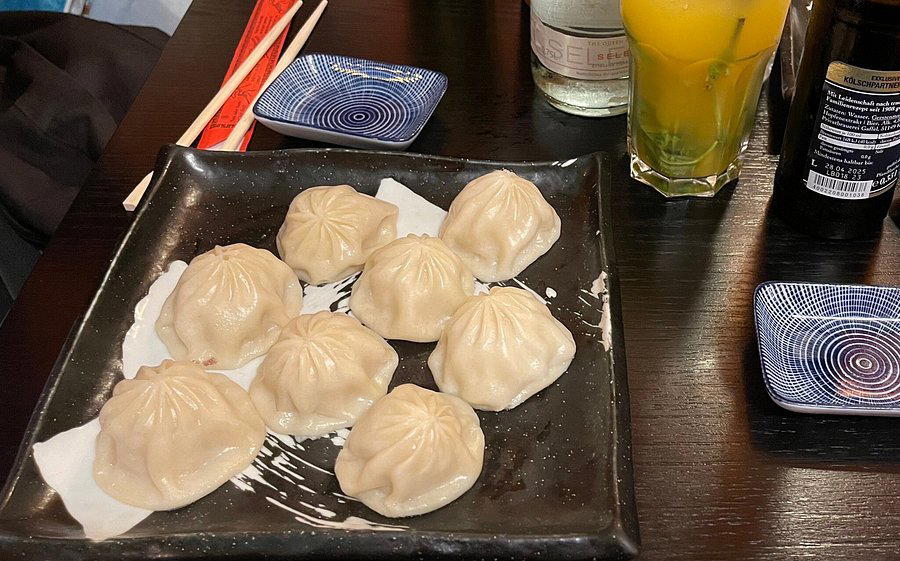
Tibetan Food in Cologne: A Format the City Rarely Gets Right
Aachener Strasse runs west from Cologne's inner ring through a district where the dining options shift quickly from Belgian Quarter wine bars to mid-range international kitchens. Tibet Momo occupies a spot on that corridor at number 11, in a neighbourhood where affordability and cultural range tend to matter more to regulars than prestige or ceremony. It is a Tibetan Momo Bistro in Cologne's inner west, with a casual dress code, recommended reservations. The room itself signals nothing grand. That is, in part, the point: Tibetan food in German cities almost never arrives in formal packaging, and Tibet Momo fits the established pattern of a cuisine that travels light.
What Momo Actually Is, and Why Cologne Is an Unlikely Home for It
Momo are Himalayan dumplings, the street food of Lhasa, Kathmandu, and the Tibetan diaspora communities that spread across South Asia and eventually Europe. They are related to Chinese jiaozi and Central Asian manti through shared nomadic trade history, but the Tibetan version carries its own logic: thicker dough, minimal seasoning in the filling, and a reliance on dipping sauces built from dried chilies and tomato to add heat and depth. The technique is not complex, but the execution gap between a properly folded, steam-finished momo and a mediocre approximation is considerable.
Germany's Tibetan restaurant count is small, concentrated in cities with larger refugee and diaspora communities. Cologne's Tibetan population is modest compared to cities like Berlin or Frankfurt, which makes a venue dedicated to this cuisine a relatively rare fixture in the Rhine city. Compared to the city's French-trained modern kitchens, places like Ox & Klee or La Cuisine Rademacher, Tibet Momo operates in an entirely different register: lower price point, informal format, and a cuisine whose authority comes from cultural inheritance rather than tasting-menu architecture.
The Intersection of Imported Method and the Ingredients That Travel With a Cuisine
Tibetan cooking in diaspora settings always involves a negotiation with available ingredients. Back in the Himalayan plateau, fillings lean on yak meat, regional greens, and dried goods that don't survive the journey west. In Germany, kitchens like Tibet Momo substitute beef, lamb, or vegetables that approximate the original profile without claiming to replicate it exactly. This is not compromise so much as translation: the cooking method, the dough hydration, the pleating style, and the chili sauce philosophy remain anchored to the source tradition even as the proteins and produce adapt to what Cologne's markets supply.
This dynamic places the restaurant inside a wider pattern visible across German cities, where diaspora restaurants act as living demonstrations of how a culinary technique migrates. The Korean kitchens of Düsseldorf, the Vietnamese pho houses of Berlin's Lichtenberg, and the Sichuan counters that have appeared across Munich all follow a similar logic: the method is preserved, the ingredient map shifts. At the more formal end of Germany's dining range, the same interplay of imported technique and local produce appears in entirely different form at places like JAN in Munich or Aqua in Wolfsburg, where European fine dining absorbs global influences at the opposite end of the price spectrum.
How Tibet Momo Sits in Cologne's Broader Dining Picture
Cologne's restaurant scene is not primarily defined by its fine dining tier, though that tier includes credible addresses. The city's strength lies in its mid-range and casual registers, where international kitchens outnumber Michelin-tracked modern European rooms. For context, restaurants like La Société, Le Moissonnier Bistro, and maiBeck represent the more technically ambitious end of Cologne's offer. The restaurant sits at a different point on that map, serving a cuisine where the value case is built on authenticity of format rather than on technique-led innovation or ingredient sourcing at premium price.
The Belgian Quarter and the streets immediately surrounding it on Aachener Strasse have absorbed a range of casual international kitchens over the years. This is not Cologne's luxury dining corridor. It is the kind of neighbourhood where a Tibetan dumpling restaurant can operate without the pressure of competing against French brasseries or modern tasting menus, which is precisely why a venue with this focus survives here where it might not in a different district.
Germany's Diaspora Dining Scene and Where Tibetan Food Fits
Across Germany's dining map, particularly formally decorated restaurants tend to cluster around French-influenced modern European cooking. Vendôme in Bergisch Gladbach, Waldhotel Sonnora in Dreis, and Schwarzwaldstube in Baiersbronn occupy the upper bracket of that tradition. Further afield, Victor's Fine Dining by Christian Bau in Perl, Restaurant Haerlin in Hamburg, and Schanz in Piesport each represent the kind of single-minded technical investment that earns sustained recognition. CODA Dessert Dining in Berlin and ES:SENZ in Grassau work at the format-experiment end of German cooking. None of these share a competitive set with the restaurant.
What they share with a Tibetan kitchen in Cologne is the underlying question that all serious restaurants in any tradition must answer: does the cooking demonstrate real understanding of its source? For diaspora restaurants, that question is answered through fidelity to method, not through price or presentation. The momo at a venue like this is assessed against the standard of the form itself, not against what a French-trained kitchen in the same city might produce.
Know Before You Go
- Address: Aachener Str. 11, 50674 Köln, Germany
- Neighbourhood: Belgian Quarter / Aachener Strasse corridor, inner west Cologne
- Reservation policy: Recommended
- Price range: Moderate
- Hours: Mon: Closed; Tue: 4–9:30 PM; Wed: 4–9:30 PM; Thu: 4–9:30 PM; Fri: 4–9:30 PM; Sat: 1–9:30 PM; Sun: 4–9:30 PM
- Dress code: Casual
Price and Positioning
Comparable venues nearby, for context on price, style, and recognition.
| Venue | Price | Notes |
|---|---|---|
| Tibet MomoThis venue — the venue you are viewing | $$ | Not listed |
| Bad Ape | $$ | Neustadt/Nord, Premium Sandwiches & Salads |
| Rich`N Greens | $$ | Altstadt/Nord, Healthy Customizable Bowls & Burritos |
| Adeli | $$ | Neustadt/Nord, International Café with Bagels & Cakes |
| Feinripp & Gold | $$ | Altstadt/Nord, Artisanal Sandwich Culture |
| Ikigai | $$ | Altstadt/Nord, Japanese BBQ All-You-Can-Eat |
Continue exploring
More in Cologne
Restaurants in Cologne
Browse all →
Bars in Cologne
Browse all →
Hotels in Cologne
Browse all →

At a Glance
- Cozy
- Classic
- Casual Hangout
- Solo
- Standalone
Current opening hours
- Monday
- Closed
- Tuesday
- 4–9:30 PM
- Wednesday
- 4–9:30 PM
- Thursday
- 4–9:30 PM
- Friday
- 4–9:30 PM
- Saturday
- 1–9:30 PM
- Sunday
- 4–9:30 PM
Hours can change for holidays and private events. Last verified .
Traditional, cozy, and आराम-like atmosphere with a warm, welcoming feel.