Thermenresort Laa – Hotel
Thermenresort Laa sits in the Weinviertel wine country of Lower Austria, where thermal bathing and regional cooking share equal weight in the guest experience. The property anchors the town of Laa an der Thaya, close to the Czech border, in a part of Austria that has historically supplied Vienna's kitchens with game, grain, and cellar-ready wines. It belongs to a tier of Austrian wellness resorts where proximity to agricultural land shapes what arrives at the table.
Pearl is the En Primeur Club membership app — saves, bookings, and concierge access live there. Same editors, same standards.
- Address
- Thermenpl. 3, 2136 Laa an der Thaya, Austria
- Phone
- +43252284700733
- Website
- therme-laa.at
- Directions
- Get directions
 Saves & bookings on Pearl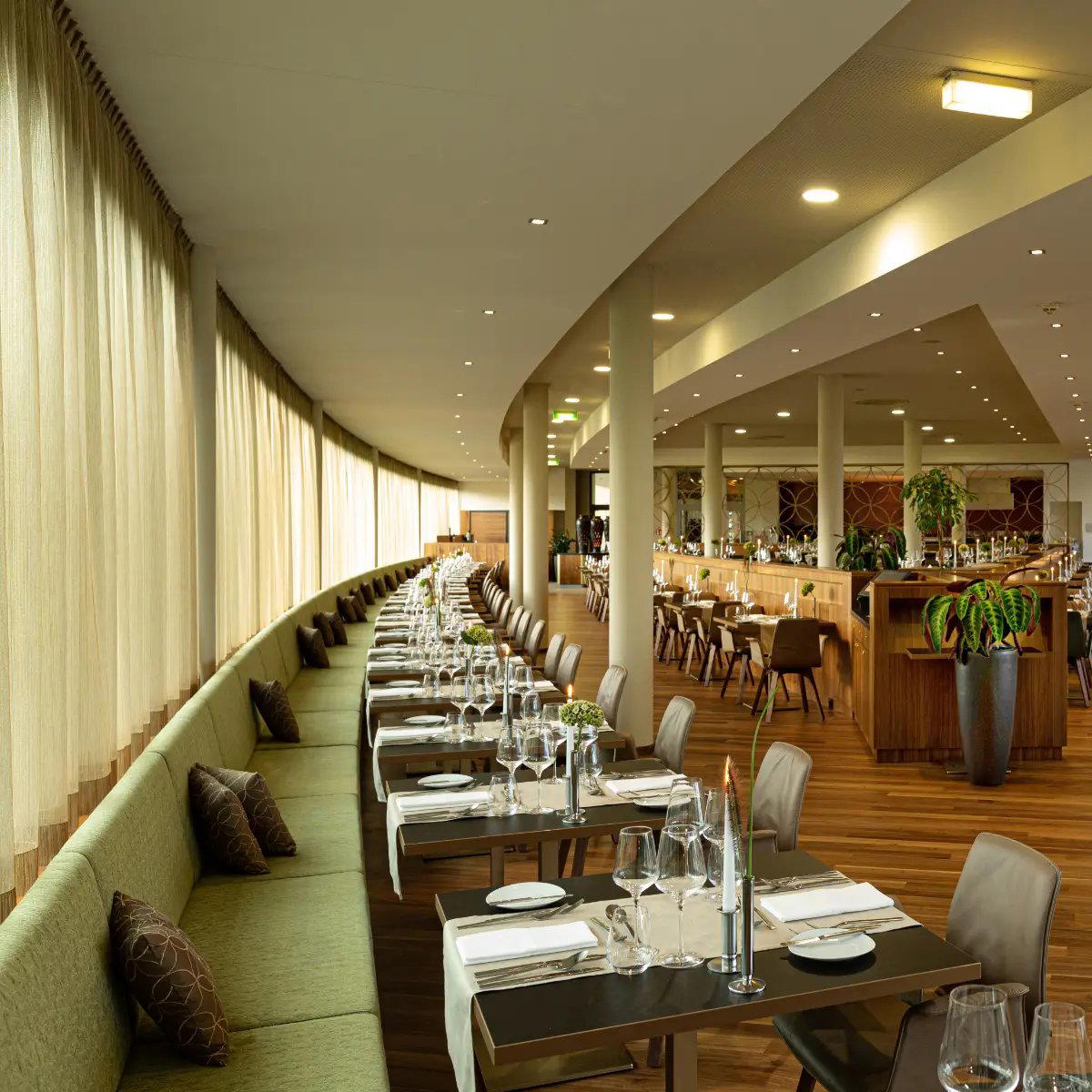
Weinviertel on the Table: Thermal Country and Regional Produce
The road into Laa an der Thaya runs through some of Lower Austria's flattest, most productive farmland. The Weinviertel, which translates directly as wine quarter, covers the northeastern corner of the country between the Danube and the Czech and Slovak borders. It is not the region that Austrian fine dining tends to celebrate first, that conversation tends to start with Vienna's market culture or the alpine kitchens of Tyrol, such as Griggeler Stuba in Lech or Gourmetrestaurant Tannenhof in Sankt Anton am Arlberg. But the Weinviertel feeds a great deal of what Austria eats: Grüner Veltliner grown on loess soils, wild game from the forested margins, root vegetables, poppy seeds, and a tradition of cellar cooking that predates any contemporary farm-to-table framing.
Thermenresort Laa sits at the centre of this agricultural reality. The property anchors the thermal spa town of Laa an der Thaya, which sits roughly 70 kilometres north of Vienna and approximately 10 kilometres from the Czech border. In this part of Austria, the thermal springs that draw wellness visitors and the farmland that supplies regional kitchens are the same territory. That geography makes ingredient sourcing less of a chef philosophy and more of a logistical default: what is close is what gets used.
The Thermal Resort Tier in Austria
Austria's thermal resort category occupies a specific position in the country's hospitality offering. These properties rarely compete with the urban fine-dining benchmark, places like Steirereck im Stadtpark in Vienna or the creative regional approach of Döllerer in Golling an der Salzach. They operate on a different logic: the guest is there for thermal bathing, rest, and recovery, and the dining programme exists to extend and support that experience rather than to perform independently. Booking patterns reflect this. Guests at thermal resorts in Lower Austria typically arrive for two or three nights, and the dining cycle runs with them, meaning kitchen consistency over stays matters more than single-visit spectacle.
Within this tier, properties in agricultural regions like the Weinviertel carry a supply-side advantage that spa resorts in more remote alpine settings do not. The density of producers, the proximity of Vienna's wholesale networks, and a local cooking tradition that has always worked with what the land gives, all of this feeds into what a kitchen here can plausibly do. For visitors accustomed to the refined regional sourcing programmes at establishments like Landhaus Bacher in Mautern an der Donau or Taubenkobel in Schützen am Gebirge, the Weinviertel context carries genuine culinary credibility.
Approaching the Property
Laa an der Thaya is a small market town with a medieval core, and the resort complex sits on the edge of it, adjacent to the thermal bath infrastructure that gives the town much of its contemporary visitor identity. The approach is flat, open country, no dramatic mountain arrival, no vineyard amphitheatre. What the setting offers instead is a quietness that the alpine resorts, crowded through ski season and hiking summer alike, often cannot. The thermal bathing culture here draws a predominantly Austrian and Czech visitor mix, with German and Slovakian guests adding to the regional pattern. International visitors from outside central Europe are less common, which keeps the atmosphere local in a way that larger resort destinations tend not to manage.
The spa infrastructure that defines the resort is the Therme Laa, a water-focused wellness centre that operates as the primary reason most guests make the journey. The dining component of the resort functions in relation to this: guests emerging from thermal bathing want substantial, grounding food rather than architecture-forward tasting menus. Regional Austrian cooking, with its emphasis on slow-cooked proteins, root vegetables, and grain-based dishes, maps well onto that appetite.
The Weinviertel Produce Tradition
Lower Austrian cuisine does not carry the international profile of, say, the Salzburg alpine kitchens explored at Obauer in Werfen or the herb-driven precision of Kräuterreich by Vitus Winkler in Sankt Veit im Pongau. But it has a credible larder. The Weinviertel produces more than forty percent of Austria's wine output, with Grüner Veltliner and Riesling from the loess and sand soils around Laa finding their way onto lists throughout Vienna. Game, particularly deer and wild boar, comes from the forested border areas. Pumpkin and sunflower oils from the region appear in dishes where an Adriatic producer might reach for olive oil. This is a kitchen tradition built on what survives cold winters and long storage, and it produces food that is dense, warming, and calibrated to the landscape it comes from.
Guests considering the broader Austrian regional dining scene will find relevant reference points in the more celebrated kitchens: Artis in Graz represents Styrian produce logic, Ois in Neufelden works the Upper Austrian tradition, and Ikarus in Salzburg takes a guest-chef rotation approach that places Austrian produce in international conversation. The Weinviertel sits outside most of these circuits, which is exactly what gives a stay at Thermenresort Laa its particular texture. You are not attending a performance of Austrian cuisine, you are in the place that supplies it.
Planning Your Stay
Laa an der Thaya is accessible by regional train from Vienna's Franz-Josefs-Bahnhof, with the journey running approximately 90 minutes on the Weinviertel line, a connection that makes the resort practical as a short-break destination from the capital without requiring a car. For guests arriving from further afield, Vienna International Airport is the logical entry point, with the city centre and onward train connection adding around two hours total from the gate. The town itself has limited evening dining options beyond the resort, so guests should expect that the resort's own food and beverage offering will carry the majority of meals. The leading seasonal window for combining thermal bathing with regional produce is autumn, when game is in season and the Weinviertel wine harvest brings a particular energy to the area. Spring, when asparagus from the sandy soils around the Marchfeld (the neighbouring agricultural plain) appears in regional kitchens, is a secondary high point for anyone interested in what the land produces.
For context on how Austrian regional dining is discussed at a higher technical level, the Atelier Fischer in Sankt Gilgen, Schwarzer Adler in Hall in Tirol, and Stüva in Ischgl all offer useful comparative reference points, as does Restaurant 141 by Joachim Jaud in Mieming for the Tyrolean end of the spectrum. For international benchmarks in ingredient-led cooking, Le Bernardin in New York City and Atomix in New York City represent how sourcing precision translates into different culinary traditions.
Comparable Venues
Comparable venues nearby, for context on price, style, and recognition.
| Venue | Cuisine | Price | Notes |
|---|---|---|---|
| Thermenresort Laa – HotelThis venue — the venue you are viewing | Regional Austrian Cuisine | $$$ | Not listed |
| Gugumuck Bistro & Gartenbar | Viennese Escargot Farm-to-Table Bistro | $$$ | Per Albin Hansson Siedlung |
| Residenz Wachau | Seasonal Austrian Regional Cuisine | $$$ | Aggsbach-Dorf |
| Steinhart | Modern Austrian | $$$ | Favoriten |
| Dorfhotel Fasching | Austrian Alpine Cuisine | $$$ | Fischbach |
| W4 – Wein | Traditional Austrian Regional | $$$ | Röschitz |
Continue exploring
More in Laa An Der Thaya
Restaurants in Laa An Der Thaya
Browse all →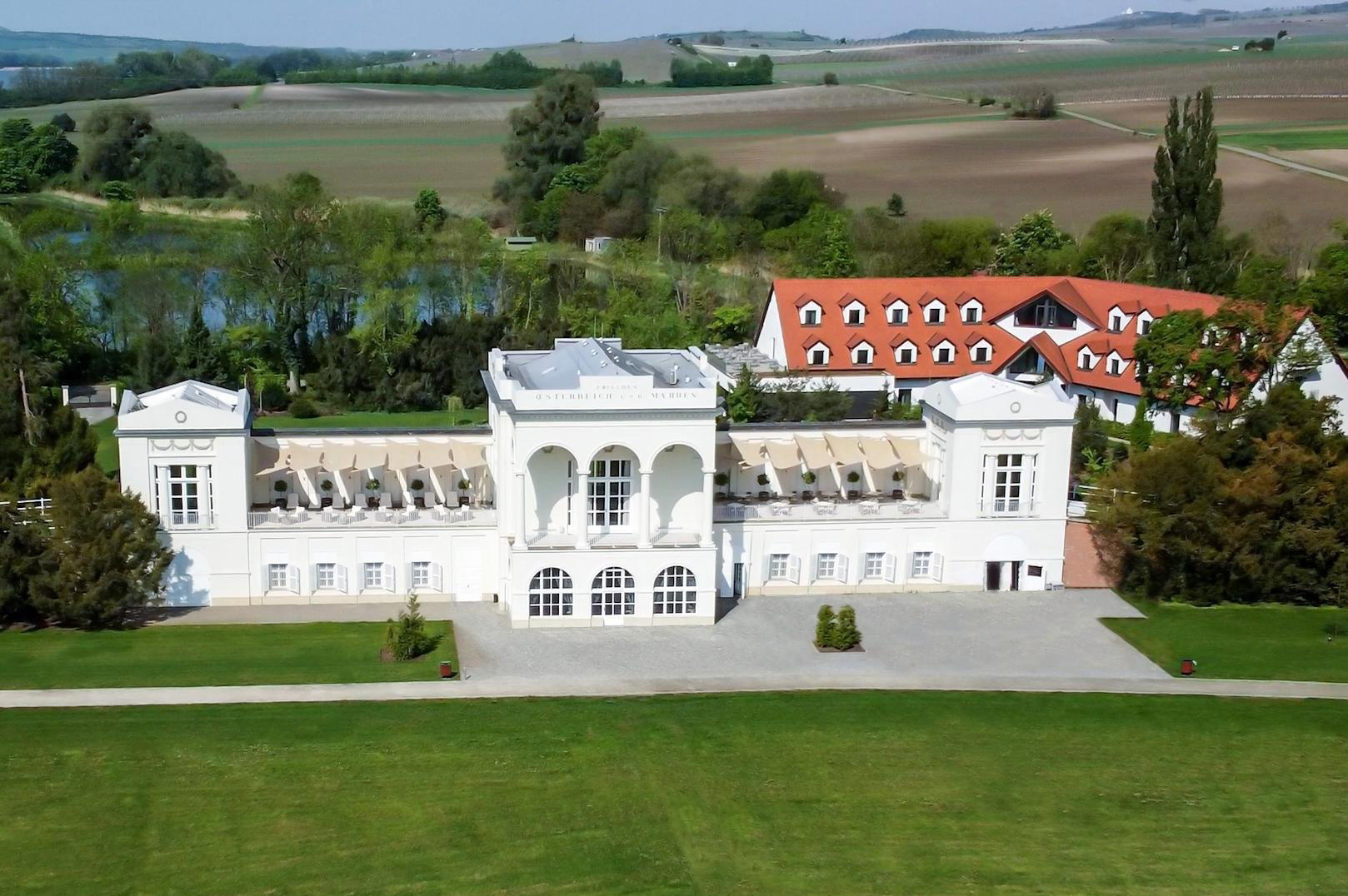
Bars in Laa An Der Thaya
Browse all →

Hotels in Laa An Der Thaya
Browse all →
At a Glance
- Quiet
- Cozy
- Elegant
- Sophisticated
- Family
- Group Dining
- Special Occasion
- Hotel Restaurant
- Extensive Wine List
- Local Sourcing
Relaxed, wellness-focused, and upscale within a spa resort setting.