The Alte Donau is Vienna's old oxbow lake, a reed-lined stretch of calm water that functions as the city's summer living room. Beach bars, boat hire, and open-air eating line the banks from late spring through early autumn, drawing Viennese residents rather than tour groups. It sits in the 22nd district, accessible by U-Bahn, and reads as a counterpoint to the formal dining culture of the Innere Stadt.
Pearl is the En Primeur Club membership app — saves, bookings, and concierge access live there. Same editors, same standards.
- Address
- Vienna, Austria
- Phone
- +43 1 514504214
- Website
- alte-donau.info
- Directions
- Get directions
 Saves & bookings on Pearl
Where Vienna Goes When It Stops Performing
There is a version of Vienna that exists entirely for visitors: the coffee houses, the Ringstrasse, the white tablecloths. The Alte Donau belongs to a different version entirely. This old arm of the Danube, cut off from the main river channel when the waterway was regulated in the nineteenth century, has become something that central Vienna rarely offers: an outdoor space that functions on the city's own terms, for the city's own people.
Approaching the lake from the U1 stop at Alte Donau, the shift in register is immediate. The street grid gives way to tree cover, the traffic noise drops, and the waterfront opens onto a band of reeds, small wooden docks, and the kind of low-key infrastructure that accumulates when a place has been genuinely used for generations rather than curated for a photograph. It is, by Viennese standards, informal to a degree that can initially read as neglect. It is not.
The Physical Environment and What It Produces
The Alte Donau operates on a seasonal logic that shapes everything about the experience. From late May through early September, the shoreline activates: beach bars set up on grass slopes, rowing boats and pedalos move slowly across the flat water, and the smell of grilled food carries across the lake in the evenings. Outside that window, the area returns to a quieter rhythm of walkers, cyclists, and anglers. The lake's protected status keeps motorised boats off the water, which is the single fact that most defines the atmosphere. The result is an unusual quietness for a city lake this close to a major metropolitan centre.
The built environment around the Alte Donau is intentionally low-rise and low-key. The eastern bank is more developed, with the Gänsehäufel peninsula housing one of Central Europe's largest open-air public bathing facilities, in operation since 1907. The western bank runs through residential streets and small marinas. Neither bank is trying to impress anyone. That absence of self-consciousness is exactly what gives the place its particular atmosphere: it functions as a neighbourhood amenity at civic scale.
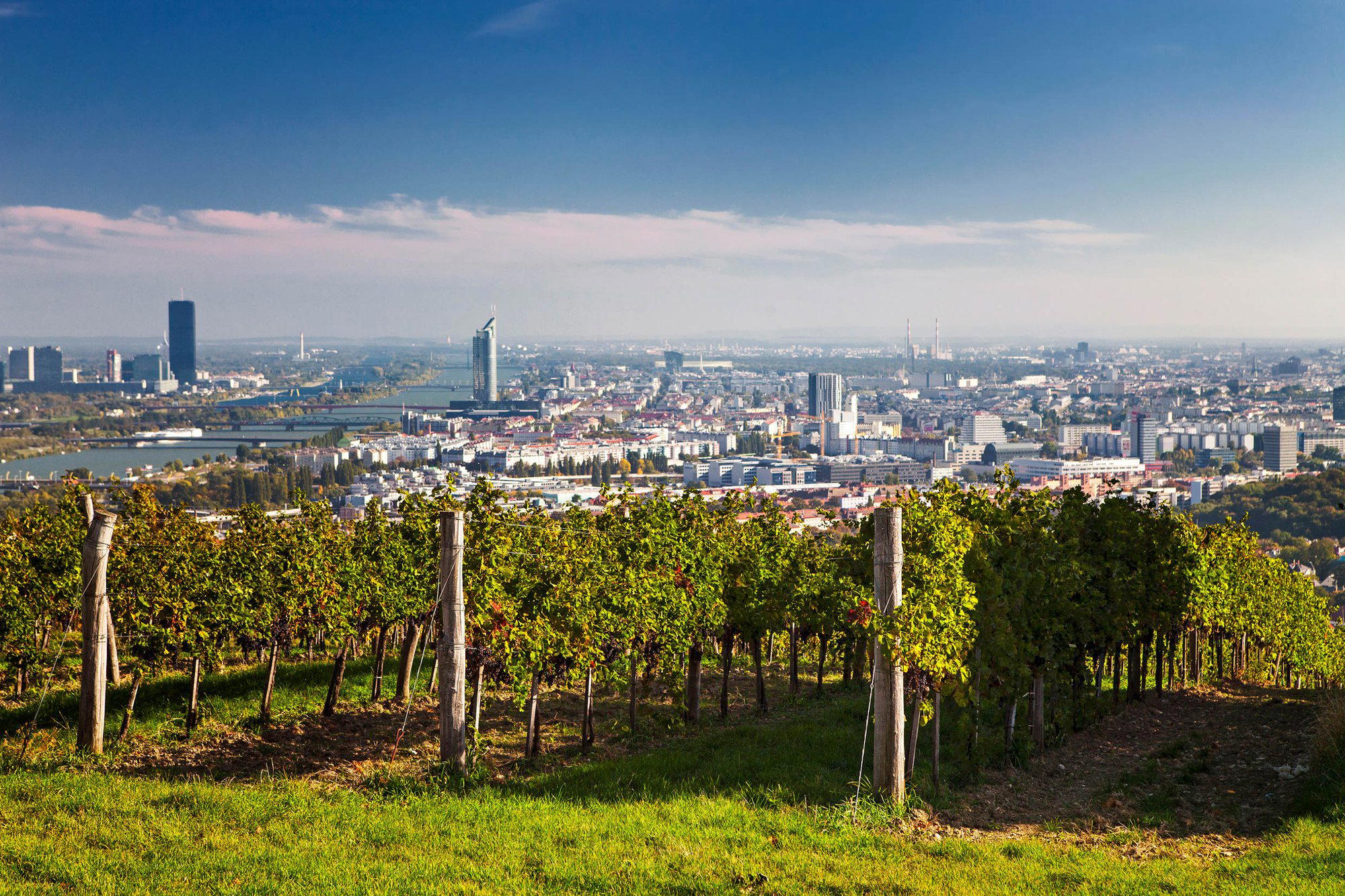
Vienna's outdoor drinking and eating scene has historically been concentrated in the Heuriger tradition of the outer districts, the wine tavern model that spreads across Grinzing, Neustift, and the Kahlenberg foothills. The bar lakefront represents a parallel tradition, beer and grilled food rather than wine and cold platters, but with the same underlying logic: a space where time is not being managed by the table-turn pressures of a formal restaurant.
The Food and Drink Logic of the Lakefront
The eating and drinking infrastructure along the bar is distributed rather than concentrated. Individual operators run beach bars and small restaurants along the banks, each with its own format. The common thread is outdoor seating, grilled proteins, and cold Austrian lager or spritz-style drinks served in plastic or direct glassware. This is not a context where wine lists or kitchen ambition are the point. The point is cold beer on a warm evening with water in front of you.
That distinction matters when thinking about where the bar sits relative to Vienna's broader food scene. The city's restaurant culture splits broadly between the formal Beisl tradition, the new-wave natural wine and small-plates scene concentrated in the 6th and 7th districts, and the outdoor casual tier. The lakefront belongs unambiguously to the third category. Comparing it to the craft-led programming at Bar Tabacchi or the hotel bar circuit at 25hours Hotel Vienna at MuseumsQuartier makes no more sense than comparing a Munich beer garden to a Michelin-listed restaurant. They are answering different questions.
Context Across Austria
The bar is most useful to understand as a specifically Viennese iteration of a broader Austrian relationship with outdoor leisure infrastructure. Other Austrian cities and regions have their own equivalents: the beer hall tradition at Augustiner Bräu Mülln in Salzburg, the regional wine focus at Carinthia Weinbar in Velden am Wörthersee, the mountain lakeside setting at Achen Lake in Eben Am Achensee, and the historic tavern format at Landhauskeller in Graz. Each reflects local geography and drinking culture. The bar reflects Vienna's: a city that maintains a strong civic outdoor life but concentrates its formal hospitality energy indoors and in the western districts.
For visitors coming from hotel bar contexts in other global cities, the transition to the bar aesthetic can take a moment. Hotel Schwarzer Adler Innsbruck or the aviation-themed spectacle of Red Bull Hangar-7 in Himmelreich both operate with a presentation logic that the bar lakefront explicitly does not have. That is the point. Even for those accustomed to the design-forward bar programmes of cities like Honolulu, as at Bar Leather Apron, the bar offers something structurally different: leisure as civic infrastructure rather than hospitality as designed experience.
Planning a Visit
The bar is most accessible between June and August, when the beach bar operators are fully open and evening temperatures allow extended outdoor time. Weekday evenings offer a more local atmosphere; weekend afternoons draw families and a higher density of visitors. The area around the western bank near the marina tends to be quieter than the Gänsehäufel peninsula side. Walk-ins are the norm at the lakeside bar operations.
For those building a Vienna itinerary that mixes formal and informal registers, pairing an evening at the bar with daytime visits to the Beisl tradition, as seen at Amerlingbeisl, gives a more complete picture of how the city actually eats and drinks than the central tourist circuit alone provides.
Budget Reality Check
Comparable venues nearby, for context on price, style, and recognition.
| Venue | Cuisine | Price | Notes |
|---|---|---|---|
| Alte DonauThis venue — the venue you are viewing | Donauturm, lounge | $$ | Not listed |
| Espresso Bar | Neubau, Bar | $$ | Not listed |
| R&Bar | Not listed | $$ | Mariahilf, cocktail_bar |
| Josef cocktailbar | Not listed | $$$ | Innere Stadt, cocktail_bar |
| Le Cru | Not listed | $$$ | Innere Stadt, champagne_bar |
| Club U | Wieden, lounge | $$ | Not listed |
Continue exploring
More in Vienna
Bars in Vienna
Browse all →
Restaurants in Vienna
Browse all →
Hotels in Vienna
Browse all →
At a Glance
- Scenic
- Relaxed
- Casual Hangout
- Group Outing
- After Work
- Waterfront
- Outdoor Terrace
- Lounge Seating
- Conventional Wine
- Craft Beer
- Waterfront
Casual, open-air waterfront setting with pleasant lake views and a laid-back summer vibe.