Landhaus Bacher






2 Michelin Stars · La Liste Top Restaurants · Star Wine List
Our verdict
Landhaus Bacher in Mautern an der Donau holds two Michelin stars and a 97-point La Liste ranking, placing it among Austria's most decorated classical kitchens. Under chef Thomas Dorfer, the forty-year-old family restaurant channels a rigorous seasonal approach through vegetables, herbs, and regional produce. The Wachau setting, across the Danube from Krems, adds a wine-country dimension that few comparable Austrian kitchens can match.

Pearl is the En Primeur Club membership app, where members save venues, book tables and use the concierge.
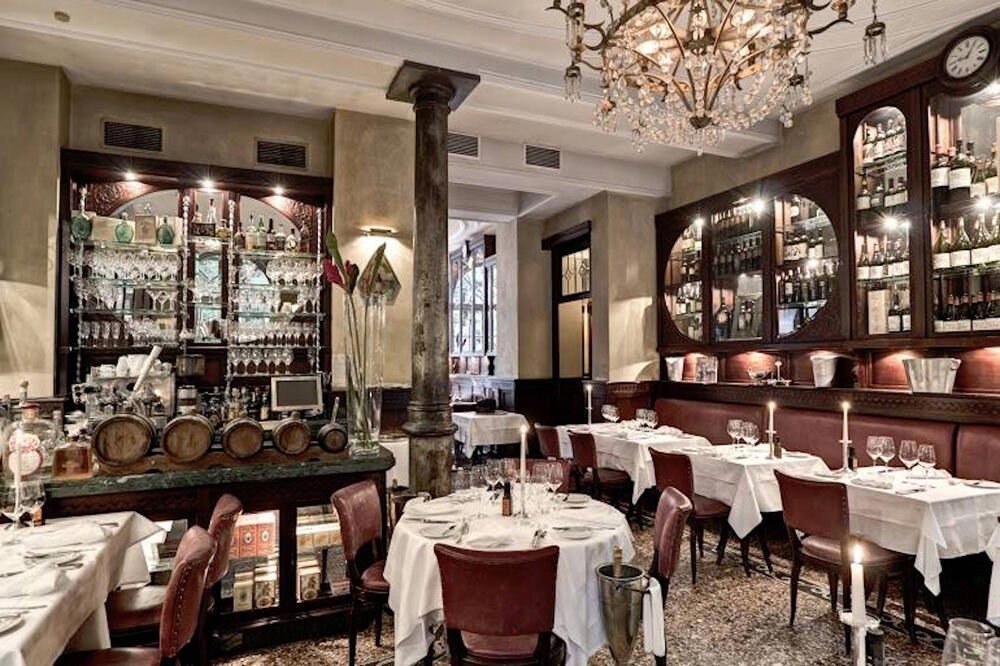
Where the Wachau's Classical Tradition Meets a Generational Kitchen
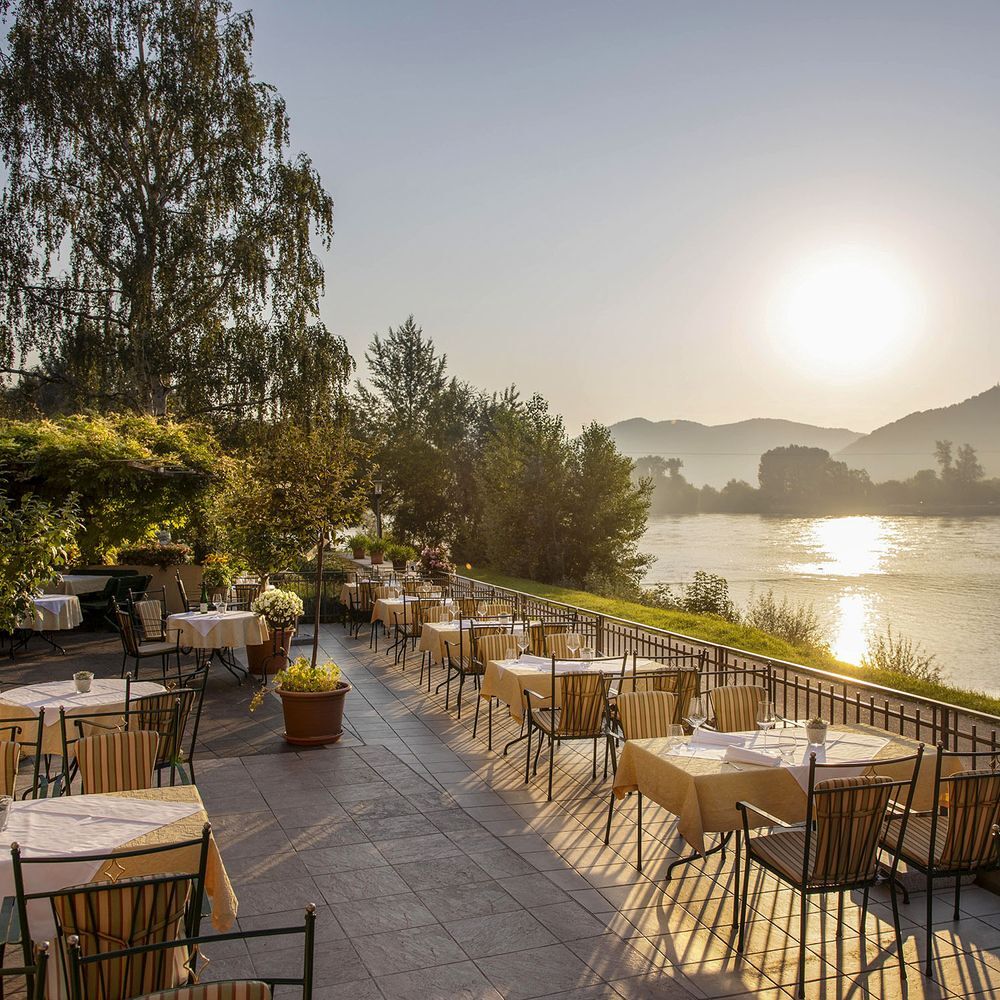
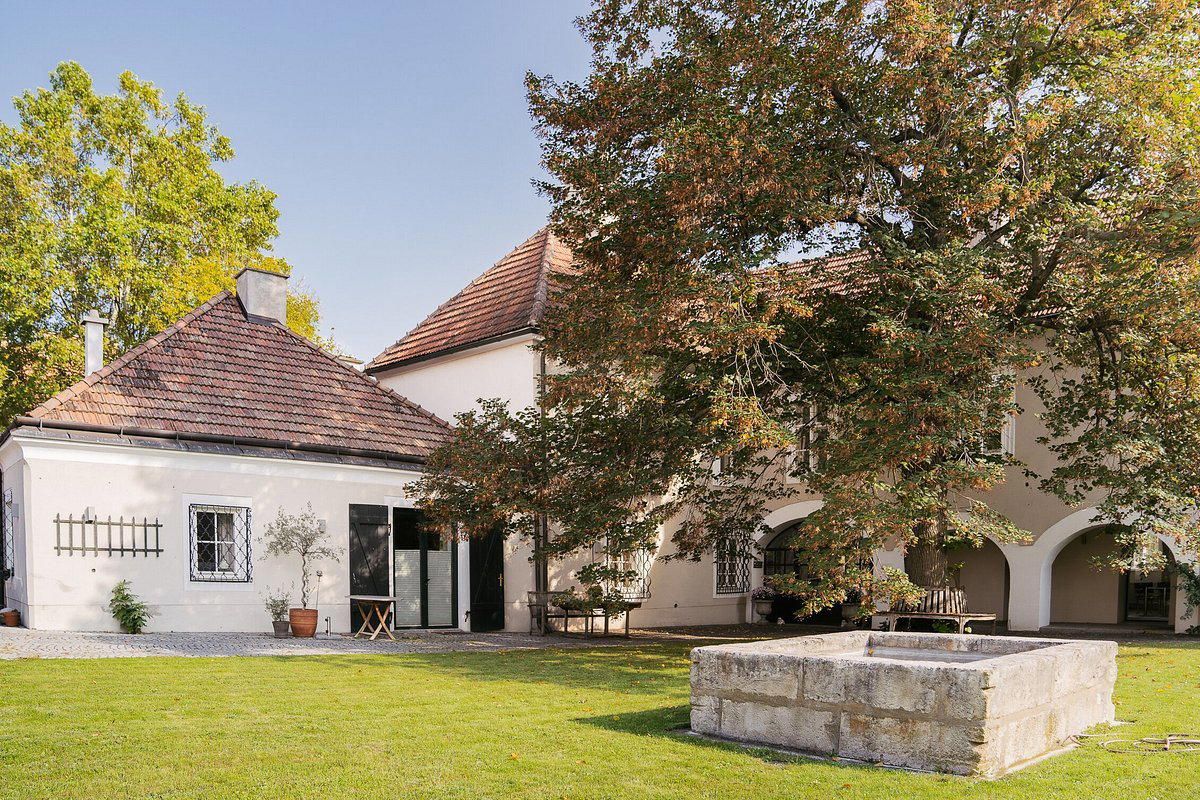
The road into Mautern an der Donau runs along the southern bank of the Danube, with vineyard terraces climbing the hillsides above and the medieval silhouette of Krems visible across the water. This is the Wachau, one of Central Europe's most consequential wine corridors, and the culinary gravity of the region has long been anchored on this side of the river. Landhaus Bacher sits on Südtiroler Platz at the centre of Mautern, a cream-coloured property that reads more like a country house than a destination restaurant, which is, in part, the point. Austria's great classical kitchens rarely announce themselves loudly. They accumulate decades, pass through families, and let the awards do the talking.
That accumulation is considerable here.
Forty Years, Three Generations, One Address
Austria's two-star kitchens often carry a founding story that runs through a single family rather than a series of celebrated chef moves. Landhaus Bacher fits that pattern precisely. The restaurant was established more than forty years ago and has operated from the same address through three generations of the same family. Lisl Wagner-Bacher, who took over from her parents in 1979, built the kitchen's foundational reputation over decades of work that earned international recognition, including a listing in the San Pellegrino World's 50 Best Restaurants in 2014. Her contribution belongs to a moment in Austrian haute cuisine when a small number of chefs in provincial settings proved that serious cooking did not require a capital-city address.
The kitchen is now led by Thomas Dorfer, who came into the restaurant through marriage to Lisl's daughter Suzanne, a succession model common in European family-run establishments of this tier, where culinary authority transfers through relationship and apprenticeship rather than open competition. The editorial significance of this lineage is what it signals about continuity: the technique, the seasonal logic, and the regional sourcing philosophy have been layered over forty years rather than invented by a single incoming chef. That kind of depth is difficult to replicate and explains why the two-star rating has held with apparent stability.
The Vegetable Argument in a Meat-Forward Country
Austria's classical kitchen tradition leans heavily on game, dairy, and river fish, so the particular emphasis Thomas Dorfer places on vegetables and herbs carries a degree of editorial weight. In the broader context of Austrian fine dining, where kitchens like Döllerer in Golling an der Salzach and Ikarus in Salzburg have pushed toward inventive, product-driven cooking, the move toward vegetable-led menus represents a genuine structural shift rather than a trend accommodation.
The available award notes describe specific preparations: leafy chicory (puntarelle) marinated and served with pickled butternut, young coconut, blood oranges, and a tapenade of spiced cashew; grilled young garlic with a teriyaki of stewed oyster mushrooms and rapeseed oil louté. These are not supporting dishes. They are compositions that use classical technique to reframe ingredients that Austrian fine dining has historically treated as peripheral. The use of ingredients like young coconut and teriyaki within a framework described as classical and seasonal is a signal of how Dorfer interprets the family repertoire: the structure is inherited, the vocabulary is expanded.
The vegetarian menu is a formal offering, not an afterthought accommodation. In the €€€€ tier of Austrian restaurant dining, a serious vegetarian tasting menu still differentiates a kitchen from peers that treat plant-based requests as a modification exercise. For the full picture of how this approach maps against Austria's other serious kitchens, Kräuterreich by Vitus Winkler in Sankt Veit im Pongau offers a direct comparison in the herb-and-vegetable register.
The Wachau as Dining Context
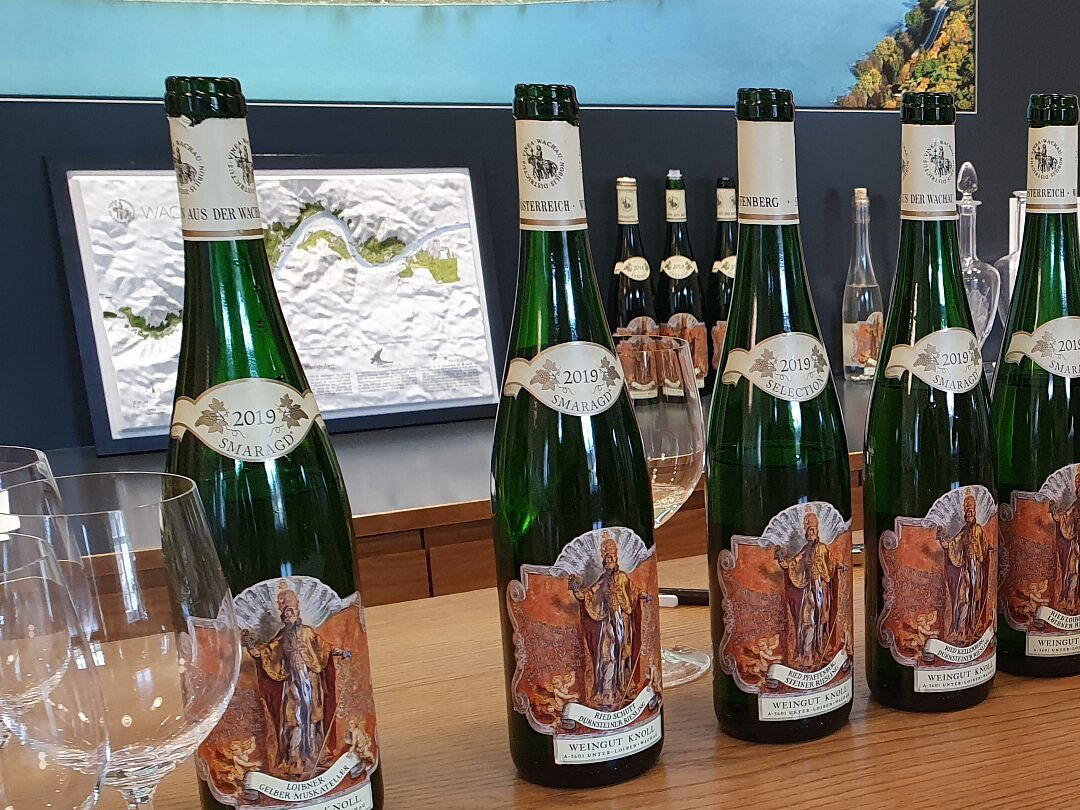
Few two-star restaurants operate inside an active wine region of Wachau's standing. The valley produces Grüner Veltliner and Riesling that rank among Austria's most respected, and a restaurant at Landhaus Bacher's level can source directly from producers whose vineyards are visible from the dining room. This is a different situation from city restaurants that curate regional wine lists at a distance. The geographical proximity shapes the wine program in ways that are difficult to replicate from Vienna or Salzburg.
The town of Mautern itself is small and quiet, which affects how this restaurant functions within the broader Wachau visitor pattern. Most international visitors approach through Krems, the larger town across the Danube, and cross by bridge or ferry. The surrounding region draws significant tourism through the Danube cycling route and the Wachau's UNESCO World Heritage designation, but Mautern retains a village character that places the restaurant in a different register from urban dining destinations. For context on the full range of options in the area, see our full Mautern an der Donau restaurants guide, our Mautern an der Donau wineries guide, and our Mautern an der Donau hotels guide.
Austria's Two-Star Field: Where Landhaus Bacher Sits
Austria carries a modest number of two-star kitchens relative to its population, which means each one occupies a specific position in a legible hierarchy. Landhaus Bacher's position as a classical, family-run, regionally anchored restaurant distinguishes it from the creative-contemporary direction taken by kitchens like Gourmetrestaurant Tannenhof in Sankt Anton am Arlberg or Griggeler Stuba in Lech, and from the mountain-resort context that defines kitchens like Stüva in Ischgl.
For international visitors comparing Austria's fine dining field to reference points elsewhere, the structural analogy is to a serious regional French house that has maintained two stars across a generation: the cooking reflects a place and a family rather than a single chef's personal brand. Visitors arriving from markets where restaurants are defined primarily by their head chef's individual celebrity may find the family-continuity model disorienting at first, but it is a more accurate representation of how European classical restaurants at this level actually function. By that logic, the comparison draws closer to Ois in Neufelden in terms of regional rootedness, while the technical ambition sits closer to Schwarzer Adler in Hall in Tirol.
Planning a Visit
Landhaus Bacher operates Thursday through Saturday for both lunch and dinner, with Sunday service running through the evening. Monday and Tuesday are closed. Lunch service on Thursday, Friday, and Saturday begins at noon; dinner service across those days runs from 6:30 pm. Sunday lunch opens at 11:30 am and service continues through the evening. The kitchen is closed on Wednesdays. This schedule reflects the rhythm of a serious country restaurant rather than an urban operation, meals here are not quick lunches between appointments, and the journey from Vienna (roughly 80 kilometres west along the Danube valley) is leading treated as a half-day or full-day excursion. Given the two-star standing and the 97-point La Liste rating, advance reservations should be treated as essential; tables at this level in the Austrian countryside do not hold open for last-minute diners. The price range places the restaurant in Austria's top tier (€€€€), consistent with Michelin two-star expectations. For visitors building a wider Wachau itinerary, the Mautern an der Donau bars guide and experiences guide cover the broader local options. Those extending their Austrian dining circuit toward alpine kitchens can reference Restaurant 141 by Joachim Jaud in Mieming for a contrasting mountain-region perspective. For international reference points in the two-star tier, Le Bernardin in New York City and Atomix in New York City offer a sense of how the format and price point translate across markets.
Frequently asked questions
What price level is Landhaus Bacher?
Pricing at Landhaus Bacher is listed as €€€€.
What are the opening hours for Landhaus Bacher?
Hours at Landhaus Bacher: Hours: Monday Closed Tuesday Closed Wednesday 6:30 pm–12:30 am Thursday 12–4:30 pm, 6:30 pm–12:30 am Friday 12–4:30 pm, 6:30 pm–12:30 am Saturday 12–4:30 pm, 6:30 pm–12:30 am Sunday 11:30 am–11:30 pm.
Comparison Snapshot
| Venue | Cuisine | Price | Awards | Notes |
|---|---|---|---|---|
| Landhaus BacherThis venue (the venue you are viewing) | Classic Austrian Fine Dining | $100–150 | 2 Michelin Stars · La Liste Top Restaurants | Not listed |
| Steirereck im Stadtpark | Modern Austrian Fine Dining | $200–300 | 3 Michelin Stars · World's 50 Best #33 | Creative |
| Döllerer | Modern Alpine Cuisine | $100–150 | 2 Michelin Stars · La Liste Top Restaurants | Contemporary Austrian, Innovative |
| Ikarus | Guest Chef Fine Dining | $200–300 | 2 Michelin Stars · La Liste Top Restaurants | Modern European, Creative |
| Mraz & Sohn | Contemporary Austrian Fusion | $150–200 | 2 Michelin Stars · La Liste Top Restaurants | Modern Austrian, Creative |
| Obauer | Modern Austrian Fine Dining | $50–100 | 2 Michelin Stars · La Liste Top Restaurants | Classic Cuisine |
Recognition history
Dated appearances from independent guides and award organizations, with the underlying list record or original source where available.
Michelin 2 Stars
Michelin
La Liste Top Restaurants
La Liste
Star Wine List
Star Wine List
Les Grandes Tables du Monde Member
Les Grandes Tables du Monde
Opinionated About Dining Classical in Europe Ranked #251
Opinionated About Dining
Full recognition history (11 entries)
La Liste Top Restaurants
La Liste
Michelin 2 Stars
Michelin
We're Smart World 4 Radishes
We're Smart World
Michelin 2 Stars
Michelin
Opinionated About Dining Classical in Europe Ranked #308
Opinionated About Dining
Opinionated About Dining Classical in Europe Recommended
Opinionated About Dining
Continue exploring
More in Mautern an der Donau
Restaurants in Mautern an der Donau
All restaurants in Mautern an der Donau →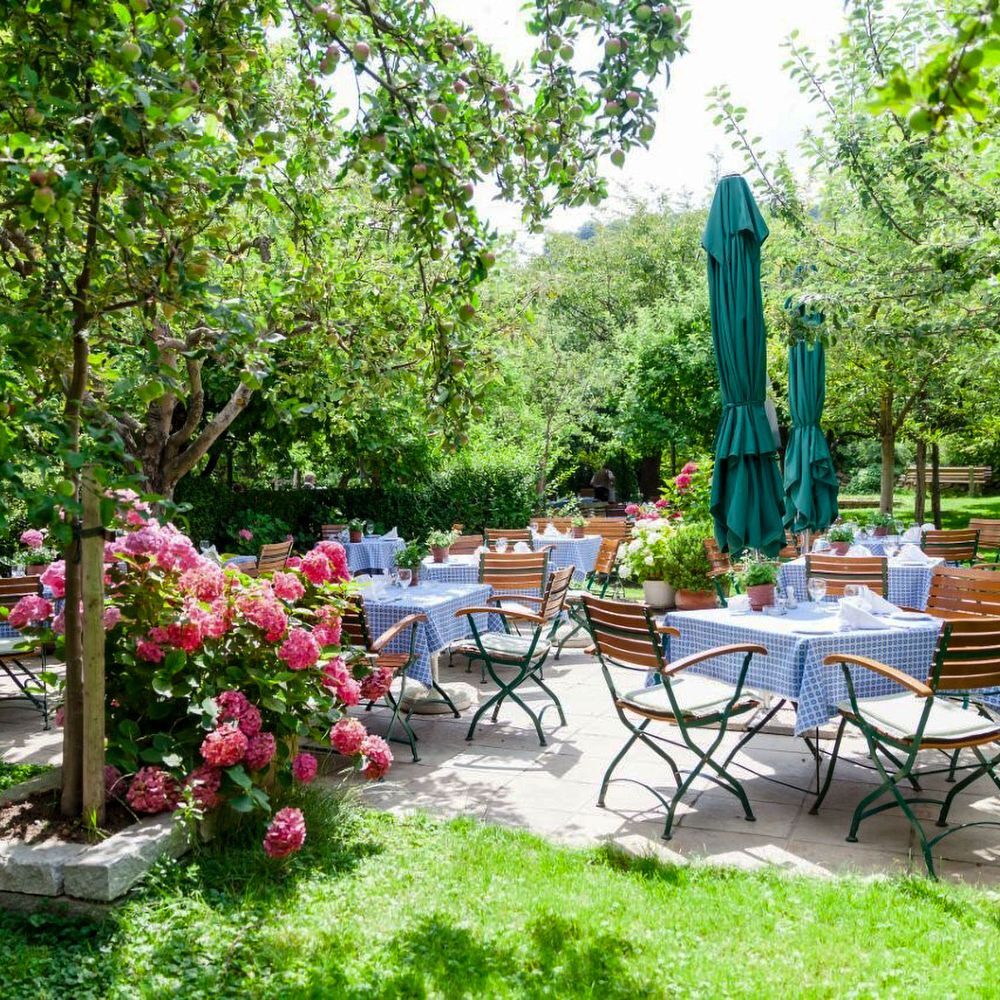
Bars in Mautern an der Donau
Browse all →
Hotels in Mautern an der Donau
Browse all →
Landhaus Bacher
The wine
- Wine program
- Deep wine list
- Extensive wine list
- Sommelier-led
Details
- Classic
- Elegant
- Sophisticated
- Well Known
- Special Occasion
- Celebration
- Date Night
- Business Dinner
- Terrace
- Wine Cellar
- Hotel Restaurant
- Extensive Wine List
- Sommelier Led
- Tasting Menu
- A La Carte
- Wine
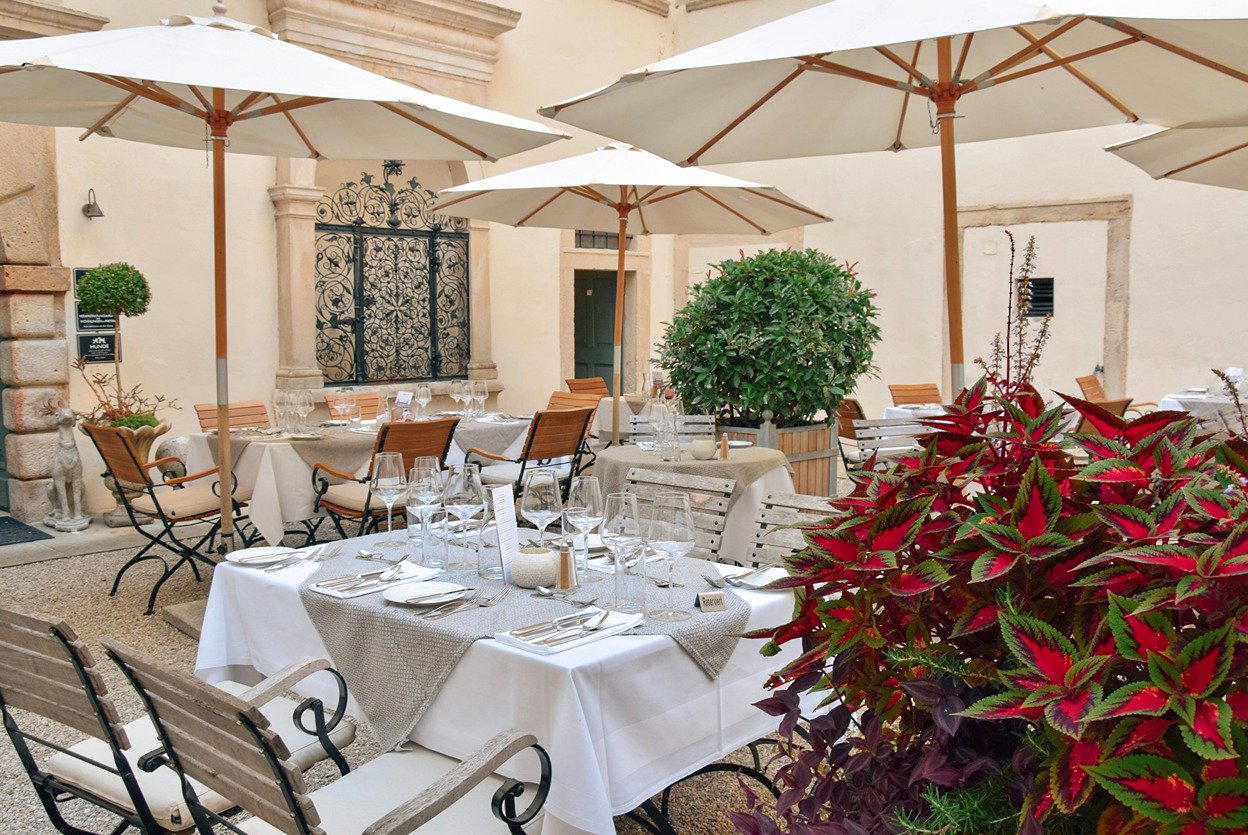
Refined country-house fine dining with a classic, polished atmosphere and terrace seating.