The Seafood Bar
On Van Baerlestraat, a short walk from the Rijksmuseum and Vondelpark, The Seafood Bar has become one of Amsterdam's most recognisable addresses for shellfish and fresh fish. The format is accessible rather than ceremonial, built around sharing plates and a cold seafood counter that rewards decisive ordering. It sits at the sharper, livelier end of the city's mid-market dining scene.
Pearl is the En Primeur Club membership app — saves, bookings, and concierge access live there. Same editors, same standards.
- Address
- Van Baerlestraat 5h, 1071 AL Amsterdam, Netherlands
- Phone
- +31 20 670 8355
- Website
- theseafoodbar.com
- Directions
- Get directions
 Saves & bookings on Pearl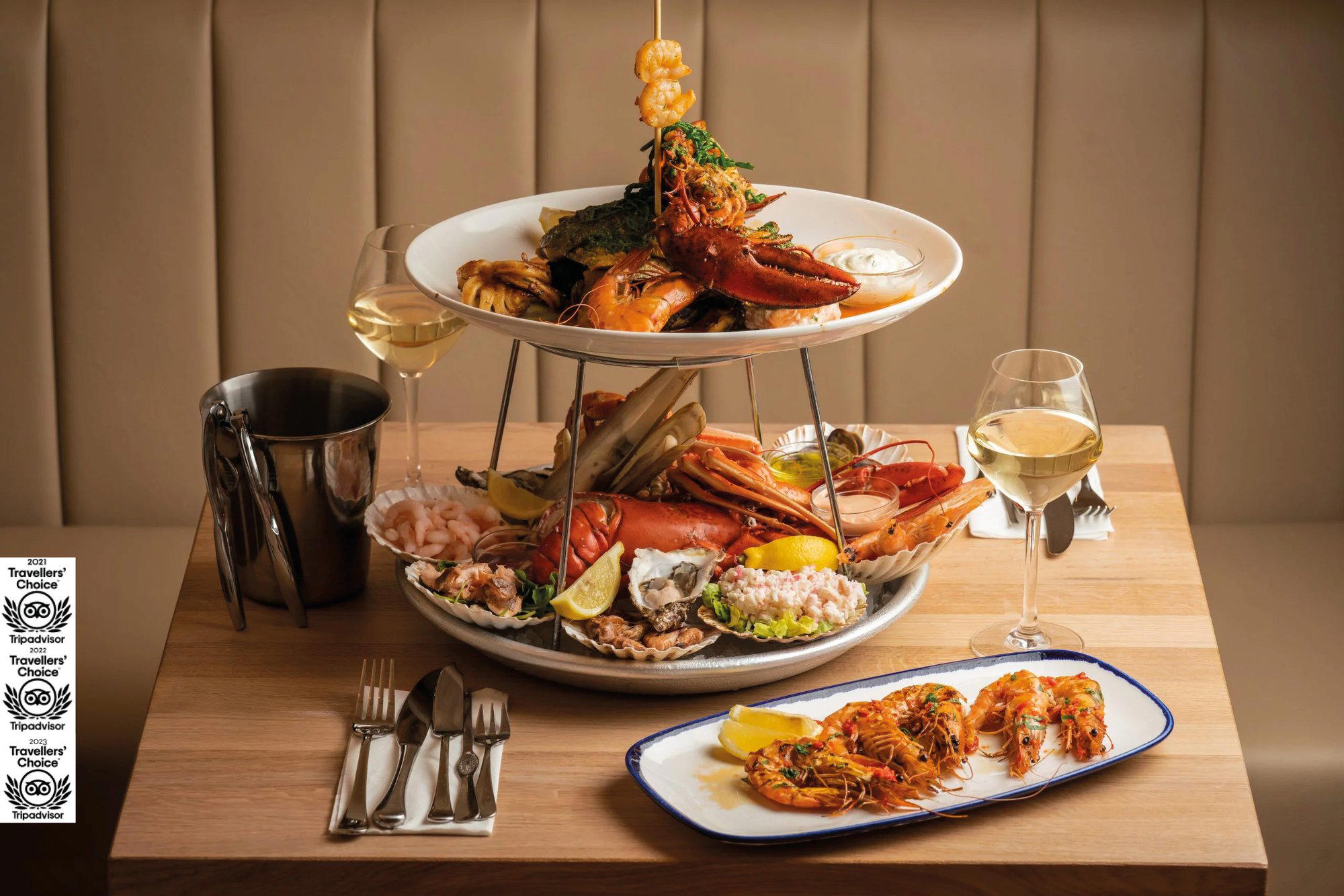
Shellfish, Celebrations, and the Case for Amsterdam's Most Committed Fish Counter
The Seafood Bar is a casual seafood restaurant in Amsterdam, serving fresh seafood and shellfish at Van Baerlestraat 5h, 1071 AL Amsterdam, Netherlands. The street leans residential and cultured rather than gastronomic, flanked by antique dealers and the occasional wine bar. Yet The Seafood Bar at number 5h has quietly become one of the better-known fish-focused addresses in a city whose relationship with the North Sea runs considerably deeper than most visitors appreciate. Amsterdam's canal-side geography and its centuries of maritime trade left a city that instinctively reaches for oysters, herring, and smoked eel when occasion calls, and The Seafood Bar has positioned itself at the accessible end of that tradition, without the ceremony or the tasting-menu format that defines the upper tier.
Where Amsterdam Eats Fish
The Dutch relationship with seafood is older and less theatrical than the grand fish temples of Paris or coastal Spain. Raw herring sold from street carts, smoked eel from the IJmeer, Zeeland oysters arriving in wooden crates, these have never been luxury propositions in the Netherlands in the way they are elsewhere. What Amsterdam's mid-market restaurant scene has done in recent years is formalise that democratised approach, creating fish-led spaces that sit between the raw herring stall and the white-tablecloth fish palace. The Seafood Bar occupies that middle tier with evident conviction. The format prioritises the cold counter, the sharing plate, and the unadorned preparation that lets the sourcing speak.
That sourcing, at the level Amsterdam's better fish restaurants operate, draws heavily on the Netherlands' own supply lines: North Sea plaice and sole, Zeeland oysters and mussels, and the seasonal runs that shift the menu across the calendar year. The cold counter format, shellfish on ice, ordered by the piece or the plateau, has international reference points. Paris operates it as near-ceremony at places like Prunier; London's J. Sheekey built a long-running reputation on the same model. In Amsterdam, the restaurant works within a slightly less formal register, which suits the city's general posture towards dining.
The Case for Occasion Dining at a Non-Occasion Format
There is a category of restaurant that earns its place on the occasion-dining shortlist not through Michelin stars or theatrical service, but through a kind of reliable festivity. Amsterdam's higher register, Ciel Bleu for the twenty-third-floor view and the two-star tasting menu, Vinkeles for the chapel dining room and creative Dutch cooking, Spectrum or Flore for contemporary tasting formats, occupies the milestone-meal tier for those who want structured ceremony with the bill to match. The restaurant sits in a different but equally valid position: the celebration that wants abundance rather than choreography, where the point is the plateau of oysters in the centre of the table, the bottle of Dutch white or Champagne, and the noise of a room that is clearly having a good time.
A seafood plateau functions well as a social anchor for milestone occasions precisely because it requires sharing and encourages a pace that keeps the table together. A dozen oysters, a cold half-lobster, a pile of North Sea shrimp, these are not dishes that disappear in three bites. They sustain a meal and a conversation across the kind of duration that a birthday dinner or an anniversary ought to involve. Bistro de la Mer, another Amsterdam address in the classic-cuisine fish category, operates in a similar register of occasion-friendly but non-ceremonial seafood. The two restaurants represent adjacent but distinct approaches: where Bistro de la Mer leans more classically bistro-French in its idiom, the restaurant presses closer to the cold-counter format that makes the sourcing the spectacle.
Neighbourhood Context and the Visitor Calculus
Van Baerlestraat 5h sits in Amsterdam's Museumkwartier, the area flanked by the Rijksmuseum, Van Gogh Museum, and Stedelijk Museum, some of the city's densest tourist infrastructure. Most serious diners treat this as a liability, and for restaurants that aim upmarket, the tourist-adjacent location can be a difficult positioning challenge. The restaurant navigates that tension through the product: raw shellfish and a cold counter are not concepts that need much cultural translation, and they attract a clientele that ranges from local regulars to informed visitors who have done the research rather than simply walked in from the museum queue.
For visitors building an Amsterdam dining itinerary that extends beyond the city, the wider Netherlands seafood and fish tradition is worth noting. The country's Michelin-decorated fish-conscious kitchens stretch well beyond Amsterdam: De Bokkedoorns in Overveen works the North Sea coastline theme at high-end register; Inter Scaldes in Kruiningen in Zeeland, the Dutch oyster heartland, operates at two stars with a produce sourcing logic that is impossible to replicate elsewhere. Further afield in the Dutch fine-dining circuit, De Librije in Zwolle, De Nieuwe Winkel in Nijmegen, De Lindenhof in Giethoorn, Tribeca in Heeze, De Groene Lantaarn in Staphorst, Brut172 in Reijmerstok, De Lindehof in Nuenen, and De Treeswijkhoeve in Waalre all represent a broader national restaurant culture that takes produce and technique seriously. The restaurant sits in a different tier and register than all of these, but belongs to the same country-level conversation about what Dutch kitchens do with the natural larder available to them.
For international reference, the cold-counter seafood format that restaurant works with has strong precedent at two-star level: Le Bernardin in New York City built its reputation over decades on the logic that fish, handled correctly and sourced obsessively, is as serious a subject as any in dining. Lazy Bear in San Francisco takes the opposite approach, communal, theatrical, land-heavy, which clarifies by contrast what a fish-focused, counter-oriented format like The Seafood Bar is actually offering: product transparency rather than transformation.
Planning a Visit
The Museumkwartier location makes the restaurant reachable on foot from the museum district and by tram from the city centre. For occasion dining, particularly on weekends, advance booking is advisable. A seafood-centred meal here sits at an accessible mid-market price point, around $40 per person; the cold-counter format means the final bill scales with appetite and the depth of the shellfish order.
Quick Comparison
Comparable venues nearby, for context on price, style, and recognition.
| Venue | Cuisine | Price | Notes |
|---|---|---|---|
| The Seafood BarThis venue — the venue you are viewing | Fresh Seafood and Shellfish | $$ | Not listed |
| Vertigo | Classic French Bistro | $$ | Vondelparkbuurt Oost |
| Café CENC | Southern European Seafood Apéro | $$ | Van Loonbuurt |
| Oceania | Traditional Chinese Seafood | $$ | Scheldebuurt West |
| La Brasa | Argentine Steakhouse | $$ | Westelijke Eilanden |
| Happyhappyjoyjoy | Asian Street Food | $$ | Da Costabuurt Noord |
Continue exploring
More in Amsterdam
Restaurants in Amsterdam
Browse all →
Bars in Amsterdam
Browse all →
Hotels in Amsterdam
Browse all →
Wineries in Amsterdam
Browse all →
At a Glance
- Modern
- Lively
- Trendy
- Casual Hangout
- Group Dining
- Open Kitchen
- Sustainable Seafood
Current opening hours
- Monday
- 12–11 PM
- Tuesday
- 12–11 PM
- Wednesday
- 12–11 PM
- Thursday
- 12–11 PM
- Friday
- 12–11 PM
- Saturday
- 12–11 PM
- Sunday
- 12–11 PM
Hours can change for holidays and private events. Last verified .
Bright, modern interiors with light wooden decor and stylish tiling creating a cozy yet lively atmosphere.