Daalder




1 Michelin Star · The Best Chef One Knife · We're Smart World 4 Radishes
Our verdict
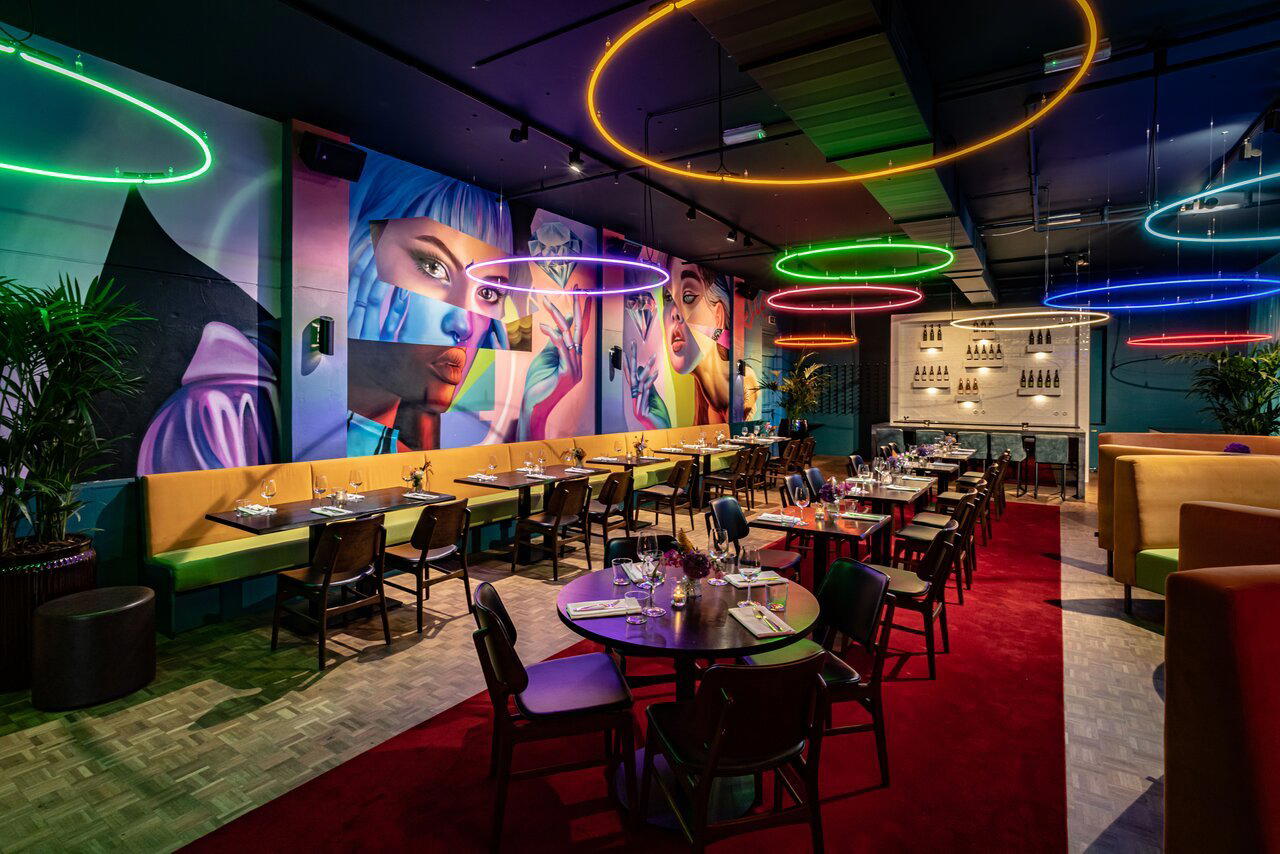
A Michelin-starred address in Amsterdam's Oud-West that trades white-tablecloth convention for neon lights, a centerstage open kitchen, and a creative menu rooted in Indonesian and Asian influences. Chef Dennis Huwaë's vegetable-forward cooking, ranked 191st in Opinionated About Dining's Classical in Europe list for 2025, makes a compelling case for why Amsterdam's most interesting dining is happening outside the canal-belt centre.

Pearl is the En Primeur Club membership app, where members save venues, book tables and use the concierge.
The menu
What to order
- Fried_chicken_with_caviar
- Satay
- Stroopwafel
Neon, Stage, and a Kitchen That Performs
Amsterdam's fine-dining scene has long anchored itself to the canal belt and the grand hotels, where rooms with high ceilings and carefully folded napkins set the expected register for a Michelin-level meal. Daalder, on Postjesweg in Oud-West, reads differently from the moment you arrive. The neon lights, bold graphic panels, and what the room's designers clearly conceived as a nightclub-adjacent energy place it in a growing cohort of starred restaurants that treat atmosphere as an active ingredient rather than a neutral backdrop. The kitchen is not tucked away: it occupies a raised, centerstage position, so the team's work is the room's primary visual, running in full view throughout service. That choice is structural rather than decorative. It reorders the social contract of fine dining, making the cooking a shared spectacle rather than a backstage operation revealed only on the plate.
Within Amsterdam's €€€€ creative tier, Daalder shares a price bracket with Ciel Bleu, Spectrum, and Vinkeles, but its register is deliberately removed from their formal idiom. Where those addresses incline toward classical European structure, Daalder positions itself at the intersection of technical ambition and deliberate informality. Opinionated About Dining's Classical in Europe ranking placed it at 191st in 2025, a step from its 175th position in 2024, which is a signal worth reading against the broader Dutch restaurant field rather than as isolated data.
The Lunch and Dinner Divide
The scheduling at Daalder carries more editorial weight than it might appear to at first read. Thursday is dinner-only, with service from 6:30 PM. Friday and Saturday open both a lunch sitting (12:30 PM to 4:30 PM) and an evening sitting (6:30 PM to midnight). Sunday and Monday through Wednesday are closed entirely. That four-service-per-week model is tight by Amsterdam standards and places Daalder closer to destination restaurants that manage quality through volume control than to neighbourhood spots with continuous covers.
The lunch-versus-dinner question matters here in practical and experiential terms. European creative-tier restaurants that run both services rarely deliver identical propositions across them. Lunch typically draws a different mix: fewer tourists extending a multi-day itinerary, more local professionals, and often a format that allows the kitchen to show technical range without the full ceremonial weight of an evening tasting. The long lunch window at Daalder, stretching to 4:30 PM, positions Friday and Saturday lunch as an occasion in itself rather than a compressed pre-afternoon slot. For visitors with an evening already committed elsewhere, the Friday or Saturday lunch sitting becomes the primary access point, and for those already planning a full dining itinerary across the city, it is worth noting that the evening sessions run until midnight, which is an unusually late close for this tier in Amsterdam.
If you are building a broader Amsterdam dining itinerary and want to map Daalder into a fuller picture, our full Amsterdam restaurants guide covers the city's range in detail. For stays, our Amsterdam hotels guide will help locate accommodation near Oud-West. The neighbourhood also sits within reach of Oud-West's bar scene; our Amsterdam bars guide covers the options.
The Menu's Orientation: Vegetables, Asia, and Contrast
The kitchen's strongest public signal is its relationship to vegetables and fruit. Daalder offers a vegetarian menu, with a Pure Plant variant available, and that commitment is not peripheral to the cooking's identity.
Chef Dennis Huwaë draws on Indonesian heritage and a wider range of Asian reference points, which places the cooking in dialogue with the Netherlands' deep colonial-era relationship with Indonesian cuisine while pulling that relationship into a fine-dining technical frame. The sensory result, based on documented public descriptions, works through contrast: temperature differentials, gel textures alongside foam sauces, the interplay of fermented dairy (kefir appears in documented dish descriptions) with bisque-based reductions. A langoustine preparation cited in Michelin documentation pairs seared shellfish with cauliflower cream, yuzu and miso gels, and both kefir foam and bisque, which maps a cooking logic interested in layered umami and acid contrast rather than single-note luxury.
That approach, where richness is delivered through technique and contrast rather than ingredient cost alone, is increasingly where the more interesting creative European tasting menus are operating. The Pure Plant option at Daalder extends that logic to a menu built entirely without animal products, which is a technically demanding brief for a kitchen already working at this level of finish.
Amsterdam's Creative Tier in Context
Amsterdam has a deeper bench of serious creative cooking than it sometimes receives credit for outside the Netherlands. 212 represents one current in the scene; the Michelin constellation that includes Ciel Bleu and Spectrum represents another. Daalder sits in this broader field but with a profile that is more aligned with restaurants that use visual identity and atmosphere as expressive tools alongside the food itself.
The Dutch restaurant field more broadly contains notable addresses worth placing alongside Daalder as reference points: De Librije in Zwolle, Aan de Poel in Amstelveen, De Bokkedoorns in Overveen, De Groene Lantaarn in Staphorst, De Lindehof in Nuenen, and De Lindenhof in Giethoorn each represent the Dutch fine-dining field from different regional vantage points. Among European creative-tier addresses at the same price bracket working with comparable menu ambition, Platán Gourmet in Tata and Brut172 in Reijmerstok offer useful comparisons for understanding where Daalder sits in the wider European creative-restaurant conversation.
For completeness on the city's offer beyond restaurants, our Amsterdam wineries guide and our Amsterdam experiences guide cover the full scope of what the city offers at this level.
Planning a Visit
Daalder is at Postjesweg 1, 1057 DT Amsterdam, in the Oud-West district, a neighbourhood that has accumulated a credible concentration of independent restaurants and bars over the past decade. The address is not in the tourist core, which is part of the appeal: the room fills with a crowd that made a deliberate choice to be there rather than stumbling in from the Rijksmuseum precinct. Service runs Thursday evenings from 6:30 PM to midnight, and both lunch (12:30 PM to 4:30 PM) and dinner (6:30 PM to midnight) on Fridays and Saturdays. The restaurant is closed Sunday through Wednesday. Given the limited weekly capacity across four services, and the sustained critical attention since the Michelin star was awarded in 2024, advance planning is advisable. The Opinionated About Dining ranking and Michelin recognition together indicate a booking window that is unlikely to accommodate last-minute requests at peak slots.
What People Recommend at Daalder
The kitchen's vegetable-focused creative menu, with Indonesian and broader Asian influences running through it, is the consistent point of reference in public documentation. The vegetarian tasting menu and its Pure Plant variant are specifically noted as strengths in critical assessments, and Opinionated About Dining's 2024 commentary singled out the vegetable cookery directly. For diners interested in how the room reads in practice, documented descriptions cite the open centerstage kitchen and the high-contrast visual environment, with neon lighting and bold graphics setting a tone that is formally at odds with the cooking's technical precision. That contrast, between the kitchen's rigour and the room's deliberate informality, is the experience that reviews return to most consistently.
Chef Dennis Huwaë's cooking is publicly described as creative and unpretentious, with Indonesian heritage informing the flavour logic at the menu's core. His approach, as documented by Michelin, works through layered contrasts: the langoustine-cauliflower-yuzu-kefir preparation that has appeared in published descriptions gives a workable index of the kitchen's texture and flavour methodology.
Frequently asked questions
Is Daalder expensive?
Pricing at Daalder is listed as €€€€.
Same-City Peers
| Venue | Cuisine | Price | Awards | Notes |
|---|---|---|---|---|
| DaalderThis venue (the venue you are viewing) | Modern Fusion Fine Dining | $100–150 | 1 Michelin Star · The Best Chef One Knife | Not listed |
| Ciel Bleu | Modern French Fine Dining | $200–300 | 2 Michelin Stars · La Liste Top Restaurants | Creative |
| Bolenius | Modern Dutch Farm-to-Table | $100–150 | 1 Michelin Star · We're Smart World Top 100 #18 | Modern Dutch, Creative |
| De Kas | Seasonal Farm-to-Table Fine Dining | $50–100 | 1 Michelin Star · Star Wine List | Organic |
| Wils | Michelin-Starred Fire-Cooked Modern European | $100–150 | 1 Michelin Star · We're Smart World 4 Radishes | World Cuisine |
| Gebr. Hartering | Modern Fusion Bistro | $50–100 | Michelin Plate · Star Wine List | French |
Recognition history
Dated appearances from independent guides and award organizations, with the underlying list record or original source where available.
Michelin 1 Star
Michelin
Opinionated About Dining Classical in Europe Ranked #191
Opinionated About Dining
The Best Chef One Knife
The Best Chef
We're Smart World 4 Radishes
We're Smart World
Full recognition history (7 entries)
Michelin 1 Star
Michelin
Opinionated About Dining Classical in Europe Ranked #175
Opinionated About Dining
Opinionated About Dining Classical in Europe Highly Recommended
Opinionated About Dining
Continue exploring
More in Amsterdam
Restaurants in Amsterdam
All restaurants in Amsterdam →
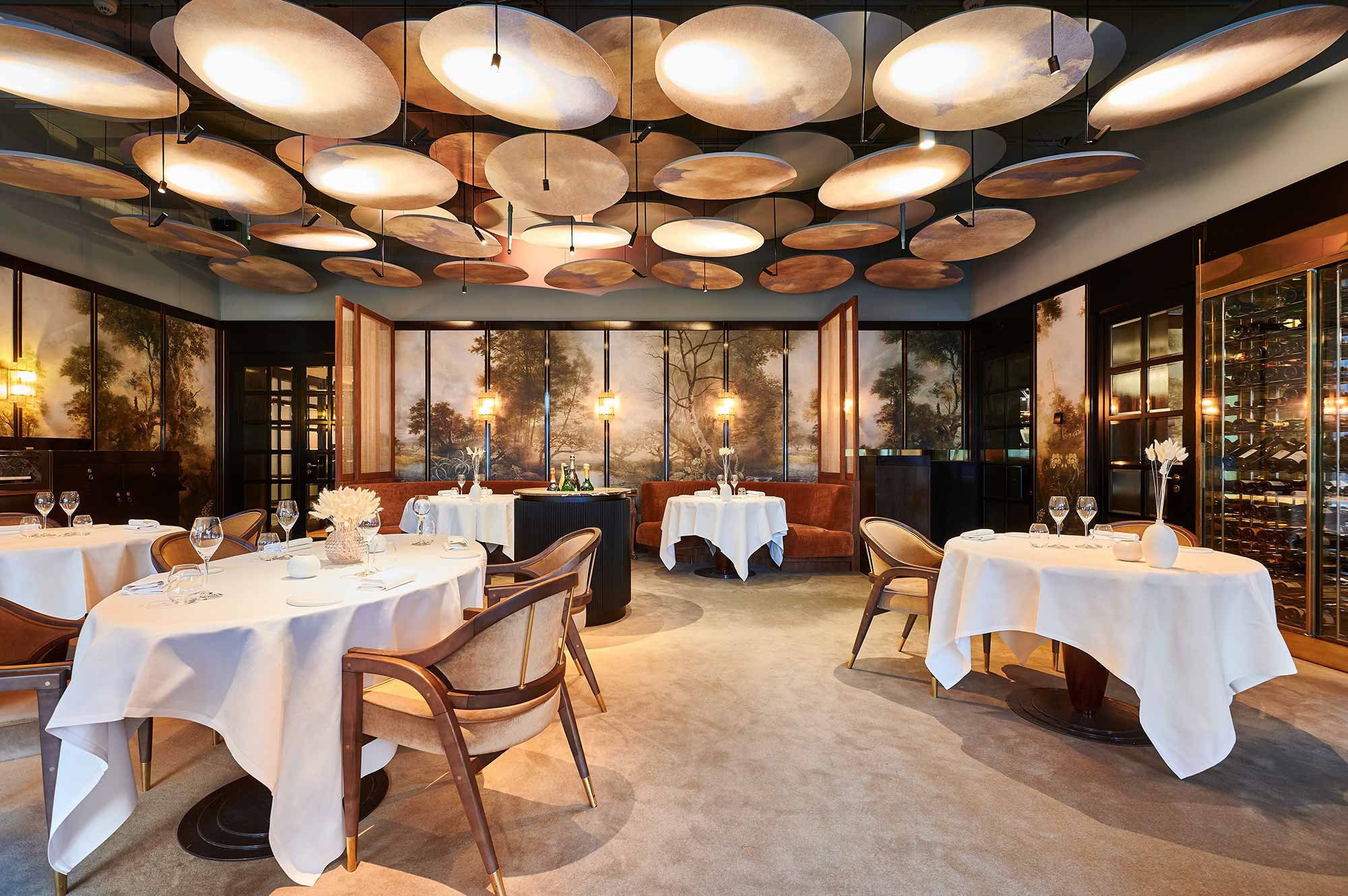
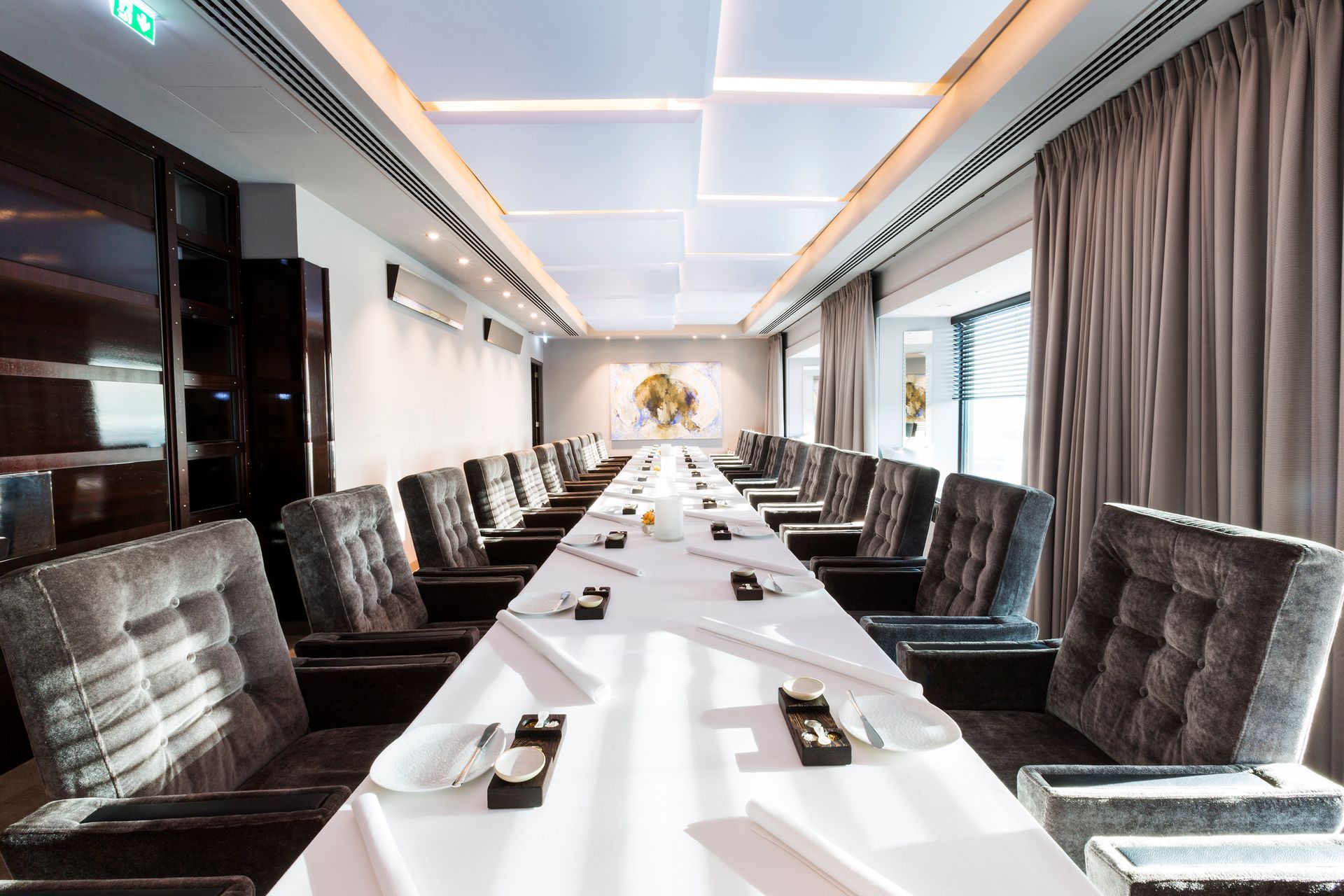
Bars in Amsterdam
All bars in Amsterdam →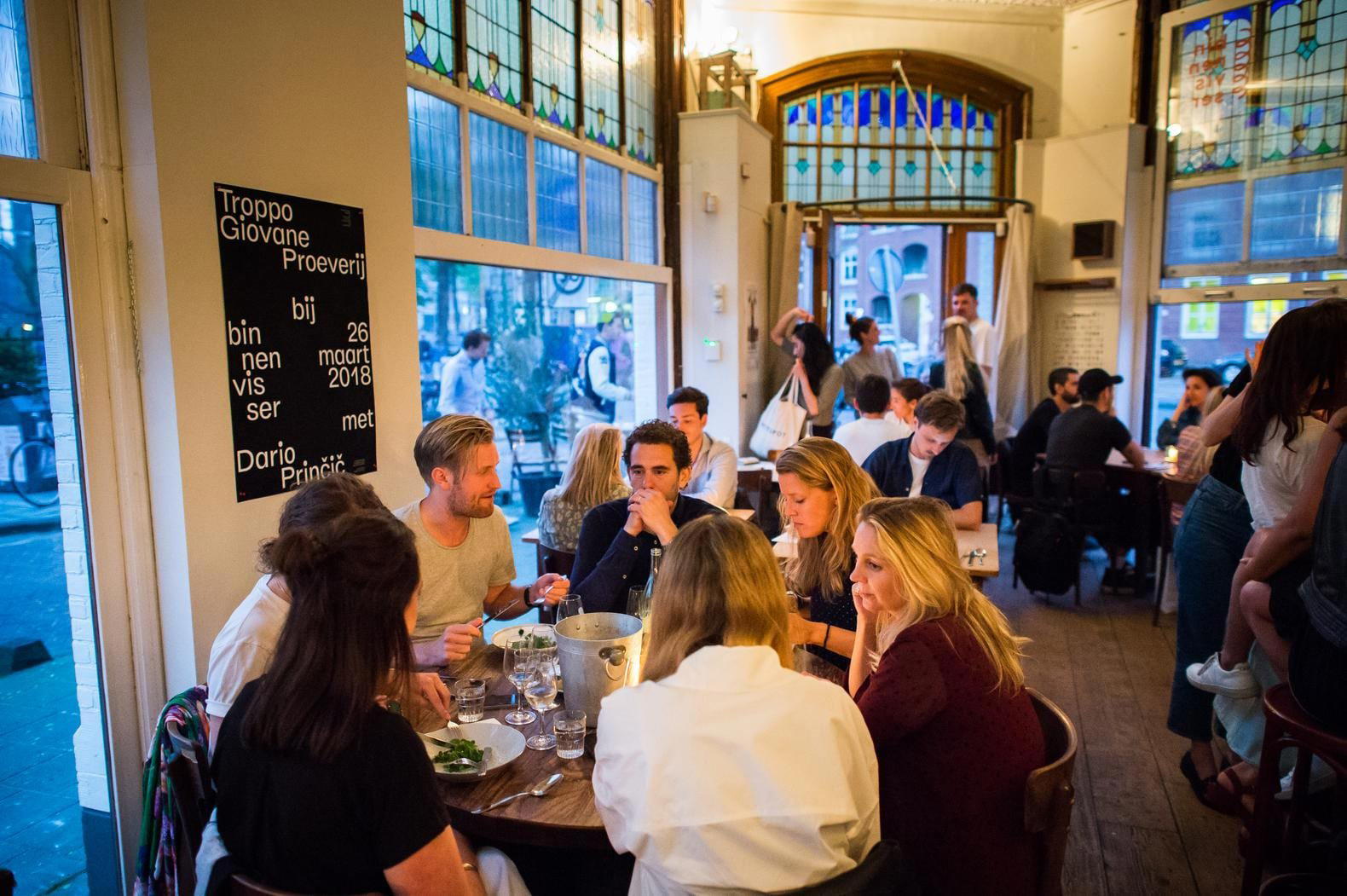
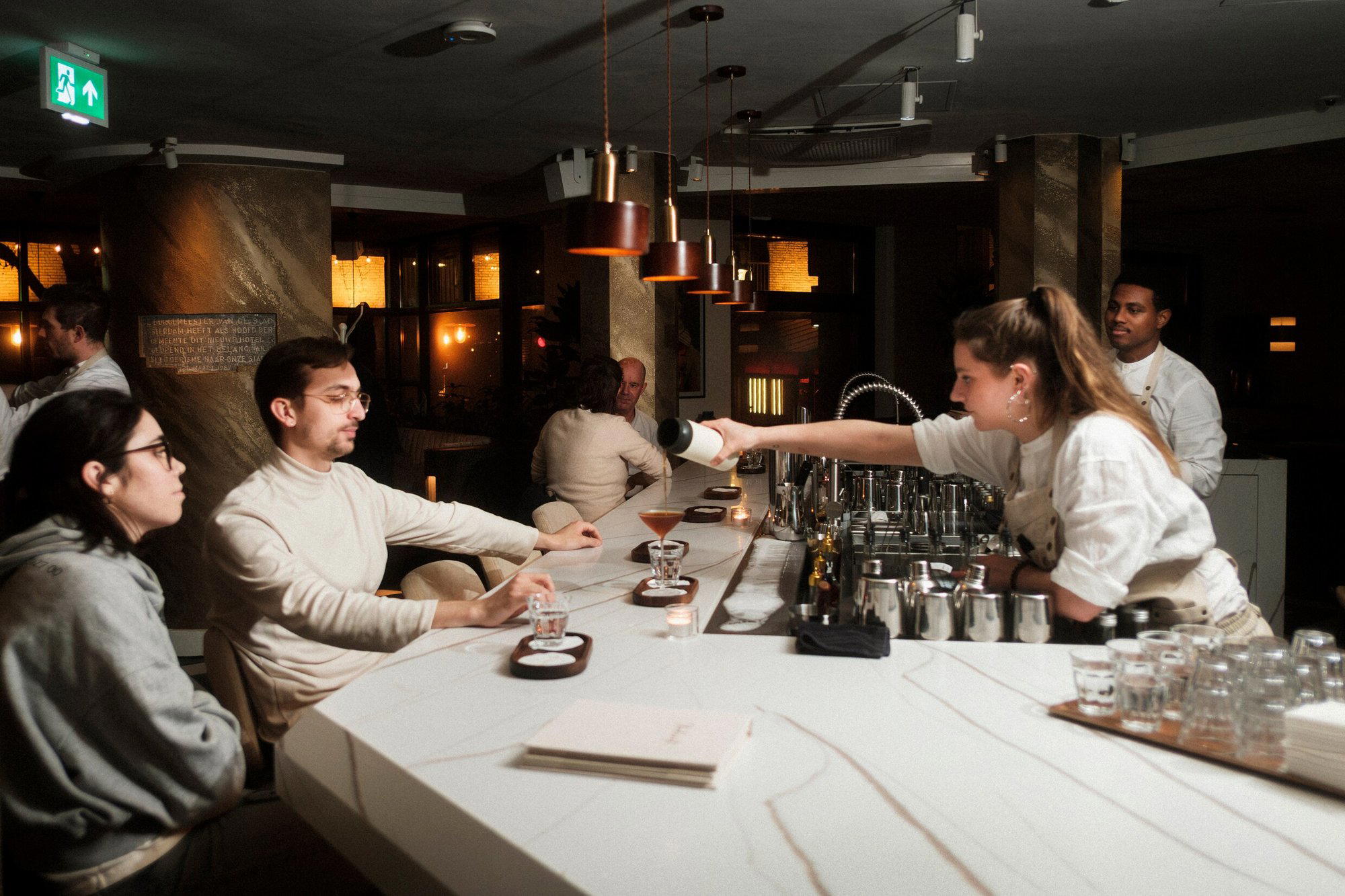
Hotels in Amsterdam
All hotels in Amsterdam →
Wineries in Amsterdam
All wineries in Amsterdam →
Details
- Trendy
- Cozy
- Modern
- Intimate
- Energetic
- Date Night
- Special Occasion
- Group Dining
- Open Kitchen
- Terrace
- Craft Cocktails
- Street Scene
- Tasting Menu
- A La Carte
- Vegetarian Friendly
- Vegan Options
- Gluten Free Options
- Halal
Current opening hours
- Monday
- Closed
- Tuesday
- Closed
- Wednesday
- 6:30 PM–12 AM
- Thursday
- 6:30 PM–12 AM
- Friday
- 12:30–4:30 PM, 6:30 PM–12 AM
- Saturday
- 12:30–4:30 PM, 6:30 PM–12 AM
- Sunday
- Closed
Hours can change for holidays and private events. Hours as of .
Neon lights, bold graffiti, colorful murals, and EDM create a hip, nightclub-like atmosphere contrasting the historic Amsterdam School architecture, with cozy intimate tables and semi-circular booths.