
Tabelog Silver #139
Our verdict
Tanaka Yoshihide puts Osaka’s Chinese dining conversation in a small-room, ingredient-led register rather than the city’s louder street-food idiom. Its Tabelog Award Silver recognition in 2025 and 2026, plus selection for Tabelog Chinese WEST 100 in 2024 and 2026, place it among the region’s serious modern Chinese rooms, with Japanese seasonality doing much of the editorial work.

Pearl is the En Primeur Club membership app, where members save venues, book tables and use the concierge.
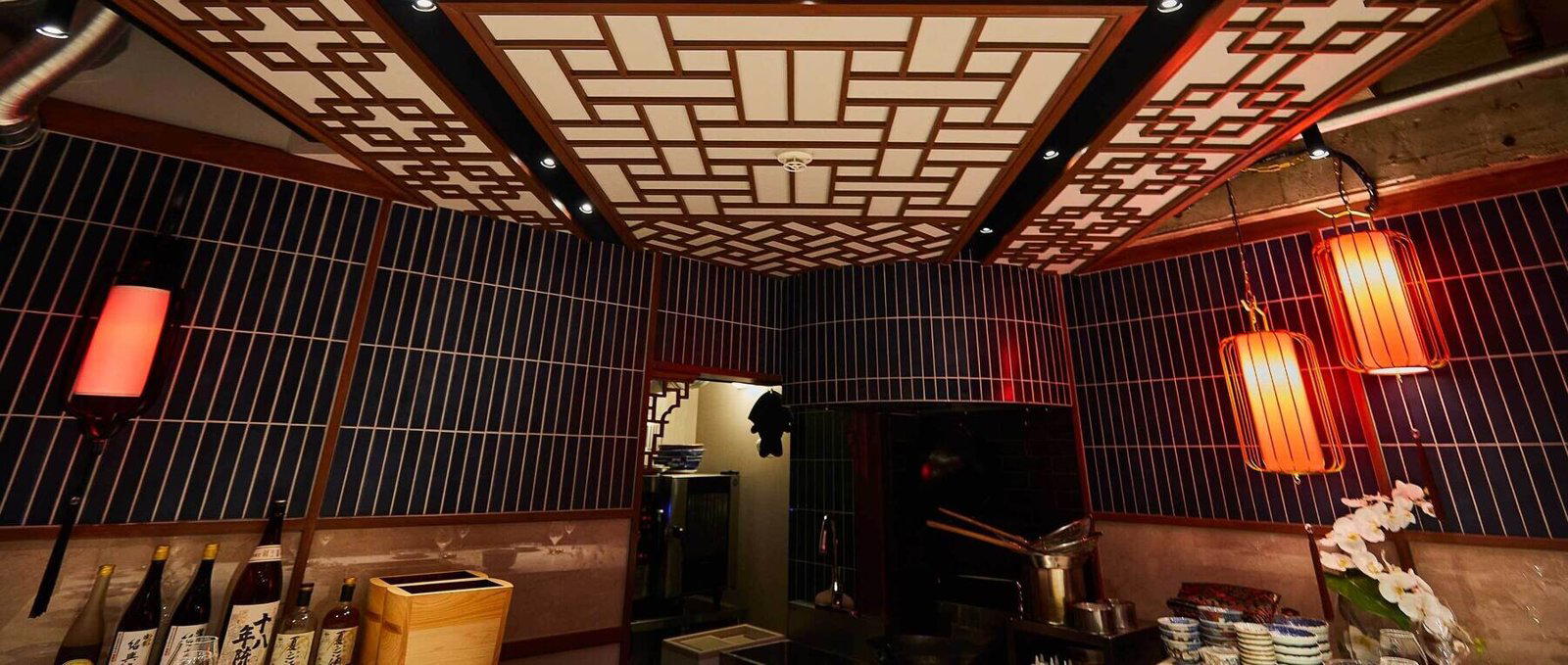
Kyobashi is not the Osaka most visitors picture first. The district runs on railway energy, after-work drinking, and small addresses above or beside commuter flow. That setting matters: the city’s Chinese cooking spans fast gyoza counters, family-run neighborhood rooms, banquet traditions, and compact kitchens using Japanese produce with tasting-menu discipline. Tanaka Yoshihide belongs to that last group, where control matters more than scale.
Abroad, Osaka often flattens into takoyaki, okonomiyaki, and late-night neon. Locally, the dining map is more layered. A casual visitor can eat pork buns at 551 Horai (551蓬莱), bakeries such as 52CHO-ME BAKERY, and coffee stops like .cafe, then meet another city at small counters where sourcing and sequence are the main event. That contrast frames this meal: Chinese cuisine filtered through Osaka’s appetite for small formats, careful produce, and wine-aware dining, not volume or spectacle.
Japanese seasonality reshapes the Chinese dining script
The restaurant is categorized as Chinese, but the sharper point is sourcing. Modern Chinese cooking in Japan often tightens the distance between regional Chinese technique and domestic produce rather than recreating a banquet-room template. Tabelog’s description cites seasonal Japanese ingredients and creative Chinese cooking, explaining why the restaurant fits a city where produce, seafood, and counter craft already shape serious dining.
The signal is not a named dish or chef biography. Stronger evidence is recognition across Tabelog channels: The Tabelog Award Silver in 2025 and 2026, and selection for Tabelog Chinese WEST 100 in 2024 and 2026. In Japan, where Tabelog scores can strongly influence local dining behavior, repeat recognition shows the room has moved beyond novelty into the narrower bracket of western Japan Chinese restaurants tracked alongside sushi, kappo, and contemporary French for precision rather than abundance.
That separates it from much of Osaka’s everyday eating. Izakaya Toyo and Washington Shokudo sit in lower-priced, higher-casual registers, while STUN.S occupies a mid-priced Osaka lane. Sushidokoro Hirokawa represents another high-spend grammar: the sushi counter. Tanaka Yoshihide is not competing meal for meal with those experiences; it asks whether the traveler wants Osaka’s ingredient culture seen through Chinese technique, in a room small enough for the kitchen’s choices to feel tightly edited.
A small-room format built for concentration, not theatre
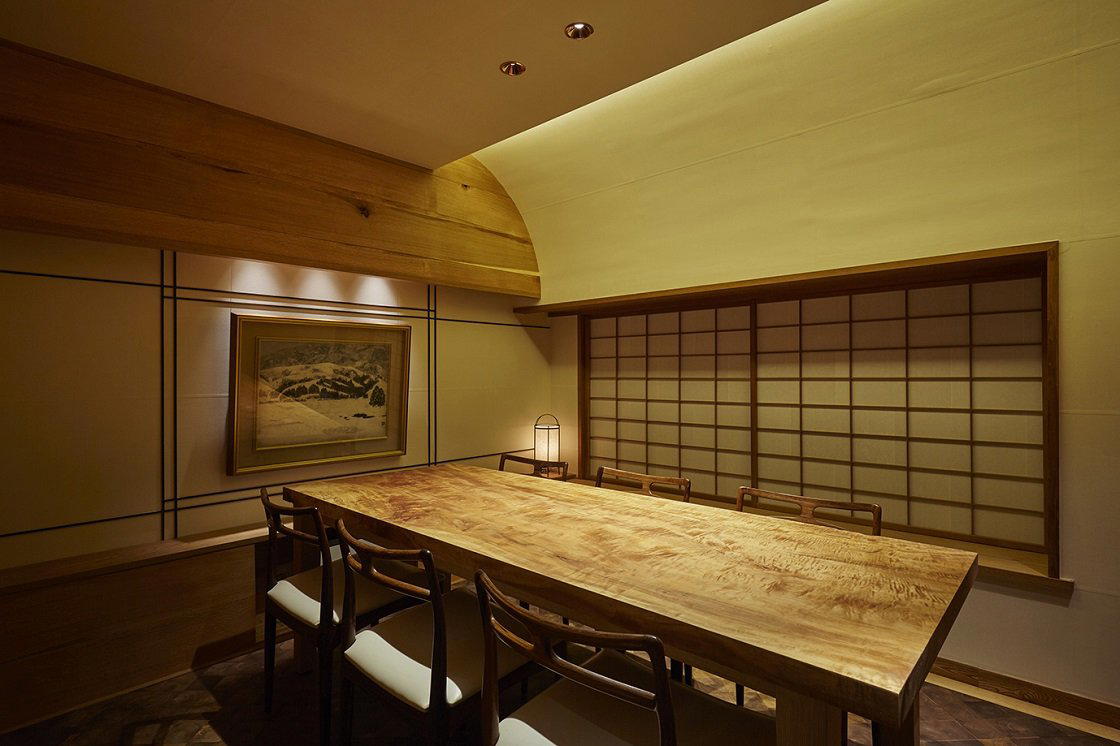
The format is intentionally narrow: eight seats, no private rooms, no private-use setup, and non-smoking service. That shapes the mood. Osaka can be generous, loud, and socially elastic, but a room this small changes the social contract. Conversation drops, pacing matters, and food becomes structure rather than background. It is a poor fit for a loose group dinner, but strong for diners who want to understand how a famously democratic food city also supports exacting, small-scale restaurants.
The wine note is another clue. Chinese fine dining in Japan has increasingly moved beyond the old beer-or-Shaoxing binary, especially in small restaurants where pairing logic can shift course by course. The stated emphasis on wine places this address in that newer zone, where acidity, texture, and seasoning share one conversation. Without a public menu to parse, the safest reading is categorical: expect Chinese cooking, Japanese seasonality, and a beverage program that takes wine seriously.
For a wider Osaka itinerary, this dinner benefits from restraint on either side. Pair it with lighter daytime eating, not a maximal lunch. Use Our full Osaka restaurants guide for the broader food map, then separate this from casual grazing rather than making it another snack-crawl stop. For sleep, drinking, and non-restaurant planning, the city pages for Our full Osaka hotels guide, Our full Osaka bars guide, Our full Osaka wineries guide, and Our full Osaka experiences guide keep the evening from becoming a logistics scramble.
Where it fits in a Japan-focused dining trip
Japan’s restaurant scene rewards specificity. A traveler moving across cities should not treat every small, serious room as interchangeable. Kyoto may offer a sharper old-capital frame at places such as [ki:] in Kyoto; Tokyo ranges from charcoal-and-tuna formats such as. 鮪と炭火焼き うお炭 秋葉原店 in Tokyo to specialist counters; Sapporo, Kumamoto, Kawasaki, and Kamakura bring local habits through [Curry Senmon Ten] Maruyama Kyoju. in Sapporo.know in Kumamoto, (Shoku) Vietnam in Kawasaki, and -Grilled beef Sukiyaki- KAMAKURA TANUKIAN 鎌倉 たぬき庵 in Kamakura. Osaka’s advantage is different: it moves from democratic comfort to highly edited rooms without losing its appetite-driven character.
That is why Tanaka Yoshihide is best understood as a modern Osaka Chinese address, not only a trophy booking. The awards matter because they validate a shift: Chinese cuisine in western Japan judged not just by generosity or familiarity, but by sourcing, restraint, beverage intelligence, and confidence at small scale. Travelers who track Japanese food culture outside Japan can triangulate the same interest through Los Angeles and Pasadena addresses such as Jōdo Saké Bar in Los Angeles and Onigiri Time in Pasadena, but Osaka is more direct. This is a city meal about where ingredients come from, how tightly a kitchen edits them, and why Chinese cooking in Japan keeps gaining critical ground.
For a contrasting Osaka night, add Italian-leaning rooms such as a canto (Italian) or pizza specialists like 99 Pizza Napoletana Gourmet on another evening. The point is not ranking them. It is seeing how Osaka now supports many kinds of precision: dough, coffee, bread, sushi, izakaya cooking, and, here, Chinese cuisine built around the Japanese seasons.
Frequently asked questions
Is Tanaka Yoshihide good for families?
The eight-seat room in Osaka also suggests a focused dining setup rather than a loose family-style one.
Is Tanaka Yoshihide better for a quiet night or a lively one?
It is built for a quiet night. With eight seats, no private rooms, and service split into two dinner seatings from 17:00 to 22:30, the room reads as concentrated and low-noise rather than lively.
What time does Tanaka Yoshihide open and close?
Hours at Tanaka Yoshihide: Mon, Tue, Wed, Thu, Fri, Sat, Sun 17:00 - 19:30 20:00 - 22:30.
What's Tanaka Yoshihide's location?
Tanaka Yoshihide is located in Osaka.
What makes Tanaka Yoshihide worth seeking out?
The draw is the combination of a tight eight-seat format, wine focus, and recognition in Tabelog's Chinese WEST 100 for 2026, plus a Tabelog Silver award in 2026. In Osaka, that places it in the serious end of the Chinese dining conversation, with dinner priced at JPY 20,000–29,999.
Comparable Spots, Quickly
Comparable venues by cuisine and price in the same metro.
| Venue | Cuisine | Price | Awards | Notes |
|---|---|---|---|---|
| Tanaka YoshihideThis venue (the venue you are viewing) | Modern Cantonese with Japanese Seasonality | $150–200 | Tabelog Silver #139 | Not listed |
| JIANG NAN CHUN | Authentic Cantonese | $150–200 | Michelin Plate | Kita |
| Kitashinchi Fuka | Modern Chinese Dim Sum Tasting (Kitashinchi Counter) | $100–150 | Tabelog 100 #22 | Kita |
| mikami limited50 | Exclusive Members-Only Omakase Sushi | $300–500 | Tabelog Bronze #271 | Kita |
| kamoshiya Kusumoto | Creative Japanese Fusion | $200–300 | Tabelog Bronze #158 | Fukushima |
| Kamifukawa | Modern Chinese Fine Dining | $100–150 | Tabelog 100 #46 | Kita |
Recognition history
Dated appearances from independent guides and award organizations, with the underlying list record or original source where available.
Tabelog Silver #139
Tabelog
Full recognition history (3 entries)
Tabelog 100 #16 · No. 16
Tabelog · Tabelog 100 - Chinese cuisine - WEST - 2026
Tabelog Silver
Tabelog
Continue exploring
More in Osaka
Restaurants in Osaka
All restaurants in Osaka →


Bars in Osaka
All bars in Osaka →
Hotels in Osaka
All hotels in Osaka →



Wineries in Osaka
Browse all →
Tanaka Yoshihide
The wine
- Wine program
- Deep wine list
- Extensive wine list
- Sake program
Details
- Intimate
- Elegant
- Quiet
- Sophisticated
- Special Occasion
- Date Night
- Chefs Counter
- Open Kitchen
- Extensive Wine List
- Sake Program
- Local Sourcing
- Tasting Menu
- Counter Dining
- Wine
- Sake
- Aged Shaoxing Wine
Hushed and focused atmosphere with eight counter seats offering a deeply personal, intimate dining experience where guests watch the chef skillfully work the wok up close.