Michelin Plate
Our verdict
On the 37th floor of a Dojima tower, Jiang Nan Chun brings Hong Kong-trained Cantonese technique to the Osaka skyline. The name, drawn from a Tang dynasty poem evoking early spring in the Jiangnan region, sets the register: classical Chinese cooking framed with considered refinement. Dim sum runs at lunch only, prix fixe seasonal menus anchor the evening, and the views across the city make the elevation feel deliberate rather than decorative.

Pearl is the En Primeur Club membership app, where members save venues, book tables and use the concierge.
The menu
What to order
- Dim sum
- Cantonese-Style Roasted Duck
- Deep-Fried Crab-Shell Stuffed with Fresh Crabmeat
- Crispy Kagoshima Pork Belly
Thirty-Seven Floors Up, the Cantonese Tradition Finds Its Osaka Address
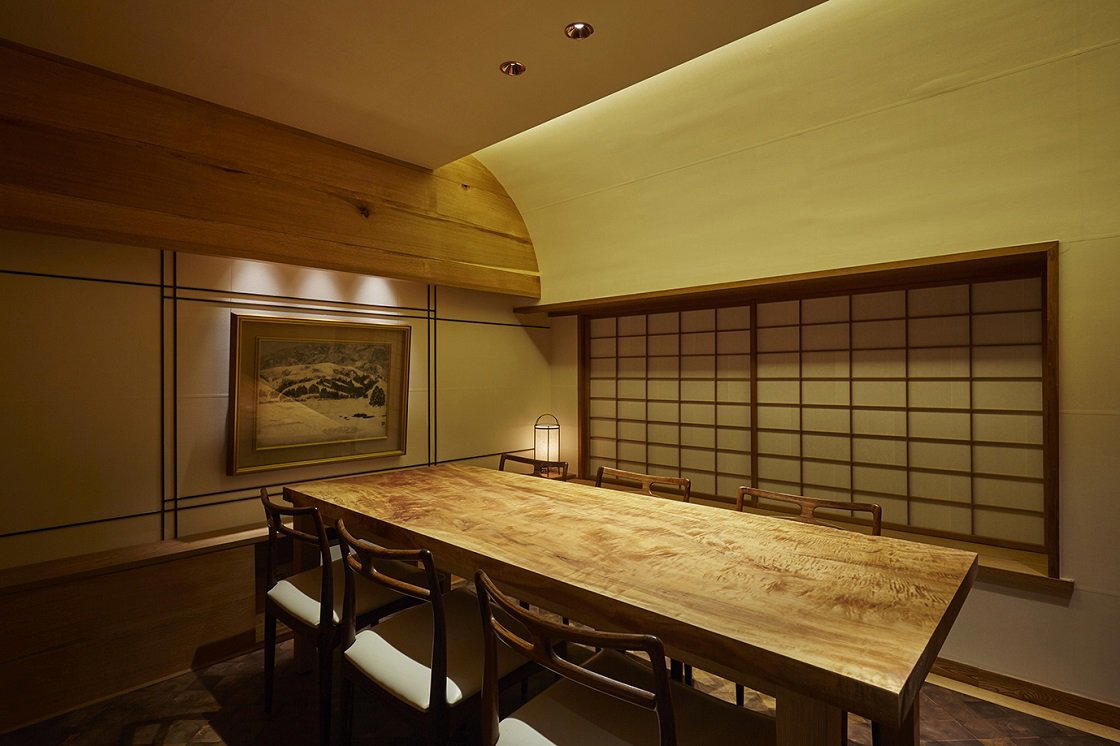
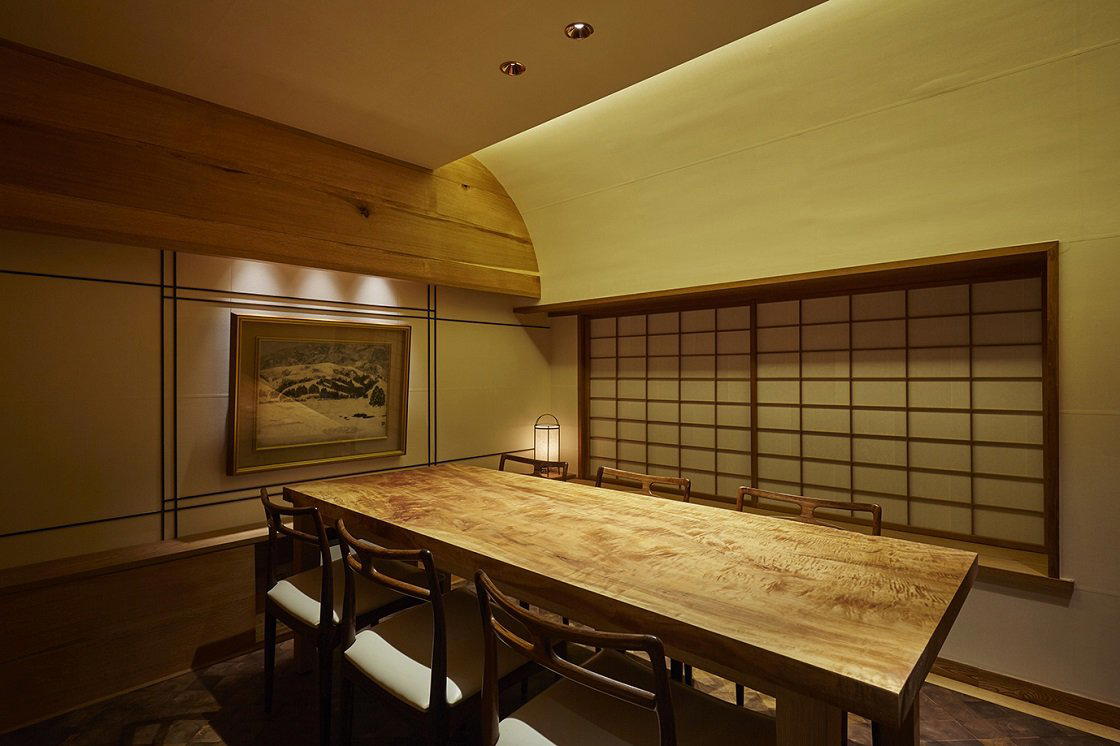
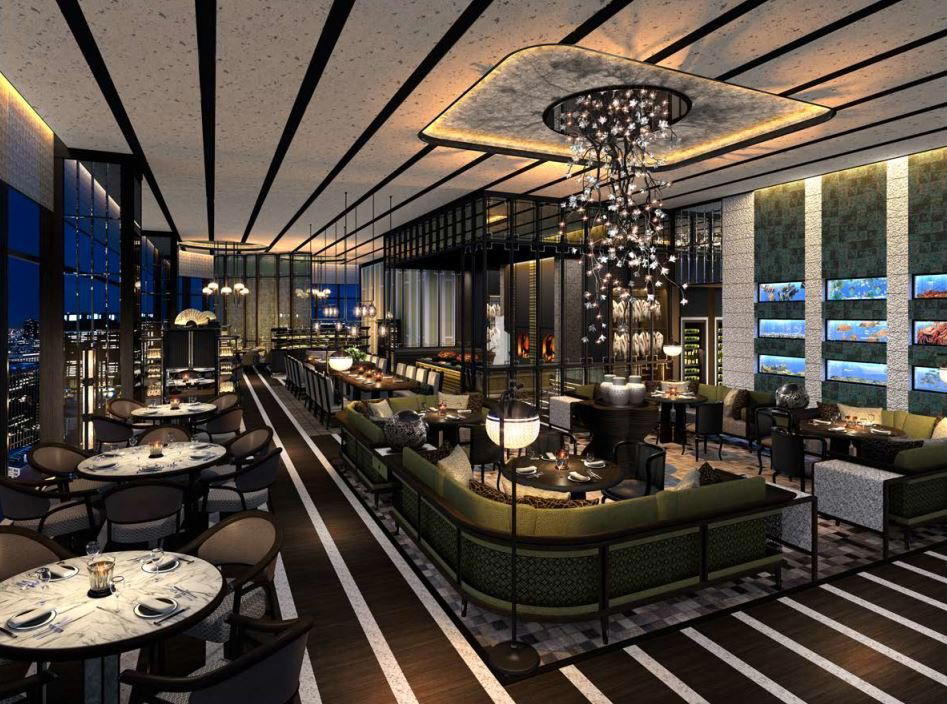
High-rise dining in Japanese cities tends to resolve into one of two formats: panoramic rooms built around the view, where the food is secondary, or serious kitchens that happen to occupy refined floors and treat the cityscape as backdrop rather than main event. Jiang Nan Chun, on the 37th floor of a Dojima tower in Kita Ward, belongs to the second category. The room is designed around the poem its name references, a four-line Tang dynasty verse about early spring in the Jiangnan region of China. A chandelier carrying a plum blossom motif echoes the seasonal imagery of that poem directly overhead. The effect is architectural rather than decorative: you are placed inside a classical Chinese sensibility before a dish arrives.
Osaka's fine dining map is dense with Japanese tradition. Kaiseki houses like Taian and Kashiwaya Osaka Senriyama hold three Michelin stars each. French-influenced kitchens, including three-star HAJIME and two-star La Cime, have built strong international reputations. There is no comparable density of high-end Cantonese restaurants in Osaka the way there is in Hong Kong, London, or Singapore, which places Jiang Nan Chun in a category of its own making within the city.
The Room: Atmosphere Before the First Course
The sensory sequence at Jiang Nan Chun begins with arrival. The building is a standard Osaka commercial tower, and the transition from street level to the 37th floor frames the dining room as a deliberate departure from the city below. The views across Osaka's Kita Ward are unobstructed at this height, and they function as a kind of temporal marker: lunch here looks different from dinner here, the light shifting from the midday clarity that suits the yum cha format to the city-lit dusk that accompanies the evening prix fixe.
The plum chandelier is the room's visual anchor. Plum blossom in classical Chinese poetry signals early spring, perseverance through cold, and the approach of renewal. The Tang poem the restaurant's name draws from carries those associations, and the room's design keeps them present. This is not decorative chinoiserie aimed at a non-Chinese audience. The references are specific and the register is internal to the tradition itself.
The Format: Yum Cha at Lunch, Prix Fixe Through the Evening
Format split at Jiang Nan Chun is meaningful. Dim sum, served at lunchtime only, operates within the yum cha tradition: small preparations, shared across the table, moving in sequence rather than arriving as a single composed plate. Yum cha at its most considered is a social and temporal experience, unhurried and iterative, and the lunch-only restriction here respects that logic. It is not available as an abbreviated evening option or a tasting-menu reference point.
Evening meals operate entirely as prix fixe. Seasonal fare drives the menu, which means the kitchen's reference point shifts across the year, and a single visit captures a specific moment rather than a fixed repertoire. This is standard practice at serious Cantonese tables, where the chef's ability to source and respond to seasonal ingredients is itself the demonstration of technique. The Hong Kong-trained chef running this kitchen brings a formation in traditional Cantonese cuisine to bear on Japanese seasonal produce, a meeting of two ingredient-first traditions that share precision but apply it through different frameworks.
For comparison, Osaka's kaiseki tradition at places like Taian operates on a similar seasonal prix fixe logic. The philosophical overlap is real, even as the culinary language is entirely distinct. Guests who have spent time at high-level kaiseki tables in Osaka will recognise the underlying discipline; the execution here speaks a different dialect.
Cantonese Cuisine in a Japanese City: What the Context Means
Traditional Cantonese cooking at this level is not widely represented in Japan outside of a handful of addresses in Tokyo and Osaka. The cuisine's technical demands, including precise control of wok heat, the sourcing of specific dried and preserved ingredients, and the knowledge required to execute classic preparations, mean that serious Cantonese kitchens require a particular kind of formation. A Hong Kong-trained chef running a Cantonese room in Osaka is working within a defined tradition that Japanese diners engage with from the outside, without the deep cultural familiarity that shapes expectations in southern China or among the Chinese diaspora abroad.
That context affects the dining experience. The prix fixe format makes the menu legible to guests who may not have the background to order confidently from a full Cantonese à la carte. It is a sensible editorial decision as much as a culinary one, and it positions Jiang Nan Chun closer to the serious tasting-menu format that Osaka's high-end dining scene understands and rewards.
Osaka sits within a wider Kansai dining corridor that includes strong addresses in Kyoto and Nara. Gion Sasaki in Kyoto and akordu in Nara represent the range of serious cooking available across the region. Further afield, Harutaka in Tokyo and Goh in Fukuoka anchor Japan's broader fine dining spread. For readers mapping premium dining across Japan, our guides to 1000 in Yokohama and 6 in Okinawa extend the picture further. For international reference points in a similar prix fixe register, Le Bernardin in New York City and Atomix in New York City represent the discipline that serious tasting-format restaurants apply in other markets.
Planning Your Visit
The dim sum lunch format and the evening prix fixe represent two distinct dining occasions that warrant separate consideration when planning. Lunch is the right choice for anyone wanting to engage with the yum cha tradition directly. Evening is where the seasonal Cantonese menu is on full display. Given the refined address in a commercial district and the format structure, advance booking is the logical approach for either service. See our full guides to Osaka restaurants, Osaka hotels, Osaka bars, Osaka wineries, and Osaka experiences for a fuller picture of the city. For innovative cooking at the ¥¥¥¥ tier, Fujiya 1935 rounds out the Osaka comparison set.
Know Before You Go
- Address: 37/F, 2 Chome-4-32 Dojima, Kita Ward, Osaka 530-0003
- Dim sum / yum cha: Lunchtime service only
- Evening format: Prix fixe seasonal menu
- Booking: Advance reservation strongly advised for both lunch and dinner services
- Setting: 37th floor with panoramic views over Kita Ward
- Cuisine tradition: Traditional Cantonese, chef trained in Hong Kong
Frequently asked questions
What awards or recognition does JIANG NAN CHUN have?
JIANG NAN CHUN has received recognition including: Jiang Nan Chun, meaning ‘springtime in Jiangnan,’ is borrowed from a four-line poem of the Tang dynasty. The chandelier with its plum motif symbolically echoes this poem of early spring. From its perch on a high floor of a tall building, th….
Where do I go for JIANG NAN CHUN?
JIANG NAN CHUN is located at Japan, 〒530-0003 Osaka, Kita Ward, 37/F2 Chome−4−32 Dojima, Osaka.
What do people recommend at JIANG NAN CHUN?
The dim sum service at lunch is the stronger draw for regulars, following the yum cha tradition of small shared preparations rather than individual ordering. In the evening, the kitchen shifts to a prix fixe format built around seasonal Cantonese fare. Both formats reflect the Hong Kong-trained chef's grounding in traditional technique, so the choice depends largely on whether you want flexibility at the table or a structured progression.
Do they take walk-ins at JIANG NAN CHUN?
No walk-in policy is publicly documented for Jiang Nan Chun. Given the restaurant's position on the 37th floor of a Dojima commercial building and its split format, lunchtime yum cha and evening prix fixe, seat availability is likely limited at both services. Reserving ahead, particularly for the dim sum lunch, is the prudent approach.
Same-City Peers
Comparable venues nearby, for context on price, style, and recognition.
| Venue | Cuisine | Price | Awards | Notes |
|---|---|---|---|---|
| JIANG NAN CHUNThis venue (the venue you are viewing) | Authentic Cantonese | $150–200 | Michelin Plate | Not listed |
| MATO | Modern Shanghai Chinese | Not listed | Michelin Plate · Tabelog 100 #58 | Kita |
| Hinotori | Classical Chinese Fine Dining | $100–150 | Tabelog Bronze #115 | Chūō |
| atelier HANADA by Morimoto | Modern Chinese Fine Dining | $100–150 | Michelin Plate · Tabelog 100 #31 | Chūō |
| TOMONO | Creative Modern Chinese | $200–300 | Tabelog Bronze #468 | Kita |
| Shantao | Modern Cantonese & Dim Sum at The Ritz-Carlton Osaka | $150–200 | Tabelog 100 #39 | Kita |
Recognition history
Dated appearances from independent guides and award organizations, with the underlying list record or original source where available.
Michelin Plate
Michelin