
Tabelog Bronze #158
Our verdict
A 12-seat Osaka counter in Fukushima where creative Japanese cooking is filtered through fermentation and brewed drinks rather than luxury signaling. Recognition includes The Tabelog Award 2026 Bronze and selection for Tabelog 100 Innovative / Creative Cuisine 2025, placing it in the city’s serious small-format dining tier.

Pearl is the En Primeur Club membership app, where members save venues, book tables and use the concierge.

Fukushima’s dining streets have a different pulse from central Umeda: narrower, quieter, and better suited to counters where the evening is built course by course rather than announced by a grand entrance. In that context, kamoshiya Kusumoto belongs to Osaka’s quieter high-end tradition: a small room focused not on theatrical luxury, but on disciplined fermentation, fish, sake, wine, and a fixed-course format.
Osaka is often reduced to its casual food vocabulary: takoyaki, okonomiyaki, kushikatsu, pork buns, station snacks. That version is real and essential, but incomplete. The city also has a compact serious-dining culture that rewards precision without Kyoto’s temple-like formality or Tokyo’s status choreography. Fukushima, just west of the city’s major transport core, is one district where that middle register feels natural: ambitious restaurants that do not behave like monuments.
Fermentation gives the meal its cultural grammar
The defining idea is not one dish, but fermented foods from different countries within a monthly changing course, matched to brewed alcoholic drinks. In Japan, fermentation is not novelty but foundation: miso, soy sauce, vinegar, sake, pickles, kōji-driven preparations. The contemporary move is to treat those techniques as a language able to absorb French and broader international references without losing Japanese structure.
That places the restaurant in Osaka’s creative and innovative dining tier rather than classic kaiseki. Tabelog classifies it under Creative, Japanese Cuisine, and Innovative, with a 2026 Bronze Award and a place in Tabelog 100 Innovative / Creative Cuisine 2025. Those signals help because this category can otherwise feel vague. Awards do not guarantee pleasure, but they indicate sustained local attention in a field where small counters compete on coherence, not just expensive ingredients.
The brewed-drink emphasis sharpens the format. Sake and wine are not decorative pairings attached to a luxury menu; they are part of the restaurant’s stated identity. In Osaka, that distinction matters. The city’s drinking culture is democratic and convivial, but the high-end pairing counter asks for another attention: acidity, amino depth, oxidation, lees, rice polish, grape variety, and how fermentation changes a course. The meal belongs as much to brewing history as to restaurant plating.
Compared with yakitori specialists such as Ayamuya, or charcoal-focused counters such as Sumibiyakitori Coquelet, the appeal is less repetition around one technique than progression across a course. Against mid-price creative rooms such as ZEN, Oshima, or Evoluer, the difference is tighter capacity and sharper beverage identity. Choose this for a concentrated fermentation-led dinner, not à la carte flexibility or a quick Osaka night out.
A small counter changes the stakes
Small-format dining in Japan is often misunderstood by visitors as merely intimate. More important is operation: 12 seats make pacing, temperature, drink timing, and course rhythm harder to hide. A counter format exposes sequence. A private room for four adds an option, but the restaurant’s logic remains compact and controlled rather than sprawling.
The no à la carte policy reinforces that discipline. Osaka has countless places where ordering freely is half the fun; this is not that mode. A fixed course asks the diner to accept the kitchen’s structure, which is why the fermentation theme matters. Without a governing idea, a creative course can feel like clever gestures in sequence. With fermentation as through-line, the meal has a cultural spine: preservation, transformation, alcohol, and the Japanese habit of finding depth in processes that happen before the plate reaches the table.
The children policy makes the same cultural point: guests aged 12 and above may dine if they take the same course as adults. That signals a room built around shared pacing. It is not anti-family; it is anti-disruption. In Japan’s small serious restaurants, that distinction matters, especially where a delayed arrival or mismatched course can affect the counter around it.
How it fits into an Osaka itinerary
For travelers building a broader Osaka food map, this is the counterweight to the city’s open-air appetite. A day might move through casual staples such as 551 Horai (551蓬莱), bakeries including 52CHO-ME BAKERY, or coffee at .cafe, then end in Fukushima with a course that slows the city down. Italian cooking has its own Osaka conversation at a canto (Italian) and 99 Pizza Napoletana Gourmet, but kamoshiya Kusumoto belongs where Japanese technique and international reference points fold into one tasting structure.
The planning logic is simple: treat it as the evening’s anchor, not one stop among several. The restaurant accepts reservations, operates with a late-entry cutoff, and has limited seats; spontaneity is a poor strategy. Payment also matters for travelers: cards and electronic money are not accepted, while QR code payments are. Parking is not provided, so the meal fits better into a rail-and-walk evening than a car-based itinerary.
For a wider view of the city, use Our full Osaka restaurants guide alongside Our full Osaka hotels guide, Our full Osaka bars guide, Our full Osaka wineries guide, and Our full Osaka experiences guide. Readers comparing Japanese dining across regions can also look at [ki:] in Kyoto, -Grilled beef Sukiyaki- KAMAKURA TANUKIAN 鎌倉 たぬき庵 in Kamakura. 鮪と炭火焼き うお炭 秋葉原店 in Tokyo.know in Kumamoto, (Shoku) Vietnam in Kawasaki, [Curry Senmon Ten] Maruyama Kyoju. in Sapporo, Jōdo Saké Bar in Los Angeles, and Onigiri Time in Pasadena.
The editorial case for kamoshiya Kusumoto is narrow, exactly its strength. It is for diners who want Osaka beyond street-food shorthand and understand fermentation as culture rather than garnish. The Bronze recognition, Tabelog 100 selection, 12-seat scale, monthly changing course, and brewed-drink focus point in one direction: a small restaurant with clear grammar, best approached with attention rather than appetite alone.
Frequently asked questions
What part of town is kamoshiya Kusumoto in?
kamoshiya Kusumoto is located in Osaka.
When can I go to kamoshiya Kusumoto?
Hours at kamoshiya Kusumoto: Mon, Tue, Wed, Thu, Fri, Sat, Sun 18:00 - 23:00.
What's the defining dish or idea at kamoshiya Kusumoto?
The defining idea is the monthly changing course built around fermented foods from different countries. That format, paired with a 12-seat counter in Osaka’s Fukushima Ward, is the restaurant’s calling card rather than a fixed signature dish.
Is kamoshiya Kusumoto allergy-friendly?
Those details are not published. The restaurant does note fish as a focus, accepts reservations in Osaka, and has no à la carte option, which makes advance communication essential. Check the venue's official channels for the latest details.
Price and Positioning
Comparable venues by cuisine and price in the same metro.
| Venue | Cuisine | Price | Awards | Notes |
|---|---|---|---|---|
| kamoshiya KusumotoThis venue (the venue you are viewing) | Creative Japanese Fusion | $200–300 | Tabelog Bronze #158 | Not listed |
| Aoki | Michelin-Starred Kaiseki | $200–300 | Tabelog Bronze #20 | Nishi, Michelin-Starred Kaiseki |
| Ohata | Kansai-style Edomae Omakase | $150–200 | Tabelog Bronze #333 | Kita, Kansai-style Edomae Omakase |
| Sushi Oga | Sakai, Tuna-Focused Omakase Sushi | Not listed | Not listed | Not listed |
| Oryori Nonohara | Modern Japanese Kappo Omakase | $300–500 | Michelin Plate | Fukushima, Modern Japanese Kappo Omakase |
| Sushi Takumi | Modern Japanese Omakase | $150–200 | Michelin Plate · Tabelog 100 #17 | Chūō, Modern Japanese Omakase |
Recognition history
Dated appearances from independent guides and award organizations, with the underlying list record or original source where available.
Tabelog Bronze #158
Tabelog
Full recognition history (3 entries)
Tabelog 100 #3 · No. 3
Tabelog · Tabelog 100 - Innovative / Creative cuisine - 2025
Tabelog Bronze
Tabelog
Continue exploring
More in Osaka
Restaurants in Osaka
All restaurants in Osaka →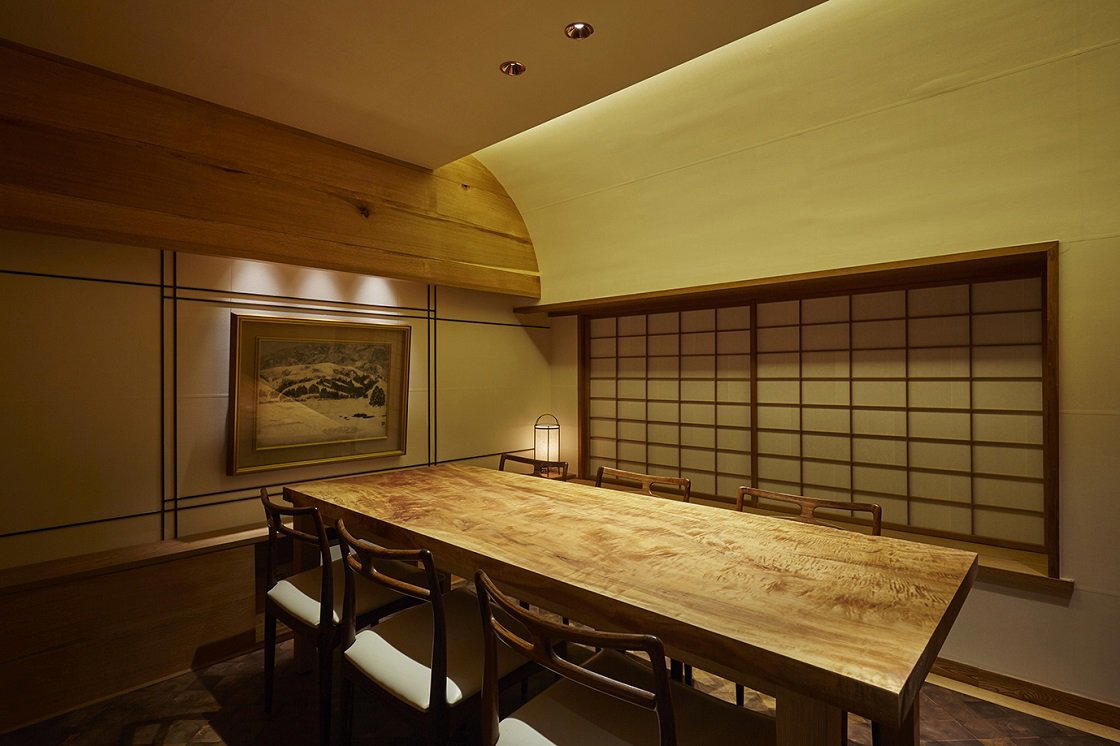


Bars in Osaka
All bars in Osaka →


Hotels in Osaka
All hotels in Osaka →


Wineries in Osaka
Browse all →
Details
- Intimate
- Sophisticated
- Date Night
- Special Occasion
- Sake Program
- Tasting Menu
- Sake
Current opening hours
- Monday
- 6–11 PM
- Tuesday
- 6–11 PM
- Wednesday
- 6–11 PM
- Thursday
- 6–11 PM
- Friday
- 6–11 PM
- Saturday
- 6–11 PM
- Sunday
- 6–11 PM
Hours can change for holidays and private events. Hours as of .
Relaxing stylish space with counter seating in an intimate hideout setting.