Tabelog 100 #46
Our verdict
Kamifukawa brings Chinese cooking into Osaka’s quieter Nishitenma orbit, away from the city’s louder dining corridors. Its selection for Tabelog 100 Chinese WEST 2026 gives it a clear trust signal, while the room’s reservation-only format and private-room availability point to a focused, adult-leaning meal rather than casual drop-in dining.

Pearl is the En Primeur Club membership app, where members save venues, book tables and use the concierge.
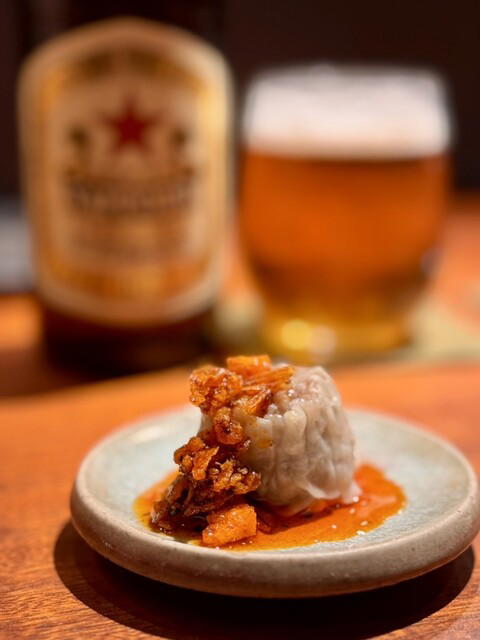
Osaka changes the register before dinner. Away from the city’s loudest entertainment rhythms, the streets can feel more workaday than theatrical: office lights, small buildings and a slower evening pace replace the glare of the busiest nightlife zones. Here, Chinese cooking reads less as banquet spectacle than controlled sequence, with the room carrying restraint rather than theatre.
Osaka has always absorbed outside food cultures quickly. Chinese cooking sits deep in that habit, from department-store dining floors to serious restaurants where technique, heat control and pacing matter as much as abundance. Kamifukawa belongs to the latter conversation. Its selection for Tabelog 100 Chinese WEST 2026 places it in a regional group judged against Chinese restaurants across western Japan, not just neighbourhood demand. In a city where Chinese food ranges from quick gyoza and mapo lunches to high-spend dinners built around precision and sequencing, that matters.
Chinese cooking in Osaka's quieter dining register
Read Kamifukawa through Osaka’s geography of appetite. In the city’s louder dining moods, Osaka sells immediacy: counters, smoke, sauce, queues, late trains. Kamifukawa asks for a different mood. Its kind of dining rewards planning and attention, and Chinese cuisine becomes a study in structure rather than volume. The cultural root is not a single publicly attached regional Chinese label, but the broader Japanese-Chinese fine-dining grammar: clean pacing, defined courses, controlled seasoning and privacy as part of the meal.
That contrasts with Osaka’s casual Chinese and pan-Asian habits. The city’s everyday Chinese food is generous and accessible, but the premium tier is narrower and more exacting. Chinese Sai Es Sawada offers one useful point of comparison within Osaka’s Chinese conversation, while Yakitori Shinose shows how the city’s specialist restaurants can command attention in other formats. Kamifukawa occupies a premium-specialist zone: intentional, category-led and built around dinner rather than casual grazing.
The Tabelog 100 Chinese WEST 2026 selection gives the restaurant recognition particularly relevant in Japan. Tabelog’s Hyakumeiten lists are not international trophy culture; they are domestic, category-specific signals Japanese diners use to map depth within a genre. For visitors, the distinction is useful: a global award tells one story; a Chinese WEST Hyakumeiten selection tells another, closer to how local restaurant obsessives sort regional strength.
What the format says about the meal
The signals point to a compact, controlled experience rather than a broad, casual restaurant. The listed dinner budget of JPY 15,000 to JPY 19,999 changes the social contract: guests should expect a meal planned around the restaurant’s structure rather than an improvised quick stop. This is not the loud, revolving-table version of Chinese dining; it suits diners who want a focused dinner and conversation to stay at the table.
There is no public chef narrative attached here, which is not a weakness. Osaka has plenty of restaurants where the founder story overwhelms the food. The sharper point is the category itself: Chinese cuisine, treated at this level in Japan, often becomes a hybrid of Chinese technique and Japanese expectations around seasonality, pacing and service discipline. Without inventing dishes or kitchen biographies, the restaurant’s Chinese category and 2026 regional selection position it within that tradition.
The recognition and price signals reinforce the grown-up nature of the experience. Kamifukawa is listed in the Chinese category, with a Tabelog score of 3.98 and a dinner budget of JPY 15,000 to JPY 19,999. Rather than depending on tourist-district spectacle, the restaurant fits a quieter Osaka itinerary: a planned dinner where the point is the cooking, the pacing and the category-specific depth.
How to place it in an Osaka itinerary
Kamifukawa is a poor choice for diners seeking maximal variety from one Osaka night. The city is built for grazing, and visitors chasing takoyaki, kushikatsu and late-night izakaya energy should go elsewhere. It is stronger for a planned dinner when Chinese cuisine is the point, not a fallback. The price band and 2026 Hyakumeiten recognition suggest a restaurant to anchor the night, not a stop between bars.
For comparison inside the city, Karakuchi Meshiya Morigen represents a different Osaka dining mood, while Nishitemma Nakamura points toward another kind of planned restaurant experience in the same broader city logic. Osteria Ottanta Sette and other small specialist rooms show how Osaka supports serious restaurants that do not need entertainment-district volume. Kamifukawa’s distinction is category: Chinese cooking given the quiet, planned treatment more often associated with specialist restaurants than casual drop-ins.
Vegetarian diners and families should treat the meal as a format question, not a cuisine assumption. Chinese food can be vegetable-rich, but premium set-course dining may depend on stocks, seafood or meat preparations not visible before booking. Children can be comfortable in calmer restaurants when the group controls the pace, but the spend level suits older children accustomed to longer meals. In both cases, clarify needs before committing to a table.
Osaka rewards diners who choose by mood as much as cuisine. For a broader city edit, start with Our full Osaka restaurants guide, then branch into Our full Osaka hotels guide, Our full Osaka bars guide, Our full Osaka wineries guide and Our full Osaka experiences guide. Nearby and category contrasts are best treated generically: other Osaka dining rooms, bakeries, casual counters and small specialist restaurants can frame the city’s range without confusing Kamifukawa’s own identity. For wider Japan and diaspora context, compare other dining cultures broadly rather than assuming that Kamifukawa should behave like a bar, bakery, café or casual street-food stop.
Frequently asked questions
Where is Kamifukawa in Osaka?
Osaka.
What does dinner at Kamifukawa typically cost?
Pricing at Kamifukawa is listed as JPY 15,000 - JPY 19,999 View spending breakdown.
Is Kamifukawa reservation-only?
The provided public details do not confirm a reservation-only policy. Kamifukawa is in Osaka; check the venue's official channels for the latest booking details.
What has Kamifukawa built its reputation on?
Its clearest trust signal is selection for Tabelog 100, Chinese cuisine, WEST, 2026. The restaurant also sits in the JPY 15,000–JPY 19,999 price range, with a listed Tabelog score of 3.98.
Is Kamifukawa good for vegetarians?
Those details are not published. Guests looking for a vegetarian meal should treat Kamifukawa as a Chinese restaurant in Osaka and confirm dish structure before booking. Check the venue's official channels for the latest details.
Is Kamifukawa suitable for children?
The listing does not identify family-friendly service. Given the dinner price range, Kamifukawa may be better suited to a planned meal in Osaka than a casual family drop-in.
Cuisine-First Comparison
Comparable venues for context, by category and price tier.
| Venue | Cuisine | Price | Awards | Notes |
|---|---|---|---|---|
| KamifukawaThis venue (the venue you are viewing) | Modern Chinese Fine Dining | $100–150 | Tabelog 100 #46 | Not listed |
| Seiran | Chinese Fine Dining | $30–50 | Tabelog 100 #48 | Chūō |
| Miwa Tei | Casual Chinese with Tantanmen & Seafood | $20–30 | Tabelog 100 #26 | Fukushima |
| Tachinomi Izakaya LIBERTY | Chinese Izakaya / Standing Bar | $20–30 | Tabelog 100 #64 | Kita |
| Kitashinchi Fuka | Modern Chinese Dim Sum Tasting (Kitashinchi Counter) | $100–150 | Tabelog 100 #22 | Kita |
| Taishu Shokudo Kawaramachi Blanc | Japanese Western (Yoshoku) Bistro | $50–100 | Tabelog 100 #1 | Kita |
Recognition history
Dated appearances from independent guides and award organizations, with the underlying list record or original source where available.
Tabelog 100 #46 · No. 46
Tabelog · Tabelog 100 - Chinese cuisine - WEST - 2026