
Tan Ha places Vietnamese cooking inside Yokohama’s broader everyday Asian dining culture rather than the city’s formal waterfront restaurant circuit. Its Tabelog 100 Asian cuisine/Ethnic cuisine EAST selections in 2022, 2023, and 2024 give a modest, shop-table format unusual weight: this is a low-price, ingredient-led stop where the room matters as much as the plate.
Pearl is the En Primeur Club membership app — saves, bookings, and concierge access live there. Same editors, same standards.
- Address
- 神奈川県横浜市泉区上飯田町3050
- Phone
- +81458032597
- Website
- tabelog.com
 Saves & bookings on Pearl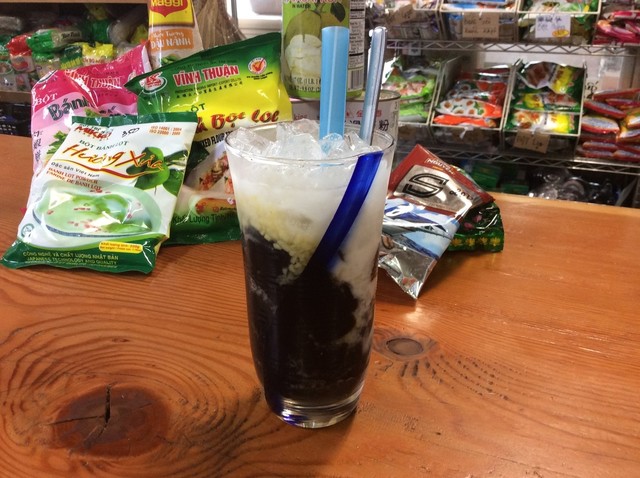
Approaching Tan Ha means leaving Yokohama’s polished harbour image for a practical food world where shelves, ingredients, seasonings, and tables share the same frame. The first impression is retail energy, not ceremony: Vietnamese cooking tied to pantry culture, take-out habits, and the everyday movement of people buying food as much as sitting down to eat.
That format matters in Yokohama. The city’s restaurant identity is often flattened into Chinatown, ramen, hotel dining, and port-city nostalgia, but its everyday food map is more dispersed. Izumi-ku sits away from the tourist spine, and Tan Ha belongs to suburban Asian dining culture: less theatrical, more functional, and closer to how immigrant cuisines settle into Japanese neighbourhoods before becoming destination dining.
Vietnamese cooking framed by a shop-table rhythm
Japanese diners often meet Vietnamese food through a narrow set of cues: phở, bánh mì, fresh herbs, fish sauce, and the lighter end of Southeast Asian cooking. Tan Ha broadens that frame as an Asian ingredients shop with tables in the centre. The room does not separate eating from provisioning; it places cooking, shopping, and take-out in one continuous loop.
The category listing, Vietnamese and sandwich, is plain but useful. It signals daily-use food rather than a tasting-menu interpretation of Vietnam. The sandwich label matters because bánh mì has become one of the easiest entry points for Vietnamese cooking in Japan: portable, affordable, and adaptable to lunch routines. In a city where ramen counters and Chinese set meals dominate quick dining, Vietnamese sandwiches give the neighbourhood another low-pressure option.
The award history adds sharper context. Selection for Tabelog’s Asian cuisine / Ethnic cuisine EAST “Tabelog 100” in 2022, 2023, and 2024 places Tan Ha in a curated regional group rather than a generic local listing. It does not turn the room into a luxury address; recognition here validates a specialist everyday format, not white-tablecloth ambition.
That distinction separates it from much of Yokohama’s better-known dining conversation. Ramen names such as Yukiguni occupy one form of local devotion, while Silk Road Ryori Budouen and Chinese Kyoka Rou point to the city’s long relationship with Asian cooking beyond Japanese categories. Tan Ha sits in that wider conversation from a different angle: retail-adjacent, Vietnamese, and grounded in ingredients rather than dining-room performance.
The sensory interest is in the working room, not staged luxury
The appeal of a shop-table restaurant is spatial. Shelves and tables share the same footprint, so the room shows what the kitchen is built from before any menu decision. Asian vegetables and seasonings are not decorative references; they are part of the operating environment, making the experience more direct than polished ethnic-dining formats in central commercial districts.
Yokohama rewards this sidestep. A traveller near Minato Mirai or Kannai may default to harbour views and Chinatown density, but the city’s quieter food intelligence often appears along rail-linked residential corridors. Izumi-ku does not sell itself as a dining district like central Yokohama. That lowers the theatre and raises the importance of intent: diners come for a specific category, not a neighbourhood stroll.
There is also a price-tier argument. Tan Ha’s published spending range sits in the everyday bracket, closer to repeat-use dining than special-occasion planning. In Japan, that bracket is revealing for Asian and ethnic cuisines because value is judged against ramen, curry, set meals, and casual Chinese restaurants. A Vietnamese address gaining repeated Tabelog 100 recognition in that competitive field suggests consistency where diners are exacting about freshness, portion value, and pantry authenticity.
Comparison should stay disciplined. This is not competing with Yokohama’s more formal destination restaurants, nor with French-leaning rooms such as Petale De Sakura. It belongs with the city’s specialist casual addresses, the kind that make a metropolitan food culture feel lived-in rather than visitor-curated. For a wider Yokohama itinerary, it pairs conceptually with low-key category specialists such as 1000 (Yakitori (Grilled chicken skewers)), Aichun, Ajowan, and Alpenjiro Honten, each showing how Yokohama’s eating culture extends beyond its postcard districts.
How to place it in a Yokohama food day
Tan Ha works better as a purposeful food stop than a polished evening anchor. The setting favours diners interested in category specificity: Vietnamese food, sandwiches, Asian pantry goods, and the casual overlap between eat-in and take-out. It is a sharper choice for travellers who have already covered central Yokohama and want a more local read on everyday dining habits.
The practical frame is simple: this is a no-frills, non-smoking venue with take-out available, no private rooms, and payment listed as cash-only across card, electronic money, and QR categories. Parking is listed behind the store, useful in a part of Yokohama where car access can matter more than around the port. Reservations are listed as unavailable, so the experience belongs to the walk-in, daily-use side of Japanese dining rather than the calendar-managed reservation economy.
Readers building a broader regional food map can use Tan Ha as the Vietnamese point in a Yokohama-focused circuit, then widen the lens through Our full Yokohama restaurants guide. For a stay around the city, pair that with Our full Yokohama hotels guide, Our full Yokohama bars guide, Our full Yokohama wineries guide, and Our full Yokohama experiences guide. Nearby-city comparisons can also be useful: (Shoku) Vietnam in Kawasaki gives another Vietnamese reference point, while -Grilled beef Sukiyaki- KAMAKURA TANUKIAN 鎌倉 たぬき庵 in Kamakura. 鮪と炭火焼き うお炭 秋葉原店 in Tokyo.cafe in Osaka.know in Kumamoto, [Curry Senmon Ten] Maruyama Kyoju. in Sapporo, Jōdo Saké Bar in Los Angeles, Onigiri Time in Pasadena, and Anzen Shokudo show how casual, specialist formats travel across different cities.
Side-by-Side Snapshot
Comparable options at the same price tier.
| Venue | Cuisine | Price | Notes |
|---|---|---|---|
| Tan HaThis venue — the venue you are viewing | Authentic Vietnamese Canteen & Sandwiches | $ | Not listed |
| Rishiri Ramen Miraku (利尻らーめん 味楽) | Rishiri-Style Yaki Shoyu Ramen | $ | Kohoku-Ku |
| Ramen Jiro Nakayama ekimae ten | Jiro-style Ramen | $ | Midori |
| Mendokoro Niboshi Kaoru Asobiru ten | Niboshi Ramen | $ | Nishi |
| Torakichi Ya Hikaru | Yokohama-style ramen shop | $ | Kanagawa |
| TOAST neighborhood bakery | British-style neighborhood bakery | $ | Naka |
Recognition history
Dated appearances from independent guides and award organizations, with the underlying list record or original source where available.
Tabelog 100 #94 · No. 94
Tabelog · Tabelog 100 - Asian cuisine / Ethnic cuisine - EAST - 2024










At a Glance
- Lively
- Cozy
- Casual Hangout
- Group Dining
- Solo
- After Work
- Standalone
Casual and bustling like a Vietnamese street-side canteen, with simple non-smoking seating in the middle of an Asian ingredients shop and a laid-back, neighborhood atmosphere.