

Tabelog 100 #19
Our verdict
A Tabelog Bronze Award holder with a 3.95 score, Takeru operates from the second floor of a Ginza building and runs through the full day from noon to 11pm, a schedule rare among Ginza sushi counters. Against the neighbourhood's appointment-only omakase tier, it occupies a more accessible position while still drawing the kind of repeat clientele that Ginza sushi earns through consistency rather than novelty.

Pearl is the En Primeur Club membership app, where members save venues, book tables and use the concierge.
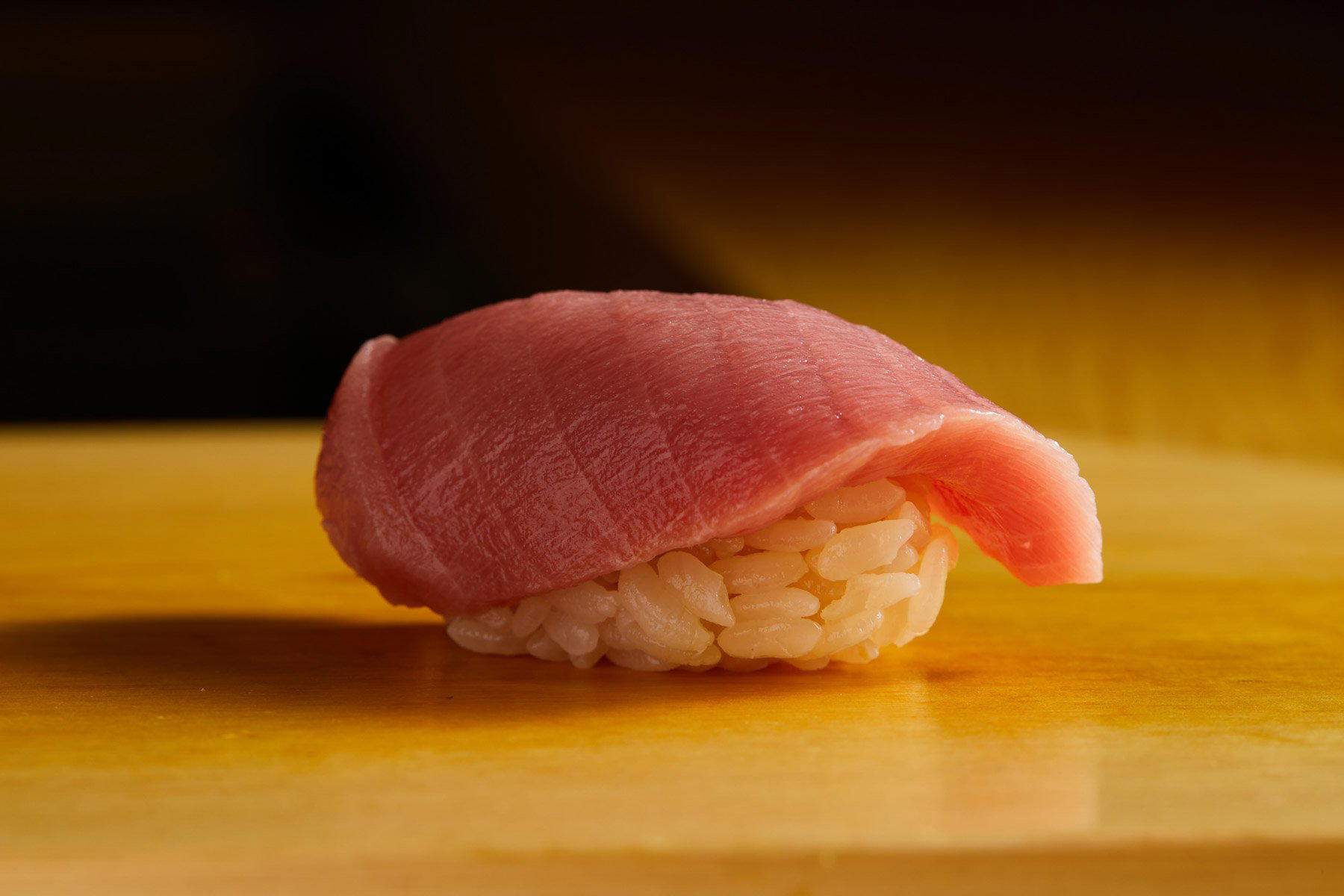
The menu
What to order
- Botan shrimp
- Bluefin tuna (akami, chutoro, otoro)
- Monkfish liver
- Conger eel
If You're Only Going to One Sushi Counter in Ginza, Make It One That Earns Its Regulars
The easiest restaurant decisions in Ginza are the ones at the extremes: the three-Michelin-star omakase that books six months out, or the conveyor belt that asks nothing of you. The harder, more rewarding decision sits in between, where Tabelog scores and repeat clientele tell you more than any single critical review. Takeru, on the second floor of the GINZA ISONO building on Chome 7-11-6, earns a Tabelog score of 3.95 and a 2025 Bronze Award, credentials that, in Tokyo's hyper-competitive sushi market, indicate not a flash-in-the-pan opening but a counter that has built genuine loyalty over time.
What Ginza's Mid-Tier Sushi Scene Actually Looks Like
Ginza's sushi identity is anchored by its highest tier: counters where the lineage runs through revered masters, where covers are limited to eight or ten, and where the price of entry clears most visitors before they even pick up the phone. Harutaka, for instance, operates squarely in that ¥¥¥¥ bracket, with the booking depth and format discipline to match. That tier is worth knowing, but it does not represent where most of Ginza's reliable sushi happens.
Below it sits a broader, less-discussed bracket: counters with serious Tabelog standing, daily service, and a clientele that returns not because they've secured a rare reservation but because the fish is dependable and the rhythm of the meal is familiar. Takeru operates in this bracket. A Tabelog Bronze Award with a 3.95 score is not a participation certificate, in a city where tens of thousands of restaurants compete for Tabelog recognition, Bronze at that score level places a venue in the leading fraction of reviewed sushi restaurants in Tokyo. For context, Tabelog's Bronze tier typically corresponds to scores between 3.8 and 3.99 across a sustained review period, meaning the kitchen has been consistent enough, across enough visits, to hold that position.
The Regulars' Calendar: Noon to 11pm, Seven Days
One of the more telling details about Takeru is its hours. The counter runs noon to 11pm, Monday through Sunday, with no weekly closure. In a neighbourhood where the most discussed sushi houses operate on tightly controlled evening-only schedules and take Sundays or Mondays off entirely, that accessibility is a structural signal about who the venue is built for.
The people who return to a counter like this are not trophy hunters logging another famous address. They are Ginza workers grabbing lunch, evening regulars who have settled into a post-work cadence, and visitors to Tokyo who want the experience of eating well in Ginza without the three-month advance booking cycle. The continuous schedule also allows for something that reservation-only counters struggle to provide: the spontaneous return visit, the midweek lunch when the day goes better than expected, the habit that turns a good restaurant into a genuine regular spot.
That kind of regularity is how Tokyo sushi counters build their reputations in the first place. The Tabelog score at 3.95 reflects not one spectacular evening but a consistent body of evidence across many service periods and many tables.
Where Takeru Sits Against Ginza's Broader Dining Pattern
Ginza is unusual among Tokyo dining neighbourhoods in that it holds serious restaurants at nearly every price point and in nearly every tradition. The kaiseki counter at RyuGin and the French precision of Sézanne and L'Effervescence operate at the neighbourhood's highest formal register. Newer entrants like Crony represent a different evolution, where innovative French technique meets more flexible format. Sushi, meanwhile, runs the full spectrum from hyper-formal to accessible.
Takeru's second-floor position in the GINZA ISONO building on the 7-chome block places it in the part of Ginza that has historically housed mid-format counters rather than flagship destination restaurants. The address is walkable from Ginza Station's exits, which matters for the lunchtime clientele the hours suggest it is actively pursuing. That logistical positioning reinforces the regulars' dynamic: a counter people can slot into their working week, not one they plan a special trip around.
For visitors building a Tokyo itinerary around more than just sushi, the EP Club guides to Tokyo restaurants, bars, hotels, experiences, and wineries cover the full range of what the city offers across price points and neighbourhoods.
Tokyo Sushi Beyond Ginza
Ginza is not the only address for serious sushi in Japan's dining hierarchy. Across the country, the format adapts to local character and local supply. Further afield, HAJIME in Osaka and Gion Sasaki in Kyoto represent the Kansai approach to premium Japanese dining, and akordu in Nara offers a different register entirely. For contrast at the international level, Le Bernardin in New York and Atomix in New York show how the precision-driven counter format translates outside Japan, and 6 in Okinawa reflects how Japan's own culinary geography continues to diversify.
Know Before You Go
| Address | 7 Chome-11-6, Ginza, Chuo City, Tokyo (2F, GINZA ISONO Building) |
| Hours | Monday to Sunday, 12:00 to 23:00 |
| Phone | 03-3575-7880 |
| Awards | Tabelog Bronze Award 2025, Score 3.95 |
| Getting There | Ginza Station (Tokyo Metro Ginza, Hibiya, Marunouchi lines) is the closest access point; the 7-chome address is a short walk from the main exits |
| Booking |
Frequently asked questions
Can I bring kids to Takeru?
Ginza sushi counters, including those in Takeru's Tabelog scoring bracket, typically operate in compact second-floor spaces with a pace and format built around adult diners. Nothing in the available venue data explicitly bars children, but the setting, a 2F counter on Ginza 7-chome, open through late evening, is oriented toward a sit-down meal with attention to the meal itself. Younger children who require significant time or space to settle are likely better served elsewhere in the neighbourhood.
What's the vibe at Takeru?
Takeru operates in the mid-tier of Ginza's sushi scene, less ceremonial than the strict omakase counters above it, but serious enough to hold a Tabelog Bronze Award and a 3.95 score in 2025. The second-floor setting on Ginza 7-chome keeps it removed from street noise without the hushed formality of the neighbourhood's most restrictive counters. Hours running noon to 11pm, seven days a week, point to a room that accommodates both lunch sarariman trade and evening regulars rather than a single ritualistic sitting.
Is Takeru Michelin-listed?
Takeru has received recognition including: Tabelog Bronze Award 2025 Score: 3.95 Cuisine: Sushi / Tokyo Phone: 03-3575-7880 Hours: Mon, Tue, Wed, Thu, Fri, Sat, Sun 12:00 - 23:00 Address: Tokyo Chuo Ward Ginza7116 GINZA ISONObiru 2F Tabelog:.
What's the best thing to order at Takeru?
Tabelog classifies Takeru squarely as a sushi venue, and the 2025 Bronze Award with a 3.95 score reflects consistent execution in that category. No specific menu or dish data is available through EP Club's records, so the safest approach is to follow the kitchen's lead and ask what the day's fish looks like rather than arriving with a fixed order in mind. At Ginza counters in this scoring tier, the seasonal neta, whatever came in that morning, tends to represent the kitchen at its most reliable.
What time does Takeru open and close?
Hours at Takeru: Mon, Tue, Wed, Thu, Fri, Sat, Sun 12:00 - 23:00.
A Lean Comparison
| Venue | Cuisine | Price | Awards | Notes |
|---|---|---|---|---|
| TakeruThis venue (the venue you are viewing) | Premium Omakase Sushi | $300–500 | Tabelog 100 #19 | Not listed |
| Harutaka | Edo-Style Omakase Sushi | $200–300 | 3 Michelin Stars · World's 50 Best #76 | Sushi |
| RyuGin | Modern Kaiseki | $500+ | 3 Michelin Stars · World's 50 Best #41 | Kaiseki, Japanese |
| L'Effervescence | Modern French with Japanese Influences | $200–300 | 3 Michelin Stars · World's 50 Best #69 | French |
| HOMMAGE | Modern French with Japanese Influences | $150–200 | 2 Michelin Stars · World's 50 Best #78 | Innovtive French, French |
| MAZ | Innovative Peruvian-Japanese Fusion | $150–200 | 2 Michelin Stars · World's 50 Best #28 | Innovative |
Recognition history
Dated appearances from independent guides and award organizations, with the underlying list record or original source where available.
Opinionated About Dining Top Restaurants in Japan Recommended
Opinionated About Dining
Tabelog 100 #19 · No. 19
Tabelog · Tabelog 100 - Sushi - TOKYO - 2025
Full recognition history (3 entries)
Tabelog Bronze
Tabelog
Continue exploring
More in Tokyo
Restaurants in Tokyo
All restaurants in Tokyo →
Bars in Tokyo
All bars in Tokyo →
Details
- Intimate
- Elegant
- Sophisticated
- Special Occasion
- Date Night
- Solo
- Chefs Counter
- Open Kitchen
- Sake Program
- Local Sourcing
- Sustainable Seafood
- Omakase
- Counter Dining
- Sake
Current opening hours
- Monday
- 12–2:30 PM, 6–11 PM
- Tuesday
- 12–2:30 PM, 6–11 PM
- Wednesday
- 12–2:30 PM, 6–11 PM
- Thursday
- 12–2:30 PM, 6–11 PM
- Friday
- 12–2:30 PM, 6–11 PM
- Saturday
- 12–2:30 PM, 6–11 PM
- Sunday
- 12–2:30 PM, 6–8:30 PM
Hours can change for holidays and private events. Hours as of .
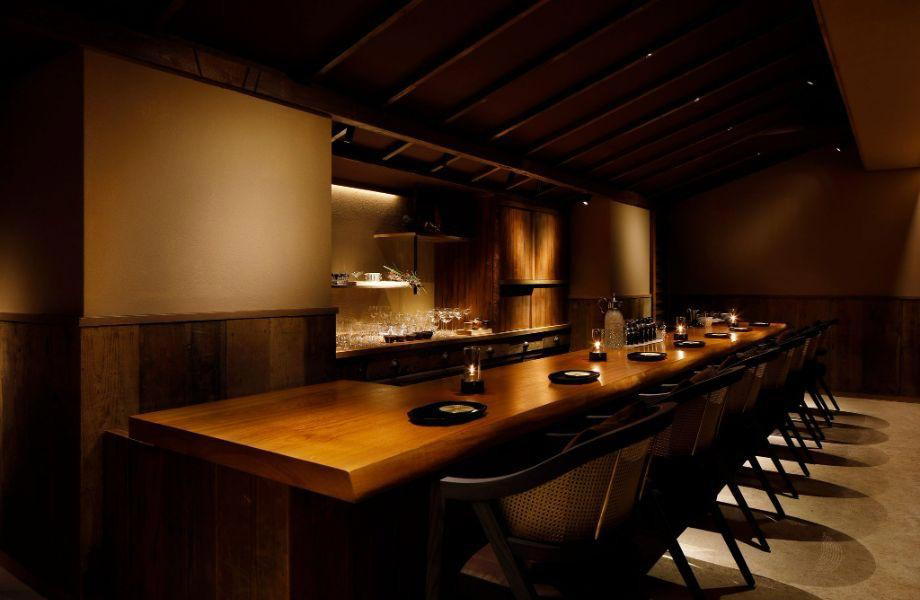
Warm and inviting with traditional mud walls and arched ceiling; intimate counter seating with an open kitchen view; decorated with gifts from colleagues and mentors reflecting the chef's journey.