
Michelin Plate
Our verdict
A Michelin Plate-recognised kaiseki counter in Osaka's Nishi Ward, Takeda channels the flavours and craft traditions of Tokushima through seafood landed at Naruto and Minami, locally sourced vegetables, and heritage somen from Handa. At a mid-tier price point relative to Osaka's starred competition, it offers a regionally specific argument for why provenance matters more than prestige.

Pearl is the En Primeur Club membership app — saves, bookings, and concierge access live there. Same editors, same standards.
- Address
- 3 Chome-9-2 Shinmachi, Nishi Ward, Osaka, 550-0013, Japan
- Phone
- +81 6-6534-2567
- Hours
- Mon–Sat 6–10 PMSun Closed
- Website
- instagram.com
- Directions
- Get directions
Indigo, Soba, and the Logic of Eating Locally in Osaka
The first thing you register at Takeda is colour. Indigo-dyed norens hang at the entrance — a traditional craft of Tokushima Prefecture — and the same deep blue runs through the chairs and serving trays inside. This is not decorative theming. Indigo dyeing is one of Tokushima's most enduring cottage industries, and its presence here is a statement of geography: this restaurant is, at its core, about a specific place on Japan's Shikoku island, translated into a meal served in Osaka's Nishi Ward.
That framing matters because it explains what kind of restaurant Takeda is and what kind of diner it rewards. Osaka's mid-tier Japanese dining scene, the ¥¥¥ bracket shared by places like Kashiwaya Osaka Senriyama, Miyamoto, and Oimatsu Hisano, covers a wide range of approaches, from broad kaiseki interpretation to more personal, regionally inflected menus. Takeda sits firmly in the latter camp. The kitchen's sourcing decisions are not positioned as variety or luxury for its own sake, but as a coherent argument about place.
What Tokushima Brings to the Table
Seafood at Takeda arrives from fishermen operating off Naruto and Minami, both on the Tokushima coast. Naruto is known for its tidal straits, which produce seafood with particular texture and flavour concentration, the kind of provenance that Japanese chefs and diners treat as meaningful rather than incidental. Vegetables and soy sauce are also specially sourced from the region, and the menu includes yuzu or similar brand-name Tokushima citrus, which carries genuine regional pride in a prefecture that produces some of Japan's most prized citrus varieties.
Two dishes anchor the menu's regional identity most clearly. The soba-gome jiru is a porridge made with buckwheat seeds and vegetables, a dish that belongs to Tokushima's home cooking tradition rather than the formal repertoire of kaiseki. Serving it in Osaka positions it as an act of translation: hometown food offered in the city where the chef completed his apprenticeship. The nyumen, thin noodle soup made with Handa somen, follows the same logic. Handa somen, produced in the Tokushima town of Awa, is dry-aged and hand-stretched to a fineness that sets it apart from mass-produced varieties. In a bowl of clear dashi, it reads as both comfort food and craft object.
For diners accustomed to Osaka restaurants where sourcing claims are broad and seasonal, Takeda's specificity is the point. This is what regionally anchored cooking looks like when it's taken seriously: not a rotating reference to local produce, but a consistent commitment to a defined geography with named suppliers and hometown recipes.
Where Takeda Sits in Osaka's Dining Map
Michelin awarded Takeda a Plate in both 2024 and 2025, a recognition that signals the inspectors found quality cooking worth noting, without the star tier awarded to the city's most formally ambitious rooms. That bracket is instructive. Osaka's ¥¥¥¥ tier includes technically intensive operations like Hajime, La Cime, and Fujiya 1935, where tasting menus run long and the format is built around culinary transformation. Takeda operates at a lower price point and with a different set of priorities: regional fidelity and accessible craft rather than technical spectacle.
The Michelin Plate designation at the ¥¥¥ price point offers a strong value argument. In a city where Michelin recognition often correlates with a significant price jump, a Plate-recognised restaurant at mid-tier pricing represents a meaningful point of entry, particularly for diners who want the credibility of inspector attention without committing to a multi-hour, multi-course format at four-symbol spend. Peer references at the same tier include Tenjimbashi Aoki and Yugen, both of which offer their own angles on Osaka's mid-range Japanese dining conversation.
For context across Japan's broader regional Japanese dining scene, Tokushima-influenced cooking sits in a category that receives less international attention than Kyoto kaiseki or Tokyo omakase formats. Restaurants like Gion Sasaki in Kyoto or Harutaka in Tokyo operate with the weight of well-documented culinary traditions behind them. Takeda's proposal is quieter and more specific: a single prefecture, its fishermen, its farmers, its noodles, its dye.
The Nishi Ward Setting
The restaurant sits in Shinmachi, a neighbourhood in Osaka's Nishi Ward with a texture distinct from the louder dining corridors of Namba or Shinsaibashi. Shinmachi has a residential density that filters out the most tourist-facing restaurant formats, making it a reasonable address for a restaurant whose identity depends more on repeat local custom than on passing foot traffic. The indigo norens at the entrance read as a quiet signal to those who already know what they're looking for.
For visitors planning a wider Osaka itinerary, the broader city dining and hospitality picture is covered in our full Osaka restaurants guide, alongside resources for hotels, bars, wineries, and experiences. For diners moving across the Kansai region and beyond, the same regional-specificity approach shows up at akordu in Nara, while Goh in Fukuoka and 6 in Okinawa illustrate how other Japanese cities are building restaurant identities around defined local sourcing. Tokyo comparisons for the regional Japanese category include Myojaku and Azabu Kadowaki, both operating at a formal tier above Takeda but within the same broad tradition. Further afield, 1000 in Yokohama rounds out the regional picture.
Planning Your Visit
Reservations: Given the small-format nature of this style of restaurant and two consecutive years of Michelin Plate recognition, advance booking is advisable; contact the restaurant directly as no booking platform details are currently listed. Budget: ¥¥¥, mid-tier relative to Osaka's broader Japanese dining market, and positioned below the city's starred and ¥¥¥¥ rooms. Address: 3 Chome-9-2 Shinmachi, Nishi Ward, Osaka. Getting there: Nishi Ward is accessible from central Osaka via subway; Shinmachi and nearby stations serve the area. Season: Tokushima sourcing means the menu tracks regional harvest and catch cycles, making autumn and spring particularly worth timing a visit around, when both citrus and coastal seafood are at their most varied.
Frequently asked questions
What's the pricing like at Takeda?
Pricing at Takeda is listed as ¥¥¥.
Should I book Takeda in advance?
At the ¥¥¥ price point with two consecutive Michelin Plate recognitions (2024 and 2025), Takeda sits in a tier where demand routinely outruns available seats at short notice. Contacting the restaurant directly well ahead of your Osaka visit is the practical approach, particularly if your travel dates are fixed.
Peers Worth Knowing
A compact comparison to help you place this venue among nearby peers.
| Venue | Cuisine | Price | Awards | Notes |
|---|---|---|---|---|
| TakedaThis venue — the venue you are viewing | Premium Japanese Omakase Kaiseki | $200–300 | Michelin Plate | Not listed |
| HAJIME | Avant-Garde Japanese Fine Dining | $300–500 | 3 Michelin Stars · World's 50 Best #83 | French, Innovative |
| La Cime | Modern French with Japanese Ingredients | $150–200 | 2 Michelin Stars · World's 50 Best #13 | French |
| Kashiwaya Osaka Senriyama | Seasonal Kaiseki Omakase | $200–300 | 3 Michelin Stars · La Liste Top Restaurants | Japanese |
| Taian | Traditional Japanese Kaiseki Omakase | $150–200 | 3 Michelin Stars · La Liste Top Restaurants | Kaiseki, Japanese |
| Fujiya 1935 | Modern Japanese with European influences | $100–150 | 2 Michelin Stars · La Liste Top Restaurants | Innovative |
Recognition history
Dated appearances from independent guides and award organizations, with the underlying list record or original source where available.
Michelin Plate
Michelin
Full recognition history (3 entries)
Michelin Plate
Michelin
Michelin Plate
Michelin
Continue exploring
More in Osaka
Restaurants in Osaka
Browse all →




Bars in Osaka
Browse all →




Hotels in Osaka
Browse all →




Wineries in Osaka
Browse all →
Details
- Sophisticated
- Elegant
- Quiet
- Intimate
- Special Occasion
- Celebration
- Chefs Counter
- Open Kitchen
- Sake Program
- Local Sourcing
- Sustainable Seafood
- Omakase
- Counter Dining
- Sake
- Wine
Current opening hours
- Monday
- 6–10 PM
- Tuesday
- 6–10 PM
- Wednesday
- 6–10 PM
- Thursday
- 6–10 PM
- Friday
- 6–10 PM
- Saturday
- 6–10 PM
- Sunday
- Closed
Hours can change for holidays and private events. Last verified .
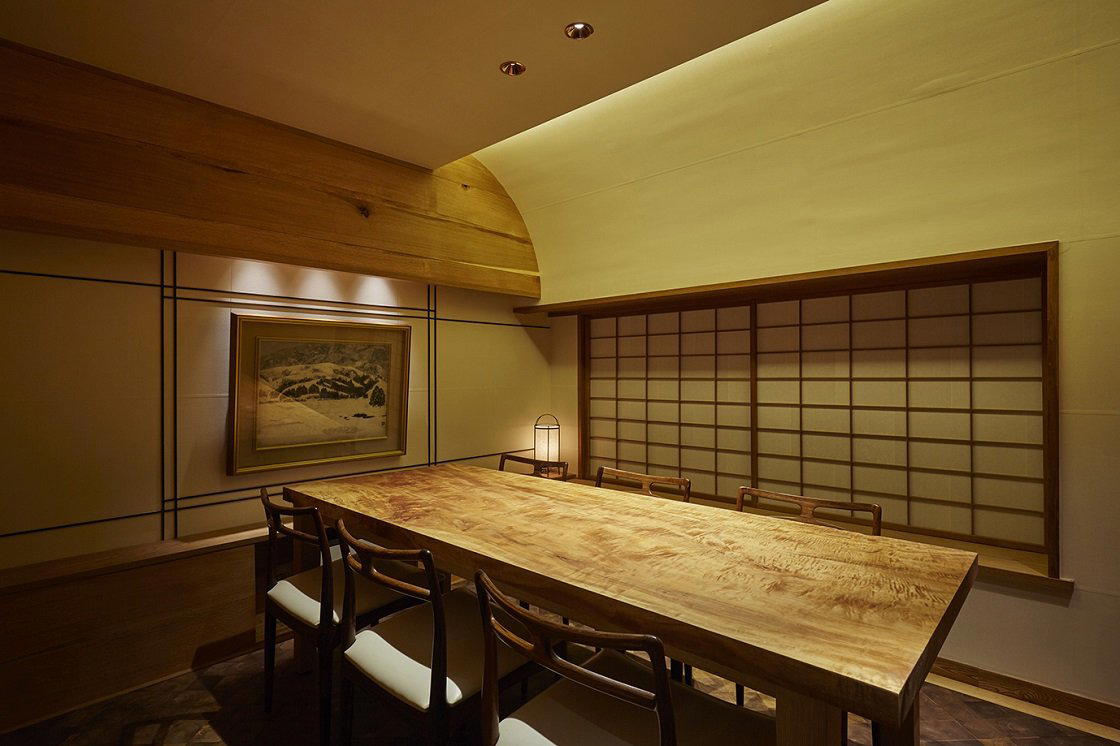
Serene and refined space with traditional indigo-dyed noren curtain entrance, sophisticated adult atmosphere in a quiet hideout location away from hustle and bustle.