On Graefestraße in Kreuzberg, Tacos El Rey occupies a corner of Berlin's most international dining strip with the straightforwardness of a taqueria that has nothing to prove. In a city where Mexican food has historically meant approximation, the address at number 92 positions it squarely in the neighbourhood where ingredient-driven cooking from outside Germany's fine-dining circuit tends to find its most committed audience.
Pearl is the En Primeur Club membership app — saves, bookings, and concierge access live there. Same editors, same standards.
- Address
- Graefestraße 92, 10967 Berlin, Germany
- Website
- elreyberlin.de
- Directions
- Get directions
 Saves & bookings on Pearl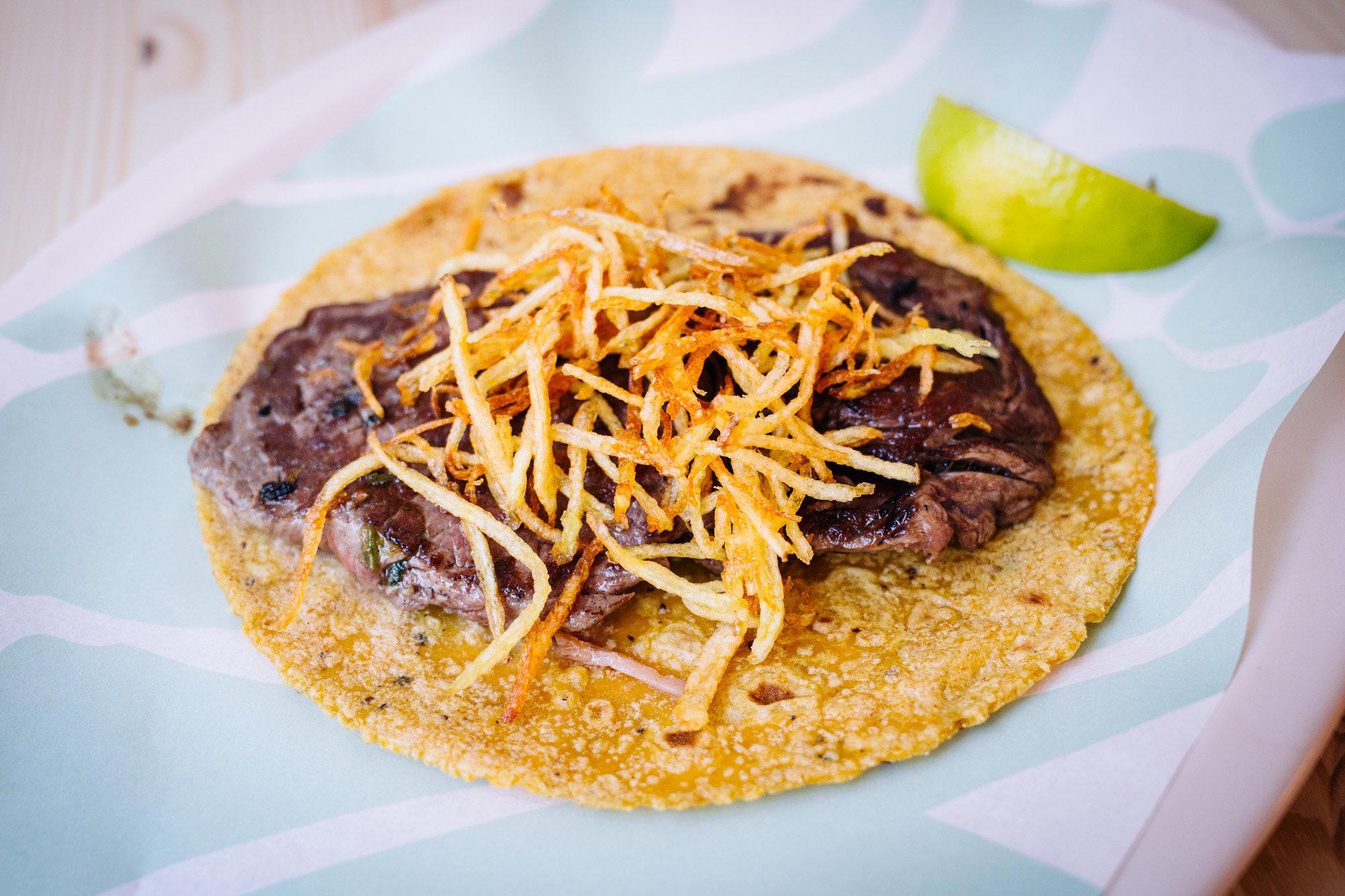
Kreuzberg's Appetite for the Unfiltered
Graefestraße runs through the heart of Kreuzberg's Reuterkiez quarter with the density of a neighbourhood that never fully decided between residential calm and late-night energy. The street at number 92 sits in the lower half of the strip, past the point where the canal-adjacent cafés give way to something more local and less curated. Approaching from the Schönleinstraße U-Bahn, the block reads as the kind of address where the cooking tends to outrun the signage. Tacos El Rey is a casual restaurant in Berlin serving authentic Mexico City taqueria fare at about $20 per person. That gap between ambition and presentation is, in Kreuzberg, often a reliable signal.
Berlin's relationship with Mexican food has been complicated for most of the city's post-reunification restaurant history. For years, the category was dominated by Tex-Mex formats that served the German imagination of the cuisine rather than anything traceable to regional Mexican tradition. The shift, when it came, arrived from the bottom of the price ladder: small operators in Neukölln and Kreuzberg who treated corn, dried chiles, and slow-cooked proteins as non-negotiable, not as interchangeable pantry items. Tacos El Rey sits inside that corrective movement, on Graefestraße, which has become one of the more reliable corridors in Berlin for cooking that prioritises sourcing discipline over room design.
Why Ingredient Provenance Matters at This Price Point
The central argument of the serious taqueria, wherever it operates, is that a small number of ingredients handled correctly produce something that neither scale nor budget can replicate. Masa is the clearest example: tortillas made from nixtamalised corn behave differently from those made with masa harina, holding fat, absorbing sauce, and carrying texture in ways that a flour or commercial corn tortilla cannot. The question for any taqueria operating outside Mexico is whether it sources or makes its own masa, and whether the proteins and aromatics are treated with the same attention. In Berlin, where supply chains for Mexican staples are genuinely thin, the answer to that question separates the serious operators from the approximators.
Kreuzberg's food culture has, over the past decade, become unusually receptive to this kind of sourcing rigour at casual price points. The same neighbourhood that produced the intensity around natural wine and sourdough applied a similar standard to cuisines arriving from outside Europe. That shift matters for understanding why an address like Graefestraße 92 can sustain an audience: the local dining public has been trained by proximity to operators who prioritise ingredient integrity, and it now expects it even when the format is informal.
For context on where ingredient-driven sourcing reaches its most formalised expression in Berlin, Nobelhart & Schmutzig built an entire tasting menu programme around hyper-local German sourcing, while Rutz positions its wine and food programme around producer relationships. At the taqueria end, the stakes are lower and the format more forgiving, but the underlying logic, that sourcing determines outcome, is the same.
The Scene Around Graefestraße
Reuterkiez is not Berlin's most written-about dining district. That distinction rotates between Mitte, Prenzlauer Berg, and the stretch of Neukölln around Weserstraße. But Kreuzberg's Graefestraße corridor has a consistency that the trendier addresses sometimes lack: it sustains its operators over years rather than seasons, and the cooking tends to respond to a local audience rather than a tourist one. That dynamic shapes what gets served and at what price. A taqueria here is priced against the people who live within walking distance, not against what a comparable offering might command in a hotel district.
Berlin's upper end of Mexican dining is not yet a fully formed tier. Unlike the city's fine-dining circuit, which runs from FACIL and Restaurant Tim Raue through to the creative dessert format at CODA Dessert Dining, the taqueria category in Berlin competes mostly on value density rather than prestige. That is not a limitation so much as a structural feature of the category: the leading taquerias anywhere are evaluated by the quality of the bite, not the depth of the wine list.
How This Fits the Broader German Dining Circuit
Germany's serious restaurant circuit is heavily weighted toward Central European fine dining. The Michelin-recognised addresses cluster in Baden-Württemberg, Bavaria, and the Rhine valley: Schwarzwaldstube in Baiersbronn, Aqua in Wolfsburg, Vendôme in Bergisch Gladbach, Waldhotel Sonnora in Dreis, Victor's Fine Dining by Christian Bau in Perl, ES:SENZ in Grassau, and JAN in Munich. Further afield, Restaurant Haerlin in Hamburg and Schanz in Piesport represent the northern and Mosel-region ends of that spectrum, while Bagatelle in Trier offers a French-inflected counterpoint. Berlin sits slightly apart from this circuit: the city's most recognised fine-dining addresses lean creative and international rather than classically German.
A taqueria on Graefestraße operates at the furthest possible remove from that tier, which is precisely the point. The comparison is not between Tacos El Rey and Nobelhart & Schmutzig; it is between the restaurant and the other casual operators in Kreuzberg competing on the same block, with the same ingredients, for the same regulars. Internationally, the standard for this kind of taqueria is set in cities like New York, where technically precise, high-volume programmes such as Atomix or seafood-focused addresses like Le Bernardin define one end of the sourcing conversation, while street-level operators define the other. The relevant comparison for Graefestraße 92 sits closer to the latter.
Planning Your Visit
The restaurant is located at Graefestraße 92, 10967 Berlin, in the Reuterkiez section of Kreuzberg. The nearest public transport is Schönleinstraße on the U8 line. The address is walkable from Kottbusser Tor. Current hours, booking requirements, and pricing are best confirmed directly. Walk-ins are welcome.
Address: Graefestraße 92, 10967 Berlin, Germany. Nearest U-Bahn: Schönleinstraße (U8).
Comparison Snapshot
Comparable venues nearby, for context on price, style, and recognition.
| Venue | Cuisine | Price | Notes |
|---|---|---|---|
| Tacos El ReyThis venue — the venue you are viewing | Authentic Mexico City Taqueria | $$ | Not listed |
| Maria Bonita | Authentic Mexican Taqueria | $$ | Prenzlauer Berg |
| Hasir Kreuzberg | Authentic Turkish Grill | $$ | Kreuzberg |
| Cevicheria | Authentic Peruvian Cevicheria | $$ | Kreuzberg |
| Mariona | Modern Catalan Tapas | $$ | Kreuzberg |
| BBI | Gourmet American Burgers | $$ | Neukolln |
Continue exploring
More in Berlin
Restaurants in Berlin
Browse all →
Bars in Berlin
Browse all →
Hotels in Berlin
Browse all →


Wineries in Berlin
Browse all →
At a Glance
- Lively
- Trendy
- Modern
- Casual Hangout
- Late Night
- Open Kitchen
- Craft Cocktails
Current opening hours
- Monday
- Closed
- Tuesday
- 5–9:30 PM
- Wednesday
- 5–9:30 PM
- Thursday
- 5–9:30 PM
- Friday
- 12–9:30 PM
- Saturday
- 12–9:30 PM
- Sunday
- 12–9:30 PM
Hours can change for holidays and private events. Last verified .
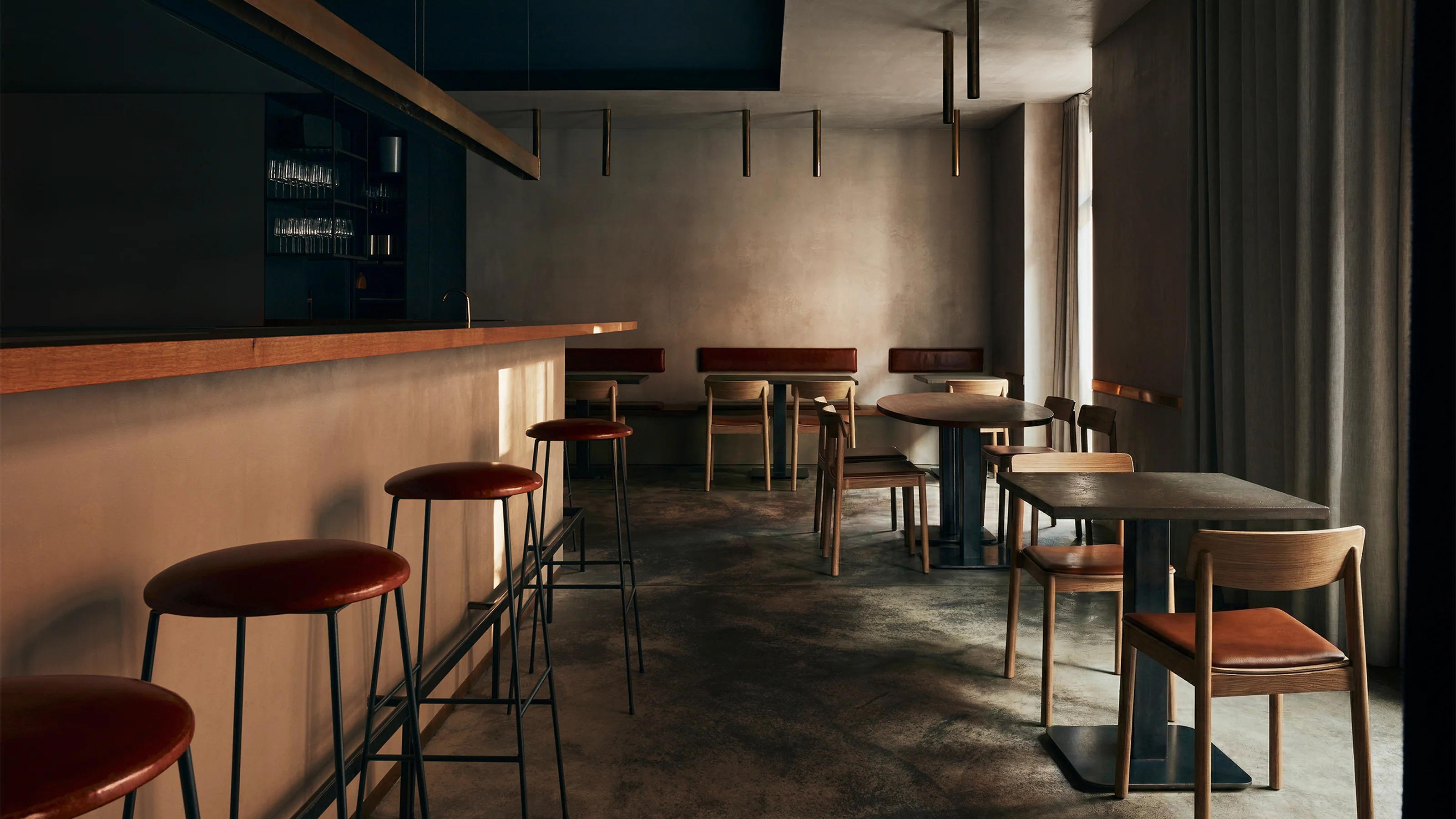
Vibey modern space with rough concrete walls, see-through tiles, light oak tables, and bright red high stools evoking cool Mexico City energy.