
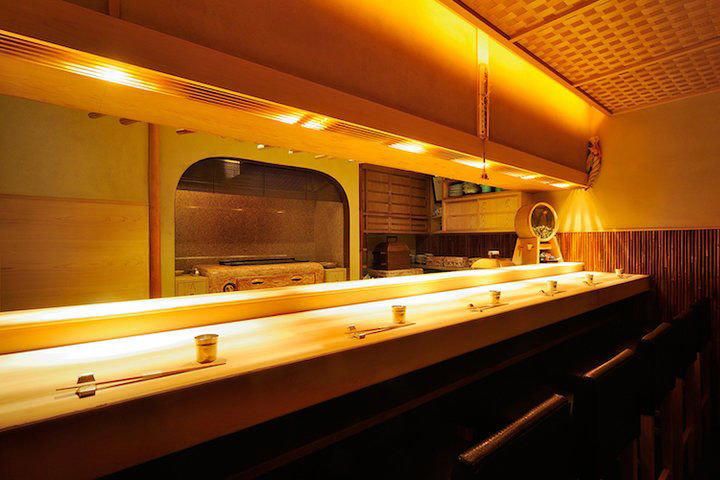
A 10-seat counter in Nishigotanda, Swastika belongs to Tokyo’s compact shokudo tradition: everyday yoshoku, curry, and cafeteria cooking judged on consistency rather than ceremony. Recognition in the Tabelog 100 Diner selection for 2026 places it in a rarefied slice of casual dining, where modest formats can carry serious local weight.
Pearl is the En Primeur Club membership app — saves, bookings, and concierge access live there. Same editors, same standards.
- Address
- 東京都品川区西五反田1-27-6
- Phone
- +81334902914
- Website
- tabelog.com
 Saves & bookings on Pearl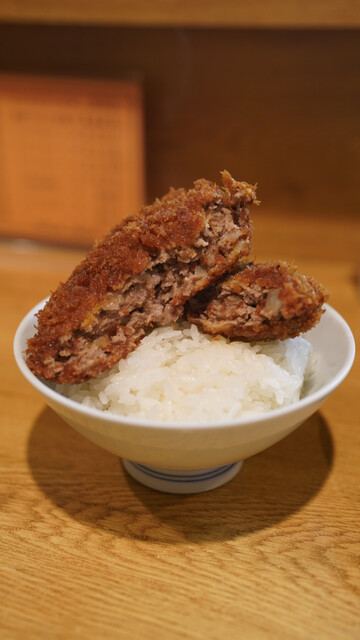
On the west side of Gotanda, the dining rhythm changes quickly from office towers and station traffic to narrow, workday restaurants built for speed, repetition, and regulars. This is not Tokyo’s ceremonial restaurant culture. It is the counter culture of shokudo cooking: a short room, a small number of seats, and a menu language shaped by curry, yoshoku, and set-meal habits rather than tasting-menu theatre.
That setting matters because Japanese cafeteria cooking has always been an ingredient-and-supply story as much as a chef story. Rice quality, frying oil management, curry base, cut vegetables, stock, and the timing of cooked-to-order plates decide the meal. In a 10-counter-seat room, there is little distance between preparation and service. The format exposes process. It also explains why repeatability carries weight in Tokyo’s casual dining hierarchy: a plate has to satisfy on a weekday lunch as reliably as it does for a destination diner crossing town.
Gotanda's counter shokudo culture rewards precision over ceremony
Tokyo’s higher-profile food conversation often tilts toward sushi counters, kappo rooms, and reservation-led dining. The shokudo category works by a different code. It is closer to daily infrastructure: lunch before a meeting, curry after work, a solo meal where the counter is not a compromise but the natural format. In that context, Swastika’s selection for Tabelog 100 Diner in 2026 is a useful signal. It places a low-priced, compact yoshoku-and-curry address inside a national conversation that usually gives more oxygen to expensive formats.
The useful comparison is not with omakase or kaiseki, but with other Tokyo casual specialists. Oniyanma Gotanda honten operates at an even lower spend tier around udon, while Tokyo Doujiang Seikatsu works in the breakfast-and-soy-milk lane. Tachinomi Todaka and Shokudo Todaka sit in a higher evening-spend bracket, showing how far Gotanda’s casual dining spectrum can stretch without becoming formal. Swastika occupies the middle ground: small, counter-based, and serious enough to earn repeat recognition, but still tied to everyday eating rather than occasion dining.
Yoshoku, often translated as Japanese-style Western cooking, is one of Tokyo’s great adaptation cuisines. Its value lies in calibration: sauces made for rice, curry adjusted to local expectations, frying and griddling techniques absorbed into the grammar of teishoku dining. The category is easy to underestimate because it looks familiar. The better versions are disciplined about texture, heat, portion, and pace. A counter seat makes those details more legible than a larger dining room would.
Curry, yoshoku, and the economics of everyday quality
Ingredient sourcing in this tier rarely announces itself through luxury labels. It shows through consistency and restraint. Curry shops depend on spice blend, roux management, aromatics, and how a sauce holds across service. Yoshoku counters depend on the freshness of garnish, the condition of fried items, the temperature of rice, and the ability to produce volume without flattening character. Those are not glamorous procurement stories, but they are procurement stories all the same.
The restaurant’s own name is tied to the nickname of a curry powder brand used at the time of founding, an old-fashioned detail that points back to how Japanese curry culture developed: imported spice blends filtered through domestic tastes, then folded into home cooking, school lunches, railway-station meals, and neighborhood counters. In Tokyo, curry is not one category. It spans specialist curry houses, coffee-shop curry, soba-shop curry, hotel curry, and yoshoku curry. The Gotanda version belongs to the practical end of that map, where a good meal has to justify itself without ceremony.
That practical seriousness is why the 10-seat counter is not merely a capacity note. It shapes the meal’s logic. Small counters place pressure on throughput and consistency; they also remove the buffer that larger restaurants use to disguise uneven service. For solo diners, the format works especially well because it turns the meal into a direct exchange with the kitchen’s pace rather than a scaled-down version of group dining.
Where it sits in a Tokyo itinerary
For travelers building a Tokyo food itinerary, this is the kind of address that corrects an overly trophy-led schedule. A city of long reservation windows and luxury counters also runs on compact rooms serving curry, yoshoku, udon, coffee-shop sets, and breakfast staples with the same seriousness applied to more expensive genres. The point is not to replace a special-occasion meal, but to understand the everyday systems that make Tokyo such a demanding dining city.
Readers comparing casual Tokyo formats can place this stop alongside 3 Chome no Curry Ya San for curry context, . 鮪と炭火焼き うお炭 秋葉原店 for another informal Tokyo register, 12/10 Shinjuku ten for a Shinjuku contrast, and 124. KAGURAZAKA (Yakitori) for a more tightly defined grill tradition. 2D Cafe shows the other side of Tokyo’s casual scene, where visual concept drives the room as much as the food.
For broader planning, use Our full Tokyo restaurants guide alongside Our full Tokyo hotels guide, Our full Tokyo bars guide, Our full Tokyo wineries guide, and Our full Tokyo experiences guide. For Japan-wide comparison, note how everyday formats travel: -Grilled beef Sukiyaki- KAMAKURA TANUKIAN 鎌倉 たぬき庵 in Kamakura.cafe in Osaka.know in Kumamoto, (Shoku) Vietnam in Kawasaki, [Curry Senmon Ten] Maruyama Kyoju. in Sapporo, and [ki:] in Kyoto each frame casual dining through a different local lens. Outside Japan, Jōdo Saké Bar in Los Angeles and Onigiri Time in Pasadena show how Japanese formats change when translated for California diners.
Booking and Cost Snapshot
Comparable venues for cuisine and category context.
| Venue | Cuisine | Price |
|---|---|---|
| SwastikaThis venue — the venue you are viewing | Not listed | $$ |
| Tonkatsu Ouryu | Minato, Tonkatsu specialist | $$ |
| Mahakala | Meguro, Kushikatsu Izakaya | $$ |
| Tenfuku | Ōta, Edomae Tempura & Tendon | $$ |
| 日本料理 太月 | Shibuya, Japanese Traditional | Not listed |
| Tonkatsu Enraku | Ōta, Traditional Tonkatsu & Katsu-don | $$ |
Recognition history
Dated appearances from independent guides and award organizations, with the underlying list record or original source where available.
Tabelog 100 #19 · No. 19
Tabelog · Tabelog 100 - Diner - 2026











At a Glance
- Classic
- Cozy
- Solo
- Casual Hangout
- Standalone
A small, old-school counter cafeteria with a classic Showa-era feel and a focused, no-frills atmosphere.