








Estro brings Neapolitan cooking to Central Hong Kong with a precision and narrative depth that has earned it a Michelin star, a Black Pearl Diamond, and a place at #32 on Asia's 50 Best list. Chef Antimo Maria Merone's six- and eight-course menus move through southern Italian ingredients and technique, backed by a wine cellar running to thousands of bottles on Duddell Street's upper floor.
Pearl is the En Primeur Club membership app — saves, bookings, and concierge access live there. Same editors, same standards.
- Address
- 2/F, 1 Duddell St, Central, Hong Kong
- Phone
- +852 9380 0161
- Website
- estro.hk
- Directions
- Get directions
 Saves & bookings on Pearl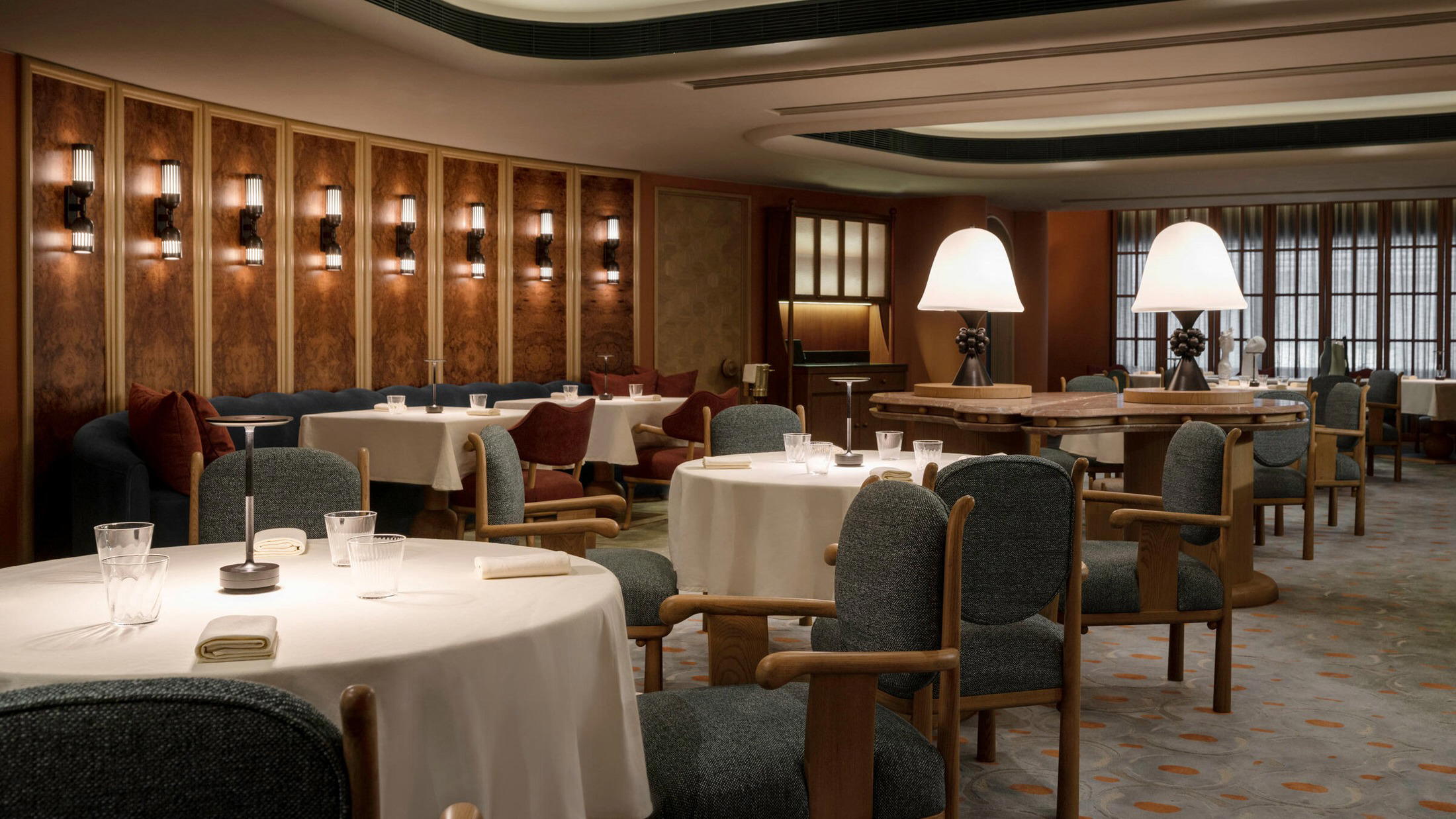
A Southern Italian Argument, Made in Central
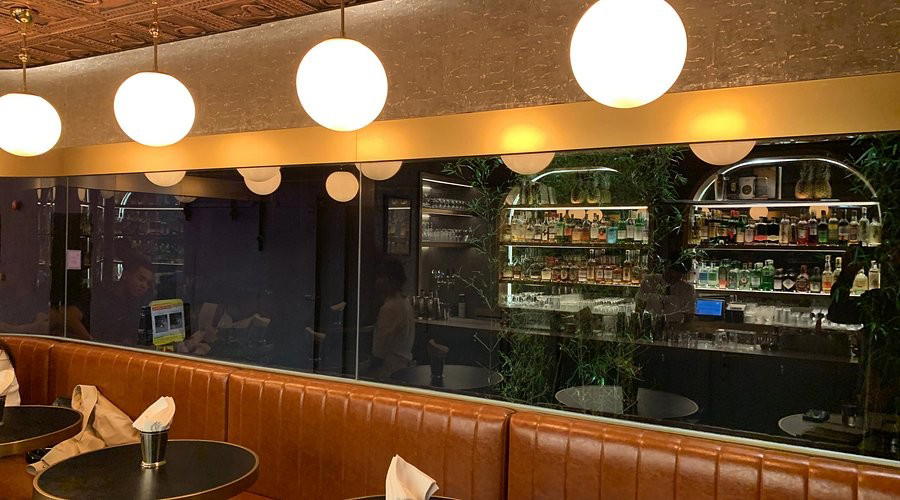
Duddell Street occupies a particular position in Hong Kong's dining geography. The short stretch of Central connecting Queen's Road to Ice House Street has accumulated a density of serious restaurants that few blocks in the city can match, and the addresses along it tend toward the deliberate and formal. Estro, on the second floor of number one, sits inside that concentration but pulls in a different direction from the Cantonese and French-leaning rooms that dominate the tier. The room itself announces the programme before a dish arrives: a wine cellar stocked with thousands of bottles occupies a dramatic visual axis, establishing from the entrance that this is a place where the liquid and the food are expected to carry equal weight.
That framing matters because it places Estro accurately within Hong Kong's competitive restaurant structure. At the $$$$-tier in Central, the comparable set includes rooms such as 8½ Otto e Mezzo Bombana, which has held the Italian-fine-dining position in this city for well over a decade and operates with a different register, leaning toward the classic and the ceremonial. Estro is younger, opened in 2021, and the culinary argument it makes is more specifically regional: Neapolitan cooking examined through modern technique, not Italian cuisine as a general proposition.
What Neapolitan Cooking Means at This Level
Regional Italian cuisine has always existed in tension with the broad international shorthand of "Italian food." In Hong Kong, where Italian restaurants span everything from casual pasta to multi-starred tasting menus, the question of what a specifically Neapolitan kitchen does at the fine-dining tier is not a trivial one. The answer Estro provides has been consistent since opening: dishes built on the ingredients, textures, and flavour logic of southern Italy, but approached with a technical vocabulary that reflects serious contemporary kitchen training.
The menu uses storytelling as a structural device, connecting individual dishes to ingredients, regions within southern Italy, and specific historical reference points. This is not unusual at the fine-dining tier globally, where narrative frameworks have become standard, but the content of the narrative matters. At venues like Aponiente in southern Spain, or Lazy Bear in San Francisco, the narrative is built into the service format itself. Estro deploys it primarily through the menu and the progression of courses, letting the food carry the argument.
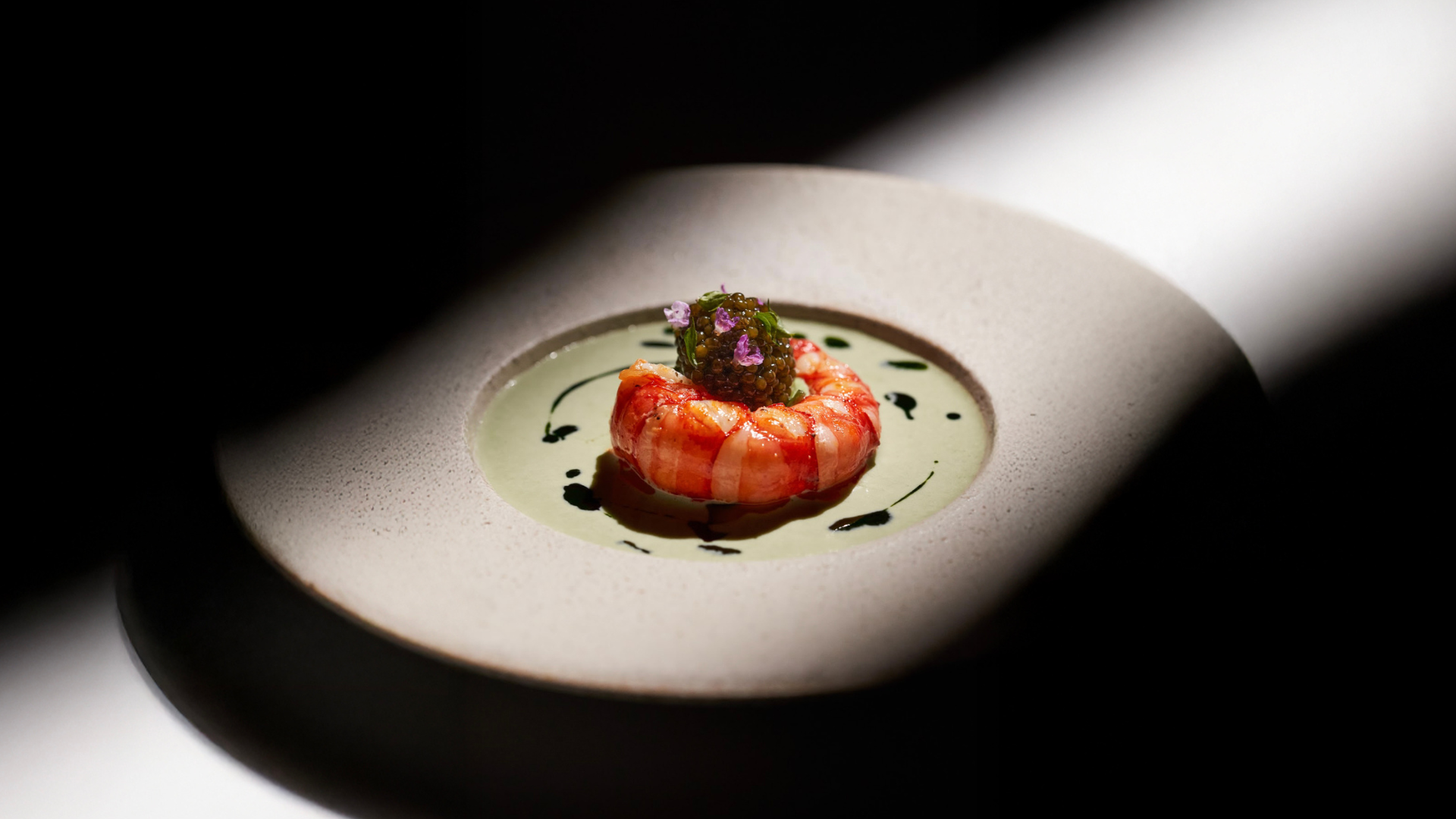
Documented dishes include fettucce with langoustine and basil, and red prawn with coral panna cotta topped with caviar. Handmade bottoni pasta stuffed with parmesan emulsion and finished with saffron glaze appears in the awards record as a representative construction. These are not dishes that describe themselves easily in a single phrase; they require a kitchen that understands both the classical source material and the technical means to transform it without losing the regional signature.
Chef Antimo Maria Merone and the Credentials Behind the Menu
In a city where Italian restaurants at this level have historically been led by non-Italian chefs working with Italian material, or by broadly trained Italians whose cooking covers the peninsula's full range, a Neapolitan-born chef running a Neapolitan-focused menu carries specific credentialing weight. Chef Antimo Maria Merone is the native head chef referenced in the awards record, and that nativity functions less as biography and more as a quality signal within the scene's competitive logic.
The trajectory from opening in 2021 to a Michelin star by 2024, a Black Pearl Diamond in 2025, and a ranking of #32 on Asia's 50 Best in 2025 is a compressed and accelerating one. For context, that Asia's 50 Best position places Estro above the large majority of fine-dining rooms in Hong Kong and across the continent. Opinionated About Dining, which weights its rankings heavily on insider-critic consensus, moved Estro from #143 in its Asia ranking in 2023 to #67 in 2025, a trajectory that reflects sustained critical recalibration rather than a single year's attention. La Liste, which aggregates restaurant criticism globally, gave the restaurant 84 points in its 2026 edition.
The chef's table format, available as an option within the booking structure, provides a more direct engagement with the kitchen's logic. In the wider context of fine dining, the chef's table has become a differentiated product at venues ranging from Atomix in New York to Alain Ducasse at Louis XV in Monte Carlo. At Estro, it represents direct access to the kitchen's perspective rather than simply a premium seat.
The Wine Programme as a Parallel Argument
Classification of Estro as both a restaurant and a wine bar is not incidental. A wine programme built around a cellar of thousands of bottles, in a room where that cellar is architecturally present, positions the restaurant in a different bracket from venues where wine is a supporting element. The Italian wine canon is deep enough, and the regional specificity of southern Italian producers distinct enough, that a serious programme focused there would be a different proposition from one covering Italy broadly or from the French-dominated cellars that anchor rooms like Caprice or Amber.
For wine-bar and Italian-focused comparisons at a different scale and context, venues such as Enomania in Copenhagen demonstrate how Italian wine programming can anchor a room's identity independently of geography. Estro's approach in Hong Kong is the higher-formality version of that logic, where the cellar functions as both a practical resource and a statement of intent about what the dining experience is meant to be.
Where Estro Sits in Hong Kong's Fine Dining Structure
Hong Kong's fine-dining tier has always been weighted toward French and Cantonese cooking, with rooms like Ta Vie and Forum representing the Japanese-French fusion and traditional Cantonese positions respectively. Italian cooking at this tier has existed primarily through the Otto e Mezzo model, which is long-established and peninsula-wide in its reference points. Estro's arrival with a specifically regional Neapolitan focus introduced a more granular Italian argument into a market that had not seen it at this price and recognition level.
Venues like Alléno Paris au Pavillon Ledoyen or Le Bernardin in New York define the international tier against which such comparative rankings are calibrated. Being placed in that conversation at all from a Hong Kong address reflects something about both the quality of the cooking and the appetite of the international critical community for Italian-regional fine dining outside Europe.
Planning Your Visit
Estro is located on the second floor at 1 Duddell Street, Central. The restaurant operates Tuesday through Saturday, with lunch service from noon to 3pm and dinner from 6:30pm to 11pm. The kitchen is closed on Sundays and Mondays. Diners choose between a six-course and an eight-course menu; the chef's table is available as a distinct format for those who want a closer view of the kitchen's work. Booking ahead is advisable, particularly for weekend dinner. The price tier sits at $$$$.
What Should I Order at Estro?
Estro does not operate à la carte in the conventional sense; the visit is structured around a six- or eight-course tasting menu, so the ordering decision is primarily about depth rather than individual dishes. The eight-course format gives the fullest range of Chef Merone's Neapolitan references, including the handmade pasta constructions and the seafood preparations built on southern Italian prawn and langoustine. The six-course option covers the same kitchen logic with less extension. For those who want one direct engagement with the cooking, the chef's table format layers in a different dimension. The wine programme, given the cellar's scale and the wine-bar classification, warrants serious attention alongside the food; pairing options will cover southern Italian producers.
Awards and Standing
Comparable venues nearby, for context on price, style, and recognition.
| Venue | Cuisine | Price | Awards | Notes |
|---|---|---|---|---|
| EstroThis venue — the venue you are viewing | Modern Neapolitan Italian | $$$$ | Michelin 1 Star | Not listed |
| Neighborhood | Modern French with Asian Influences | $$$ | Michelin 1 Star | Central |
| Andō | Japanese-Argentinian Fusion | $$$$ | Michelin 1 Star | Central |
| Vea | Modern Chinese-French Fusion | $$$$ | Michelin 1 Star | Central |
| T'ang Court | Three Michelin-Star Cantonese | $$$$ | Michelin 3 Star | Yau Tsim Mong South |
| Forum | High-end Cantonese | $$$$ | Michelin 3 Star | Wan Chai |
Recognition history
Dated appearances from independent guides and award organizations, with the underlying list record or original source where available.
Black Pearl 1 Diamond
Black Pearl
Gambero Rosso 3 Forchette
Gambero Rosso
La Liste Top Restaurants
La Liste
Michelin 1 Star
Michelin
Opinionated About Dining Top Restaurants in Asia Ranked #32
Opinionated About Dining
SCMP 100 Top Tables Restaurants
SCMP 100 Top Tables
World's 50 Best Asia's Best Restaurants #32
World's 50 Best
Black Pearl 1 Diamond
Black Pearl
Michelin 1 Star
Michelin
Opinionated About Dining Top Restaurants in Asia Ranked #67
Opinionated About Dining
Opinionated About Dining Casual in Europe Ranked #751
Opinionated About Dining
Tatler Listed in Best Restaurants Asia-Pacific
Tatler
Tatler Best 20 Restaurants Hong Kong
Tatler
The Best Chef One Knife
The Best Chef
World's 50 Best Asia's Best Restaurants #32
World's 50 Best
Michelin 1 Star
Michelin
Opinionated About Dining Top Restaurants in Asia Ranked #102
Opinionated About Dining
Opinionated About Dining Casual in Europe Ranked #625
Opinionated About Dining
Opinionated About Dining Top Restaurants in Asia Ranked #143
Opinionated About Dining
Continue exploring
More in Hong Kong
Restaurants in Hong Kong
Browse all →
Bars in Hong Kong
Browse all →
At a Glance
- Elegant
- Sophisticated
- Modern
- Intimate
- Business Dinner
- Date Night
- Special Occasion
- Chefs Counter
- Open Kitchen
- Extensive Wine List
- Sommelier Led
Current opening hours
- Monday
- Closed
- Tuesday
- 12–3 PM, 6:30–11 PM
- Wednesday
- 12–3 PM, 6:30–11 PM
- Thursday
- 12–3 PM, 6:30–11 PM
- Friday
- 12–3 PM, 6:30–11 PM
- Saturday
- 12–3 PM, 6:30–11 PM
- Sunday
- Closed
Hours can change for holidays and private events. Last verified .
Elegant and sophisticated with refined interiors designed by André Fu Studio, offering a stylish and relaxed fine dining atmosphere.