

Kobe’s serious sushi tier is smaller and quieter than Tokyo’s, which makes Sushi Ueda a useful marker for how far Kansai counter culture extends beyond Osaka and Kyoto. The eight-seat format, Masamichi Ueda’s named chef presence, and repeated Tabelog Bronze recognition place it in a disciplined, reservation-only category rather than a casual Motomachi stop.
Pearl is the En Primeur Club membership app — saves, bookings, and concierge access live there. Same editors, same standards.
- Address
- Japan, 〒650-0004 Hyogo, Kobe, Chuo Ward, Nakayamatedori, 3 Chome−2−1 112
- Phone
- +81 78-515-6655
- Website
- tabelog.com
 Saves & bookings on Pearl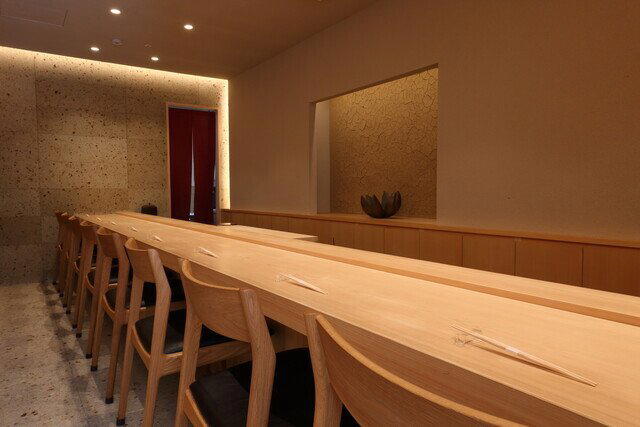
Approaching a serious sushi counter in Kobe is quieter than in Ginza or Kitashinchi. The city needs no scarcity theatre. Around Motomachi and Nakayamatedori, the rhythm is compact rooms, fixed starts, regulars who know counter etiquette, and sourcing shaped by Hyogo’s position between the Seto Inland Sea and the Japan Sea. Sushi Ueda fits that register: an eight-seat room defined by concentration, not spectacle.
Kobe is often read through beef, port-city hybridity, and old foreign settlement geography, but its sushi scene rewards different attention. The strongest counters compete not by scale, but through sourcing discipline, rice handling, pacing, and the small social choreography of a counter. In eight seats, weak timing has nowhere to hide, and a chef’s training is the meal’s operating system, not mere backstory.
Kobe sushi at a counter built for apprenticeship discipline
Apprenticeship matters in Japanese sushi because skill is transmitted through repetition long before it appears as personality. Masamichi Ueda’s name gives the counter an identifiable hand, but the better lens is shokunin practice: years of watching, correcting, and repeating until gesture looks plain. At this level, the guest is not buying novelty. Value sits in calibration: seafood cutting, rice temperature and seasoning, and rhythm that avoids turning technique into theatre.
That explains why small Kansai sushi counters can feel more severe than outsiders expect. The room is not built for social sprawl. Conversation follows service; photography, perfume, smoke, and loose formality can disrupt a format based on close physical distance. This is not stiffness for its own sake. Sushi is unusually exposed: a few seconds too long, too much scent in the air, or a distracted counter can change the meal. Etiquette protects the craft.
Sushi Ueda’s recognition gives that craft a public benchmark. The restaurant holds Tabelog Award Bronze recognition for 2026 and was also listed for Bronze in the preceding run from 2022 through 2025. It was selected for Tabelog Sushi WEST “Tabelog 100” in 2025, with earlier selections in 2022 and 2021. Those signals matter because Tabelog’s sushi audience is unusually granular; a strong score in Japan’s counter-sushi category usually reflects repeated diner scrutiny, not one press cycle.
The 2026 Tabelog score of 4.29 places the restaurant in a serious national conversation without making it a Tokyo-style status symbol. In Kobe, the appeal is not simply that a counter has been awarded; it is that the city’s sushi culture can produce a room comfortable within the western Japan selection while keeping a local sourcing identity. Hyogo seafood, drawn from two coastal systems, gives the category a broader base than many visitors assume.
What the format says about Kobe's serious dining culture
Kobe’s luxury dining often divides between beef-focused restaurants, French-leaning rooms shaped by the city’s international history, and Japanese counters with fewer visual cues. For beef, the city ranges from Aburi Niku Kobo Wakkoku Shinkobe ten to Aburi Niku Kobo Wakkoqu Kitano Sakamoto Ten. Sushi sits differently. It asks for less display and more trust in sequence, silence, and the counter’s internal standards.
Comparisons need care. Out-of-metro counters such as Takahashi Kentaro, Sushi Murakami Jiro, Sushi Oga, Yunagibashi Takoyasu, and Sakamoto Sushi help define the broader Japanese sushi spectrum, but not the Kobe experience by themselves. A Kobe counter must be read through the city’s tempo: less frenzy than Tokyo, less culinary tourism pressure than Kyoto, and a neighborhood structure where a serious room can sit inside ordinary urban circulation rather than destination architecture.
The compactness changes the guest decision. A seat here is not for diners wanting a long, flexible evening with multiple side orders, or anyone treating sushi as a casual add-on before bar-hopping. It is for a diner prepared to submit to sequence. That is not forbidding; it is precise. The question is not whether the room is fancy, but whether the guest wants controlled intimacy where the chef’s hand, rice, and fish are the entire argument.
Within Kobe, that style sits alongside a wider food map. Coffee culture has old-city gravity at Akaneya Coffee Ten, while smaller restaurants like Akari and Ali's Halal Kitchen show how varied the city becomes beyond beef. For a broader read, use our full Kobe restaurants guide, then build the trip through our full Kobe hotels guide, our full Kobe bars guide, our full Kobe wineries guide, and our full Kobe experiences guide.
How to place it within a wider Japan itinerary
For travelers moving through Japan, the strategic question is whether Kobe should carry a sushi booking or be reserved for beef and port-city dining. Sushi Ueda makes the case for giving Kobe a serious counter slot, especially for diners who know the Tokyo template and want a western Japan expression with a tighter room and quieter mood. It is not a substitute for every major-market sushi experience; it is a different reading of the same tradition.
The price tier also signals intent. This is not an entry point into sushi culture, nor is it built for diners testing the category casually. It belongs with other high-commitment Japanese meals where booking, etiquette, and spend demand focus. Travelers building a longer route can compare the decision with sushi and Japanese dining stops elsewhere, from 3110, Sushi in Tokyo and AKA to SHIRO, Sushi in Osaka to regional contrasts such as -Grilled beef Sukiyaki- KAMAKURA TANUKIAN 鎌倉 たぬき庵 in Kamakura,. 鮪と炭火焼き うお炭 秋葉原店 in Tokyo,.cafe in Osaka,.know in Kumamoto, (Shoku) Vietnam in Kawasaki, and [Curry Senmon Ten] Maruyama Kyoju. in Sapporo.
The editorial verdict is simple: choose this counter for Kobe sushi when precision, quiet, and apprenticeship-led technique matter more than a scene-heavy dining room. The repeated Tabelog Bronze run and Sushi WEST selections give the external validation; the eight-seat format explains the experience. It is for diners who understand that restraint, in sushi, is not minimalism. It is pressure applied to every small decision.
Side-by-Side Snapshot
Comparable venues by cuisine and price in the same metro.
| Venue | Cuisine | Price | Awards | Notes |
|---|---|---|---|---|
| Sushi UedaThis venue — the venue you are viewing | Traditional Kobe Omakase Sushi | $$$$ | ||
| Kobe beef Hana-Houbi | Teppanyaki Kobe Beef Steakhouse | $$$$ | , | Chūō |
| Kobe Beef Steak Ishida. Ikutashinmichi-shop | Premium Kobe Beef Teppanyaki | $$$$ | , | Chūō |
| Aragawa | Kobe Beef Steakhouse | $$$$ | , | Chuo-ku |
| Kobe Kikusui Teppanyaki Restaurant | Teppanyaki Kobe Beef Steakhouse | $$$$ | , | Chūō |
| Kobe Beef Steak Sakura | Premium Kobe Beef Teppanyaki | $$$$ | , | Chūō |
Continue exploring
More in Kobe
Restaurants in Kobe
Browse all →

Bars in Kobe
Browse all →



Hotels in Kobe
Browse all →


At a Glance
- Elegant
- Sophisticated
- Intimate
- Quiet
- Date Night
- Special Occasion
- Business Dinner
- Chefs Counter
- Sake Program
- Local Sourcing
- Sustainable Seafood
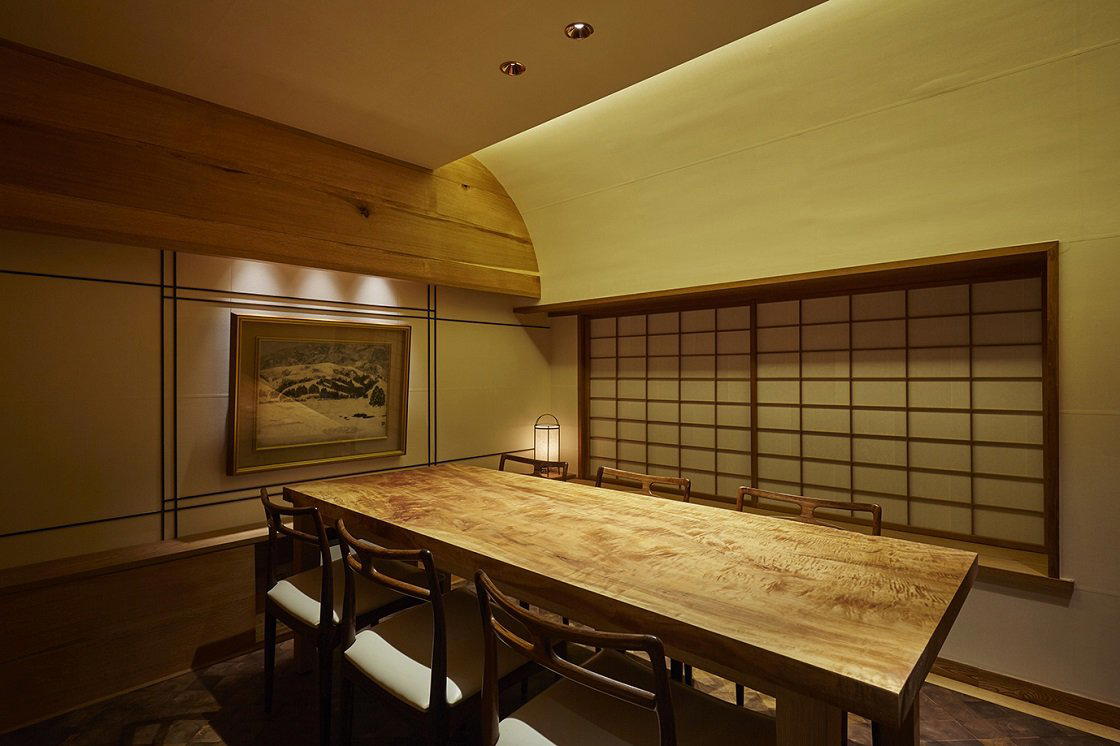
Serene and traditional Japanese atmosphere with a focus on the sushi counter experience and meticulous presentation.