Tabelog Bronze #369
Our verdict
Sushi Riku is an eight-seat Edomae counter in Hiroo, Tokyo, operating reservation-only with dinner averaging JPY 40,000–49,999. A 2026 Tabelog Award Bronze winner with a 4.37 score, it holds a place in the Tabelog Sushi Tokyo 100 for 2025. The chef trained under Hachiro Mizutani and at Nihon Kakushimachi Sugita, two reference points in the Edomae lineage.

Pearl is the En Primeur Club membership app, where members save venues, book tables and use the concierge.
The menu
What to order
- Sardine rolls
- Shijimi clam chawanmushi
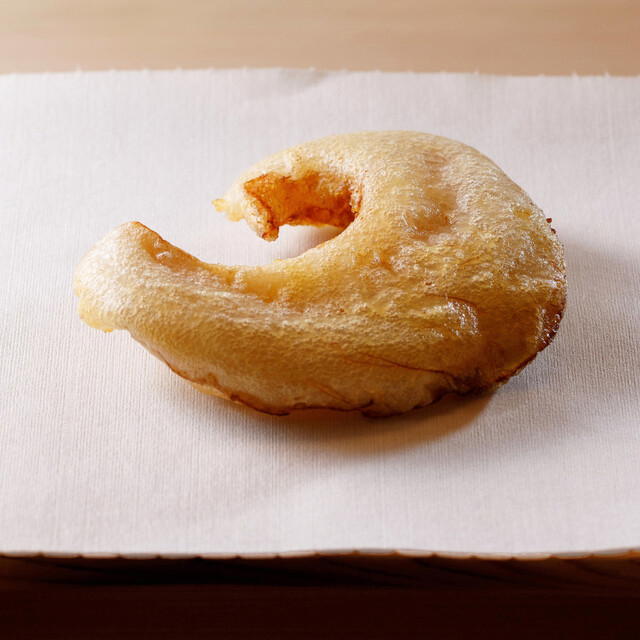
- Shark fin tempura
The Edomae Counter and the Surrender of Choice
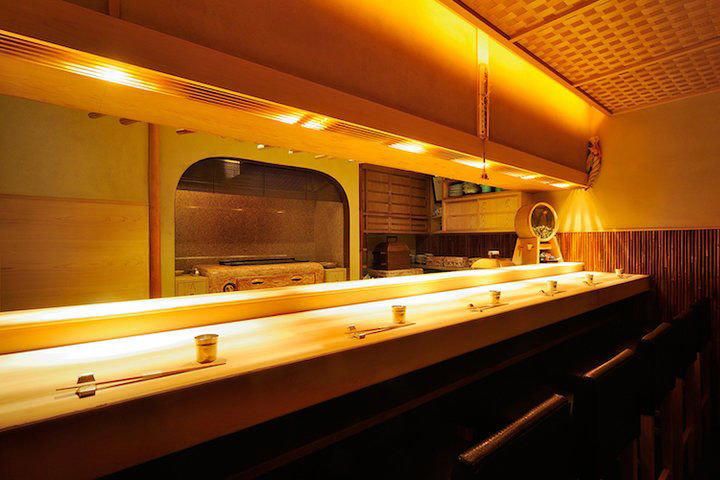
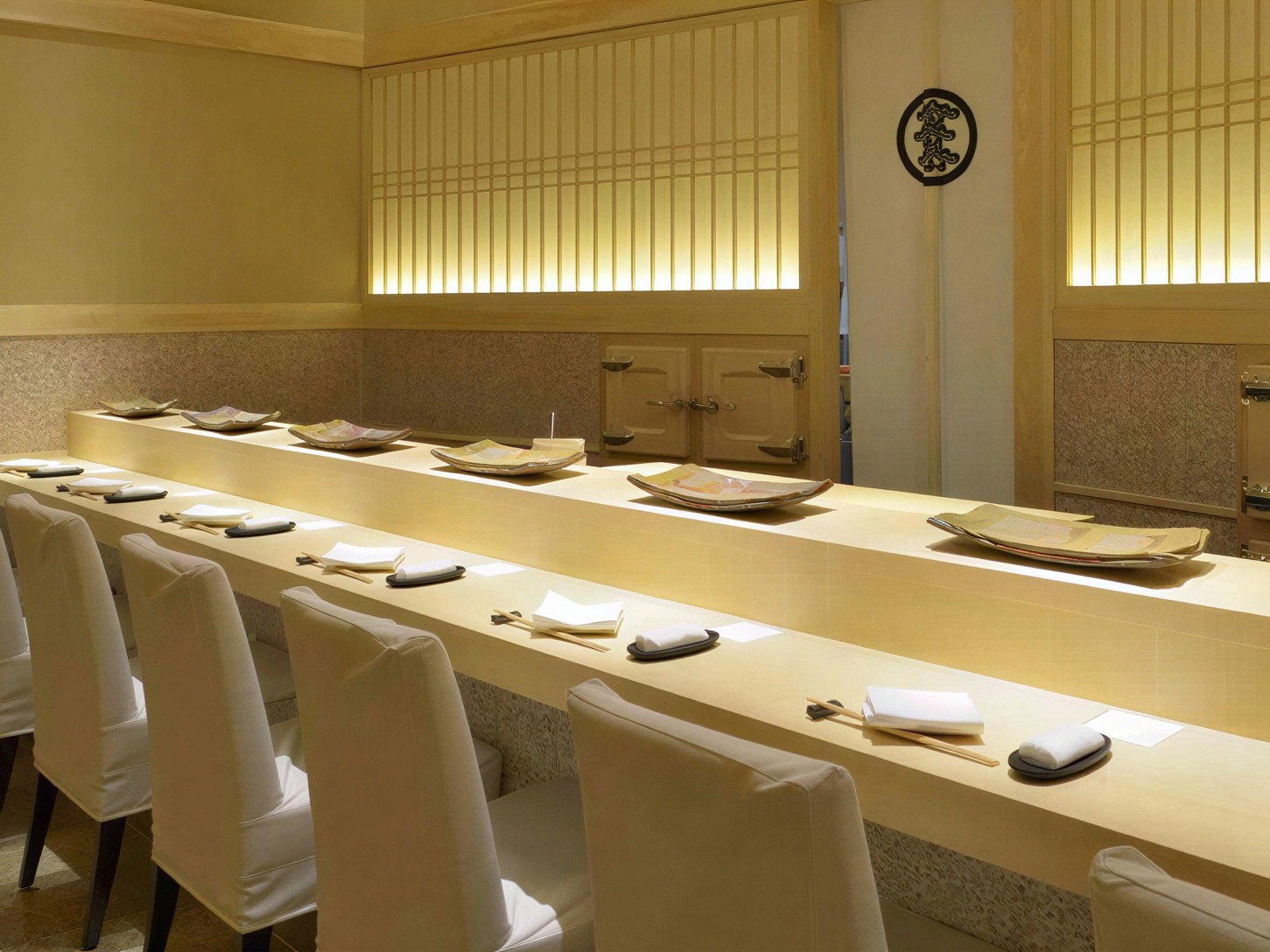
There is a particular kind of trust built into the omakase format that distinguishes it from any other premium dining contract. The guest pays in full, often weeks in advance, before knowing what will be served. The chef controls sequence, temperature, ratio, and pace. No menu changes hands. At Tokyo's tighter counters, seating eight or fewer, this arrangement is not an affectation but a structural requirement: the chef cannot cook to order for two separate menus across a single session. The format forces coherence. Sushi Riku, operating from a ground-floor space in Hiroo's Shibuya ward, works inside exactly this tradition. Eight seats, counter-only, reservation mandatory, dinner running from two seatings at 17:00 and 20:00.
The Edomae tradition that Sushi Riku references has a long and specific history. Originating in Edo-period Tokyo, when nigiri was assembled and sold quickly near what is now Tokyo Bay, the style depends on the preparation of fish through curing, marinating, and aging rather than on serving it purely raw. Vinegared rice, pressed into a loose, warm mound, is as technically demanding as the fish placed on it. The rice temperature, acidity, and grain integrity are variables that can undermine or complete a piece of nigiri. Within Edomae, the counter functions as the stage for all of this, and the chef's training lineage is one of the few reliable signals a guest can use to calibrate expectations before arrival.
Lineage as Evidence
In Tokyo's premium sushi tier, chef credentials operate as a shorthand for the school of thought behind the rice seasoning, the aging approach, and the style of neta (topping) preparation. Sushi Riku's chef, Riku Toda, trained under Hachiro Mizutani, one of the most referenced figures in modern Edomae, and later worked at Nihon Kakushimachi Sugita, a counter with its own standing in the city's sushi hierarchy. These two references place Riku within a traceable lineage that connects directly to the classical Edomae method, rather than to the fusion-forward or produce-first variants that have proliferated in Tokyo's dining scene over the past decade.
That lineage matters not because provenance is a guarantee of quality, but because it signals the operative constraints. A counter emerging from the Mizutani tradition is unlikely to serve elaborately plated courses or ingredient-led departures. The emphasis stays on the relationship between shari and neta, on the discipline of the hand, and on restraint in seasoning. Peer counters in the same lineage include venues like Sushi Kanesaka, where the classical Edomae form is similarly the organising principle.
Hiroo and the Quiet Counter Tier
Hiroo occupies a different position in Tokyo's sushi geography than Ginza or Minami-Aoyama. The neighbourhood draws a residential and diplomatic crowd rather than a tourist-heavy one, and its restaurant culture reflects that: smaller venues, lower visibility, and a guest profile that skews toward regulars and serious eaters rather than occasion diners looking for spectacle. This suits the omakase format well. Sushi Riku sits in the ARISTO Hiroo building on 5-chome, three minutes on foot from Hiroo Station, and its address signals something about how the counter wants to be found: by people who are looking for it specifically, not by those passing through.
The neighbourhood already carries sushi credibility. Hiroo Ishizaka operates nearby and represents the same local tendency toward counter dining with a focus on ingredients and technique over theatrics. For visitors building a broader Tokyo itinerary, Edomae Sushi Hanabusa offers another point of comparison in the classical style.
What the Awards Signal
Sushi Riku holds a 2026 Tabelog Award Bronze, with a score of 4.37, and was selected for the Tabelog Sushi Tokyo 100 in 2025. Tabelog's scoring system is crowd-sourced but weighted toward frequency and recency of high-scoring reviews, making a 4.37 a statistically difficult figure to reach and sustain at a counter open only for dinner, closed Sundays and Mondays, with eight seats per session. The Bronze award and the 100-leading designation together confirm that the counter has attracted a consistent body of serious reviewers, not just a single spike of early enthusiasm.
The score of 4.37 positions it meaningfully within that tier. Counters like Harutaka and Sukiyabashi Jiro Roppongiten operate in the same award-recognition stratum, and understanding the full competitive field helps a guest decide where Sushi Riku sits relative to other options at similar price points.
Pricing and the Omakase Contract
Dinner at Sushi Riku averages JPY 40,000–49,999, with some review-based data suggesting evenings in the JPY 30,000–39,999 range depending on the session. At this price, the counter sits inside the bracket where comparison to Michelin-recognised peers is reasonable. The omakase contract at this tier implies no à la carte options, no substitutions, and a meal whose length and pace are determined by the chef. The maximum party size is four, meaning solo diners and couples are the dominant configuration. Groups larger than four cannot be seated together, which shapes the kind of occasion this counter suits.
The payment structure accepts major credit cards (Visa, Mastercard, JCB, Amex) but not electronic money or QR code payments, a practical detail worth noting for visitors accustomed to Japan's expanding cashless options outside the premium restaurant tier. No private rooms are available, and the counter format means there is limited acoustic separation between seated guests.
For those planning a broader Japan trip around high-end dining, it is worth noting that the omakase format has regional variations beyond Tokyo. HAJIME in Osaka, Gion Sasaki in Kyoto, and Goh in Fukuoka each represent the omakase structure applied to different cuisines and regional ingredients. Akordu in Nara applies similar chef-led tasting formats to European cooking. For those extending the concept to other Asian cities, Sushi Shikon in Hong Kong and Shoukouwa in Singapore both represent Edomae-trained counters operating outside Japan.
Planning Your Visit
Sushi Riku operates dinner-only, with seatings from 17:00 and 20:00. The counter is closed Sundays and Mondays. Reservations are required; walk-ins are not available given the eight-seat format and the advance preparation that omakase service demands. The counter runs non-smoking throughout.
For those building a broader Tokyo itinerary, EP Club's guides cover the full range: our full Tokyo restaurants guide, our full Tokyo hotels guide, our full Tokyo bars guide, our full Tokyo wineries guide, and our full Tokyo experiences guide provide neighbourhood-level context across every category. For those extending the Japan itinerary beyond Tokyo, 1000 in Yokohama and 6 in Okinawa offer further regional reference points.
Quick reference: Sushi Riku, Hiroo, Shibuya, Tokyo. Eight-seat Edomae counter. Dinner only, seatings 17:00 and 20:00. Closed Sunday and Monday. Reservation required. Average spend JPY 40,000–49,999. Three minutes from Hiroo Station (Hibiya Line). Tabelog Award 2026 Bronze, score 4.37.
What Should I Order at Sushi Riku?
The question does not apply at this counter in a conventional sense. Sushi Riku operates as omakase only: the sequence is set by the chef, not selected by the guest. This is the foundational contract of the format, and it reflects the Edomae tradition directly. The chef determines which fish is at peak condition that evening, in what order the pieces should be served, and how the session moves from lighter to richer preparations. Guests should arrive without a list of requested items. The appropriate posture is to communicate dietary restrictions or allergies at the time of booking, not on the night. The counter's emphasis, per its own positioning, is on the shari-neta relationship and the classical Edomae approach drawn from the chef's training under Hachiro Mizutani and his time at Nihon Kakushimachi Sugita. Sake and wine are both available, with the counter described as attentive to both; the drinks list is part of the evening rather than an afterthought.
Frequently asked questions
What's sushi riku known for in terms of accolades?
sushi riku has received recognition including:
How do I find sushi riku?
sushi riku is located at Japan, 〒150-0012 Tokyo, Shibuya, Hiroo, 5 Chome−13−6 ARISTO広尾 1F, Tokyo.
What should I order at sushi riku?
Sushi Riku operates as omakase only, so the sequence is determined by the chef rather than the guest. The kitchen's stated focus is Edomae-style nigiri, with an emphasis on sourcing and fish preparation. At JPY 40,000–49,999 per person, the full counter progression is what you are booking, there is no à la carte alternative.
Is sushi riku focused on a specific cuisine style?
What price level is sushi riku?
Pricing at sushi riku is listed as JPY 40,000 - JPY 49,999.
Pricing, Compared
Comparable venues nearby, for context on price, style, and recognition.
| Venue | Cuisine | Price | Awards | Notes |
|---|---|---|---|---|
| sushi rikuThis venue (the venue you are viewing) | Edomae Omakase | $300–500 | Tabelog Bronze #369 | Not listed |
| Hoshinoya Restaurant | Modern Japanese Kaiseki with French Techniques | $150–200 | Not listed | Chiyoda, Modern Japanese Kaiseki with French Techniques |
| Yachiyo | Japanese Kaiseki | $100–150 | Not listed | Marunouchi, Traditional Japanese Kaiseki |
| Yakatabune Izanagi | Wagyu Omakase on Tokyo Bay Yakatabune | $500+ | Conde Nast Hot List Restaurants | Shinagawa, Wagyu Omakase on Tokyo Bay Yakatabune |
| Nikusho Horikoshi | Japanese | Not listed | Not listed | Minato, Premium Yakiniku Omakase |
| Shunbou | Seasonal Japanese Kaiseki and Kappo | $200–300 | Not listed | Minato, Seasonal Japanese Kaiseki and Kappo |
Recognition history
Dated appearances from independent guides and award organizations, with the underlying list record or original source where available.
Opinionated About Dining Top Restaurants in Japan Recommended
Opinionated About Dining
Tabelog Bronze #369
Tabelog
Full recognition history (3 entries)
Tabelog 100 #67 · No. 67
Tabelog · Tabelog 100 - Sushi - TOKYO - 2025