Our verdict
Berlin's supper club format occupies a different tier from the city's Michelin-tracked fine dining circuit. The Berliner Zimmer Dinner Party by GAiETY operates on Motzstraße in Schöneberg, bringing the private-apartment dining tradition into a neighbourhood defined by queer culture and independent creative life. For evenings when a tasting menu counter feels too formal and a restaurant too anonymous, this format offers a third register.

Pearl is the En Primeur Club membership app — saves, bookings, and concierge access live there. Same editors, same standards.
- Address
- Motzstraße, 00000 Berlin, Germany
- Website
- opentable.com
- Directions
- Get directions
- Booking
- Book on OpenTable
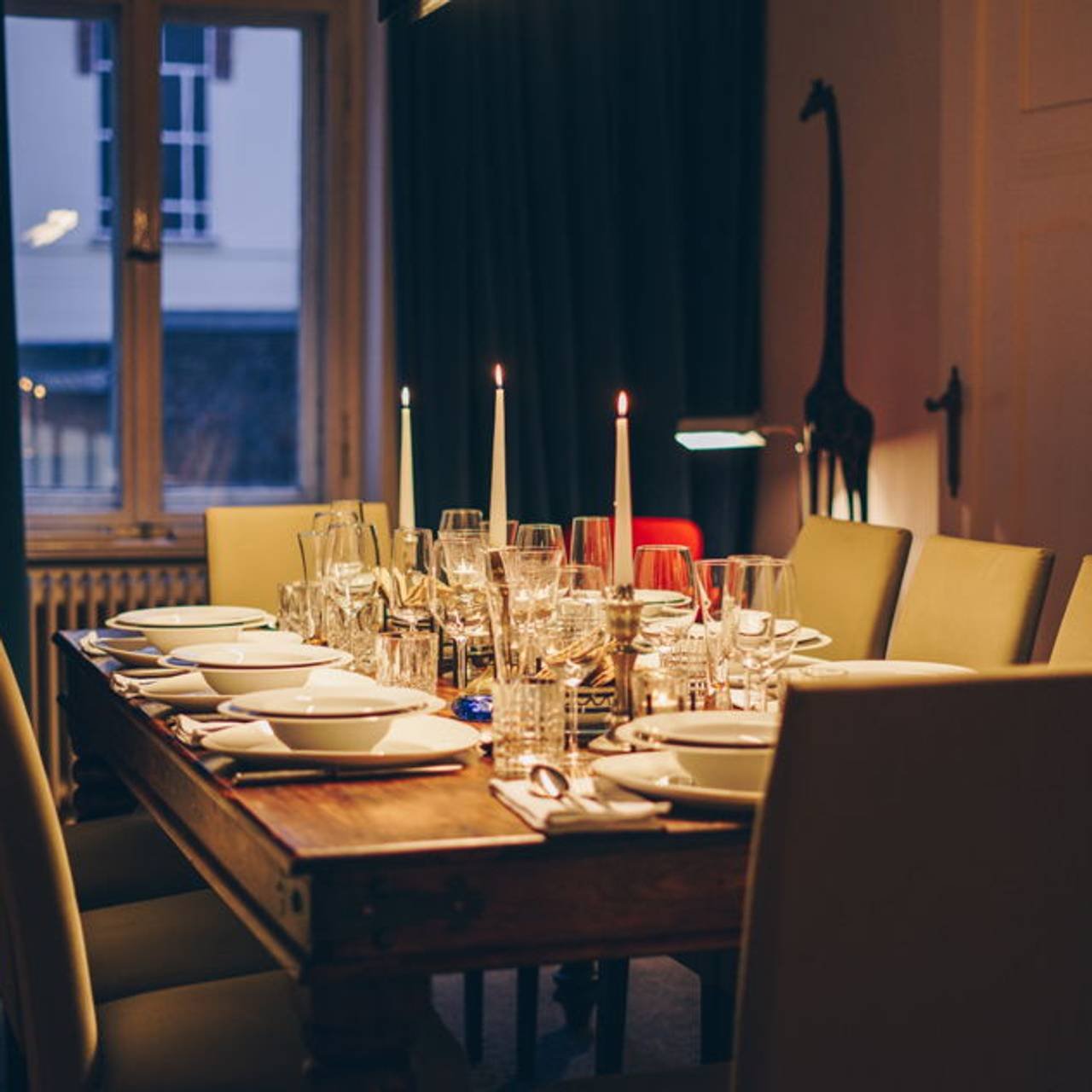
Schöneberg After Dark: How Berlin's Supper Club Format Reads at Night
The supper club tradition in European cities has always operated in the gap between restaurant and private household. In Berlin, that gap is unusually wide. The city's formal dining tier, which includes counters like Rutz, Nobelhart & Schmutzig, and FACIL, operates at €€€€ price points with fixed tasting structures, chef-led narratives, and booking windows that can stretch months out. Below that, the city's casual neighbourhood scene is dense and cheap. What sits between is a category defined less by price than by format: the hosted dinner, held in someone's apartment or a recurring private space, where the social contract resembles a dinner party more than a restaurant transaction.
The Berliner Zimmer Dinner Party by GAiETY works within that tradition, operating out of Motzstraße in Schöneberg. The address matters culturally. Schöneberg's queer identity, established over decades and rooted in the area around Motzstraße and Nollendorfplatz, means the neighbourhood has long supported communal social formats that sidestep conventional hospitality hierarchies. A supper club here reads differently than one in Mitte or Prenzlauer Berg — the social environment already expects gatherings that mix strangers with regulars and resist the conventions of seated service.
Evening vs. Daytime: Why the Dinner Format Is the Only Format That Makes Sense Here
Editorial angle of lunch versus dinner has particular relevance to the supper club category. Unlike a brasserie or a bistro, where a daytime service might offer abridged menus and lower prices, the private-dining and supper club format is structurally an evening event. Lunch service, where it exists in comparable formats elsewhere in Europe, tends to function as a one-off or occasional offering rather than a parallel programme. The entire premise — arriving at a domestic or semi-domestic space, sharing a meal with strangers across a set table, with wine poured by a host, depends on the rhythms of an evening. Daylight undermines the staging.
This contrasts with Berlin's Michelin-tier counters, where lunch sometimes offers the stronger value proposition. At places like CODA Dessert Dining, the evening is the designed experience. At the supper club level, the same logic applies, but for different reasons: the format is theatrical without being a theatre, and that theatricality depends on the hour. For travellers whose instinct is to book fine dining at lunch to manage costs, the supper club format asks for a different decision. The evening is the product.
Where the GAiETY Format Sits in the Berlin Private Dining Tier
Berlin's premium dining tier is primarily tracked through Michelin and the 50 Best system, which rewards chef-driven tasting menus at permanent addresses. The supper club category sits outside that framework almost entirely. Formats like the Berliner Zimmer Dinner Party are closer, structurally, to the hosted experiences found in cities like London or Copenhagen, where low-capacity private dining has developed a distinct following among travellers who have already covered the Michelin circuit and want a different register of evening.
Germany's wider restaurant scene, for context, includes some of the country's most technically ambitious kitchens at addresses well outside Berlin: Aqua in Wolfsburg, Schwarzwaldstube in Baiersbronn, Vendôme in Bergisch Gladbach, Victor's Fine Dining by Christian Bau in Perl, and Waldhotel Sonnora in Dreis. Within Berlin itself, the formal fine dining circuit is smaller than the city's global reputation might suggest. That compression makes the supper club tier more relevant, not less, it fills a social and experiential space that the Michelin programme doesn't address.
Comparable formats in other German cities include JAN in Munich and ES:SENZ in Grassau, though both operate as permanent restaurant addresses rather than the rotating hosted model. The international comparison is closer to Atomix in New York, where a small counter, a set menu, and deliberate social intimacy define the experience, or Le Bernardin, where the room's formal structure sets a very different tone. GAiETY's format consciously rejects that formality.
The Schöneberg Address: Neighbourhood Context
Motzstraße runs through the heart of Schöneberg's established LGBTQ+ district. The street and its immediate surroundings have hosted bars, clubs, and community spaces for decades, giving the area a social density that differs from Berlin's nightlife-tourism zones in Friedrichshain or Mitte. A supper club operating here draws on a neighbourhood that already understands communal gathering as a form of culture, not just consumption. The domestic register of the format, apartment setting, shared table, host-led evening, fits the neighbourhood's social logic more naturally than it would in a hotel corridor or a converted warehouse.
For visitors planning a Berlin evening that moves across formats, Schöneberg's bar and café density means the Berliner Zimmer dinner can connect to a wider neighbourhood evening without requiring a taxi to another district. For a broader view of where this experience sits within Berlin's dining offer, see our full Berlin restaurants guide. Programmes like Restaurant Haerlin in Hamburg or Schanz in Piesport represent the formal German dining tradition that GAiETY's format deliberately steps away from, while Bagatelle in Trier offers a third reference point in the French-influenced bistro register. Restaurant Tim Raue remains the clearest example of Berlin's permanent fine dining tier operating with a distinct conceptual identity.
Planning Your Visit
Given the supper club format, practical details differ from a standard restaurant booking. Reservations: Advance booking through GAiETY's event channels is advisable; capacity at hosted dinner formats of this type is typically low, and specific dates book out faster than standing restaurant tables. Dress: No formal code is standard in this category, but the Schöneberg social environment tends toward considered-casual rather than either suits or streetwear extremes. Budget: Location: Motzstraße, Schöneberg, Berlin, well-served by U-Bahn at Nollendorfplatz (U1, U2, U3, U4).
Frequently asked questions
Can Supper Club Berliner Zimmer Dinner Party by GAiETY handle vegetarian requests?
If the event operates on a set menu, dietary requirements including vegetarian preferences are leading communicated directly at the time of booking. In cities like Berlin, where plant-forward cooking has significant cultural traction across all price tiers, hosted dinner formats generally accommodate dietary needs when given adequate notice. Contact GAiETY directly through their event booking channel to confirm the current policy for a specific date.
Is Supper Club Berliner Zimmer Dinner Party by GAiETY good value for money?
Assessed against Berlin's formal tasting-menu tier at €€€€, a supper club price point, if set below that bracket, typically offers strong value for the intimacy and host-led format. The relevant comparison is not a neighbourhood restaurant but a small-counter dinner: you're paying for low capacity, a set evening, and a curated social environment.
How does the GAiETY format differ from a standard pop-up or temporary restaurant?
The Berliner Zimmer Dinner Party by GAiETY operates with the social logic of a recurring hosted dinner rather than a one-time pop-up or a restaurant operating under a temporary licence. That distinction matters practically: the format builds a returning guest community over time, which shapes the room's dynamic differently from a one-off event attended entirely by strangers. In European cities, this recurring supper club model, rooted in a fixed neighbourhood address and a consistent host identity, has more in common with private members' dining than with the pop-up restaurant circuit.
A Minimal comparable set
Comparable venues nearby, for context on price, style, and recognition.
| Venue | Cuisine | Price | Awards | Notes |
|---|---|---|---|---|
| Supper Club Berliner Zimmer Dinner Party by GAiETYThis venue — the venue you are viewing | German Contemporary Fusion with Brazilian Influences | $100–150 | Not listed | Not listed |
| Capital Grill | Upscale Classic Grill | Not listed | Not listed | Mitte, Upscale Classic Grill |
| Restaurant Jolesch | Traditional Austrian with Modern Twists | $30–50 | Not listed | Kreuzberg, Traditional Austrian with Modern Twists |
| Rutz Altes Zollhaus | Modern German | Not listed | Michelin Plate · Star Wine List | Kreuzberg, Modern German |
| Panama | Modern German | Not listed | Not listed | Tiergarten, Modern German |
| HOLIs | Traditional German Home Cooking | $30–50 | Not listed | Rummelsburg, Traditional German Home Cooking |
Continue exploring
More in Berlin
Restaurants in Berlin
Browse all →
Bars in Berlin
Browse all →
Hotels in Berlin
Browse all →

Details
- Lively
- Elegant
- Energetic
- Special Occasion
- Celebration
- Date Night
- Live Music
- Set Menu
Elegant and gorgeous with a lively, fun party vibe including post-dinner dancing.