Black Pearl 1 Diamond
Our verdict
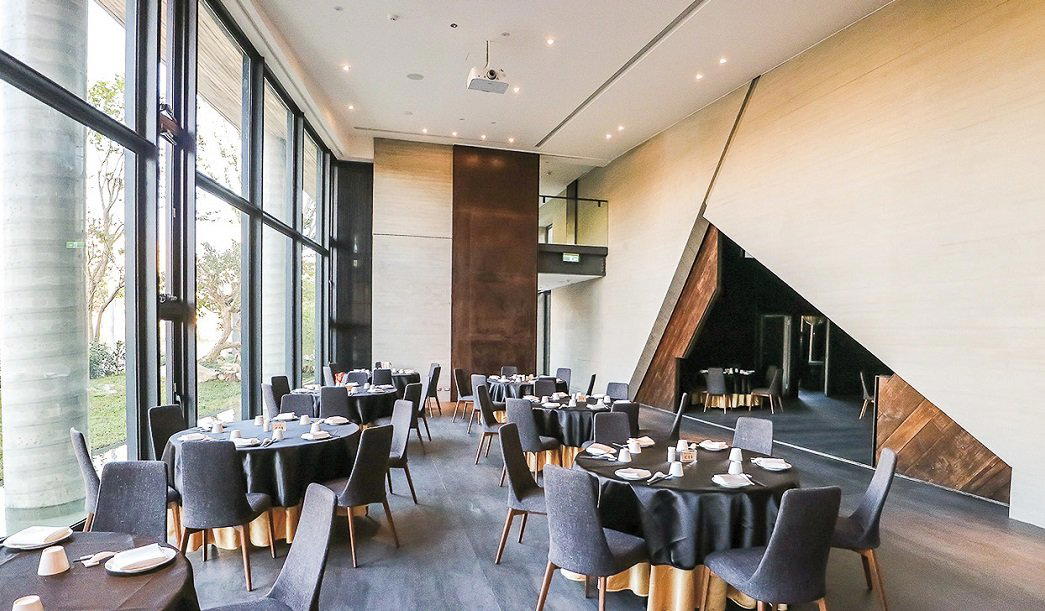
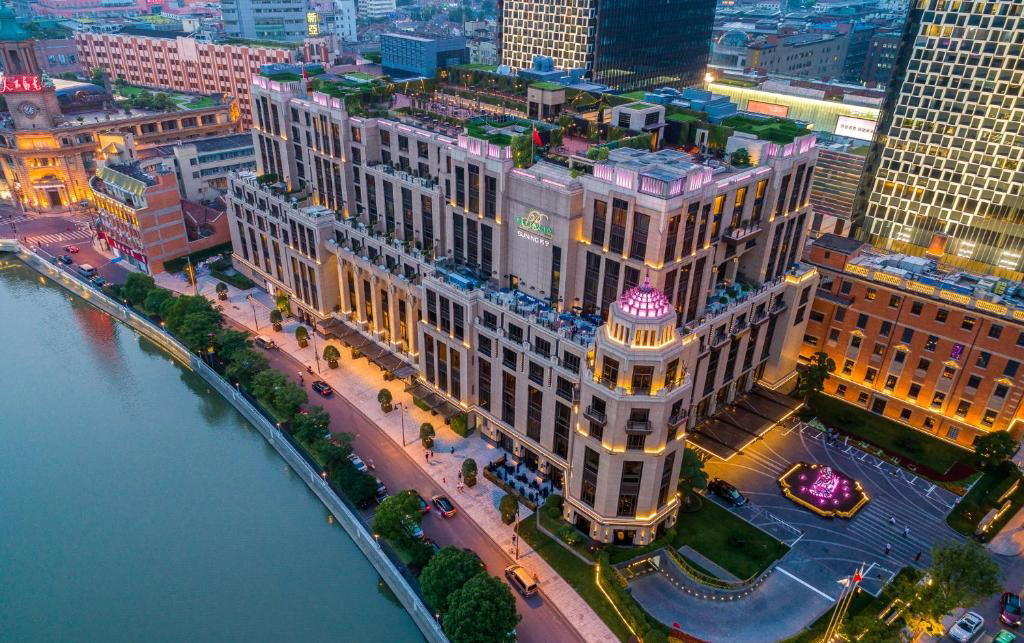
Shanghai Tang Cafe holds a Black Pearl 1 Diamond award (2025), placing it among the city's recognized dining addresses in Yangpu District. Located on the second floor of the Shunda Building on Guoji Road, the restaurant operates outside the French Concession circuit that dominates most premium dining itineraries, making it a distinct point of reference for Shanghai's broader restaurant scene.

Pearl is the En Primeur Club membership app, where members save venues, book tables and use the concierge.
The menu
What to order
- Peking duck
- Crispy duck skin
- Osmanthus cake
A Diamond in Yangpu: Shanghai's Award Recognition Beyond the Concession
Most of Shanghai's decorated dining addresses cluster west of People's Square, in the French Concession or along Jing'an's commercial spine. Yangpu District tells a different story. Historically an industrial and university quarter, it has developed a dining identity that sits at some remove from the polished hotel lobbies and heritage lane-house conversions that define premium addresses elsewhere in the city. Shanghai Tang Cafe, on the second floor of the Shunda Building on Guoji Road, holds a Black Pearl 1 Diamond distinction for 2025, the Chinese restaurant industry's most referenced native recognition system, which positions it squarely in the tier of restaurants that critics and serious diners track when building a Shanghai itinerary.
The Black Pearl Guide, operated by Meituan-Dianping, applies a multi-stage jury process modeled loosely on Western critical frameworks but weighted toward Chinese culinary traditions and regional specificity.
What the Menu Structure Reveals
The editorial angle that most clearly defines Shanghai Tang Cafe's position in the city's dining order is what its menu architecture implies about ambition and audience. Without access to a published menu, certain inferences follow from the venue's context: a second-floor location in a commercial building in Yangpu, away from Shanghai's tourism infrastructure, typically signals a room built for regulars rather than one-time visitors. Restaurants in this position tend to organize their menus around familiar formats that reward repeat engagement, whether that means rotating seasonal preparations, a fixed-format set meal, or a la carte breadth that lets the kitchen demonstrate range over multiple visits.
In Chinese restaurant culture, menu architecture carries specific meaning. A carte that runs deep in cold starters, braised dishes, and wok techniques communicates a classical kitchen lineage. A shorter, edited menu with higher per-dish ambition signals a more contemporary sensibility. The Black Pearl recognition suggests the kitchen has achieved consistent execution at a level that the guide's jury found noteworthy, which itself implies a degree of menu discipline rather than scattershot range. Where Shanghai Tang Cafe sits on that spectrum, between classical depth and edited precision, is the question a first visit would resolve.
For comparison, Shanghai's most architecturally considered Chinese menus operate at different price tiers and in different registers. Fu He Hui structures its vegetarian menu as a single tasting sequence, using menu form as a philosophical statement. 102 House works within Cantonese tradition but organizes its offering around premium ingredient sourcing. Xin Rong Ji on West Nanjing Road uses the Taizhou style as a organizing principle, giving the menu a regional coherence that rewards knowledge of that tradition. Each of these represents a different answer to the question of what a Chinese restaurant's menu is for. Shanghai Tang Cafe, from its Yangpu position, likely answers that question differently from all of them.
Yangpu's Place in the Shanghai Dining Circuit
Understanding where Shanghai Tang Cafe sits geographically is part of understanding its function. Yangpu occupies the northeastern arc of the inner city, bounded by the Huangpu River to the east and Hongkou to the west. Fudan University and Tongji University anchor the district's cultural identity, and the dining that has developed around them skews toward informed, cost-aware audiences rather than expense-account entertaining. That demographic tends to produce restaurants with genuine kitchen ambition that price at lower multiples than equivalent cooking would command in Xintiandi or the Bund corridor.
Premium dining in Shanghai has historically concentrated in three zones: the Bund and its immediate surrounds, the French Concession, and Jing'an. Restaurants earning critical recognition outside those zones, as Shanghai Tang Cafe has, tend to do so on kitchen merit rather than location premium, because the foot traffic and tourist spend that support high-rent dining rooms are less abundant in Yangpu. That context reinforces what the Black Pearl designation signals: the kitchen is doing something worth tracking.
For travelers assembling a Shanghai dining itinerary with geographic spread, Yangpu offers a counterpoint to the concentrated western districts. Taian Table and 8 1/2 Otto e Mezzo Bombana represent the city's most international fine dining expressions; Shanghai Tang Cafe in Yangpu represents something more locally embedded. Those are different trips, and both have merit.
Planning a Visit
Frequently asked questions
Does SHANGHAI TANG CAFE have a Michelin star or similar recognition?
SHANGHAI TANG CAFE has received recognition including: Black Pearl 1 Diamond (2025).
How do I find SHANGHAI TANG CAFE?
SHANGHAI TANG CAFE is located at China, Shanghai, Yangpu District, Guoji Rd, 28号顺达楼2层 邮政编码: 200093, Shanghai.
What should I eat at SHANGHAI TANG CAFE?
What the 2025 Black Pearl 1 Diamond recognition does confirm is that the kitchen meets the jury's documented standards for food quality and ingredient sourcing, criteria the Black Pearl Guide applies consistently across its China selections. Visit with an open menu and let the kitchen's current direction guide the order.
What do critics highlight about SHANGHAI TANG CAFE?
The primary documented signal is the Black Pearl Guide's 2025 1 Diamond award, which the jury assigns based on food quality, ingredient standards, and culinary consistency. The significance here is geographical as much as gastronomic: most of Shanghai's Black Pearl-recognised addresses sit west of People's Square, making a Yangpu District entry a notable exception in the guide's Shanghai map.
Where the Accolades Land
Comparable venues nearby, for context on price, style, and recognition.
| Venue | Cuisine | Price | Awards | Notes |
|---|---|---|---|---|
| SHANGHAI TANG CAFEThis venue (the venue you are viewing) | Modern Shanghainese | Not listed | Black Pearl 1 Diamond | Not listed |
| Restaurant LING LONG | Neo-Chinese Fine Dining | $200–300 | Star Wine List · Tatler Listed in Best Restaurants Asia-Pacific | Huangpu |
| 楼上荟馆 | Luxury Hong Kong-Style Hotpot | $100–150 | Not listed | Jing'an |
| Maggie 5 | Upscale Shanghainese Fine Dining | $100–150 | Black Pearl 1 Diamond | Changning |
| W Shanghai The Bund - YEN (艳餐厅) | Contemporary Cantonese & Jiangnan | $50–100 | Not listed | North Bund |
| FULL HOUSE | Jiangzhe Fine Dining (Shanghai) | Not listed | Black Pearl 1 Diamond | Jing'an |
Recognition history
Dated appearances from independent guides and award organizations, with the underlying list record or original source where available.
Black Pearl 1 Diamond
Black Pearl
Full recognition history (2 entries)
Black Pearl 1 Diamond
Black Pearl