Sea Palace


Amsterdam's Cantonese dining scene has a clear mid-range anchor in Sea Palace, the floating restaurant moored on Oosterdokskade that has held a Michelin Bib Gourmand for two consecutive years and ranked #222 in Opinionated About Dining's Casual Europe list for 2024.
Pearl is the En Primeur Club membership app — saves, bookings, and concierge access live there. Same editors, same standards.
- Address
- Oosterdokskade 8, 1011 AE Amsterdam, Netherlands
- Phone
- +31 20 626 4777
- Website
- seapalace.nl
- Directions
- Get directions
 Saves & bookings on Pearl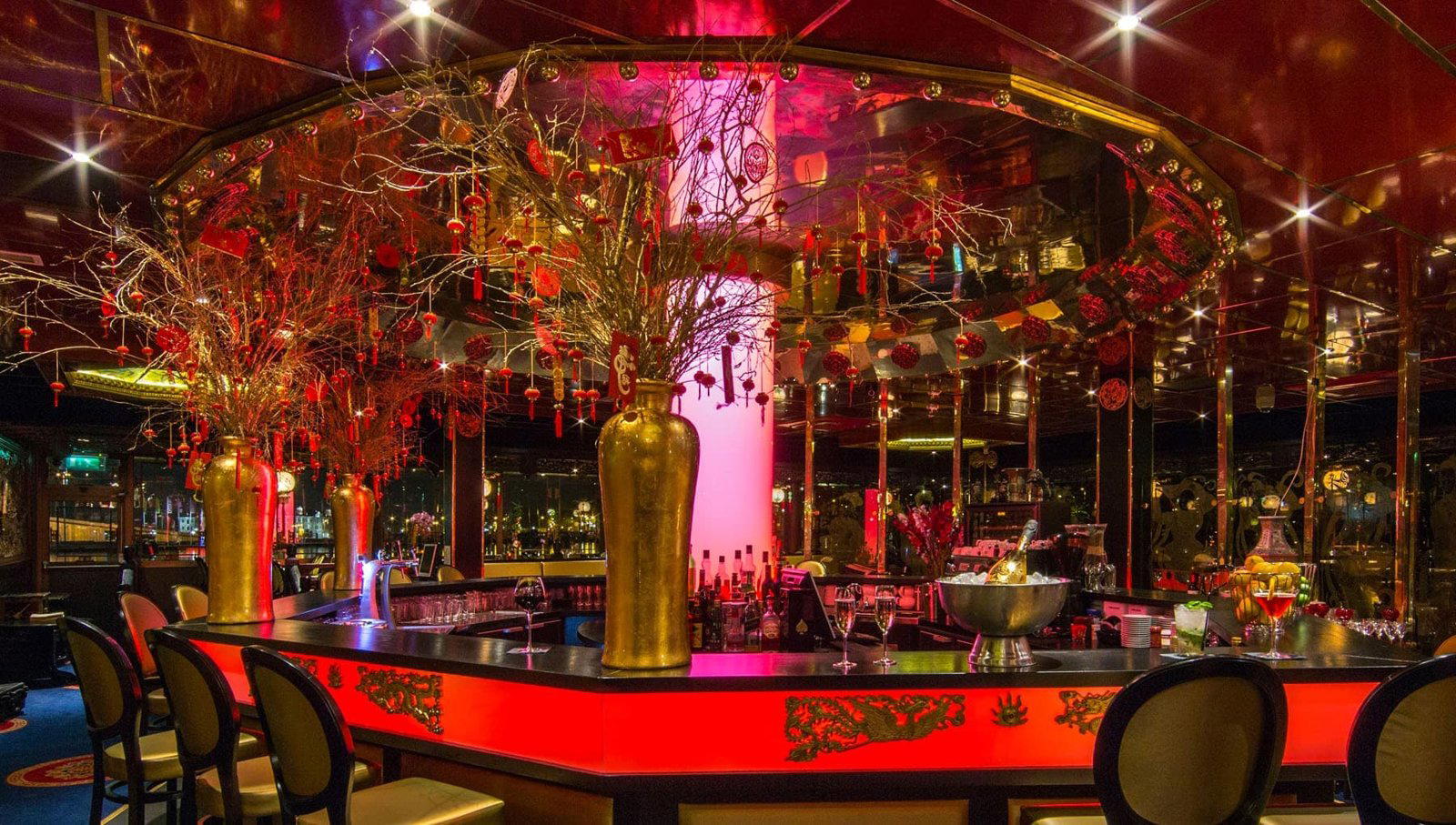
A Floating Reference Point on the IJ
Approaching Oosterdokskade 8 from the central station side, the first thing you register is the building itself: a multi-storey Chinese pavilion sitting directly on the water, its curved rooflines and lantern detailing marking it immediately against the flat brick and glass of the surrounding dock development. This is not a restaurant that hides its identity. The exterior signals a particular kind of Dutch-Chinese dining institution, one that has been part of Amsterdam's eating life long enough that a significant portion of its clientele arrives already knowing what they want. That accumulated familiarity is the point.
Amsterdam's Chinese restaurant scene has historically concentrated around the Zeedijk corridor, a short walk inland, where a cluster of Cantonese and broader Chinese kitchens have served the city since the mid-twentieth century. Sea Palace sits at the edge of that geography, moored on the IJ waterfront, and operates at the more established, higher-volume end of the city's Cantonese offer. Sea Palace has been recognized by Michelin with Bib Gourmand designations in both 2024 and 2025, underscoring its value-focused Cantonese cooking. That framing matters: this is not a restaurant competing with the tasting-menu formats at Ciel Bleu or Spectrum, nor with the creative Dutch cooking at Flore or Vinkeles.
What the Regulars Already Know
The editorial angle that makes Sea Palace worth understanding is not novelty, it is repetition. The people who return here do so because the formula is stable. Cantonese dim sum traditions form the backbone of lunchtime visits, with the characteristic trolley or ordered-sheet format (common in larger-scale Cantonese rooms across Europe) allowing tables to build meals incrementally. Har gow, siu mai, cheung fun, and roast meats are the categories that regulars track across visits, adjusting their orders based on what arrived well on the previous occasion rather than exploring in any open-ended way. This is a dining pattern more common in Hong Kong-style teahouse culture than in European restaurant dining, and its presence in Amsterdam reflects the depth of the Cantonese community that has shaped the city's Chinese food offer over generations.
Evening visits shift the register toward larger Cantonese plates: whole fish preparations, roasted meats, stir-fried greens with fermented tofu or oyster sauce, clay pot dishes that reward the kind of group ordering that makes the format work. The room, multi-level, able to handle the volume that 8,400+ reviews implies, functions as a gathering space as much as a restaurant. Tables of extended families, groups celebrating occasions, and solo diners who have clearly eaten here dozens of times share the floor in a way that is characteristic of the better-established Cantonese houses in London's Chinatown or in the Zeedijk-adjacent blocks of Amsterdam itself.
Opinionated About Dining placed the restaurant at #222 in its Casual Europe ranking for 2024, moving to #332 in 2025. A ranking shift of that magnitude in a single year is worth noting: OAD scores fluctuate with both the submission pool and with genuine changes in kitchen consistency, so Among Amsterdam's mid-range options, the venue sits in a bracket alongside Bistro de la Mer in terms of price tier, while occupying a completely different culinary tradition.
Cantonese Cooking in a Dutch Context
The Cantonese tradition that restaurant operates within is worth placing in its broader European context. Unlike the Sichuan and northeastern Chinese formats that have gained ground in European cities over the past decade, Cantonese cooking in the Netherlands developed through a specific wave of post-war migration, and the restaurants that emerged from that community built their menus around the roasted meats, steamed dumplings, and wok-fried techniques that defined Hong Kong's working eating culture. Those dishes have not changed dramatically in the restaurant's genre, which is partly the appeal and partly the limitation depending on what a diner expects.
The Bib Gourmand recognition across consecutive years (2024 and 2025) confirms that Michelin's inspectors find the cooking at the price point genuinely worthwhile, which, given the guide's relative conservatism in awarding Bib recognition to Chinese restaurants in European cities, carries some weight as a trust signal. For context, the restaurant's inclusion reflects consistency at its price point.
The category the restaurant occupies is a different register entirely, closer in spirit to the big-room Cantonese institutions that anchor Chinese dining in major European cities than to the tasting-menu circuit.
Planning a Visit
The restaurant operates seven days a week from noon to 10 pm, making it accessible across both lunch and dinner service without the restricted hours that affect many of Amsterdam's smaller kitchens. The address at Oosterdokskade 8 places it within a short walk of Amsterdam Centraal, which makes it a practical option before or after train travel as well as a destination in its own right. The floating format means arriving by water taxi is a genuine option for those already on the IJ. Reservations are recommended, especially for weekend dim sum service. The price tier (€€) positions it well below the city's fine dining options and broadly in line with Amsterdam's more considered casual restaurants.
A Tight Comparison
Comparable venues nearby, for context on price, style, and recognition.
| Venue | Cuisine | Price | Notes |
|---|---|---|---|
| Sea PalaceThis venue — the venue you are viewing | Oosterdokseiland, Authentic Cantonese | $$ | Not listed |
| Rijsel | Not listed | $$ | Weesperzijde Midden/Zuid, French Bistro with Flemish Influences |
| Lazuur | Not listed | $$ | Tuindorp Nieuwendam Oost, French Bistro with Portuguese Influences |
| Wils Bakery Café | Not listed | $$ | Olympisch Stadion e.o., French Bistro with Artisanal Bakery |
| Gitane | Not listed | $$ | Cremerbuurt West, Modern Mediterranean Bistro |
| Arles | Not listed | $$$ | Sarphatiparkbuurt, Modern French Neo-Bistro |
Recognition history
Dated appearances from independent guides and award organizations, with the underlying list record or original source where available.
Opinionated About Dining Casual in Europe Recommended
Opinionated About Dining
Michelin Bib Gourmand
Michelin
Opinionated About Dining Casual in Europe Ranked #332
Opinionated About Dining
Michelin Bib Gourmand
Michelin
Opinionated About Dining Casual in Europe Ranked #222
Opinionated About Dining
Opinionated About Dining Casual in Europe Highly Recommended
Opinionated About Dining
Continue exploring
More in Amsterdam
Restaurants in Amsterdam
Browse all →
Bars in Amsterdam
Browse all →
Hotels in Amsterdam
Browse all →
Wineries in Amsterdam
Browse all →
At a Glance
- Well Known
- Elegant
- Ornate
- Group Dining
- Family
- Celebration
- Waterfront
- Historic Building
- Waterfront
Current opening hours
- Monday
- 12–10 PM
- Tuesday
- 12–10 PM
- Wednesday
- 12–10 PM
- Thursday
- 12–10 PM
- Friday
- 12–10 PM
- Saturday
- 12–10 PM
- Sunday
- 12–10 PM
Hours can change for holidays and private events. Last verified .
Richly decorated with Chinese warlord statues, pagoda motifs, and wooden chinoiserie, creating an ornate and inviting atmosphere.