Our verdict
A mountain hut on the Hauser Kaibling ski area in Haus im Ennstal, Schoarlhütte sits within one of Austria's most developed alpine resort zones. The address, Hauser Kaibling 243, places it high on the mountain, accessible in the rhythm of a ski day. For the broader Haus dining scene, it belongs to a cluster of on-mountain huts where altitude and ritual shape the meal as much as the menu.

Pearl is the En Primeur Club membership app, where members save venues, book tables and use the concierge.
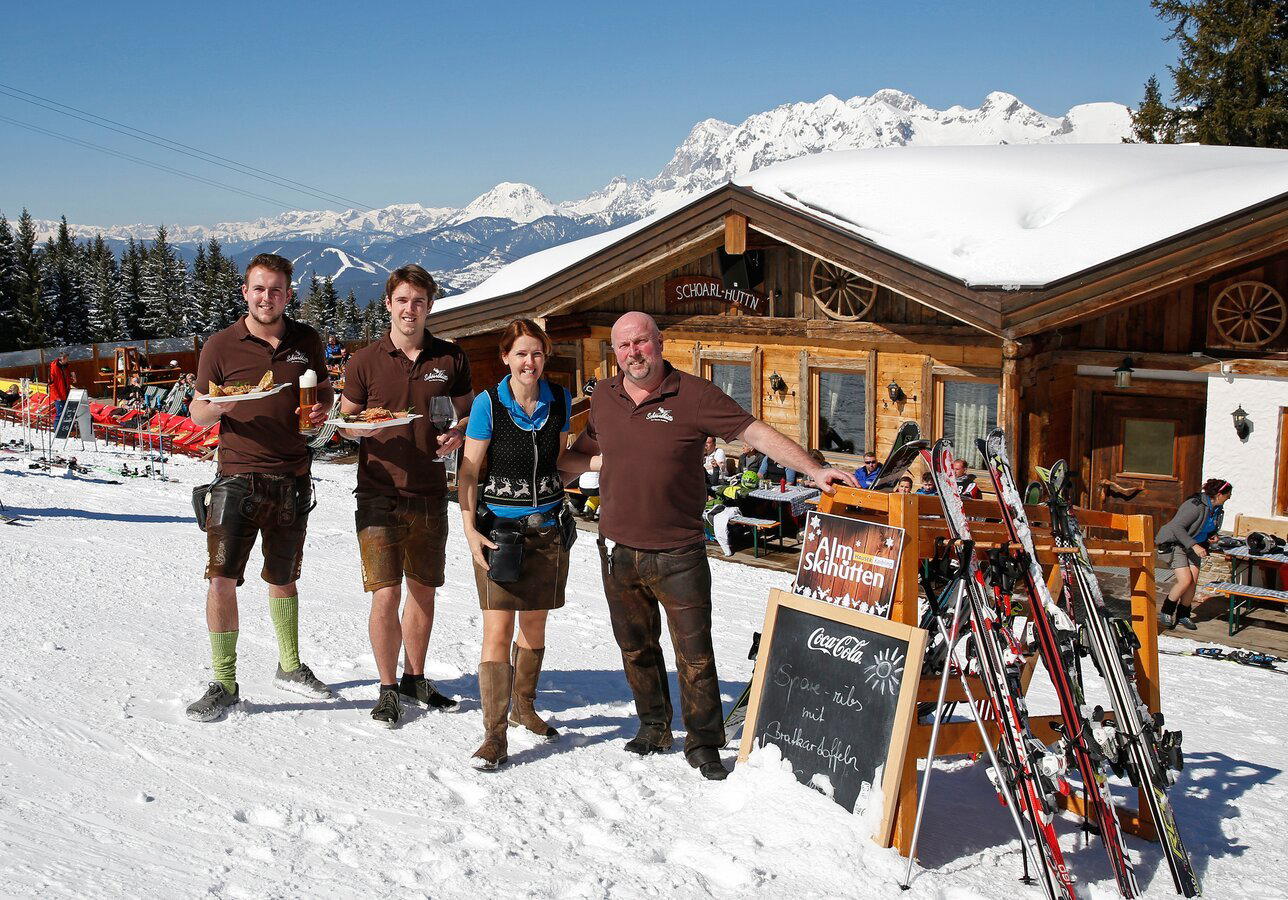
Mountain Altitude, Alpine Ritual
At elevation in the Hauser Kaibling ski area, the format of eating is dictated by the mountain before any kitchen makes its contribution. Boots stay on, jackets get draped over chair backs, and the sequence of the meal follows the logic of the ski day: a warm pause between runs, or the longer sit-down that signals the afternoon is winding toward the valley. Schoarlhütte, positioned at Hauser Kaibling 243 above Haus im Ennstal in the Austrian Steiermark, operates inside that rhythm. The address alone locates it within one of the Schladming-Dachstein region's four interconnected ski mountains, a system that draws consistent winter traffic to the Ennstal valley from across central Europe.
The alpine hut dining format is one of Austria's more codified eating traditions. Unlike the resort restaurants at destination properties, where the dining room is insulated from the mountain by architecture and price, hut-level eating in Austria maintains a direct relationship with physical exertion. You arrive cold, the room is warm, and the food is calibrated to that gap. Schmalzbrot, Gulasch, Kaiserschmarrn: the menu vocabulary is stable across most of the country's ski-area huts, and the pleasure is less about novelty than about execution within a familiar frame. How the broth is made, how long the goulash has been reducing, whether the Kaiserschmarrn has the right pull between crispness and yielding centre, these are the metrics that separate one hut from another within that tradition.
Where Schoarlhütte Sits in the Haus Dining Picture
Haus im Ennstal has a broader dining spread than its size might suggest, partly because the Hauser Kaibling mountain drives steady visitor volume through the winter season. On the mountain itself, a cluster of huts competes for the midday and afternoon trade. Du & I Alm, Krummholzhütte, Stangl Alm, and Stöcklhütte all occupy the same competitive tier, ski-accessible huts where the proposition is warmth, sustenance, and a degree of alpine atmosphere rather than a curated fine-dining sequence. The choice between them, for most visitors, comes down to location on the mountain relative to where they are skiing, and the specifics of what each kitchen does well on a given day.
Below the mountain, Natur- und Wellnesshotel Höflehner represents a different register entirely, a hotel dining context where the format, pacing, and price point diverge significantly from hut-level eating. For guests anchored to the valley, the hotel restaurant provides a more structured evening option. For those who want the mountain experience concentrated into the meal itself, the huts remain the relevant choice. Our full Haus restaurants guide maps both tiers and the distinctions between them.
The Dining Ritual at Altitude
The ritual of eating at an alpine hut runs on a different clock than most restaurant formats. There is no arrival time negotiated weeks in advance, no dress consideration beyond whatever the mountain requires, and no structured progression of courses designed to extend the evening. The meal is earned by the morning's skiing and measured against the afternoon still to come. This is what gives hut dining its particular character in the Austrian ski context: the food is context-dependent in a way that even the most atmosphere-conscious urban restaurant cannot replicate.
Within that frame, pacing matters more than it might appear. The table that lingers too long over a second round of Glühwein loses the afternoon light; the table that rushes through misses the specific pleasure of watching the mountain through glass while the room generates its own heat. At Schoarlhütte, as at the huts across Hauser Kaibling, the ideal timing sits somewhere in the middle, long enough to warm through completely, short enough to carry the energy back onto the slope. That calibration is the tacit skill of hut eating in Austria, and experienced alpine visitors manage it instinctively.
Austria's alpine dining tradition has a broader reference frame that extends well beyond the ski-hut tier. At the upper end of Austrian cuisine, kitchens like Steirereck im Stadtpark in Vienna, Obauer in Werfen, and Döllerer in Golling an der Salzach set a standard for what Austrian ingredients and technique can achieve at a formal level. In the alpine resort belt, Griggeler Stuba in Lech and Gourmetrestaurant Tannenhof in Sankt Anton am Arlberg demonstrate how mountain-hotel dining can hold Michelin recognition. Huts like Schoarlhütte operate entirely outside that competitive set, they are not aspiring toward it and are not evaluated against it. Their reference frame is the tradition of alpine sustenance itself.
Planning a Visit
Hauser Kaibling is accessible from Haus im Ennstal via the main gondola lift system, and the mountain's huts are reachable on skis or snowboards as part of a normal ski day. The address at Hauser Kaibling 243 places Schoarlhütte within the ski area's network, meaning access is tied to lift operating hours and snow conditions rather than conventional restaurant opening times. The ski area typically operates from December through April, with the precise window depending on the season's conditions. No advance reservation system applies in the conventional sense at hut level, arrival is walk-in, timing-dependent, and shaped by the mountain's own rhythms.
For those exploring Austrian mountain dining across a broader trip, the Schladming-Dachstein region provides a logical anchor. Other recognised Austrian dining destinations within reasonable reach include Ikarus in Salzburg, Kräuterreich by Vitus Winkler in Sankt Veit im Pongau, Landhaus Bacher in Mautern an der Donau, Ois in Neufelden, and Restaurant 141 by Joachim Jaud in Mieming. Each operates in a distinctly different register from the alpine hut format, but together they sketch the range of what Austrian table culture produces across its geographies, from the structured tasting menus of Michelin-tracked kitchens to the direct, unmediated warmth of a hut at elevation. For contrast at a global scale, the technical precision of Le Bernardin in New York City or the choreographed ceremony of Atomix in New York City represents the opposite pole from the hut tradition, formally rigorous where the hut is spontaneous, lengthy where the hut is time-compressed, and priced at a level that places them in an entirely different decision framework.
Frequently asked questions
What's Schoarlhütte's location?
Schoarlhütte is located at Hauser Kaibling 243, 8967 Haus im Ennstal, Austria, Haus.
What is the best way to reach Schoarlhütte during the ski season?
Schoarlhütte sits within the Hauser Kaibling ski area at address 243, above Haus im Ennstal in Austria's Ennstal Valley. The mountain is accessed via the main gondola lift system from the village, and the hut is reachable on skis or snowboard as part of a day on the slopes. It is not a venue you drive to, the approach is part of the experience.
What's the signature dish at Schoarlhütte?
Alpine huts on the Hauser Kaibling mountain generally anchor their menus to Austrian mountain staples, think hearty midday plates calibrated for skiers returning to the slopes. The kitchen format and mountain setting at Haus im Ennstal tend to drive the offer more than any single signature item.
How far ahead should I plan for Schoarlhütte?
Schoarlhütte operates within the rhythm of the Hauser Kaibling ski area, where walk-in midday traffic from the slopes is the norm rather than advance reservations. Peak ski season weeks in January and February will see the hut fill quickly around midday. Arriving before noon or after the main lunch rush is a practical way to secure a seat without booking ahead.
What's Schoarlhütte best at?
Schoarlhütte is positioned on the Hauser Kaibling mountain above Haus im Ennstal, and its primary function is the classic alpine hut midday stop, a place where skiers break from the runs to eat and rest at altitude. The setting and mountain access are the defining draws.
Can Schoarlhütte adjust for dietary needs?
No dietary policy or menu detail is documented for Schoarlhütte. Alpine huts at this elevation in Austria typically carry a focused, traditional menu with limited flexibility for substitutions.
Is Schoarlhütte worth it?
Whether Schoarlhütte earns its place in a ski day depends on what you're after. As a mountain hut on the Hauser Kaibling above Haus im Ennstal, it offers access at altitude during ski season, a format that has its own logic separate from destination dining.
What It’s Closest To
Comparable venues nearby, for context on price, style, and recognition.
| Venue | Cuisine | Price | Notes |
|---|---|---|---|
| SchoarlhütteThis venue (the venue you are viewing) | Traditional Austrian Alpine Hut | $10–20 | Not listed |
| Stöcklhütte | Traditional Austrian Alpine | $10–20 | Haus im Ennstal |
| Stangl Alm | Traditional Tyrolean Alpine Cuisine | $20–30 | Oberndorf in Tirol |
| Du & I Alm | Alpine Ski Hut | Not listed | Haus im Ennstal |
| Krummholzhütte | Styrian Gourmet Hut | $20–30 | Haus im Ennstal |
Continue exploring
More in Haus
Restaurants in Haus
All restaurants in Haus →
Details
- Rustic
- Cozy
- Scenic
- Casual Hangout
- After Work
- Terrace
- Local Sourcing
- Mountain
- A La Carte
Current opening hours
- Monday
- 9 AM–6 PM
- Tuesday
- 9 AM–6 PM
- Wednesday
- 9 AM–6 PM
- Thursday
- 9 AM–6 PM
- Friday
- 9 AM–6 PM
- Saturday
- 9 AM–6 PM
- Sunday
- 9 AM–6 PM
Hours can change for holidays and private events. Hours as of .
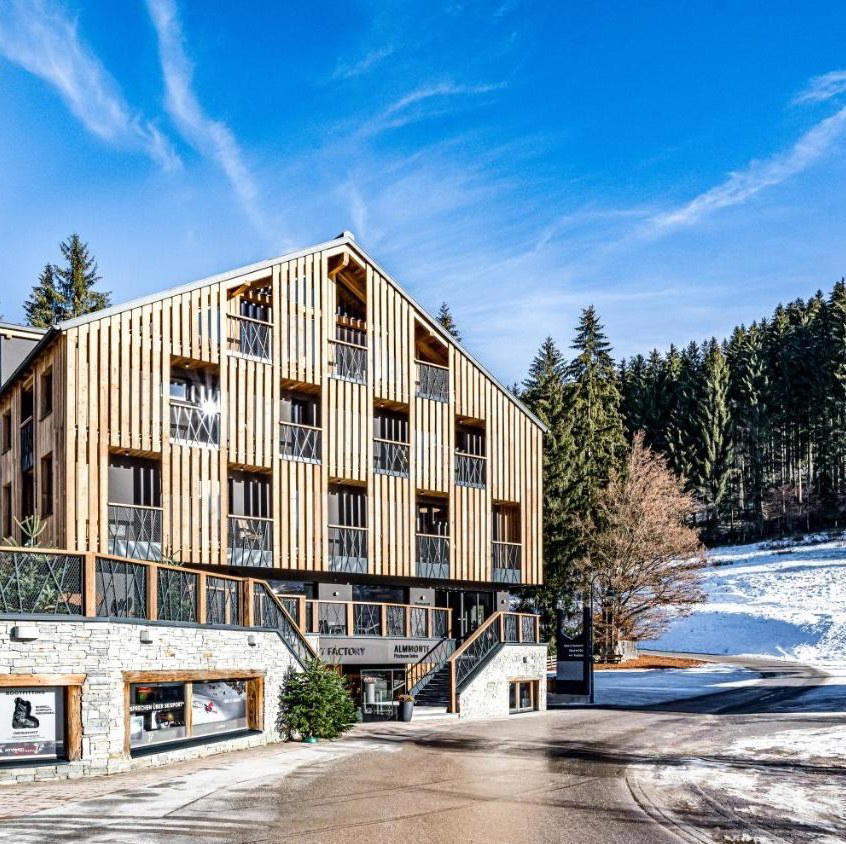
Cozy rustic atmosphere with far-reaching mountain views.