Our verdict
On Bebelstraße in Stuttgart's western residential belt, Schnitzelkönig has built a local following around one of Germany's most seriously treated casual formats. The schnitzel, so often reduced to canteen-level afterthought, receives the kind of attention here that more decorated kitchens reserve for composed plates. A reference point for the city's mid-register dining without pretension.

Pearl is the En Primeur Club membership app, where members save venues, book tables and use the concierge.
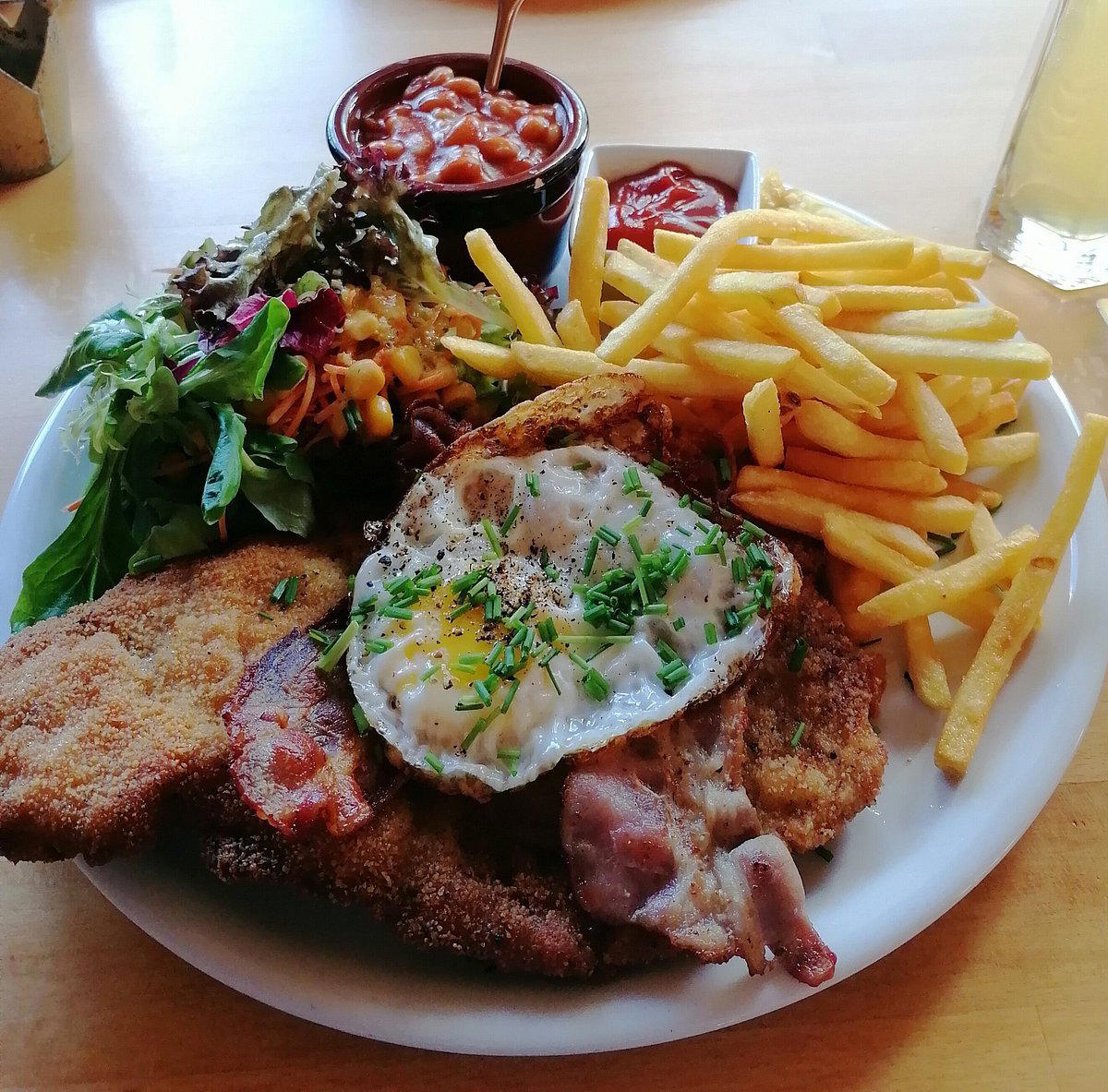
The menu
What to order
- Texas Schnitzel
- Schnitzel Bayern
- Stuttgarter Schnitzel
Stuttgart's Schnitzel Tradition, Taken Seriously
Germany's relationship with the schnitzel is complicated by familiarity. The dish appears on nearly every gasthaus menu from Flensburg to Berchtesgaden, which means the gap between a perfunctory version and a genuinely considered one is enormous, and rarely discussed. Stuttgart, a city whose dining identity has long been split between the Michelin-chasing rooms of Speisemeisterei and Délice and the workaday Swabian taverns in between, has relatively few addresses where a classical German format receives the sustained technical attention it deserves. Schnitzelkönig, on Bebelstraße in the West district, occupies that narrower tier.
The address itself signals something about the audience. Bebelstraße 96 sits in a residential quarter rather than a tourist corridor, the kind of location that filters for repeat local custom over passing trade. In most European cities, the restaurants that last in residential streets do so through consistency and genuine neighbourhood trust, not through novelty or spectacle. That context shapes expectations before you arrive.
A Format Built on Repetition and Craft
The schnitzel format rewards a specific kind of kitchen discipline that differs from the improvisational energy of a tasting menu kitchen. Here, the craft lies in repetition done precisely: the thickness of the cut, the fineness of the crumb, the temperature and clarity of the fat, the timing of the crust's set. These are not variables that a kitchen resolves once and moves on from, they require consistent execution across every service. It is, in that sense, a more demanding format than it appears from the outside.
Across Germany's mid-register dining tier, the schnitzel has seen a quiet reconsideration over the past decade. A generation of cooks trained in more technically rigorous environments has returned to traditional formats with sharper skills and less tolerance for shortcuts. The result, in a handful of cities, is a small cohort of addresses where the classical German casuals, schnitzel, sauerbraten, spätzle, are treated with the same seriousness that London or Paris kitchens reserve for their national staples. Schnitzelkönig in Stuttgart belongs to that reconsideration, positioned as a format-specialist rather than a generalist gasthaus.
Where It Sits in Stuttgart's Dining Structure
Stuttgart's restaurant scene divides more sharply by tier than many comparable German cities. At the leading, rooms like 5 and Der Zauberlehrling operate at the creative end of the market, drawing on a regional fine-dining culture that stretches into the Black Forest and produces addresses like Schwarzwaldstube in Baiersbronn. At the other end, the city has a deep bench of traditional Swabian restaurants operating on volume and familiarity. The middle tier, where technique and format-discipline drive the offer without the overhead of full fine-dining, is thinner. Schnitzelkönig occupies that middle ground, where the competition is lower but so is the tolerance for inconsistency among the local regulars who sustain these businesses.
That positioning has parallels across Germany. Addresses like Hegel Eins in Stuttgart show how a focused format and a residential address can build durable reputations without Michelin scaffolding. The same logic applies at higher price points elsewhere in the country, from Aqua in Wolfsburg to JAN in Munich, where a clear format identity tends to outlast more eclectic programming.
The Team Dynamic in a Format Kitchen
Single-format restaurants make the collaboration between kitchen and floor unusually visible. When the menu is deliberately contained, the front-of-house carries a disproportionate share of the dining experience: the pace of service, the knowledge of preparation details, the ability to differentiate between what sounds like a small menu to a first-time visitor and what it actually represents in terms of sourcing and craft decisions. In this kind of room, a well-briefed server is not a supporting actor, they are the primary channel through which the kitchen's choices reach the guest.
This is a pattern seen across Germany's format-specialist tier, from the fish-focused rooms of Hamburg (where Restaurant Haerlin demonstrates what sustained front-of-house investment produces over time) to the wine-led formats of the Moselle valley, where addresses like Schanz in Piesport have built reputations partly on floor knowledge. At Schnitzelkönig, the same principle applies at a different price point: the coherence of the guest experience depends on the floor team understanding and communicating the kitchen's approach, not just delivering plates.
At restaurants where the menu doesn't change by season or chef whim, that team dynamic becomes load-bearing. The room's reputation accumulates through hundreds of individual service interactions rather than a single landmark dish or press moment. It is a slower, more durable kind of reputation-building, and in a residential neighbourhood like Stuttgart's West district, it is the only kind that works.
Stuttgart in the Wider German Dining Context
Stuttgart punches above its population size in fine dining terms, with a concentration of serious kitchens that reflects both regional wealth and the Swabian tendency to value craft over flash. The city sits within reasonable reach of some of Germany's most decorated restaurants: Vendôme in Bergisch Gladbach, Victor's Fine Dining by Christian Bau in Perl, and Waldhotel Sonnora in Dreis all operate within a day's drive. Internationally, the format-specialist approach Schnitzelkönig represents has equivalents at different price points, from the precision tasting formats at Le Bernardin in New York and Atomix to the dessert-forward programming at CODA Dessert Dining in Berlin and the mountain-set focus of ES:SENZ in Grassau. The commitment to a single format, executed with discipline, is a durable model across price tiers and geographies.
For visitors to Stuttgart working through the city's dining options, Schnitzelkönig represents a different kind of commitment than the city's fine-dining rooms. It is not the place to benchmark Stuttgart's creative cooking, for that, the city's higher-end kitchens are the reference point. It is, instead, a case study in what happens when a city's most democratic format receives the attention it usually doesn't get. See our full Stuttgart restaurants guide for a broader map of the city's dining tiers.
Know Before You Go
Address: Bebelstraße 96, 70193 Stuttgart, Germany
Neighbourhood: Stuttgart West, residential district, local clientele
Phone: Not publicly listed, check current channels for reservations
Website: Not currently available, contact directly or check local directories
Booking: Advisable for weekends; the local repeat-custom base means tables in residential-format restaurants of this type fill on a community rhythm rather than a tourist one
Price tier: Not confirmed, contact directly for current pricing
Dress code: Not stated, neighbourhood casual is the working assumption for this address type
Frequently asked questions
What's the address for Schnitzelkönig?
Schnitzelkönig is located at Bebelstraße 96, 70193 Stuttgart, Germany, Stuttgart.
How does Schnitzelkönig differ from a standard Stuttgart gasthaus serving schnitzel?
Most Stuttgart gasthaus menus include schnitzel as one item among many, a broad roster of regional dishes where the schnitzel competes for kitchen attention. Schnitzelkönig, by contrast, structures the entire operation around that single format, which shifts the kitchen's priorities toward consistency and refinement of one preparation rather than range. That specialisation places it in a distinct category within Stuttgart's dining structure, closer to a craft-format restaurant than a generalist gasthaus.
What's the signature dish at Schnitzelkönig?
The name says it plainly: schnitzel is the kitchen's single organizing principle. At a restaurant called Schnitzelkönig, literally 'schnitzel king', in Stuttgart, the menu is built around mastering one format rather than ranging across multiple concepts. Preparation details are best confirmed directly at the Bebelstraße 96 address, as the specific cuts and coatings are not documented here.
Should I book Schnitzelkönig in advance?
No phone number or booking platform is currently listed for Schnitzelkönig at Bebelstraße 96, Stuttgart. For a format-kitchen restaurant with a contained menu, walk-in availability can vary sharply by day and hour. Arriving early in a service window or contacting the venue directly on arrival is the most reliable approach until booking details are confirmed.
What has Schnitzelkönig built its reputation on?
Schnitzelkönig operates in a Stuttgart dining scene that divides clearly by tier, with serious kitchens concentrated in a city that punches above its population size in German fine dining terms. Within that structure, a single-format schnitzel restaurant builds credibility through repetition and consistency rather than range. The address at Bebelstraße 96, in the 70193 postal district, places it in an accessible part of the city for both locals and visitors.
Can Schnitzelkönig accommodate dietary restrictions?
Guests with specific dietary needs should contact the venue at Bebelstraße 96, Stuttgart before visiting to confirm what alternatives, if any, the kitchen can offer.
Is a meal at Schnitzelkönig worth the investment?
Price range data for Schnitzelkönig is not currently on record, which makes direct comparison to Stuttgart's broader restaurant tier difficult. What the format signals is a kitchen that prioritises depth over breadth: one dish, executed repeatedly, in a city where the dining scene rewards that kind of discipline. For anyone specifically seeking well-executed traditional German schnitzel in Stuttgart, the focused format is a reasonable indication of intent.
Reputation Context
Comparable venues nearby, for context on price, style, and recognition.
| Venue | Cuisine | Price | Notes |
|---|---|---|---|
| SchnitzelkönigThis venue (the venue you are viewing) | German Schnitzel House | $20–30 | Not listed |
| Nesenbach Brauhaus | Swabian Brauhaus with Bavarian Influences | $20–30 | Gablenberg |
| Plenum - Stuttgart | Modern Regional German with Swabian Influences | $20–30 | Gablenberg |
| Stuttgarter Stäffele | Traditional Swabian | $30–50 | Heslach |
| Wirtshaus Hasen | Traditional Swabian Gasthaus | $20–30 | Gaisburg |
| SHOBU POKÉ & DELI | Hawaiian Poké Bowls | $10–20 | Gablenberg |
Continue exploring
More in Stuttgart
Restaurants in Stuttgart
All restaurants in Stuttgart →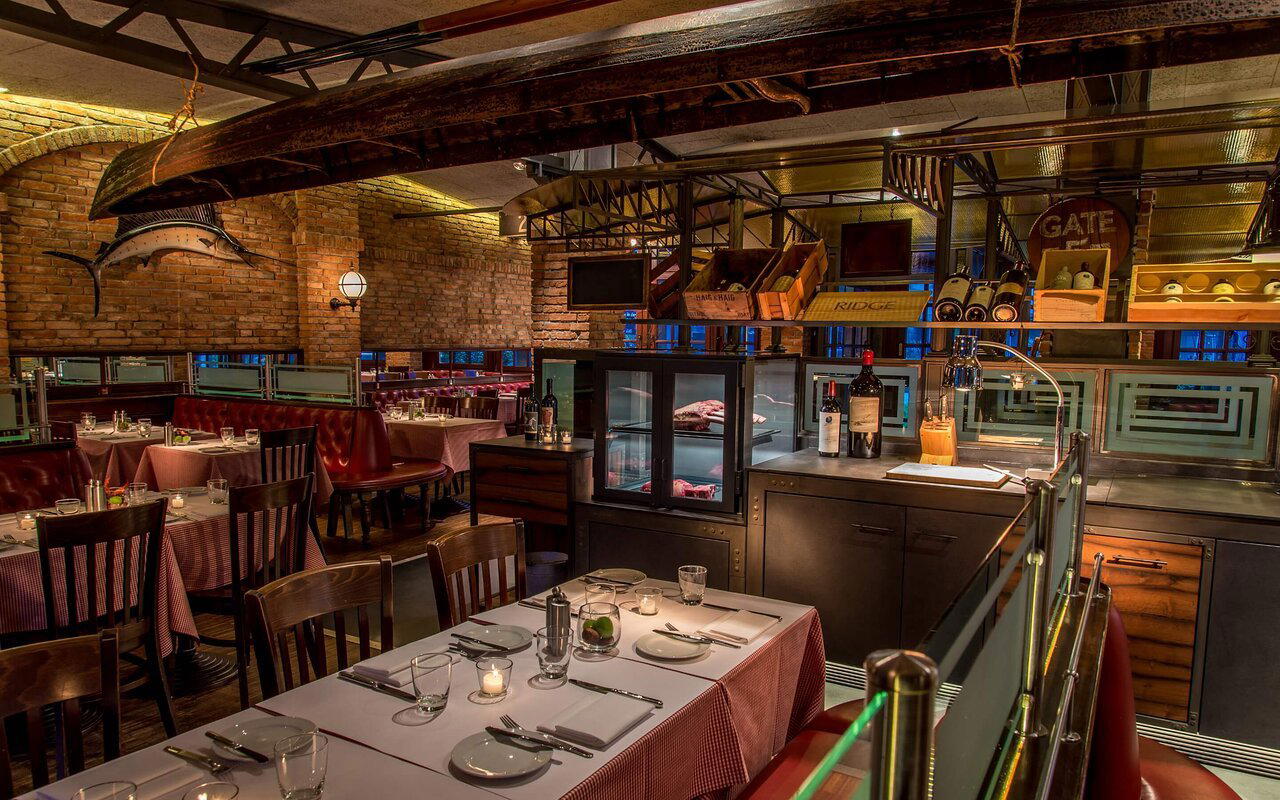
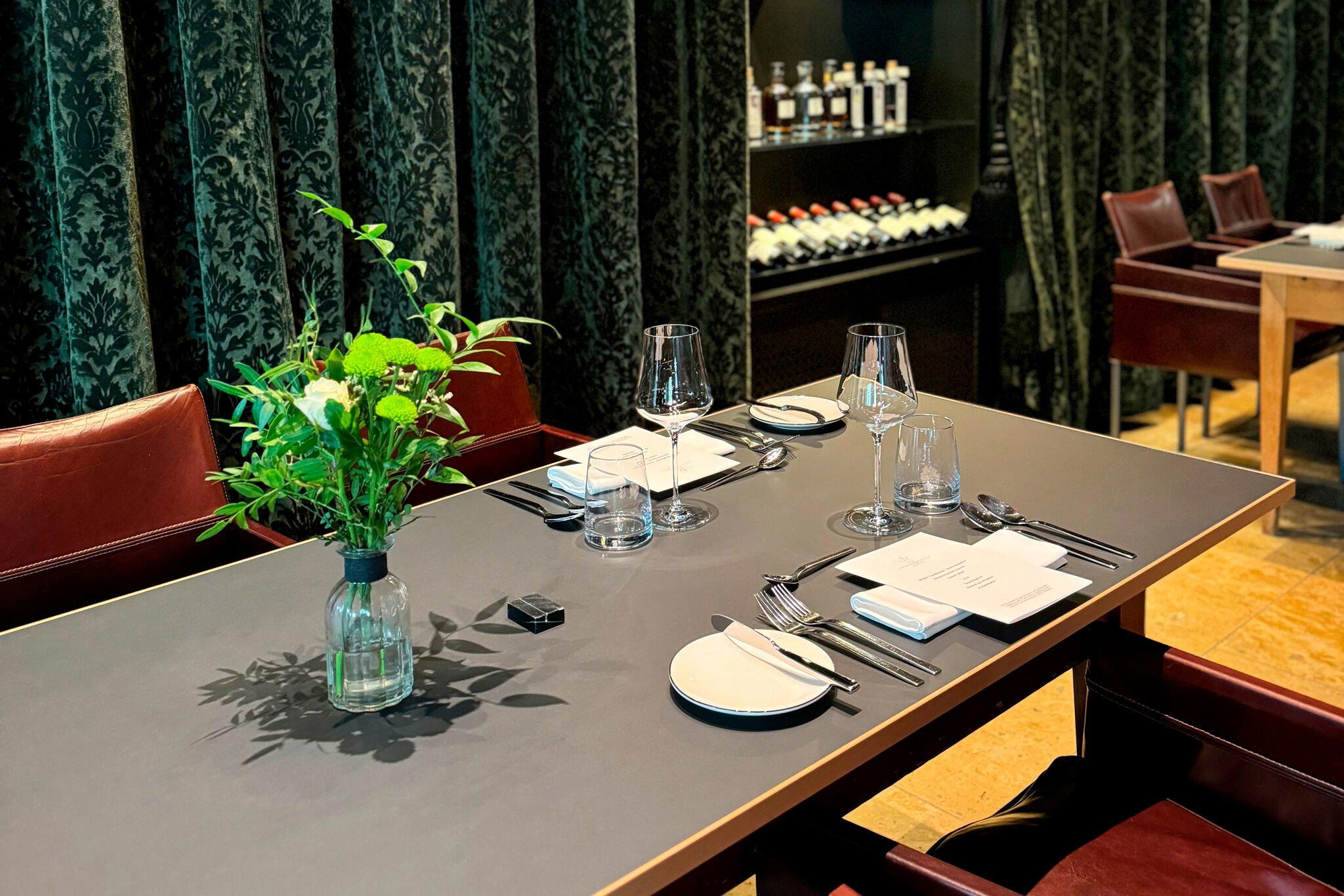
Bars in Stuttgart
All bars in Stuttgart →
Hotels in Stuttgart
All hotels in Stuttgart →

Details
- Cozy
- Rustic
- Family
- Casual Hangout
- Beer Program
- A La Carte
- Vegetarian Friendly
Current opening hours
- Monday
- Closed
- Tuesday
- 11:30 AM–2 PM, 5–10:30 PM
- Wednesday
- 11:30 AM–2 PM, 5–10:30 PM
- Thursday
- 11:30 AM–2 PM, 5–10:30 PM
- Friday
- 11:30 AM–2 PM, 5–10:30 PM
- Saturday
- 5–10:30 PM
- Sunday
- 11:30 AM–2 PM, 5–10:30 PM
Hours can change for holidays and private events. Hours as of .
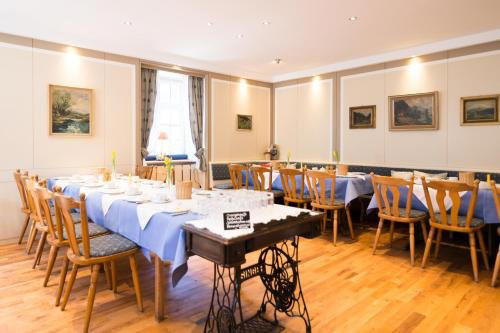
Cozy and casual atmosphere with simple wooden furnishings reminiscent of a traditional pub or canteen.