Schöni-Alm
A mountain hut address in the Ausseerland, Schöni-Alm sits at Zauchen 147 above Bad Mitterndorf in the Styrian Alps, the kind of place where the sourcing logic runs from slope to plate with little distance in between. The setting frames everything: timber, altitude, and a kitchen that draws on the immediate landscape rather than supply chains. For those tracing alpine food culture in its less-trafficked registers, this is a useful stop.
Pearl is the En Primeur Club membership app — saves, bookings, and concierge access live there. Same editors, same standards.
- Address
- Zauchen 147, 8983 Bad Mitterndorf, Austria
- Phone
- +434336232553
- Website
- schoenis.at
- Directions
- Get directions
 Saves & bookings on Pearl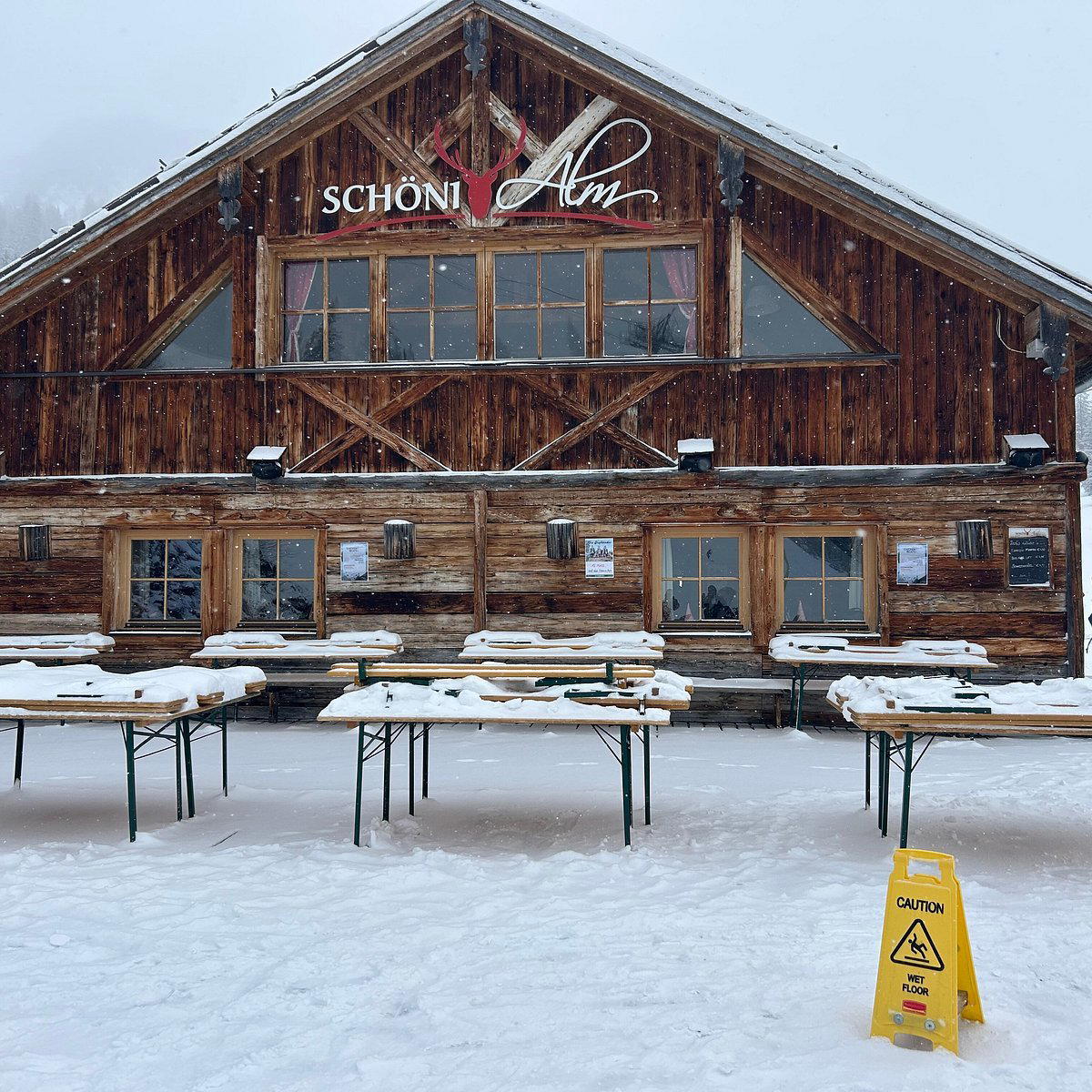
What the Altitude Decides
Alpine hut dining in Austria follows a logic that urban restaurants spend considerable energy simulating. At elevation, the supply chain is short by necessity. What grows within reach, what the farmer a kilometre downslope raises, what the forest yields in a given week, these constraints shape the kitchen more directly than any culinary philosophy could. Schöni-Alm is a traditional Austrian mountain hut at Zauchen 147, 8983 Bad Mitterndorf, Austria.
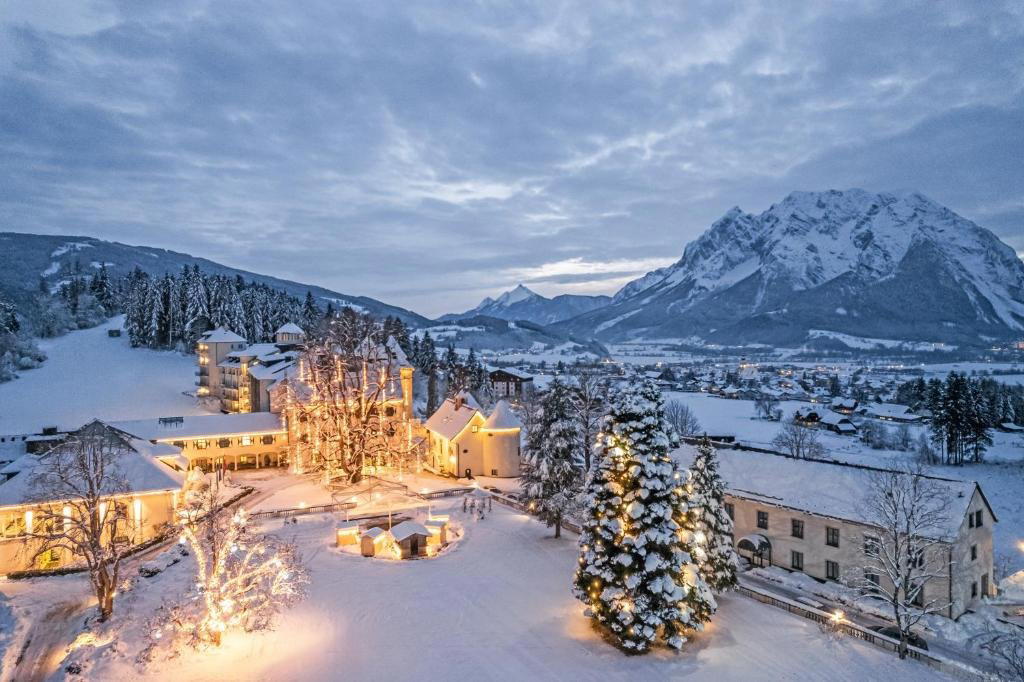
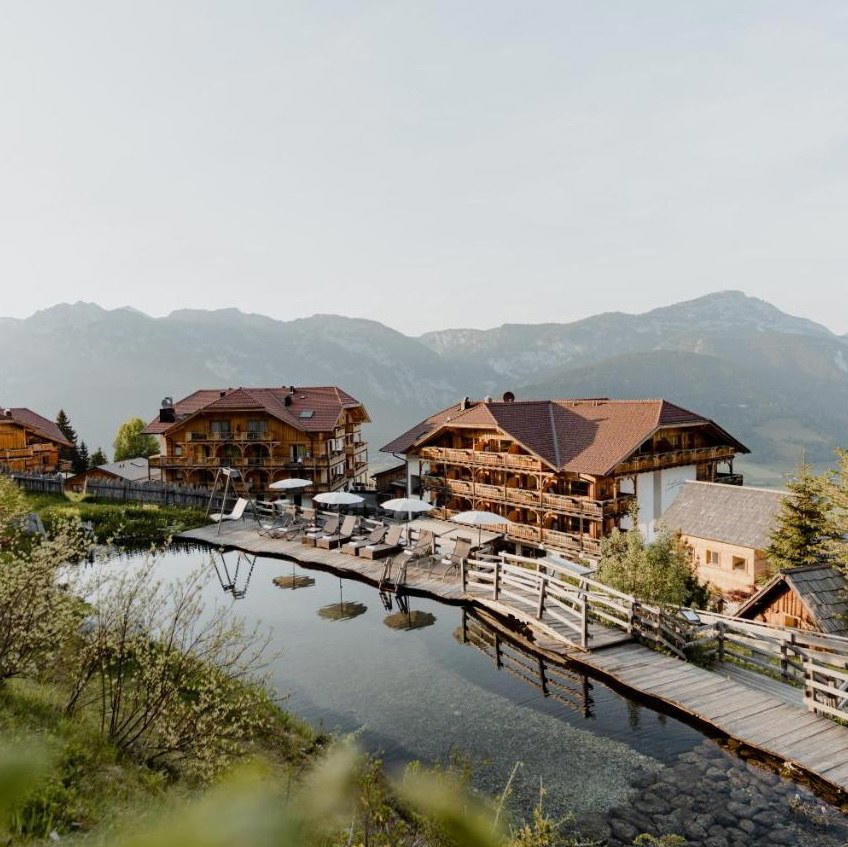
The approach to a mountain hut like this one, up through the Zauchen area, with the Totes Gebirge range fixing the horizon, resets the frame before you arrive. The architecture speaks the standard alpine dialect: exposed timber, low eaves, a terrace oriented to catch whatever sun the season offers. Inside, the room temperature carries the smell of wood and slow cooking. This is the physical environment that mountain hut dining has occupied for generations in Styria, and Schöni-Alm occupies it without affectation.
The Ingredient Logic of the Styrian Alps
Styrian alpine cooking has always been defined by what the plateau provides. The Ausseerland, the broader lake and mountain district that Bad Mitterndorf anchors, sits at a productive intersection of dairy farming tradition, freshwater fishing from the region's lakes, and game from its managed forests. These three categories form the backbone of any credible mountain kitchen in the area, and they are harder to replicate at lower elevations precisely because the quality gradient is steep: grass-fed dairy from alpine meadows at this altitude has a fat composition and flavour depth that lowland equivalents rarely match.
That sourcing proximity matters more at a hut address than at a town restaurant. Distance introduces cold-chain logistics, holding time, and the softening that comes with both. A kitchen working from immediate regional suppliers, or, in the tradition of the better Styrian Alms, from animals raised on the property's own slopes, is working with different raw material. The gap between farm and plate is compressed to hours rather than days. For dishes built on dairy fat, cured meats, or freshwater fish, that compression is audible in the eating.
The Ausseerland's food culture also carries a quiet influence from its historical role as a retreat for Viennese and Salzburg families, which introduced a second strand of refinement alongside the peasant-economy cooking. The result in the region's better kitchens is a hybrid: hearty in portion logic and material, but with a finish that acknowledges a more sophisticated diner. Whether Schöni-Alm pitches toward the traditional or the refined end of that spectrum is leading assessed on the ground, but its position in the Zauchen area places it within a cluster of Alm addresses that collectively define how the Ausseerland feeds visitors at altitude.
Bad Mitterndorf's Mountain Dining Circuit
Bad Mitterndorf's restaurant range runs from town-centre Gasthäuser to mountain hut addresses accessible on foot or by lift. The hut tier operates on a different clock and rhythm to the valley floor. Lunch is the primary service window for most Alm kitchens, driven by the movement patterns of walkers, skiers in winter, and day-trippers who plan their routes around midday eating. The seasonal calendar matters here: winter brings the ski-touring crowd; summer shifts toward hikers and families using the area's trail network.
The restaurant occupies the mountain hut register in Bad Mitterndorf.
Austria's Broader Alpine Kitchen: Where Schöni-Alm Fits
Austrian alpine dining sits on a wide spectrum. At the leading end, mountain-adjacent restaurants have absorbed the technical ambitions of the broader fine-dining movement: Griggeler Stuba in Lech and Stüva in Ischgl represent the Vorarlberg and Tyrolean versions of that alpine-luxury format, where Michelin recognition and high resort pricing define the comparable set. Further into the Austrian countryside, addresses like Obauer in Werfen and Landhaus Bacher in Mautern an der Donau show what happens when regional ingredients meet sustained kitchen ambition over decades.
Styrian cooking specifically has a flagship in Steirereck im Stadtpark in Vienna, which has spent years translating regional Austrian produce into a format that competes with the European fine-dining conversation. The distance between that city reference point and a Zauchen hut address is real, but the ingredient logic is not entirely different: both start from the same Styrian provenance and work outward from there. Döllerer in Golling an der Salzach occupies a useful middle position, a country-format kitchen with award-level ambition that bridges the hut tradition and the Michelin register.
For readers who want to understand how alpine herb and produce sourcing translates into a more structured format, Kräuterreich by Vitus Winkler in Sankt Veit im Pongau offers a direct example of that thinking applied with precision. Equally, Gourmetrestaurant Tannenhof in Sankt Anton am Arlberg shows how a mountain-resort setting can anchor ingredient-led cooking with formal structure. Elsewhere in Austria, Ikarus in Salzburg, Schwarzer Adler in Hall in Tirol, Ois in Neufelden, and Restaurant 141 by Joachim Jaud in Mieming each represent distinct regional inflections of the broader Austrian kitchen tradition. And for those who want a global comparison on ingredient-led precision, Le Bernardin in New York City and Atomix in New York City illustrate what sustained sourcing discipline looks like when applied at the highest technical level.
Planning a Visit
The restaurant is addressed at Zauchen 147, 8983 Bad Mitterndorf, Austria. The Zauchen area sits above the Bad Mitterndorf valley floor and is accessible on foot or by lift.
In Context: Similar Options
Comparable venues nearby, for context on price, style, and recognition.
| Venue | Cuisine | Price | Notes |
|---|---|---|---|
| Schöni-AlmThis venue — the venue you are viewing | Traditional Austrian Mountain Hut | $$ | Not listed |
| Goaßhittn | Traditional Austrian Jause & Most | $ | Neuhofen |
| Zum Troadkastl | Traditional Austrian Gastropub | $$ | Tauplitz |
| Schupfer's Dorfschmiede | Traditional Austrian with Innovative Twists | $$ | Bad Mitterndorf |
| Lärchbodenalm | Traditional Austrian Alpine | $$ | Ramsau am Dachstein |
| Kirchenwirt Kirchberg-Thening | Traditional Austrian Gasthaus | $$ | Kirchberg-Thening |
Continue exploring
More in Bad Mitterndorf
Restaurants in Bad Mitterndorf
Browse all →

Bars in Bad Mitterndorf
Browse all →

At a Glance
- Cozy
- Rustic
- Scenic
- Family
- Casual Hangout
- Terrace
- Mountain
Quaint and cozy alpine hut atmosphere with warm hospitality.